
The Legendary Story Behind This Arizona Chapel Is Almost Too Good To Be True
A sculptor looked up at a brand-new New York skyscraper in 1932 and saw a giant cross hidden in its steel beams. That single moment set off a dream that crossed an ocean, survived a world war, and finally landed in the red rocks of Arizona.
Today, the chapel she imagined seems to grow right out of a stone butte, and visiting costs nothing at all. Her story has so many twists that it almost sounds made up, but every piece of it is real.
A Cross Rising From Red Rock
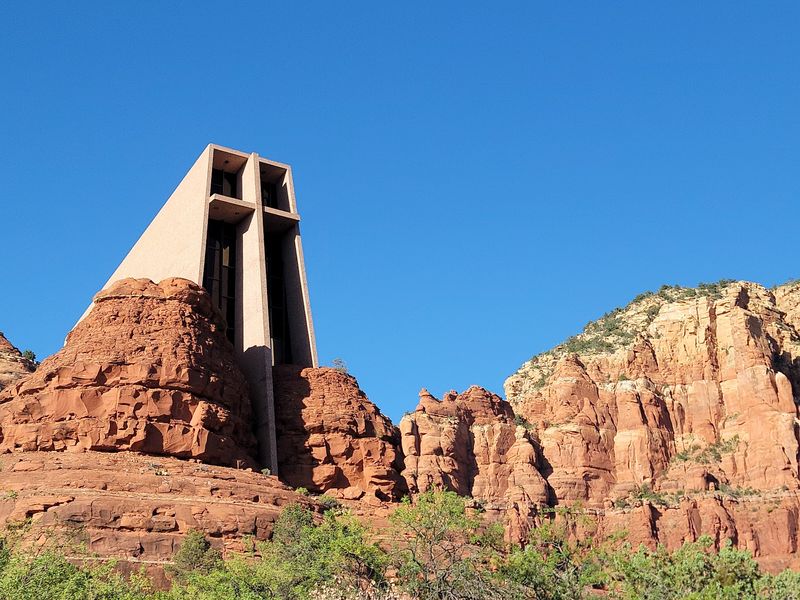
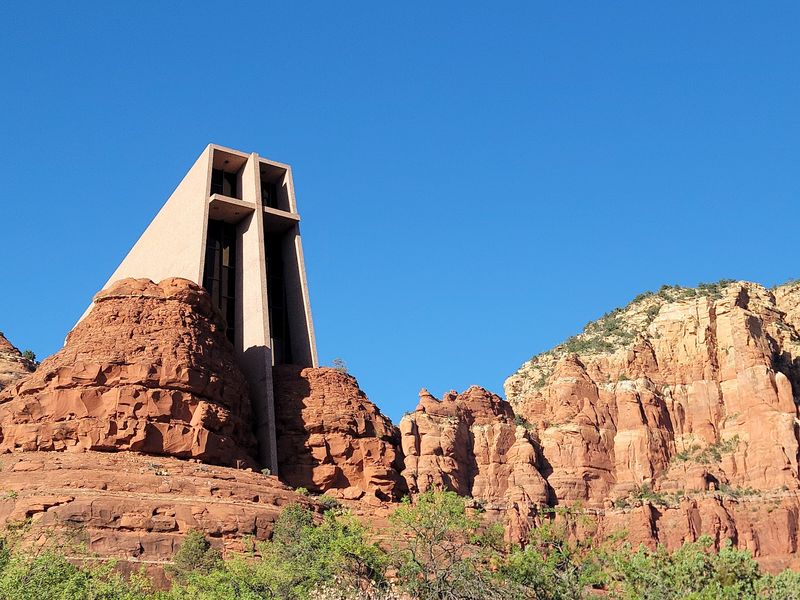
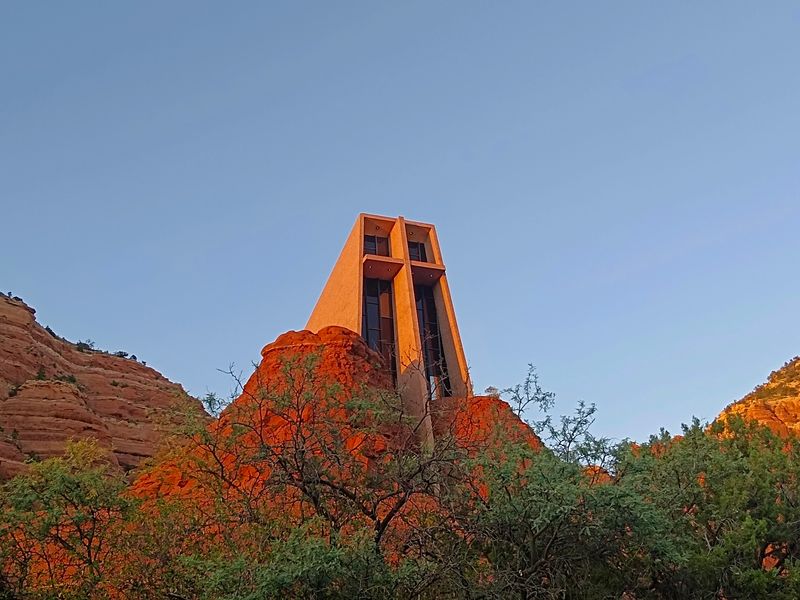
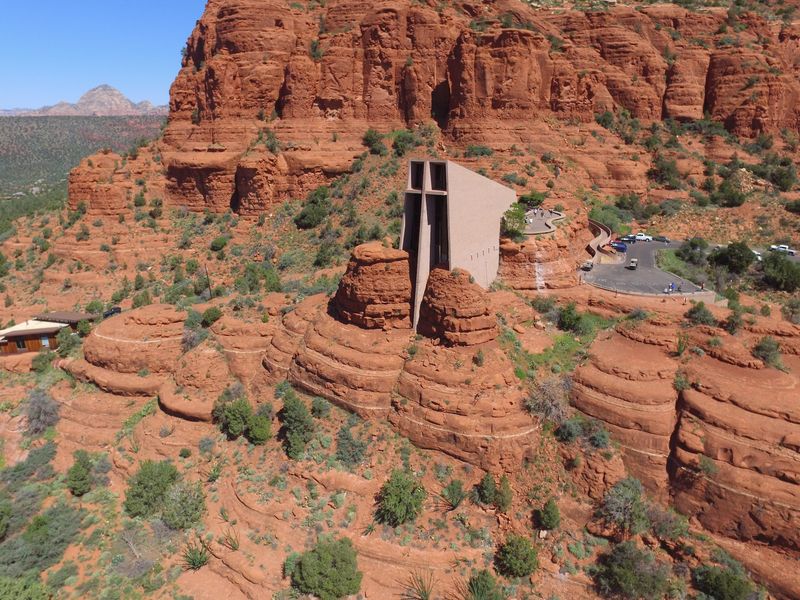
Drive south from uptown Sedona toward the Village of Oak Creek, glance to the east, and a tall concrete cross suddenly appears wedged between two red rock spires. That striking sight is the Chapel of the Holy Cross, sitting at 780 Chapel Rd in Sedona, Arizona.
Built in 1956, the chapel is a Catholic church that stands high on the buttes with wide views over the whole Sedona area. It looks less like it was placed on the rock and more like the rock decided to become a chapel.
Many first-timers pull over just to stare before they even find the entrance road.
Here is the part locals love. Admission is free, no tickets are needed, and the doors open every single day of the week.
For a landmark this famous, that makes it one of the best-value stops anywhere in northern Arizona.
Plenty of people come for the architecture, others come to pray, and a good number come simply for the view. Whatever brings you, the chapel manages to feel both grand and humble at once.
Before exploring what makes a visit special, though, it helps to know the remarkable tale of how it got here.
The Empire State Building Vision
Inspiration struck in the most unlikely place. In 1932, Marguerite Brunswig Staude, a rancher and sculptor, was looking at the newly built Empire State Building in New York City.
Instead of simply admiring the height, she saw something nobody else seemed to notice. Within the towering steel beams, she perceived the shape of an enormous cross.
The image moved her so deeply that she decided she wanted to build a church with that same sense of grandeur.
Think about that for a second. Millions of people have looked at that skyscraper, yet one artist spotted a sacred symbol hiding in its frame.
It sounds like a scene from a movie, but it truly happened, and it launched a mission that would shape the rest of her life.
Staude was not the type to let a big idea fade away. As a sculptor, she understood how shapes can speak to people without words.
She began dreaming of a place where art and faith could meet, a place that would welcome anyone who walked through the door. At that point, though, she had no idea her dream would one day end up perched among the red cliffs of Arizona.
Detour Through Budapest
Believe it or not, the first plans for this chapel had nothing to do with Arizona. Staude’s ambition carried her across the Atlantic Ocean to Budapest, Hungary.
There she teamed up with Lloyd Wright, the son of the legendary architect Frank Lloyd Wright. Together they worked on designs for a monumental church, one that would have stood far from the deserts and canyons of the Southwest.
The partnership sounded like a perfect match of vision and talent.
Then history stepped in. The outbreak of World War II halted the European project, and Staude’s grand plan was put on hold.
For many people, a setback that big would have ended the dream for good.
Looking back, the pause almost feels like fate nudging the story in a new direction. Had the Budapest church been built, Sedona would never have gained its most recognizable building.
Visitors today might instead be crossing an ocean to see it.
It is a fun bit of trivia to share with friends on the drive up. The chapel you see in Oak Creek Canyon has roots in Hungary and a family tie to one of America’s most famous architects.
Few small-town Arizona landmarks can claim a backstory that stretches that far across the globe.
Homecoming to Oak Creek Canyon
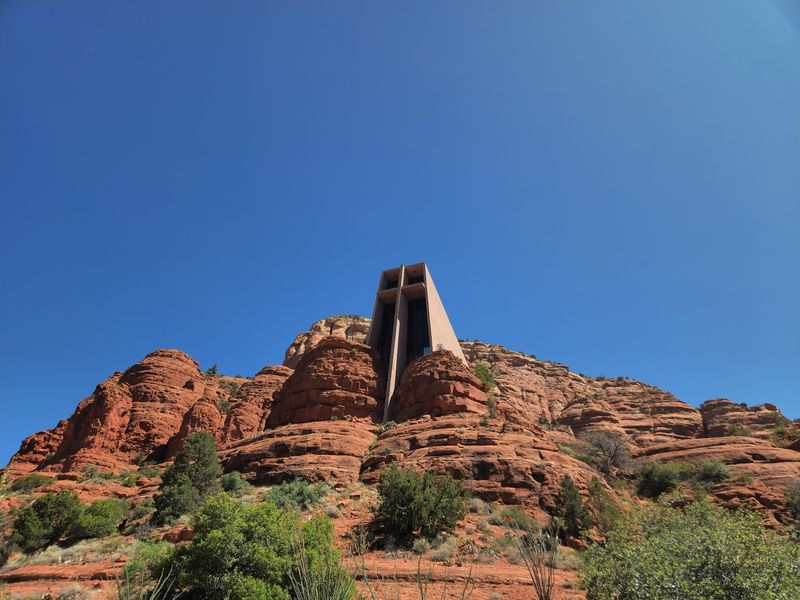
Some dreams simply need the right backdrop. Staude eventually brought her vision home to Arizona, and by the 1950s she owned a ranch in Sedona’s Oak Creek Canyon.
The scenery there seemed to call for exactly the kind of shrine she had imagined for decades. Towering red buttes, open skies, and rugged rock formations offered a natural cathedral waiting for its centerpiece.
Choosing a site, however, came with a complication.
The spot she wanted sat within the Coconino National Forest. Building on public forest land required special permission, which is not easy to get.
So Staude reached out to Senator Barry Goldwater, one of Arizona’s best-known political figures.
Goldwater helped secure the special-use permit that made construction possible. It is a wonderful slice of Arizona history, with a local rancher, a sculptor’s dream, and a famous senator all playing a part in the same story.
Anyone who enjoys state history will appreciate this chapter most. The chapel is not just a pretty building placed on a hill.
It stands as proof of stubborn hope, local connections, and a woman who refused to give up after a war derailed her first attempt. That persistence is part of what makes a visit feel meaningful.
Building Without Dynamite
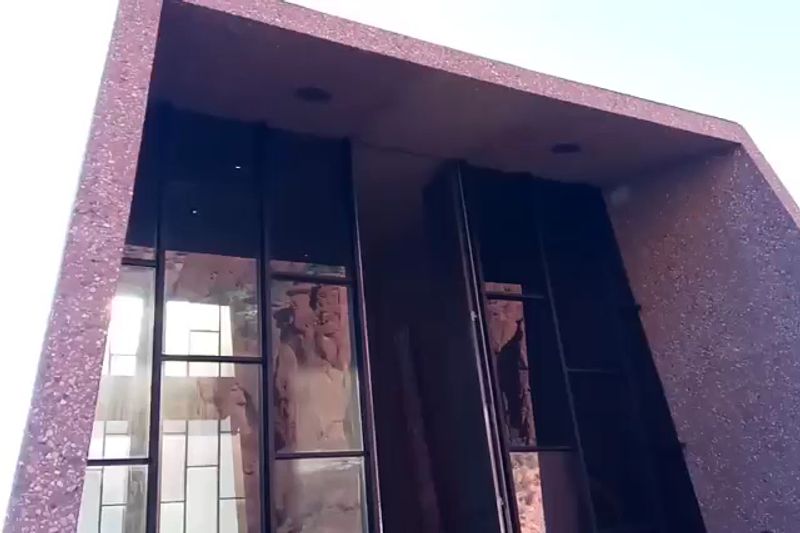
Twenty-five tons of rock were moved to make room for this chapel, and not one stick of dynamite was used. That careful approach says a lot about how much the builders respected the land.
The design came from August K. Strotz, with Richard Hein as project architect, both from the firm Anshen and Allen.
Work began around 1954 or 1955, and over roughly 18 months the chapel took shape. It was completed in 1956 at a cost of about $300,000.
The style blends modernist and organic architecture. Reinforced coarse-aggregate concrete, steel, and smoky gray glass create a bold form that still feels at home against the stone.
The giant cross appears to rise straight out of the earth instead of competing with it.
Visitors often remark on how simple the building looks up close. Rather than being flashy, it blends into its surroundings so naturally that it never distracts from the landscape.
That quiet confidence is exactly why architecture lovers make the trip.
Stand outside and notice where concrete meets sandstone. The seams are part of the magic.
It is a rare chance to see mid-century design and ancient geology sharing the same wall.
Awards, Wonders, and National Honors
Praise arrived almost immediately. Just one year after it opened, in 1957, the American Institute of Architects gave the chapel an Award of Honor for its design.
The recognition did not stop there. In 2007, Arizonans voted the Chapel of the Holy Cross one of the Seven Man-Made Wonders of Arizona.
That vote came from everyday residents, which makes it feel especially meaningful for a building so loved by locals.
Then in 2011, the chapel was added to the National Register of Historic Places. This formally acknowledged its architectural importance and helped secure its place in the nation’s history books.
Quick recap for your next trivia night:
1957 brought the architecture award. 2007 brought the Seven Wonders honor. 2011 brought the national historic listing.
Not bad for a project that started with a sculptor squinting up at a skyscraper decades earlier. Each honor adds another layer to the story, and knowing about them can make standing inside feel even more special.
You are not just visiting a pretty chapel. You are standing in one of Arizona’s officially celebrated treasures, and you can do it without paying a cent for admission.
Inside the Sanctuary
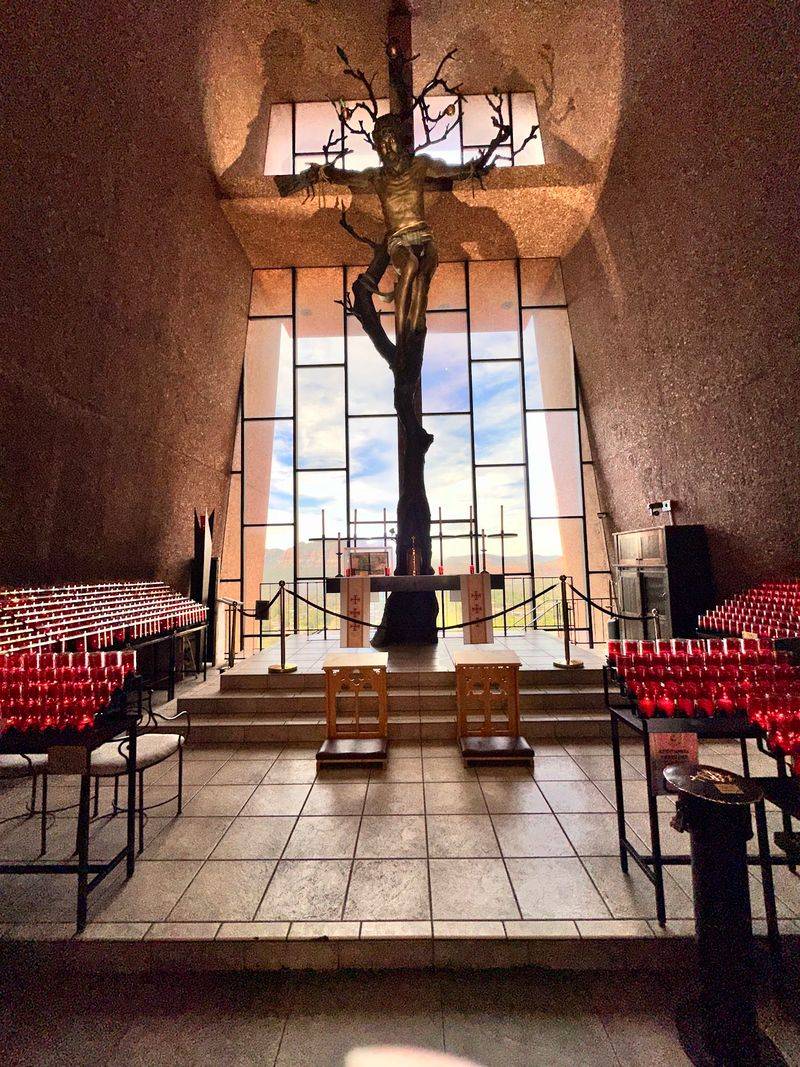
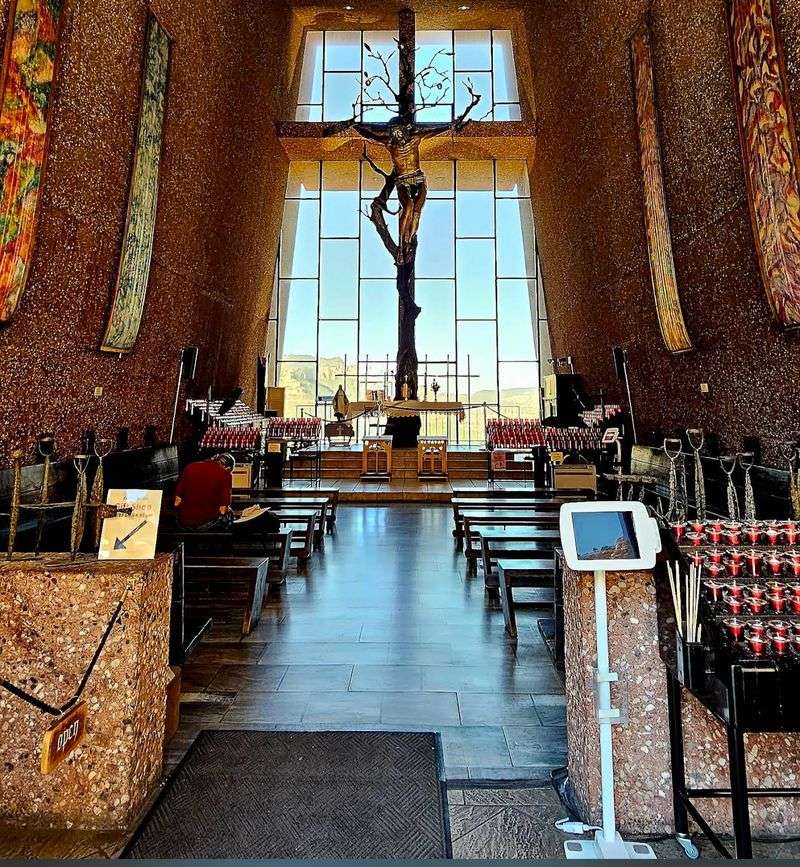
Step through the doors and the noise of the parking lot melts away. The interior is small, with pews that seat roughly 30 people, yet the huge window behind the altar makes the room feel enormous.
Many visitors say the view from inside is even better than the one outside. Red rock scenery fills the glass, and a figure of Jesus on the cross seems to look right at you.
A popular tip is to walk to the front row and stand on the brass footprints for the fullest view of those eyes.
Candles add a warm glow. Small votives in the back cost about $1, while larger five-day candles near the front run about $5.
A kiosk accepts cash or card for donations. Candles are not always available later in the day, so arriving early on a weekday may help if lighting one matters to you.
People of every background come through here. That matches Staude’s hope that the chapel would welcome everyone, built around the idea of finding God through art.
Keep your voice low and your phone quiet, since plenty of guests are praying.
Views, Statues, and the Walk Up
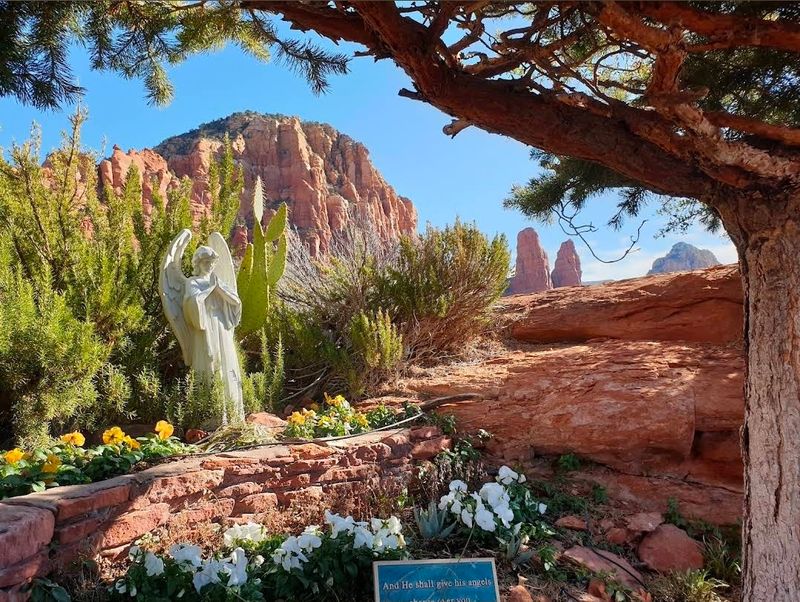
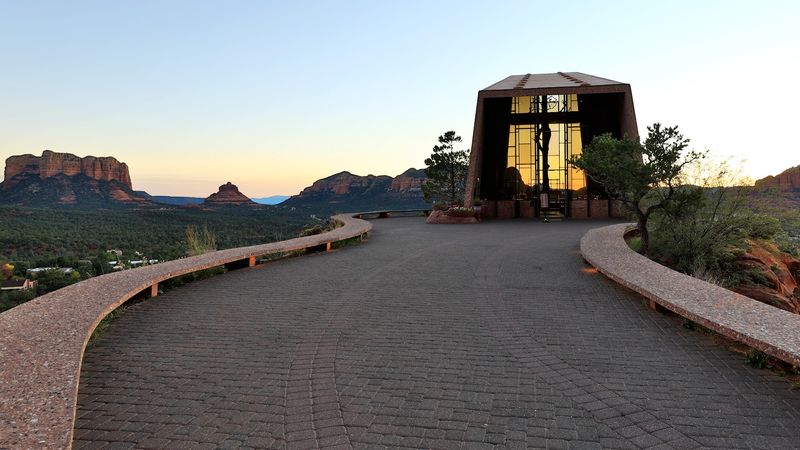
Half the fun happens before you even reach the door. Beautiful statues line the path leading up to the chapel, giving the climb a peaceful, almost pilgrimage-like feel.
Once you reach the top, the scenery opens in every direction. Sweeping panoramas of Sedona’s red rock formations stretch out below, and a pleasant breeze often drifts across the terrace.
Photographers find endless angles here, from wide landscape shots to close views of the cross itself.
Some visitors enjoy spotting shapes in the nearby rocks. A few say they can see a formation resembling the Blessed Mother holding Jesus just outside the chapel.
Whether you spot it or not, it makes a fun game for families.
Hikers can also reach the area on trails that lead toward the chapel. One visitor described an inner trail walk of around 20 minutes from the lower parking area, while a shorter five-minute climb works from closer spots.
Be aware that the hill is steep and there is no sidewalk on the road up. Keep children close, since you may share the path with moving cars.
Comfortable shoes and a water bottle make the short climb much more pleasant.
The Gift Shop Downstairs
Down a narrow staircase, tucked beneath the sanctuary, sits a gift shop that surprises many first-time visitors. Few people expect to find a store hiding in the basement of a chapel built into a cliff.
Shelves are packed with religious keepsakes, Catholic gifts, and souvenirs from Sedona. Many guests call it a really nice store with lots of beautiful items, and some say they plan to return just to shop again on their next trip.
A little planning helps. The space is tight and can feel crowded when the chapel is busy, which makes moving around tricky.
Folks using wheelchairs or walkers may find it especially hard to navigate, since the stairs are narrow.
Shoppers looking for general Arizona trinkets may find the selection leans mostly toward faith-based pieces. For anyone hoping to bring home a rosary, candle, or cross with a meaningful story attached, though, it is a lovely stop.
Timing matters too. The shop has been known to close a bit earlier than the chapel on some days, so browse first if souvenirs are high on your list.
A small keepsake from here can serve as a sweet reminder of a quiet morning among the red rocks.
Parking, Shuttles, and Hours
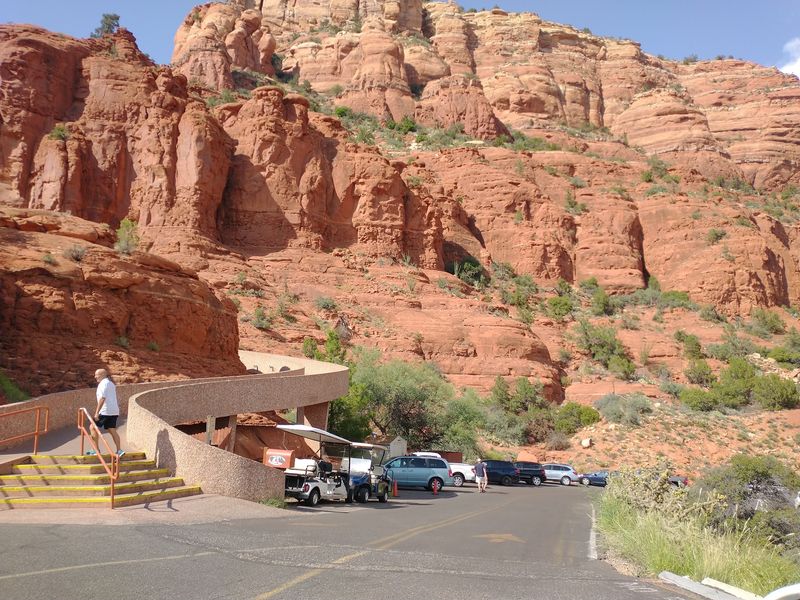
Parking is the one challenge nearly everyone mentions, so a smart plan makes all the difference. The chapel is open daily from 9 AM to 5 PM, and lots can fill within minutes of opening.
One family arrived around 10:30 AM and waited about 15 minutes for a space. Another showed up just before 9 and already found lots filling fast.
Weekday afternoons, like a Thursday, tend to be easier than weekends and holidays.
Here is the insider tip. Do not grab the very first parking area if you want to skip the climb.
More spaces sit further up the steep, winding road closer to the chapel, including a handicap lot at the top. Being dropped off also works well.
Friendly staff drive free golf cart shuttles up and down the hill, often sharing trail and parking tips along the way. Loaner wheelchairs and walkers are available too.
The chapel itself is wheelchair accessible, though surrounding paths can be limited.
Restrooms are only porta-potties near the parking area at the bottom, with none at the chapel. Most visitors spend about an hour from start to finish, and an information booth near the entrance offers extra background.
A Free Landmark Worth the Drive
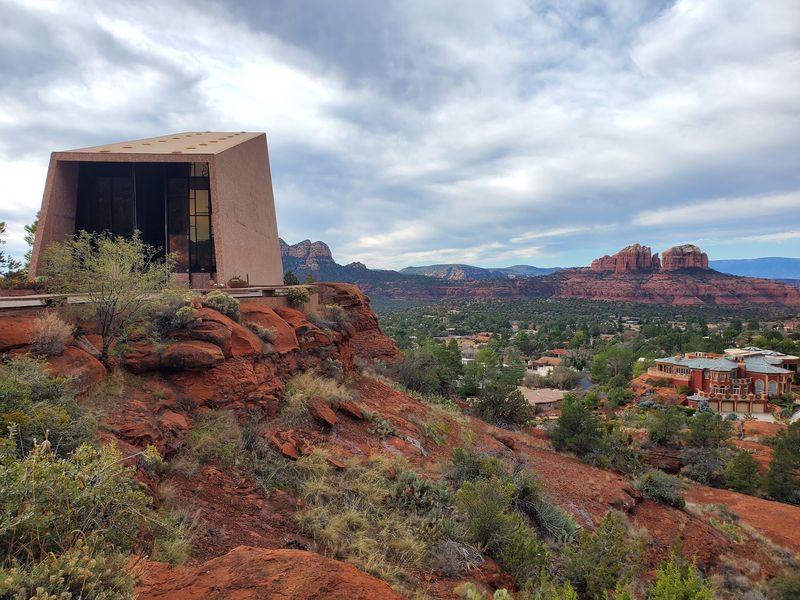
Few Arizona day trips deliver this much story for zero dollars. Between the skyscraper vision, the Budapest detour, the senator’s help, and the rock carved without dynamite, the chapel feels like a legend you can actually touch.
Visitors consistently describe the experience as peaceful, calm, and deeply moving, whether they arrive with strong faith or none at all. The architecture impresses history buffs, the views thrill photographers, and the quiet sanctuary gives everyone a moment to breathe.
It suits retirees looking for an easy outing, families wanting a short walk with a big payoff, and road-trippers passing through Sedona. Thanks to golf carts and loaner wheelchairs, even guests with limited mobility can usually reach the top.
A few tips round things out. Come early or on a weekday, bring small bills or a card for candles, and pack water for the hill.
Spring and fall offer the most comfortable weather for lingering on the terrace.
Some people who first visited 20 years ago say it still carries the same spiritual feeling today, even with bigger crowds. That lasting magic might be the best proof of all.
Marguerite Staude’s dream really did come true, and it is waiting for you in the red rocks.