
The Strange Story About A Wyoming Town Where Dinosaur Bones Changed Everything People Knew About The Area
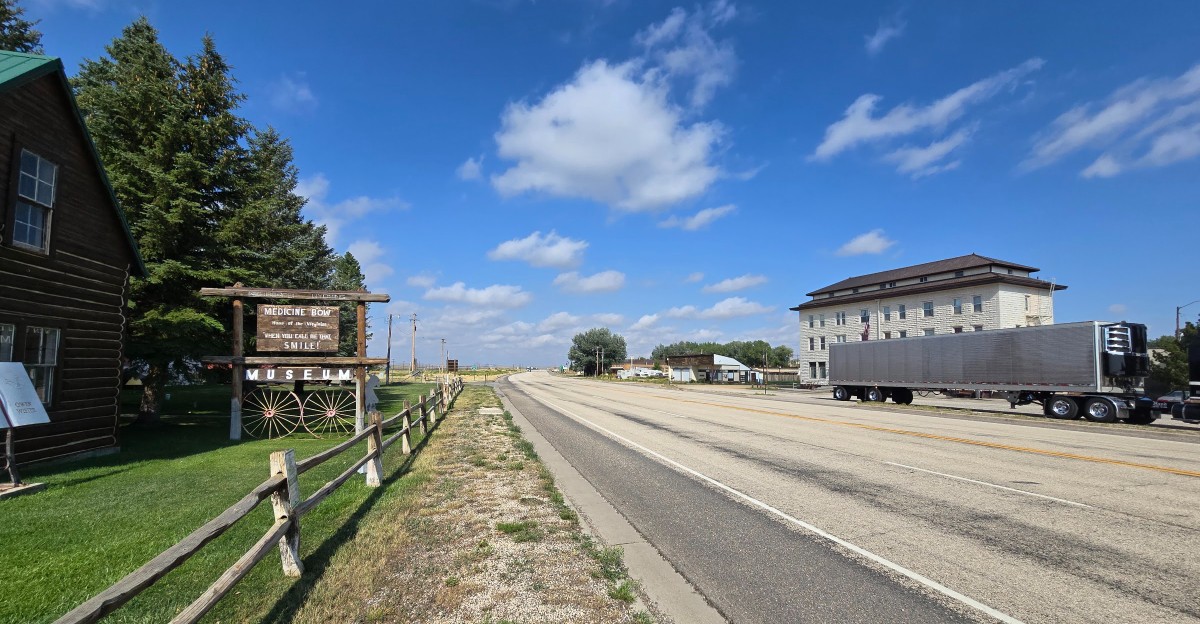
A Wyoming town once built a cabin out of dinosaur bones. Yes, actual bones.
The kind that make you wonder who looked at a pile of fossils and thought, “Those would make excellent walls.”
The odd little structure was only the beginning. A discovery in the surrounding prairie put this quiet corner of Wyoming on the scientific map and set off a rivalry that changed how people understood the prehistoric West.
I love a mystery that starts with something so bizarre you almost assume someone made it up. Here, the strangest part is that the bones were only one piece of the story.
Today, the prairie looks peaceful enough. But beneath that wide-open landscape lies a discovery that gave this little town a very different claim to fame.
A Railroad Worker Spotted Dinosaur Bones Near The Tracks
Back in 1877, Union Pacific worker William Harlow Reed discovered huge fossil bones near Como Bluff, east of Medicine Bow, Wyoming. He later shared the discovery with station agent William Edwards Carlin.
The spot was a long ridge called Como Bluff. Wind and weather had peeled back its rock layers, exposing fossils that had waited around for millions of years.
Reed and Carlin did something smart. They wrote to Othniel Charles Marsh, a famous paleontologist at Yale, and hinted at a giant discovery.
They even used fake names in their first letter. Apparently, they worried someone else might grab the treasure before them, which turned out to be a reasonable fear.
Marsh sent help, and the digging started fast. Crews soon pulled out bones so large that hauling them felt like moving furniture made of stone.
Before that letter, most people saw this area as a railroad stop with lots of wind. Afterward, scientists saw a window into the Jurassic period.
Not bad for a couple of guys who were just doing their jobs along the line.
A Fossil Feud Turned The Prairie Into A Scientific Battleground
Grudges can get weird, and the rivalry between Othniel Marsh and Edward Drinker Cope got very weird. These two scientists competed nonstop to name new dinosaurs first.
Como Bluff quickly became one of the hottest spots in that contest. Marsh wanted every bone kept away from Cope, and Cope wanted in anyway.
Historians call this rivalry the Bone Wars, and the stories sound like a soap opera. Spies, secret shipments, and smashed fossils all show up in accounts from the time.
Some diggers reportedly broke leftover bones so the other side couldn’t use them. That’s painful to think about if you love fossils.
Still, the rivalry had a bright side. Because both men raced so hard, dozens of new species got named in just a few years.
Wyoming went from blank space on a paleontology map to a must-dig destination. The quarries near Medicine Bow helped push American science forward at lightning speed.
Next time you argue over the last slice of pizza, remember these two. At least your feud probably won’t end up in history books or museum halls across the country.
Some Of The Most Famous Dinosaurs Ever Have Wyoming Roots
Stegosaurus, Allosaurus, Apatosaurus, Camarasaurus, and Diplodocus all turned up in the rock around Como Bluff. That lineup reads like the cast of every dinosaur movie you watched as a kid.
Many of these fossils traveled east to Yale’s Peabody Museum. Others ended up in collections that scientists still study today.
Here’s what made the site so special. The bones came from the Morrison Formation, a rock layer packed with Late Jurassic life.
Finding so many big plant-eaters and meat-eaters in one area gave researchers a fuller picture. They could start to see how an entire ancient ecosystem fit together.
Before these finds, many dinosaurs were known only from scraps. Suddenly, scientists had huge skeletons to measure, compare, and argue about.
So when a kid somewhere points at a Stegosaurus and grins, there’s a fair chance its story connects to this patch of Wyoming. Pretty wild for an area most drivers zip past on the highway.
Want a fun challenge? Try counting how many famous dinosaur species you can name.
Odds are, a good chunk of them owe something to the hills east of Medicine Bow.
Someone Actually Built A Cabin Out Of Dinosaur Bones
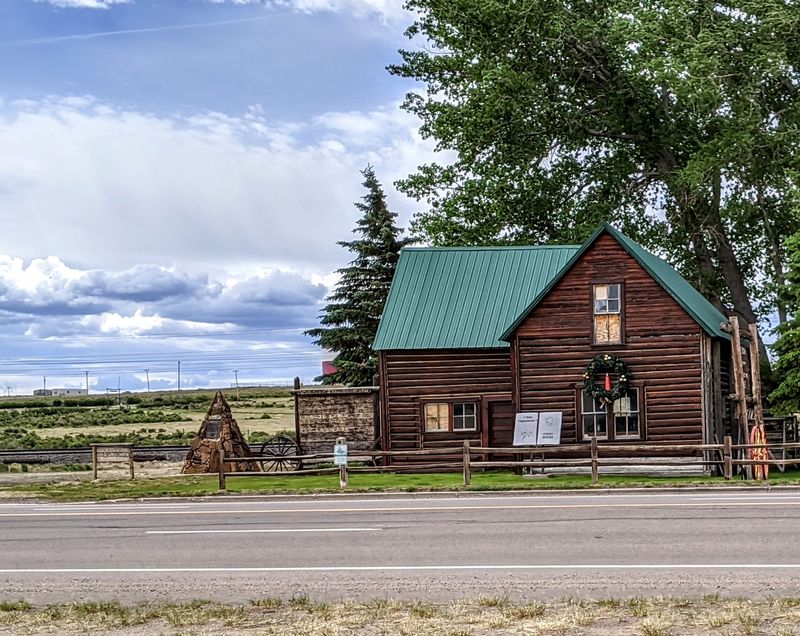
Most folks build with logs or bricks. Thomas Boylan looked at a field full of broken dinosaur bones and thought, why not?
In the early 1930s, he gathered 5,796 fossil pieces from the Como Bluff area. He then stacked and mortared them into a small building known as the Fossil Cabin.
The finished structure reportedly weighs around 52 tons. That’s a lot of ancient skeleton holding up a roof.
Ripley’s Believe It or Not! later called it the world’s oldest building. Technically, the walls are millions of years old, so the joke kind of works.
For decades, the cabin stood along the Lincoln Highway and pulled in curious travelers. It became one of those quirky roadside stops that families remembered long after the trip.
Today, scientists would never use fossils as building blocks. The cabin is a snapshot of a time when people treated old bones like handy rocks.
Still, you have to admire the creativity. Boylan turned leftovers from the great fossil rush into a landmark that keeps the Medicine Bow area on the map for dinosaur fans.
The Bone Cabin Took A Slow, Careful Road Trip Into Town
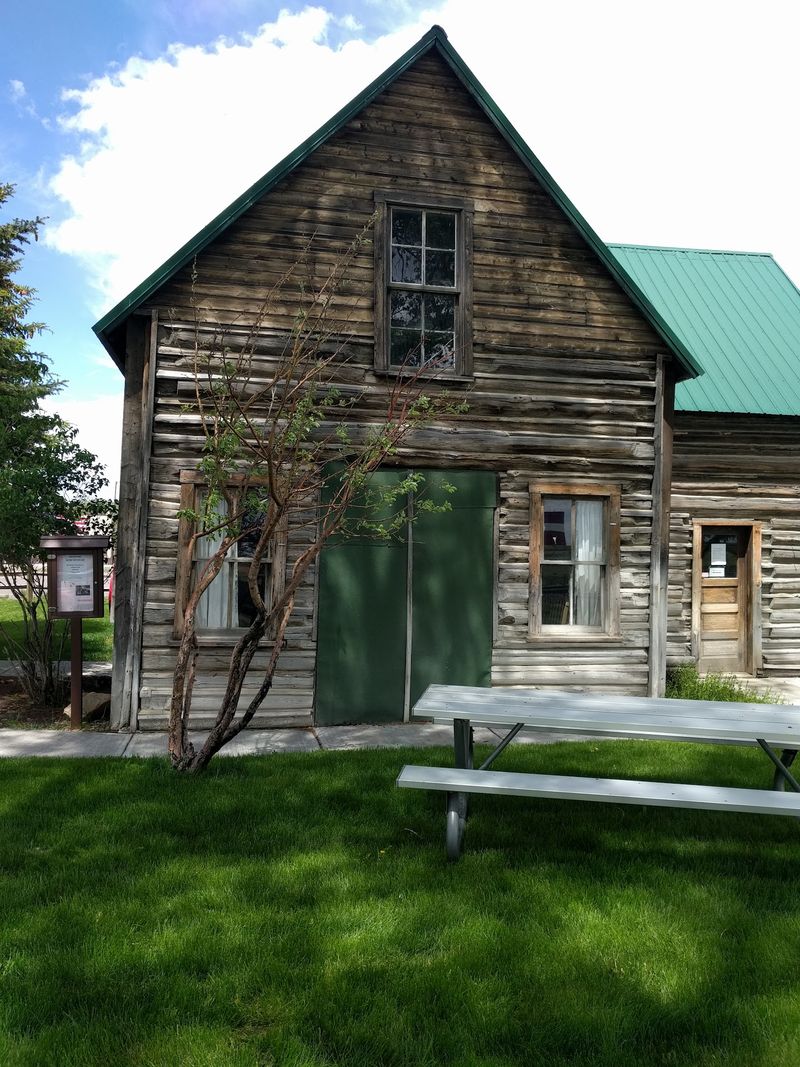
Buildings usually stay put. The Fossil Cabin didn’t get that memo.
Its old roadside spot left it exposed and vulnerable for years. So supporters arranged to move the entire 52-ton structure about seven miles to a safer home in Medicine Bow.
Think about the stress of that job. Every one of those thousands of fossil pieces had to survive the trip in one piece.
The move happened slowly and carefully, like the world’s most nerve-racking parade. Nobody wanted to explain how a Jurassic wall cracked on a Wyoming highway.
The cabin now stands beside the Medicine Bow Museum following its May 2026 relocation. However, it remains fenced off while repairs and insurance issues are resolved.
Visitors can view it from outside the fence, but public access has not yet reopened.
I find it fitting that the cabin traveled at all. The bones inside it already made one huge journey through time, so a short drive seems almost relaxing by comparison.
If you’re planning a visit, look for the cabin near the town’s other historic spots. It’s hard to miss once you know what those walls are made of.
An Old Train Depot Now Guards The Town’s Best Stories
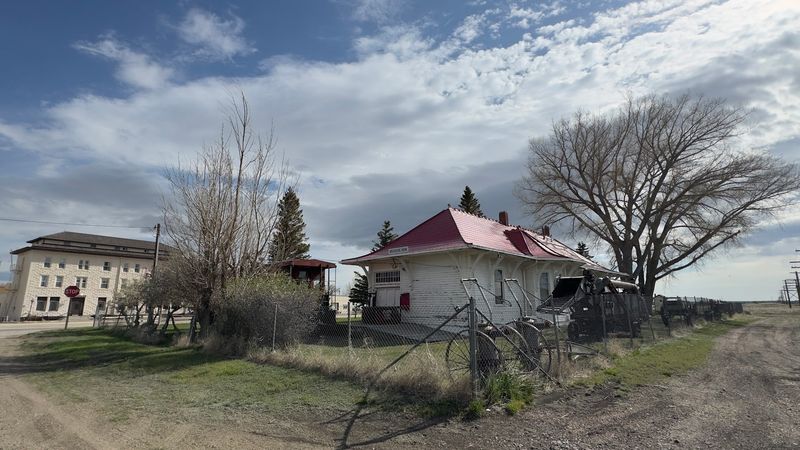
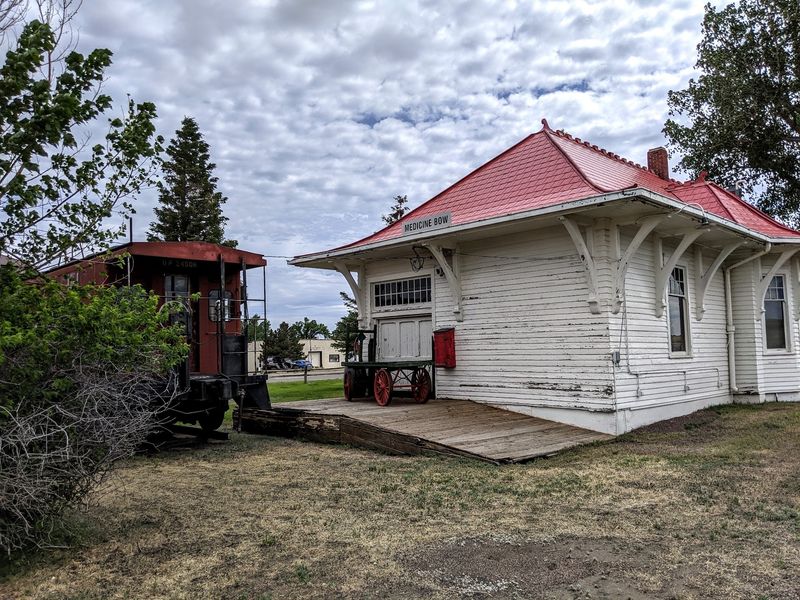
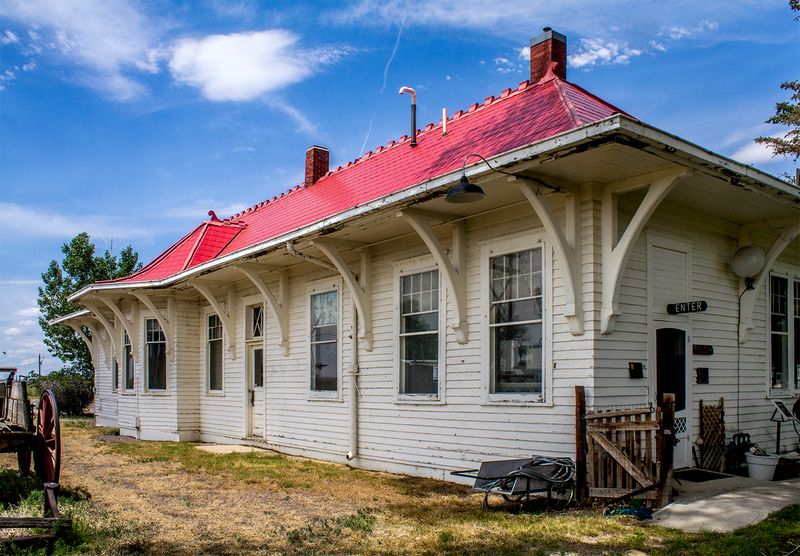
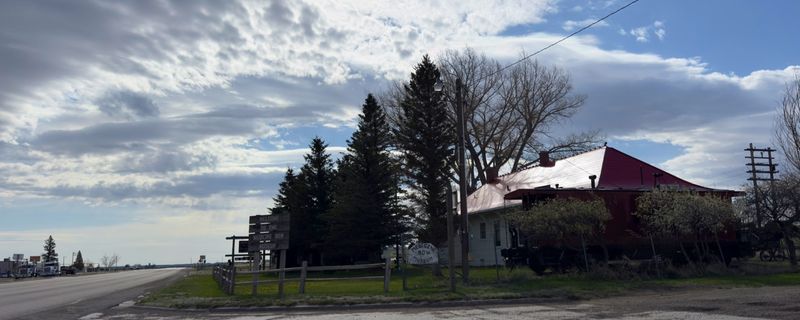
Trains built this town, so it makes sense that its history lives in a depot. The Medicine Bow Museum sits inside the old Union Pacific station built in 1913.
The building is listed on the National Register of Historic Places. It’s a handsome reminder of the days when rail travel shaped life across southern Wyoming.
Inside, the museum shares the bigger story of the community. Railroad history, ranching life, and local characters all get their moment.
That mix matters because the dinosaur tale doesn’t stand alone. The same railroad that carried passengers also brought the workers who first noticed those giant bones.
A stop here helps the whole puzzle click together. You start seeing how trains, fossils, and frontier grit overlapped in one small place.
Kids usually love train stuff anyway. Pair that with a nearby bone cabin, and you’ve got a pretty easy sell for a family road trip.
Check hours before you go, since small-town museums often run on seasonal schedules. A little planning keeps you from staring sadly at a locked door while the Wyoming wind messes up your hair.
Cowboy Fans Will Recognize A Very Famous Line From Here
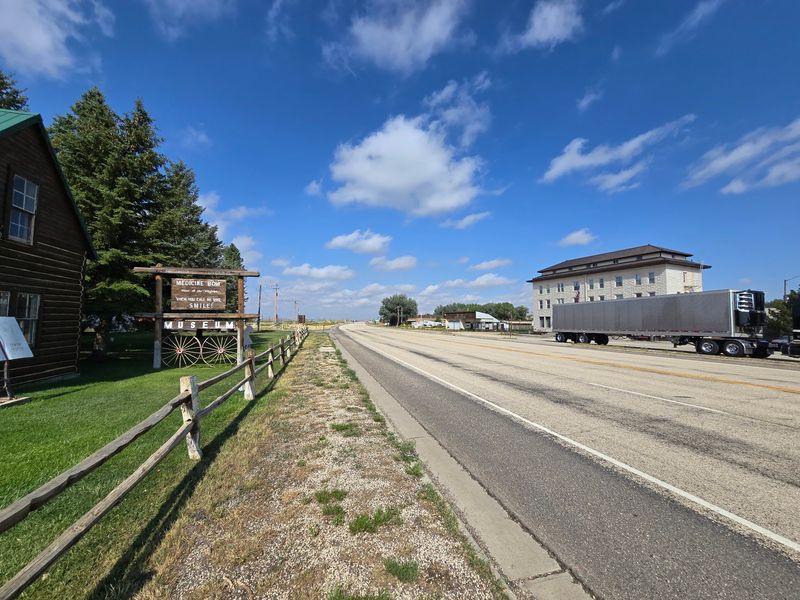
When you call me that, smile! That classic line comes from The Virginian, a 1902 novel by Owen Wister.
Wister set part of his story in Medicine Bow. The book became one of the first great Western novels and shaped how people imagined cowboys for decades.
The town embraced that fame in a big way. The Virginian Hotel, completed in the early 1910s, carries the novel’s name and still anchors the community.
Its sturdy design stands out in a town this size. It feels like a piece of the old West that simply refused to leave.
So Medicine Bow has a funny double identity. Scientists know it for Jurassic giants, while book lovers know it for a quiet hero with a cowboy hat.
Honestly, few towns can claim both. Most places are lucky to get one good story, let alone two that changed how the world saw an entire region.
If you enjoy Westerns, read the book before your trip. Standing in the town that inspired it makes the pages feel a lot more real.
You Can Find It Right On America’s First Coast-To-Coast Road
Getting here is half the fun. Medicine Bow sits right on U.S.
Route 30, which follows the historic Lincoln Highway.
That road was America’s first transcontinental highway for cars. Early drivers bounced across this stretch long before smooth interstates existed.
For directions, use Medicine Bow, WY 82329, USA. The town lives in Carbon County, between Laramie and Rawlins.
It’s small, too. The 2020 census counted 245 residents, so you won’t need a map just to find Main Street.
Choosing Route 30 over Interstate 80 adds some scenery and plenty of history. You’ll pass wide plains, rolling hills, and sky that seems to go on forever.
Pack snacks and water before you leave a bigger city. Services can be spread out in rural Wyoming, and gas stations don’t pop up every few miles.
Also, keep an eye on the weather. Wind is a serious part of life here, and winter storms can roll in quickly.
A flexible schedule makes the trip calmer and safer for everyone in the car.
Fierce Wind Turned This Place Into An Energy Experiment Too
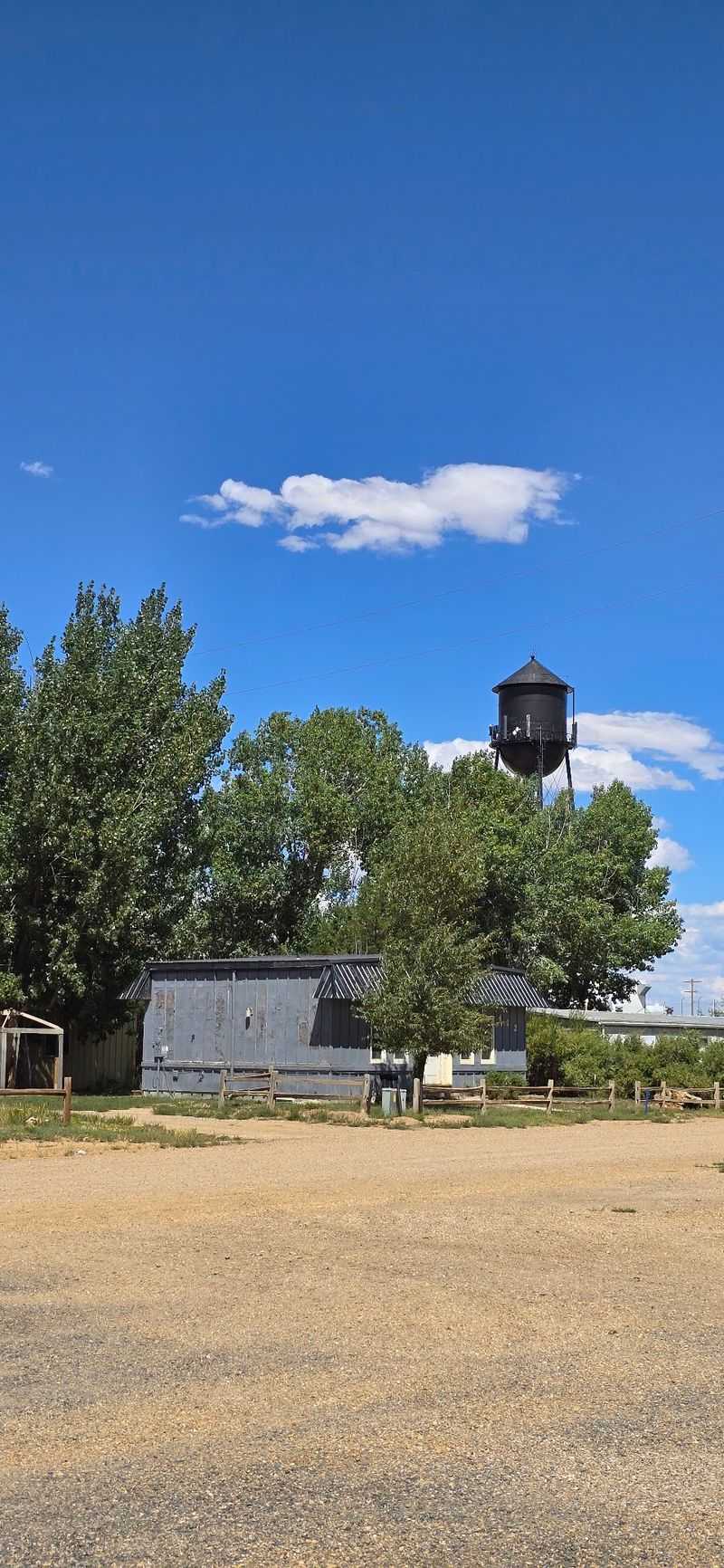
Those same gusts that toss tumbleweeds around also caught the attention of energy researchers. In the early 1980s, large experimental wind turbines went up near Medicine Bow as part of federal research.
Engineers wanted to test how giant machines could turn steady wind into electricity. This corner of Wyoming offered plenty of the main ingredient.
It’s a neat echo of the dinosaur story. Once again, scientists looked at this stretch of prairie and saw something the rest of the world had overlooked.
Today, wind energy remains a big topic across southern Wyoming. Turbines dot many ridges in the region, spinning like oversized pinwheels.
For visitors, that wind is worth respecting. Hold onto your hat, park facing the right way, and keep car doors firmly in hand.
Honestly, the landscape tells the whole story here. Ancient rock layers hold Jurassic giants, while modern turbines catch breezes overhead.
Few small towns can connect dinosaurs, cowboys, trains, and clean energy in one quick stop. Medicine Bow pulls it off with only a few hundred residents, which might be its most impressive trick of all.