
This Arizona Mall Food Court Hides A Filipino Counter Dishing Up Adobo, Pancit, And Crispy Pork Belly
Pickled garlic, served on the side so you can pile it onto already garlicky rice. That one small detail tells you a lot about the Filipino counter I can’t stop thinking about.
It sits in a shopping mall food court in Arizona, of all places. Next door, the usual chain options hum along while this little kitchen ladles out adobo, pancit, and crispy pork belly.
I like how the whole operation started on wheels. It rolled around as a food truck before making the leap to a permanent counter.
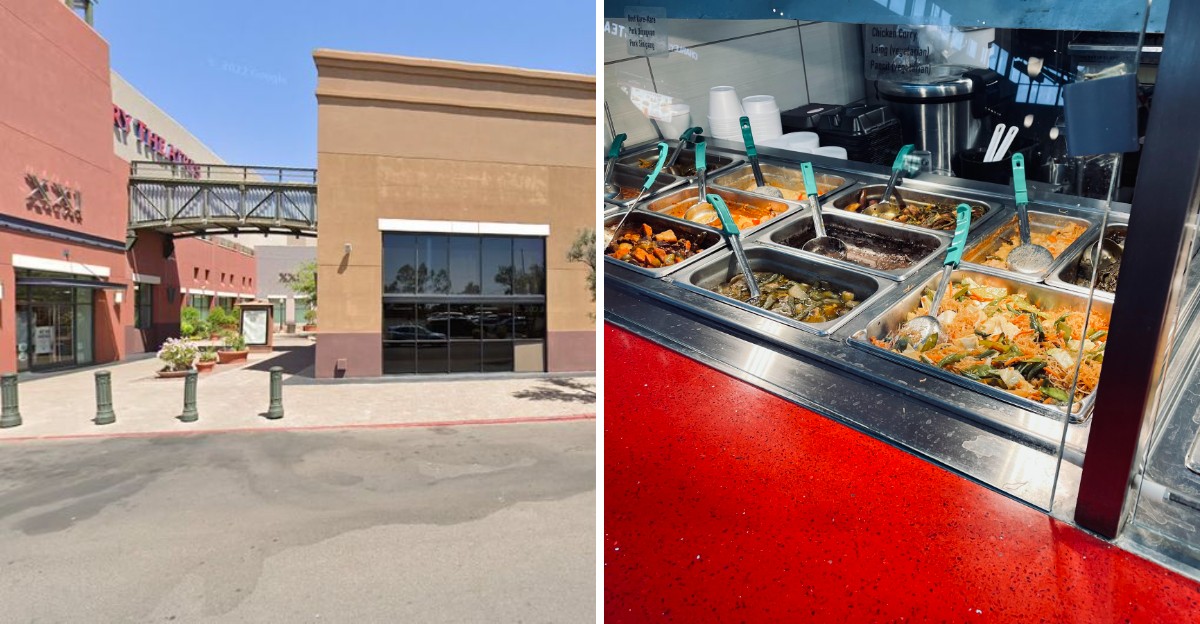
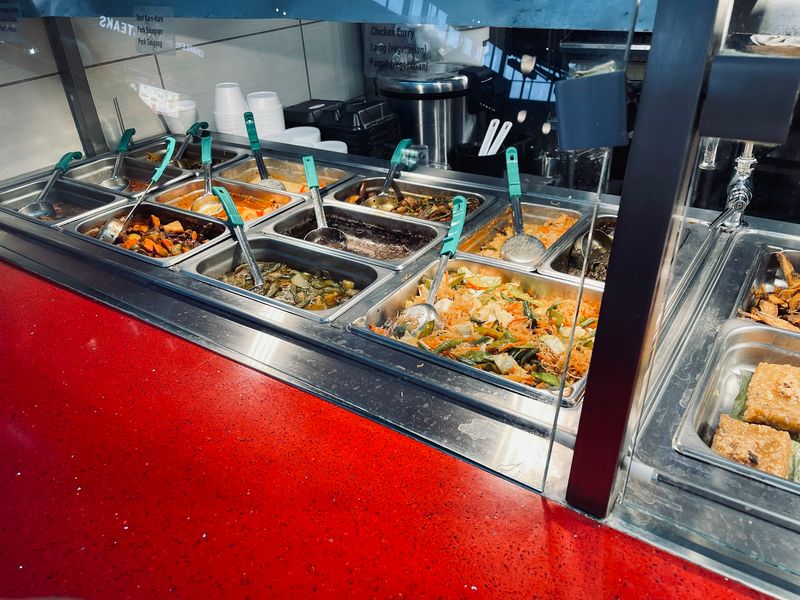
The steam table gets restocked with fresh trays carried out from the back kitchen.
I believe food like this deserves a wider audience. Filipino home cooking is still surprisingly hard to find in many towns.
So how did a mall become the place to find it?
The Mall Food Court Counter Serving Real Filipino Comfort Food
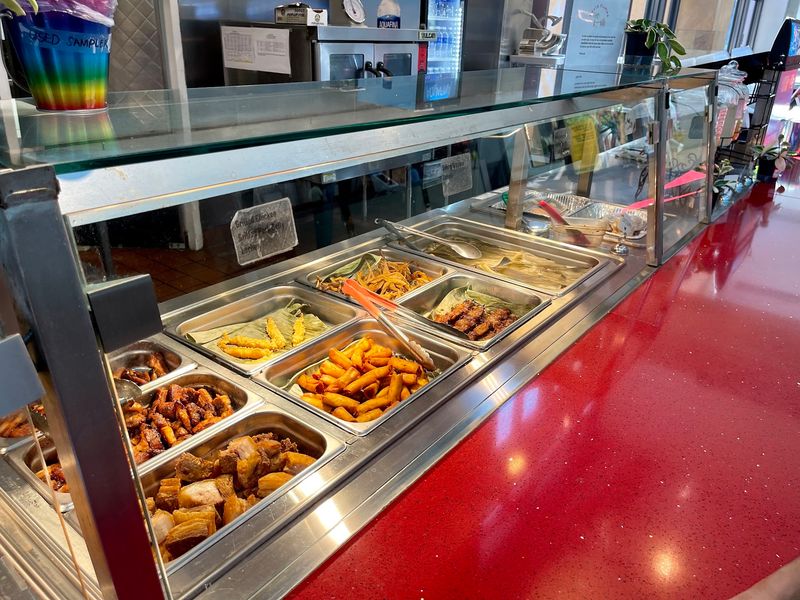
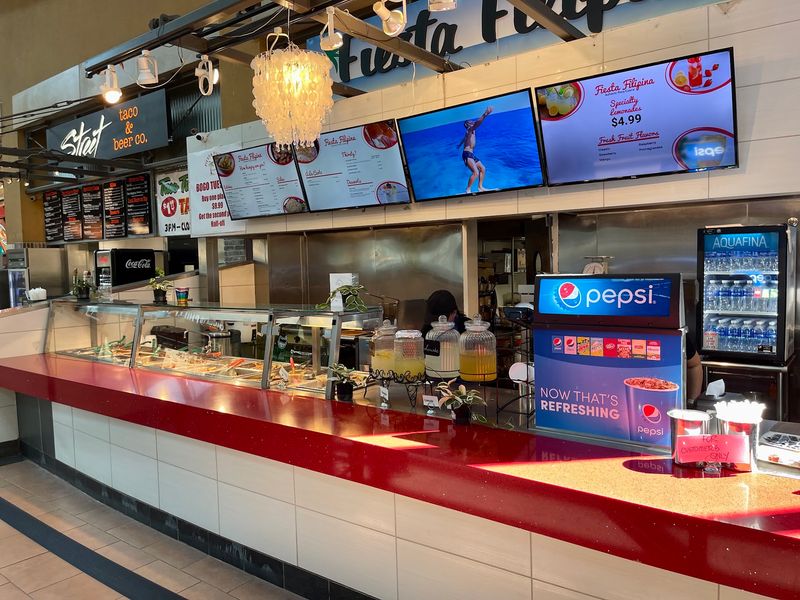
Food courts usually mean pretzels, orange chicken, and a lemonade the size of a fire hydrant. Fiesta Filipina Asian Express breaks that pattern in a very delicious way.
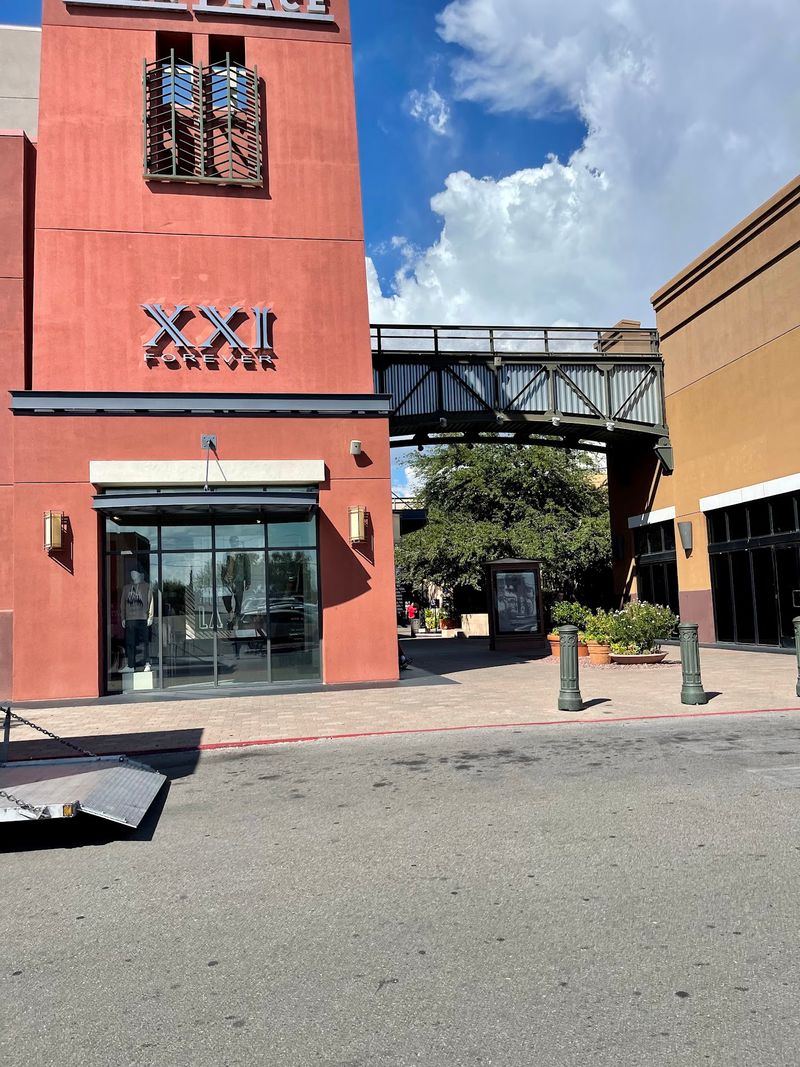
The counter sits inside Park Place in Tucson, near the exit doors that lead out to the courtyard. It works a lot like the quick-service spots around it, with ready-made dishes waiting on a steam table.
The difference is what’s in those trays. Instead of generic stir-fry, you’ll find Filipino staples like adobo, pancit, lumpia, and beef caldereta.
Those are dishes many families across the Philippines know from their own kitchens.
Fiesta Filipina Asian Express is locally owned, which gives it a different feel from the national names nearby. The cooking leans toward home-style flavors rather than an Americanized take on Asian food.
That alone makes it a standout among mall dining options in Arizona.
Speed is part of the appeal too. Because the food is already prepared, getting a plate doesn’t take long at all.
You can shop, grab lunch, and keep moving without a long wait.
So yes, this is a mall counter. It just happens to be one where you can eat like you were invited to a Filipino family dinner.
How A Beloved Food Truck Found A Permanent Home
Long before the food court counter, there were wheels. Fiesta Filipina began life as a food truck rolling around Tucson.
That food truck built a loyal following one plate at a time. Some fans followed the business from the truck straight to its new brick-and-mortar spot.
The move to a permanent location was a big step. Running a kitchen with a fixed address brings steady hours, rent, and a whole new set of challenges.
Still, the switch gave Tucson a reliable place to find Filipino cooking without chasing a truck around town.
The owner, Thelma, is a big part of the story. Her pride in Filipino culture and food comes through in how the counter runs.
She’s been known to walk newcomers through the dishes personally.
I love that kind of origin story. It’s small, scrappy, and rooted in the community instead of a corporate playbook.
A food truck growing into a storefront usually means people kept showing up hungry.
The owner also replies warmly to feedback and has adjusted recipes based on suggestions. The kare-kare recipe, for example, was reworked after customer input.
That kind of listening keeps a small family business moving forward.
Build Your Own Plate And Watch It Fill Up Fast
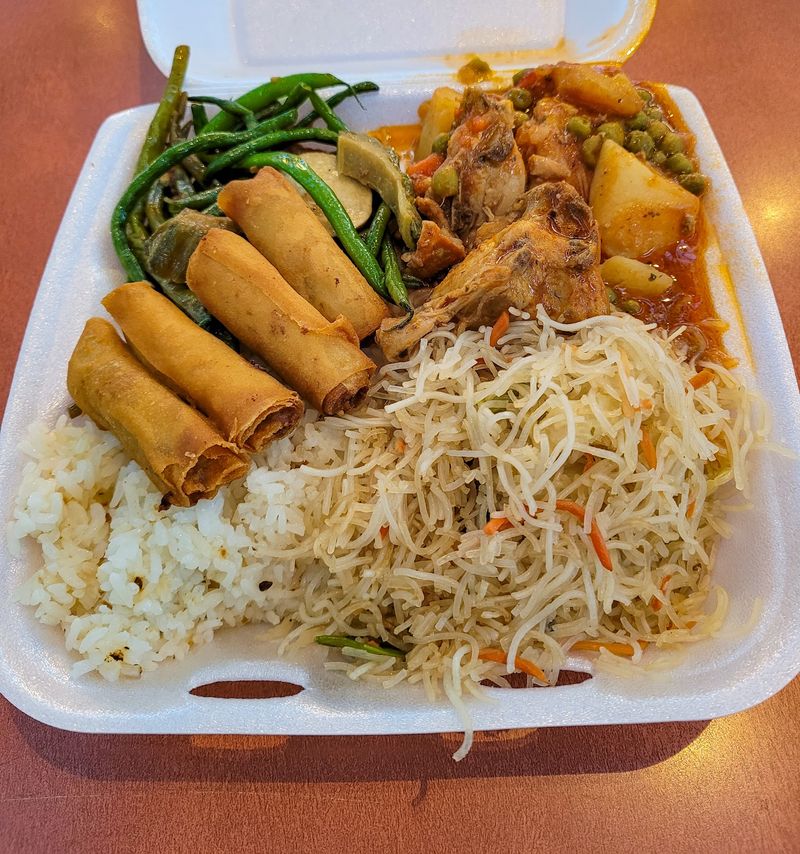
Two entrees or three? That’s the big decision at the counter, and neither answer is wrong.
Plates come with a choice of entrees plus a side and a soup. The regular plate includes two entrees, while the large plate bumps that up to three.
Either way, you get a little tour of Filipino cooking in one sitting.
The large plate is serious business. Some diners end up packing enough leftovers for another full meal.
If you’re sharing or just very hungry, that’s a smart move.
For a first visit, mixing textures works well. Try something saucy, something crispy, and something with vegetables.
A tomato-based stew next to crunchy pork belly makes a fun contrast.
Prices feel reasonable for a mall setting, especially when you consider the amount of food. Portion opinions do vary, so the bigger plate is the safer bet for big appetites.
Menu prices and options can shift, so it’s worth checking at the counter.
The setup also takes the pressure off newcomers. You can point, ask questions, and build a plate based on what looks good.
It’s a low-risk way to try a cuisine you might not know yet.
Garlic Rice Deserves Its Own Fan Club
Plain white rice could have done the job. Fiesta Filipina Asian Express went with garlic rice instead, and that choice changes everything.
Garlic rice is a classic Filipino side, often called sinangag back home. It turns a basic starch into something you actually look forward to.
At this counter, it may be the single most talked-about item on the plate.
The rice arrives nice and garlicky on its own. Then comes a bonus: a side of pickled garlic you can add for extra tang.
It brightens each bite and cuts through richer dishes like pork belly.
I can’t imagine skipping it. Even if you’re unsure about the entrees, the rice makes a safe and satisfying anchor.
It pairs well with just about everything in the steam table.
There’s a reason Filipino meals revolve around rice. Saucy dishes like adobo and caldereta need something to soak up all that flavor.
Garlic rice does that job with a lot more personality.
Here’s a tip if you love bold flavor. Spoon some of that pickled garlic over the rice before adding your entrees.
Your taste buds will thank you, even if your breath has other opinions.
Pork Belly Two Ways, And You Might Want Both
Crispy or grilled, the pork belly here has earned a loyal following. It’s one of the dishes people mention again and again.
The grilled version gets a soy-based treatment and a smoky barbecue finish. It comes out tender and full of flavor.
Fair warning, though, it can lean on the salty side.
Then there’s lechon kawali, the fried pork belly that crackles. It’s crispy outside and soft within, with enough fat to melt nicely.
That crunch-meets-tender combination is a big reason it’s so popular.
Pair the lechon kawali with Mang Tomas sauce for the full experience. Mang Tomas is a sweet, tangy Filipino sauce traditionally served with roasted pork.
It’s a pairing many Filipino families would call non-negotiable.
Lechon itself has also made appearances on the menu. Availability seems to come and go, so it’s worth asking when you stop by.
If it’s there, consider it a lucky day.
Pork belly fans in Arizona don’t always have many Filipino options. Here you get two styles under one roof.
Grab a little of each on a large plate, and let the garlic rice balance things out.
Saucy Stews That Taste Like Sunday At Lola’s
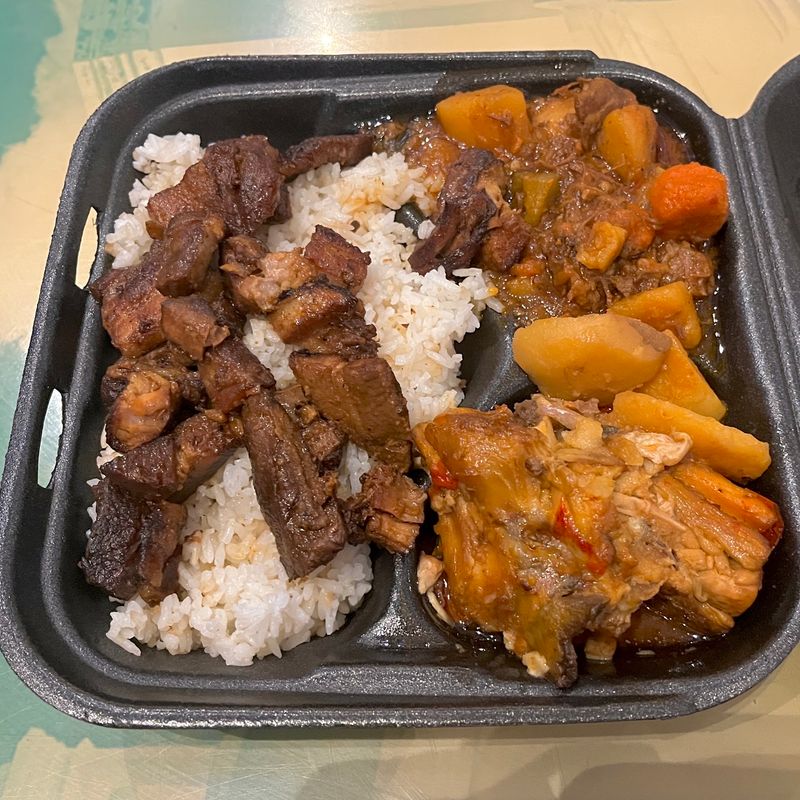
Adobo leads the pack, and for good reason. It’s often called the national dish of the Philippines, and this counter offers both pork and chicken versions.
Adobo is braised in vinegar, soy sauce, garlic, and bay leaf. The result is tangy, savory, and deeply comforting.
It’s an easy entry point if you’re new to Filipino food.
Beef caldereta brings a heavier, heartier mood. The tomato-based stew comes loaded with vegetables and has a rich, almost creamy feel.
Some consider it the best thing on the menu.
Chicken afritada shares the tomato base but tastes completely different. It’s lighter, with a gentle chicken broth flavor and a hint of sweet and sour.
Ordering both side by side is a fun lesson in how varied Filipino cooking can be.
Chicken curry has also shown up on the steam table. Kare-kare, the peanut-based oxtail stew, has appeared too, with its recipe adjusted over time.
These dishes are slow-cooked comfort in a bowl. They’re the kind of meals that taste like home to many Filipino families.
Spooned over garlic rice, they make a mall lunch feel surprisingly personal.
Brave Bites For Curious Eaters
Ready to go beyond adobo? A few dishes on the menu reward a little adventure.
Dinuguan is the boldest of the bunch. It’s a savory Filipino pork stew made with a rich, dark sauce.
Some folks call it chocolate meat because of its color, though there’s no chocolate involved.
Laing is another gem for the curious. It’s a leafy green dish cooked down until deeply savory.
Its strong umami flavor surprises people who expect plain greens.
Sinigang is the famous Filipino sour soup. The version here has a subtle spiciness and includes daikon.
It’s tangy, warming, and a nice reset between heavier bites.
Not sure about something? The staff has been known to offer a taste before you commit.
That small gesture makes trying new dishes much less intimidating.
I like that the menu doesn’t water things down. These are dishes Filipino families actually cook, not crowd-pleasing shortcuts.
If you ever wanted to explore past the familiar favorites, this counter makes it easy.
Just remember that steam-table selections can rotate. What you find on one visit might be different the next.
That’s part of the fun.
Crunchy Lumpia, Slurpable Pancit, And Skewers On The Side
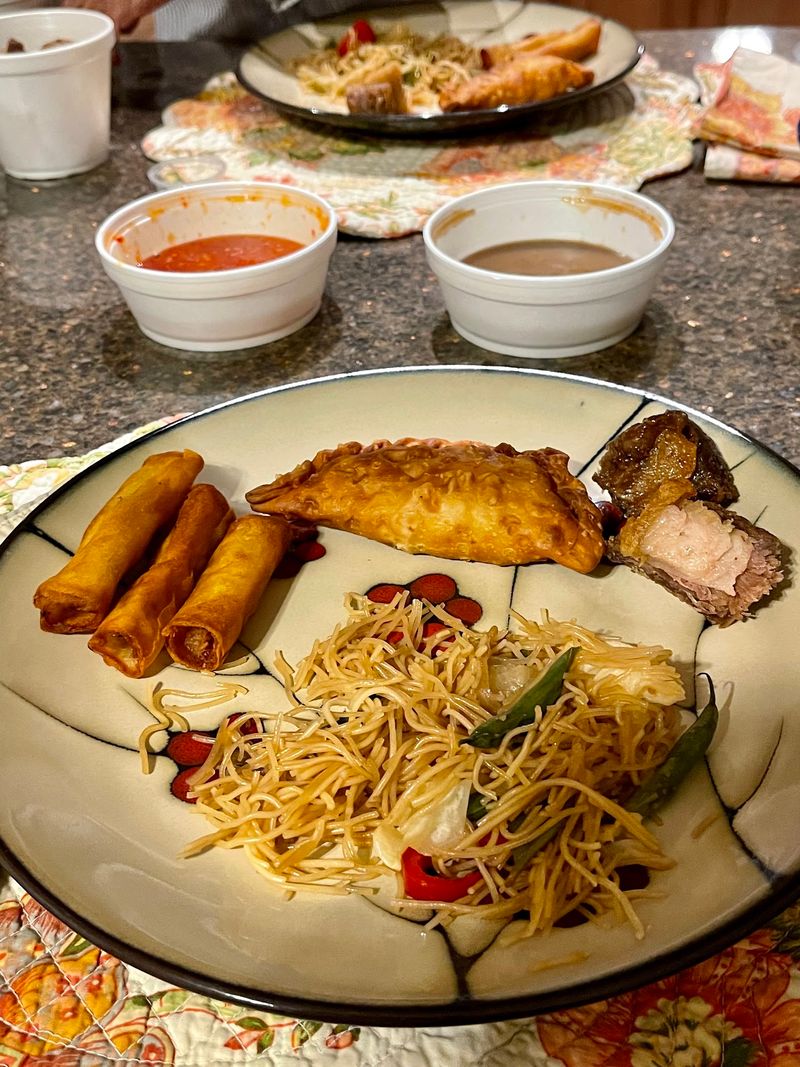
Every Filipino party has a lumpia tray, and it never lasts long. The ones at Fiesta Filipina Asian Express have plenty of fans.
Lumpia are slim, crispy Filipino egg rolls. They’re perfect for snacking, sharing, or tossing onto a plate as a crunchy extra.
Fair warning, it’s hard to stop at one.
Pancit holds its own as a fan favorite. The pancit bihon features thin rice noodles tossed with vegetables.
In Filipino tradition, noodles are often served at celebrations as a wish for long life.
Beef skewers round out the snackable side of the menu. They make an easy grab for anyone who wants something simple and savory.
There’s also banana lumpia on the sweet side. It’s a banana wrapped and fried until crisp, a popular Filipino street treat.
These items work well for picky eaters or kids trying Filipino food for the first time. Nothing feels too unfamiliar, yet the flavors still taste distinct.
Lumpia and pancit together make a solid starter lunch.
Pancit even works as a side on its own. Pair it with an adobo and a soup, and you’ve got a satisfying spread.
Save Room For A Colorful Cup Of Halo-Halo
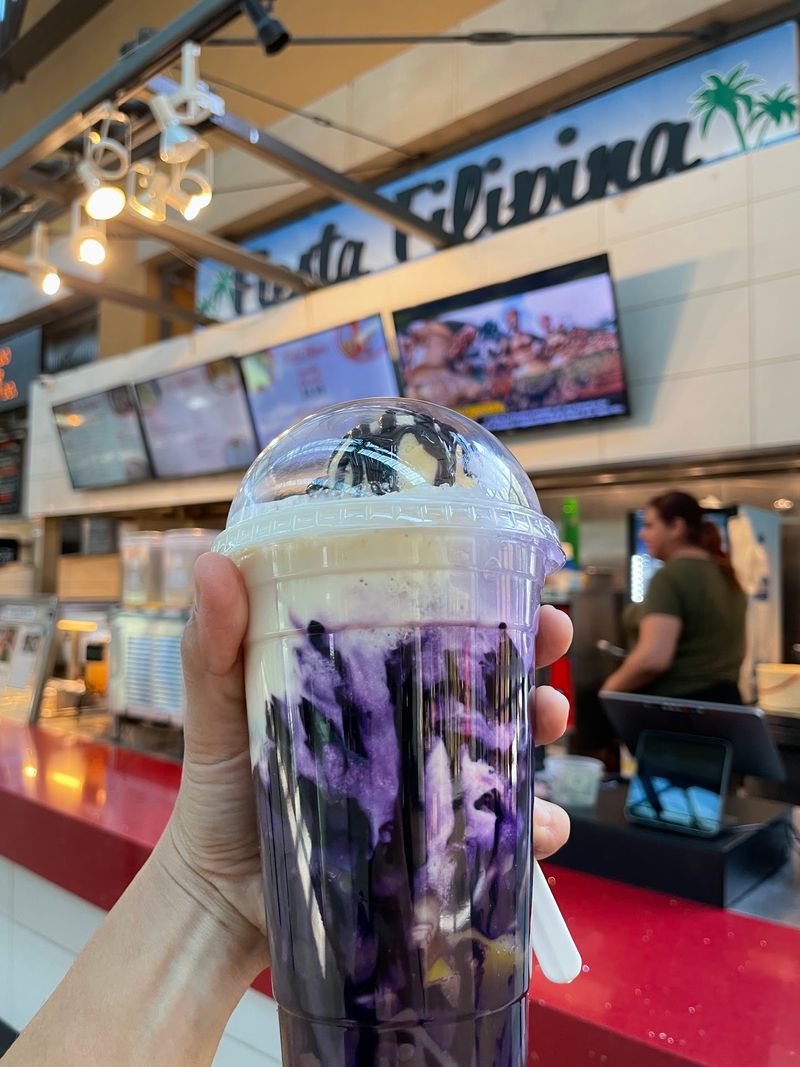
Shaved ice, sweet beans, jellies, and milk all in one cup. Halo-halo might be the most cheerful dessert on the planet.
The name means mix-mix in Tagalog. You’re supposed to stir everything together until each spoonful has a little of everything.
It’s part dessert, part treasure hunt.
Halo-halo is one of the most talked-about items at this counter. Some people stop by specifically for it.
In a hot Arizona summer, a cold cup of it makes a lot of sense.
Toppings and ingredients can vary from day to day. The owner has worked to keep every component stocked after customers asked for consistency.
Flan has come up as a favorite addition, so ask about it.
I love how halo-halo turns dessert into an experience. It’s colorful, textured, and a little messy in the best way.
It also photographs beautifully, if you’re the type to snap a pic before eating.
Finishing a plate of savory food with something icy just feels right. After pork belly and garlic rice, halo-halo cools everything down.
Grab a spoon and start mixing.
Finding The Counter Near The Courtyard Doors
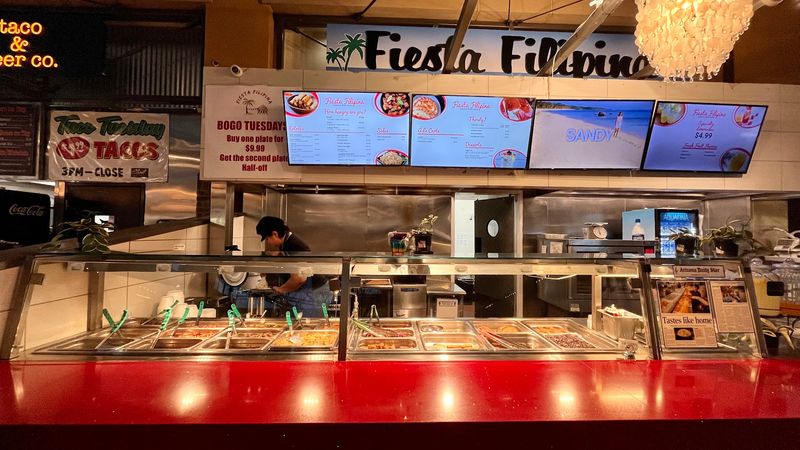
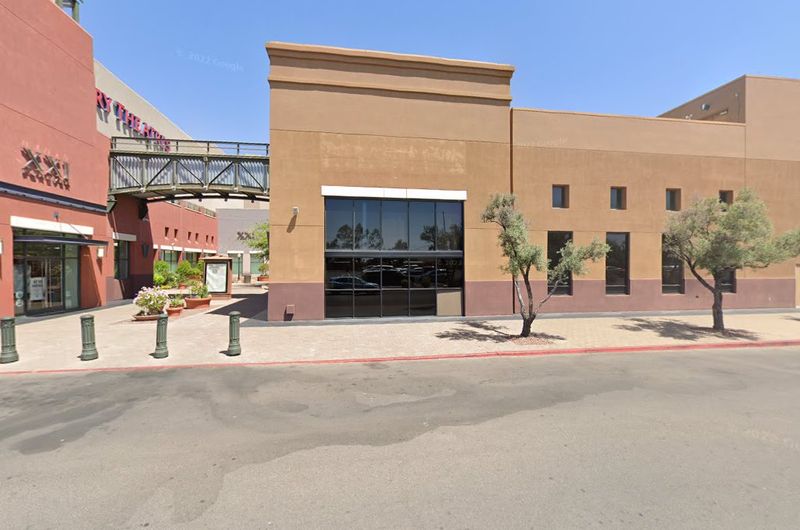
Park Place is a familiar spot for many Tucson shoppers. Fiesta Filipina Asian Express sits inside its food court, at 5870 E Broadway Blvd, Tucson, AZ 85711.
Look for the counter near the exit doors to the courtyard. The food court setup means shared seating and a casual, come-as-you-are feel.
Don’t expect fancy decor or table service. The service area stays clean, and the vibe is quick and easy.
It works great for a lunch break or a shopping pit stop.
Newcomers tend to appreciate the friendly approach. The owner and staff have walked guests through the dishes and handed out samples.
That makes it a good fit for anyone nervous about trying Filipino food.
It also suits Filipino families looking for a taste of home in southern Arizona. Military families, students, and curious locals all have reason to stop in.
Kids will find easy wins like lumpia and pancit.
Hours can follow the mall’s schedule, and those may change. It’s smart to check before making a special trip.
Parking around a mall like this is usually easy, which is always a nice bonus in Tucson.
Why This Little Counter Is Worth A Detour
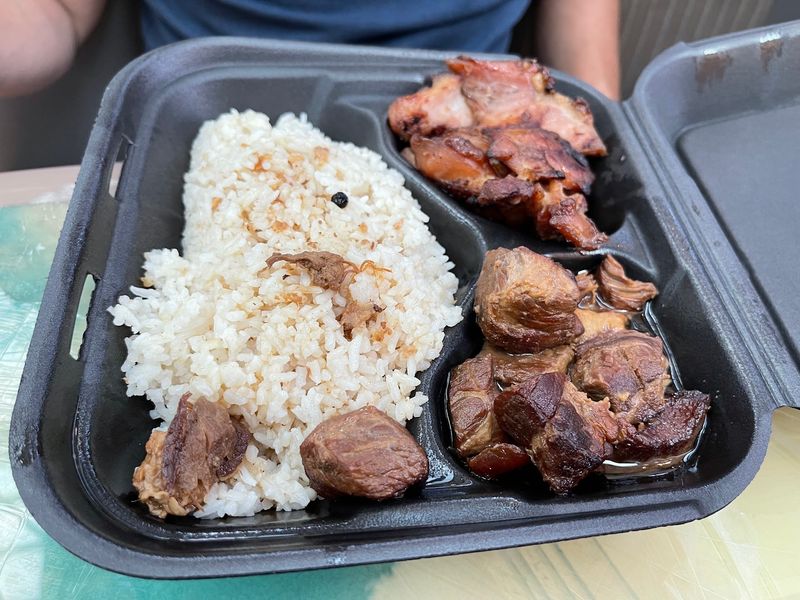
Some meals are about convenience, and others are about heritage. At Fiesta Filipina Asian Express, you sort of get both.
The food is quick, the plates are generous, and the setting couldn’t be more casual. Yet the dishes carry real Filipino roots, from adobo to dinuguan to halo-halo.
Is it perfect? Not every dish lands the same for everyone, and portion opinions vary.
Still, the flavors have won over plenty of people who grew up eating Filipino food.
I believe that matters most. When food reminds someone of their mom’s cooking, that’s high praise.
It’s the kind of compliment no marketing budget can buy.
For newcomers, this counter is a friendly first step. You can sample, ask questions, and build a plate without pressure.
For longtime fans, it’s a handy source of garlic rice and crispy pork belly.
The food truck roots still show in the personal touch. A local owner who knows her regulars brings warmth to an otherwise ordinary food court.
Next time you’re shopping on Broadway, skip the usual chains. Grab a plate, add pickled garlic, and see what the fuss is about.