
This Arizona Mission Built In 1797 Has A Quiet Beauty That Still Draws Visitors In
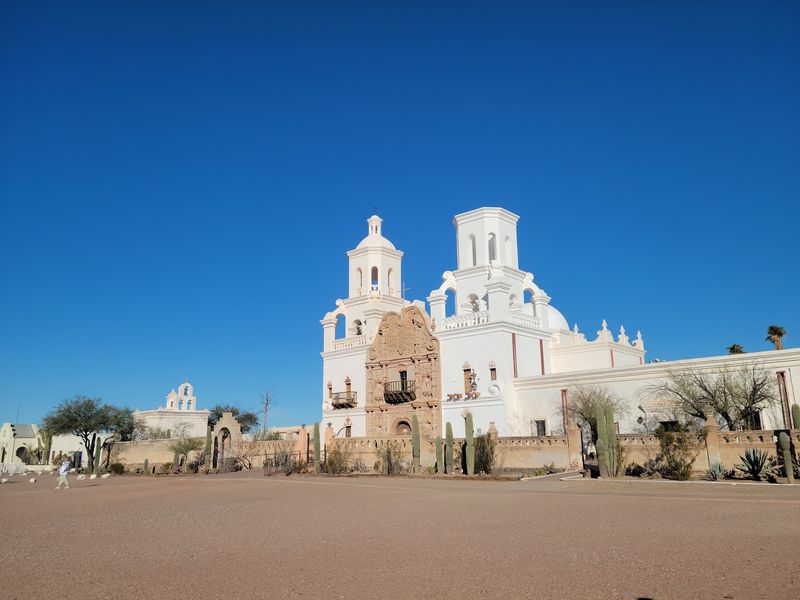
A carved stone cat has been chasing a carved stone mouse across one Arizona church front for more than 200 years. Neither one has made any progress.
That playful detail sits on a bright white mission rising out of the Sonoran Desert. One of its two bell towers never got a finished top.
It still welcomes worshippers every day, and nobody charges you a cent to walk inside.
I like how the outside stays calm and simple. Then the doors open onto walls covered in painted saints, carved statues, and color climbing all the way to the ceiling.
I can’t imagine a better reward for a short drive. Add fresh frybread out front and a hilltop view nearby, and the question becomes simple.
Why haven’t you gone yet?
A White Dove Shines About Ten Miles South Of Tucson
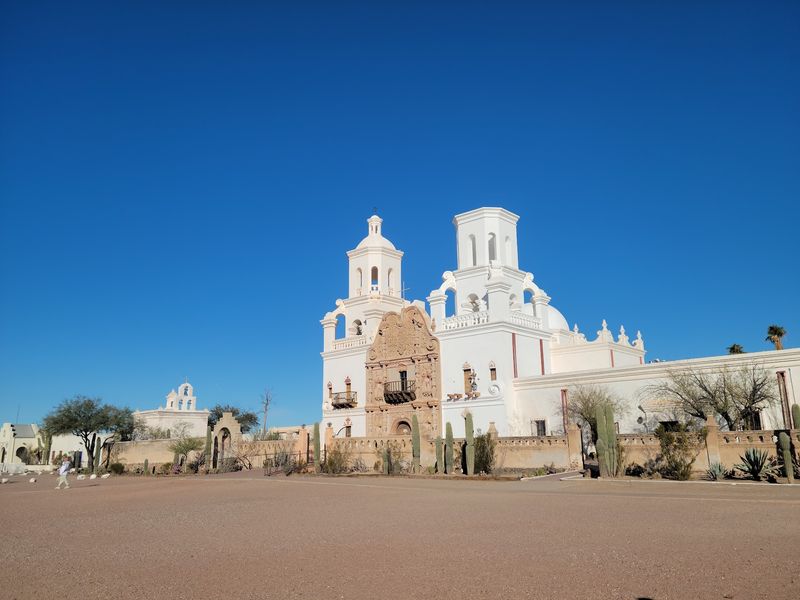
San Xavier del Bac Mission sits about ten miles south of downtown Tucson, and it earned a nickname that fits perfectly. People call it the White Dove of the Desert, thanks to walls that glow against the brown Sonoran landscape.
The mission stands on the San Xavier Indian Reservation of the Tohono O’odham Nation. That setting matters, because the church grew from an O’odham village and still serves the community around it.
It’s also a big deal on paper. The church ranks as the oldest intact European structure in Arizona, and it’s a standout example of Spanish Colonial architecture in the country.
Don’t expect a roped-off relic, though. San Xavier del Bac Mission remains an active Catholic church, so prayer and history share the same roof every single day.
The drive is easy for anyone in the Tucson area. You leave the city behind quickly, and then the white towers pop up like someone dropped a postcard into the desert.
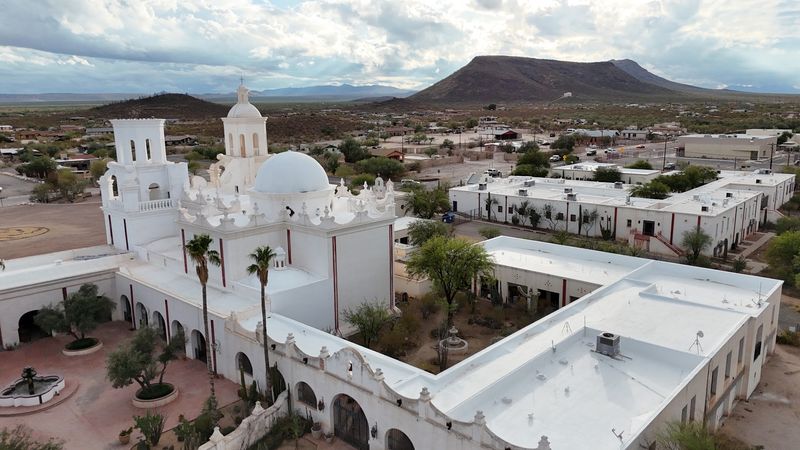
Mountains frame the view from the grounds, and open sky does the rest. It’s the kind of landmark that makes a quick morning trip feel much bigger than the miles behind it.
The Story Reaches Back To Father Kino In 1692
Every great story needs a starting point, and this one begins in 1692. That year, Jesuit missionary Father Eusebio Francisco Kino founded the mission at an existing O’odham village.
Kino laid foundations for a church in 1700. That building was never completed, which makes it the first of several false starts in the mission’s long tale.
A different adobe church went up beginning in 1756. Raids destroyed it in 1770, and the community had to start all over again.
The history here carries real weight. Missions like this were part of Spanish colonization, and that chapter was complicated and often painful for Indigenous communities.
The church you see today was built with O’odham labor in the late 1700s. Keeping that in mind adds depth to every carved detail and painted wall.
Appreciating the beauty and understanding the full story can happen together. In fact, the museum on site helps fill in that bigger picture with displays about both Native and Spanish history.
So when someone mentions that the mission dates to 1797, they’re only telling half of it. Its roots stretch back more than a century before the current walls ever rose.
Fourteen Years Of Work Shaped The Church You See Today
Building something this grand in the desert took patience. Construction on the current church ran from 1783 to 1797, a stretch of roughly fourteen years.
Franciscan fathers Juan Bautista Velderrain and Juan Bautista Llorenz directed the project. Their names don’t show up on many road signs, but their vision still shapes the skyline south of Tucson.
The result became the oldest surviving European-designed building in Arizona. That’s a remarkable title for a church that has weathered more than two centuries of desert summers.
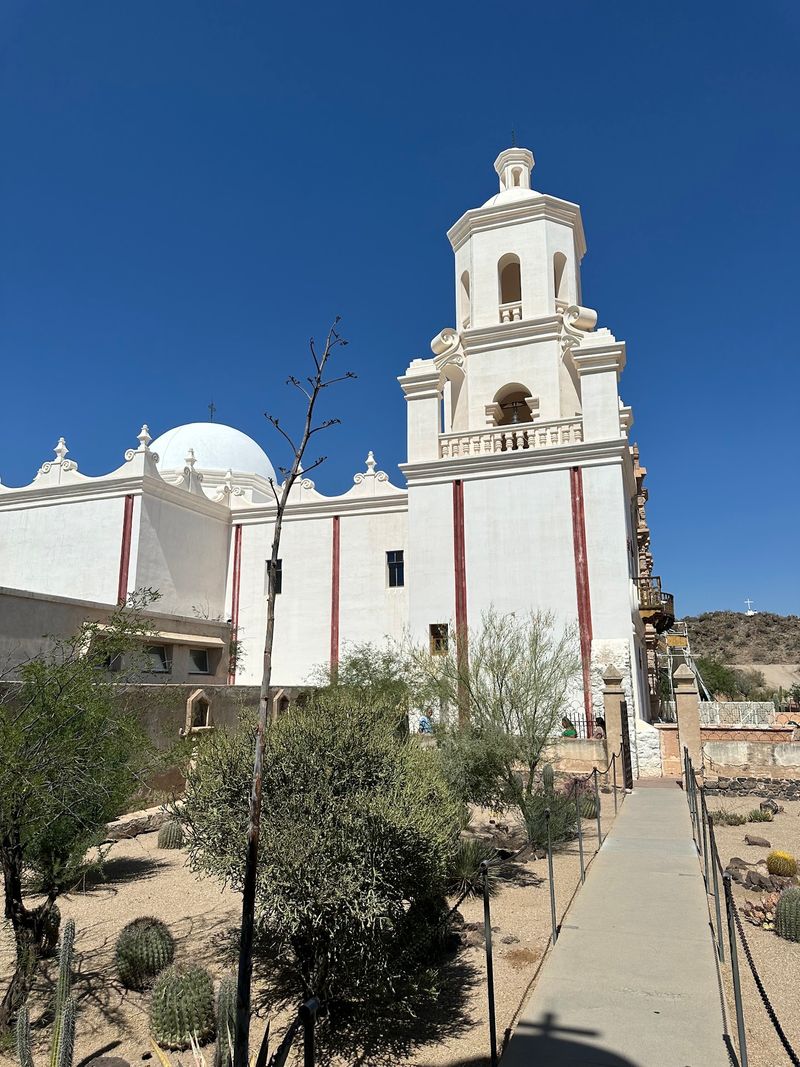
The style blends Spanish Colonial design with deep Mexican Baroque influence. Outside, the look is clean and bright, with a decorated front and a pair of bell towers.
Those plain white walls are a clever trick of contrast. They keep your expectations low right up until you step through the doors and see what waits inside.
The year 1797 gives the mission its famous birthday. Still, the real accomplishment is that it’s still here, still used, and still pulling people off the highway to stare.
Plenty of newer buildings across the state haven’t aged half as gracefully. This one simply keeps going, one careful repair at a time.
Mass, Feast Days, And A School Keep The Mission Alive
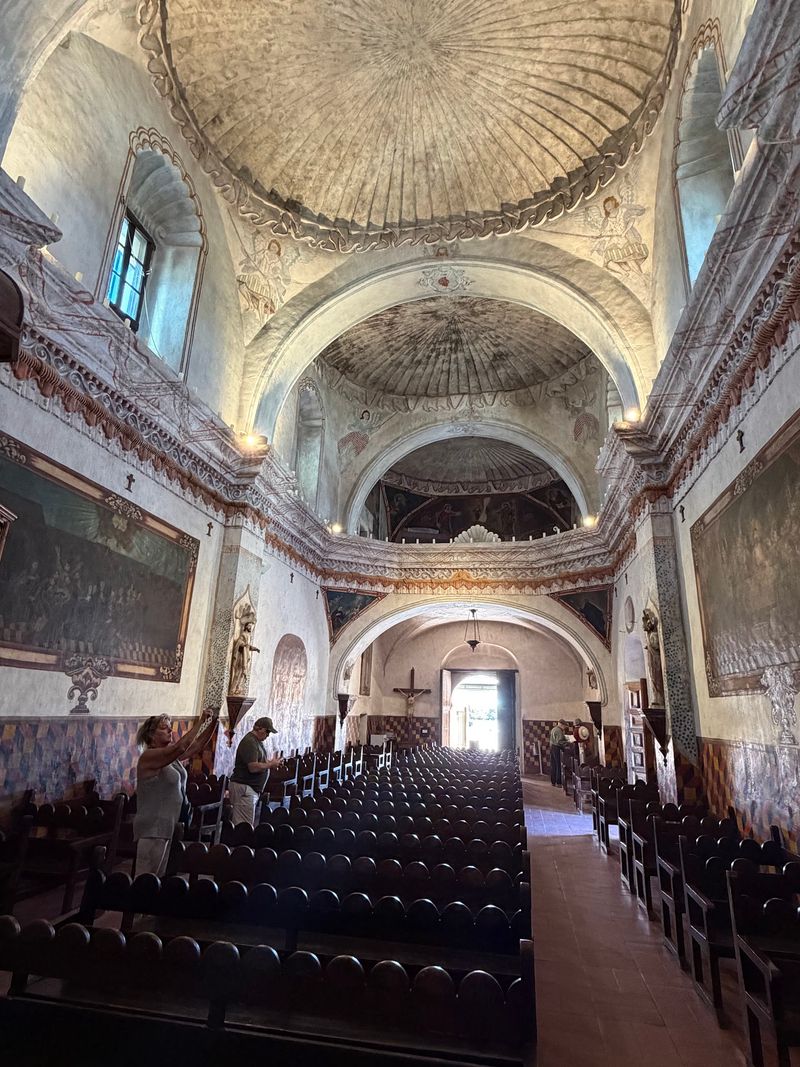
Plenty of historic sites go quiet once the last tour bus leaves. San Xavier del Bac Mission never got that memo, because it remains an active Roman Catholic parish today.
It still serves the spiritual and community needs of the local Tohono O’odham people. Daily masses, feast days, and special celebrations fill the calendar throughout the year.
The mission also supports a tuition-free K-8 school. That detail turns the place from a pretty landmark into a working part of the neighborhood.
Visitors are welcome, but manners matter here. You may find people praying in the pews, so quiet voices and a respectful pace go a long way.
Sunday visits call for extra awareness. If mass is underway, waiting until it ends before exploring the church interior is the considerate move.
Events and markets sometimes bring big crowds to the grounds as well. On those days, the plaza feels packed and lively, and local vendors get a welcome boost from the whole community.
The overall mood stays calm but very much alive. It’s history you can feel breathing, not just something you read about on a plaque and forget by lunchtime.
Inside, Every Wall Bursts Into Color
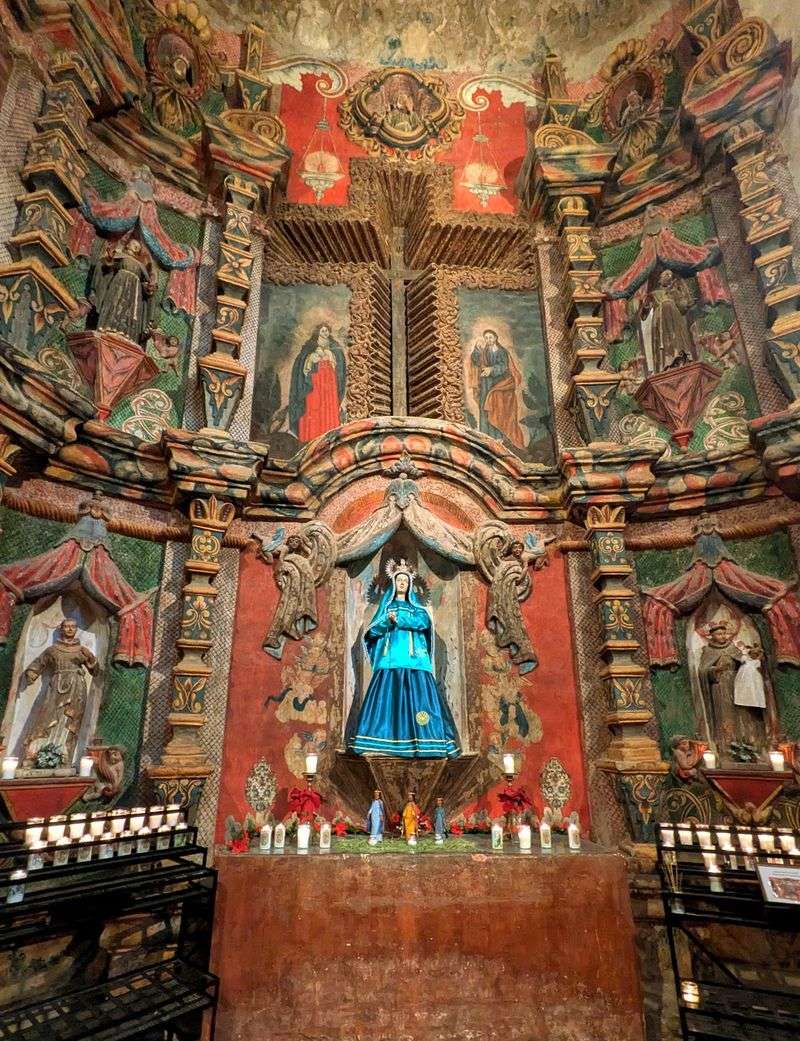
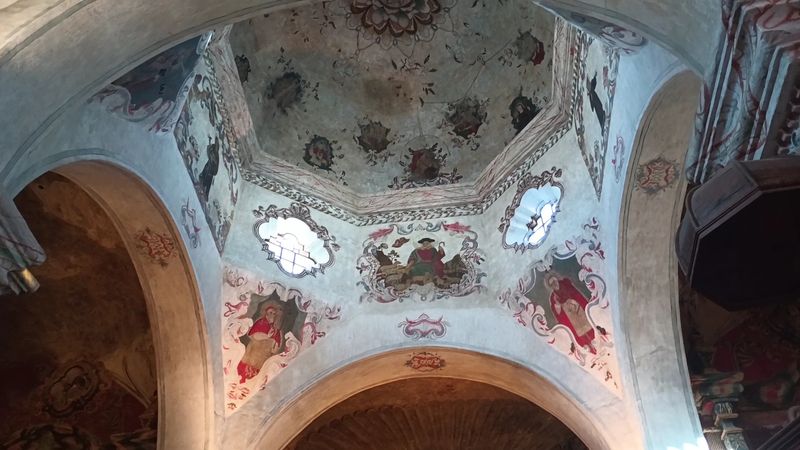
All that white on the outside is basically a polite understatement. Inside, nearly every surface is covered in painted and sculpted decoration, a showcase of Mexican Baroque art.
Frescoes stretch across walls and ceilings. Hand-carved statues of saints stand in niches, and religious imagery fills just about every spot your eyes land on.
The massive altarpiece grabs attention first. From there, your gaze naturally climbs upward through the sanctuary, which is exactly what this kind of design intends.
Photos rarely capture the full effect. The scale, the color, and the sheer amount of detail are hard to squeeze onto a phone screen.
I believe the best approach is to slow way down. Pick one corner, study it for a minute, and then move on to the next.
The church has no air conditioning or heating, so the indoor temperature follows the season. A light layer in winter and water in summer will keep you comfortable while you linger.
Keep in mind that worshippers may be present. Admiring the artwork quietly lets everyone enjoy the space, whether they came for faith, history, or simple wonder on an ordinary afternoon.
A Lopsided Tower And A Very Patient Stone Cat
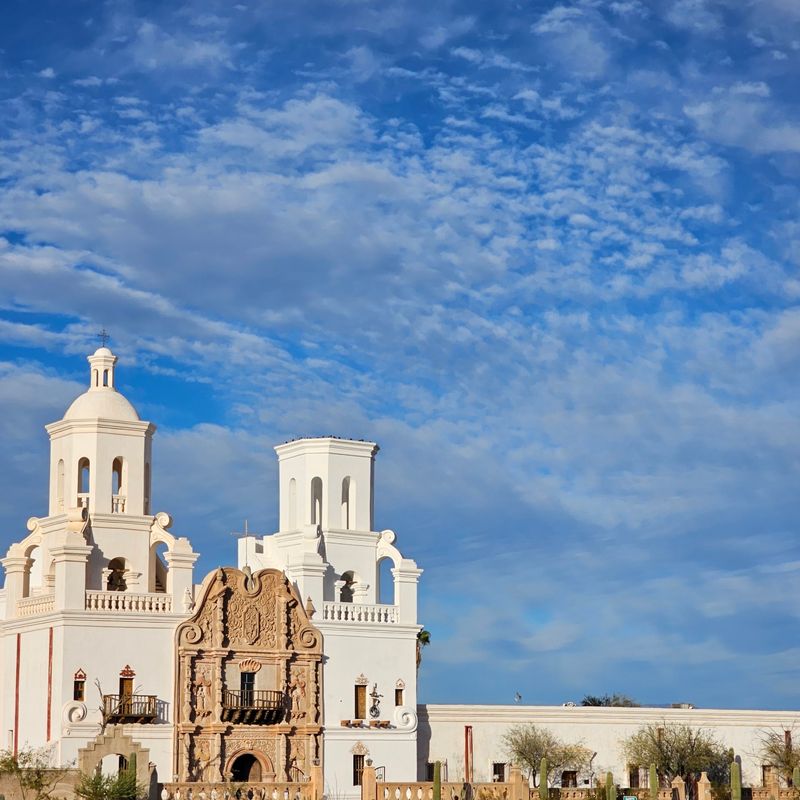
Something seems slightly off when you study the skyline here. One of the mission’s two bell towers appears incomplete, missing the top its twin wears so proudly.
That lopsided look has become part of the charm. It gives the White Dove a quirky signature that’s easy to spot in any photo.
Then there’s the ornate front above the main entrance. Look carefully, and you can find stone carvings of a cat and a mouse among the decorative details.
A local legend surrounds that pair. As the story goes, the cat must never catch the mouse, so plenty of visitors end up quietly rooting for the little guy.
The search makes a fun scavenger hunt for kids. Adults tend to get competitive about it too, even if they pretend they’re just admiring the architecture.
The front may be partly covered during restoration season, so the carvings aren’t always easy to see. Warmer months usually give you a better shot at a clear view.
Either way, these little touches make the mission feel personal. It’s fun to think the artisans behind such a serious building had a playful streak, and their work still brings smiles centuries later.
Scaffolding Season Means The Church Is Getting Some Love
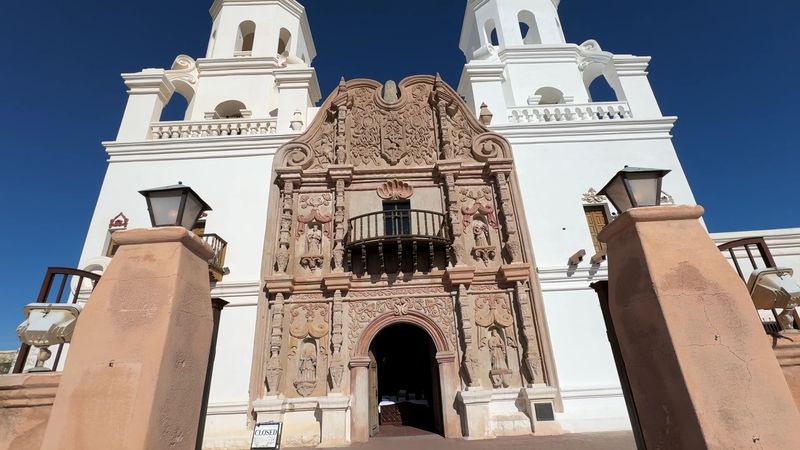
Arrive in winter, and the famous front might be wrapped in scaffolding. Restoration work on the facade typically happens during the cooler months, roughly from Halloween to Easter.
A nonprofit called the Patronato San Xavier funds and directs the conservation work. Its focus is ethical conservation that keeps the church sound for future generations.
The current priority involves stabilizing and rehabilitating the ornate retablo facade. The project is planned in phases, with work expected to continue until around spring 2027.
Scaffolding may block your photo, but it shouldn’t block your visit. The church interior and museum have typically stayed open during the work.
Seeing restoration in progress is interesting in its own right. It’s a reminder that a 1797 building doesn’t stay beautiful by accident.
If a clear shot of the front tops your wish list, aim for a visit between Easter and late October. Just pack extra water, because Tucson summers don’t mess around.
Admission is free, and donations help support the mission. Dropping something in the box is an easy way to become a small part of a very long story.
Future visitors will thank everyone who chipped in. That’s a pretty nice legacy for spare change.
Grotto Hill Hands You The Best View Around
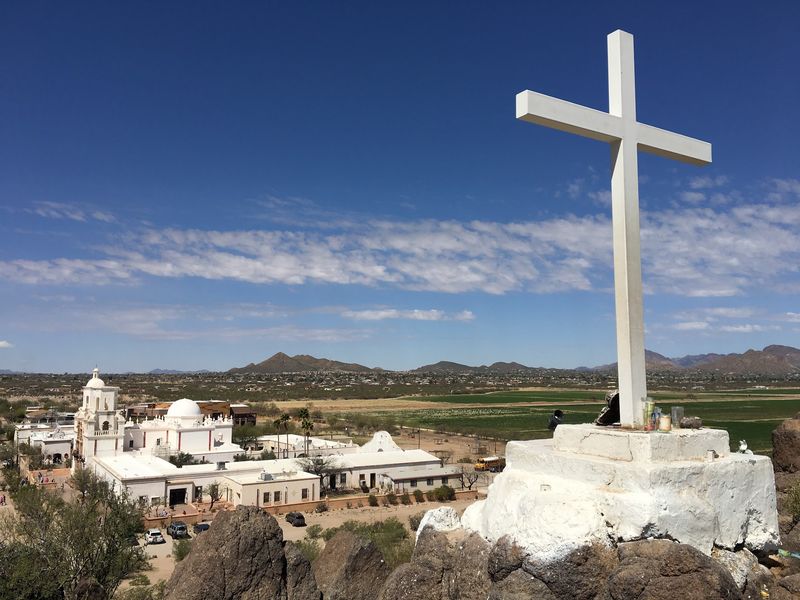
Want the postcard angle? Head east of the church to a small hill crowned with a cross and a replica of the Lourdes Grotto.
The walk is short and manageable for most visitors. A scenic loop and memorial up top add a quiet stop for reflection along the way.
Once you reach the top, the payoff is a wide panoramic view. The white mission sits below, while mountains and open desert stretch out in nearly every direction.
A few quiet minutes here balance out the busy color inside the church nicely. The breeze, the sky, and the stillness make it easy to linger longer than planned.
The hill also gives you a fresh way to understand the mission’s setting. From up high, you can see how the church rises from the landscape of the Tohono O’odham Nation.
Wear sturdy shoes, since desert paths can be rocky and uneven. Sun protection is a smart idea too, because the Arizona sun doesn’t take breaks.
Bring your camera, because the elevated view shows the whole mission at once. That’s a hard angle to get anywhere else, and it makes the short climb feel completely worth it.
Museum Rooms, Courtyards, And Shady Ramadas Fill Out The Grounds
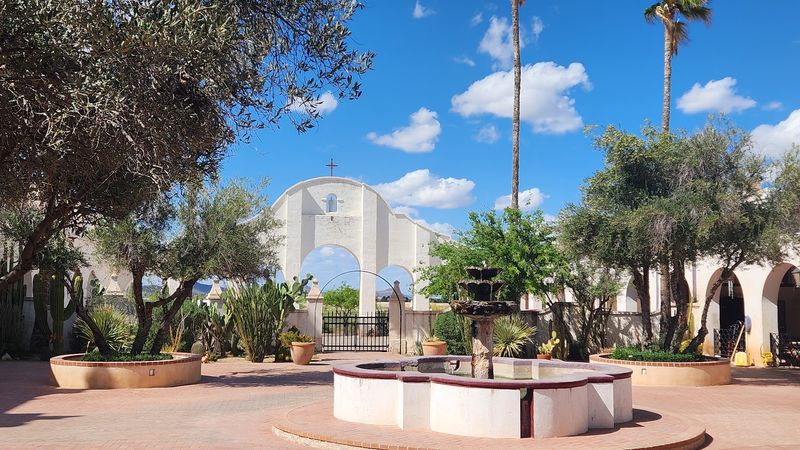
History buffs, this one’s for you. A small museum on site shares artifacts, photos, and displays covering the mission’s past and the Native and Spanish history around it.
The exhibits are well curated and easy to follow. You can move through at your own pace, which suits both quick visitors and people who read every single label.
Outside, a beautiful courtyard offers a calm break. Peaceful gardens and landscaped grounds invite you to slow down before heading back to the car.
In the plaza, traditional ramadas built from cholla and mesquite branches provide welcome shade. They’re a smart bit of desert know-how that still works beautifully today.
The gift shop on the grounds carries religious items and local art. Purchases help support the mission, so a souvenir does double duty.
Restrooms are available during regular hours. That’s a small detail, but anyone traveling with kids knows exactly how much it matters.
Together, these spaces turn a church visit into a full outing. You can easily spend a relaxed morning here without feeling rushed, and nobody will hurry you along to the next stop.
Frybread Stands Make Arriving Hungry A Smart Move
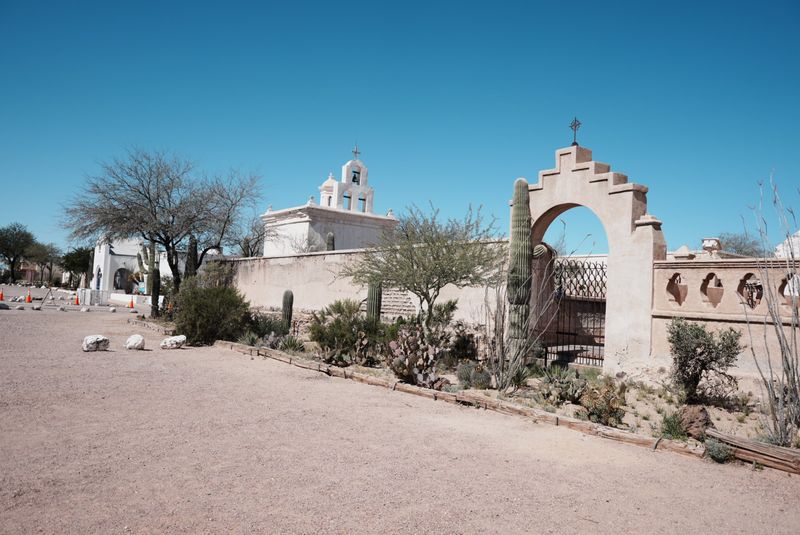
Golden, puffy, and fried fresh, frybread might be the tastiest reason to arrive hungry. Family-run stands operated by local Native vendors often set up near the parking area.
The treat is about the size of a softball. You can go sweet with honey or savory with fillings like red chile beef.
Buying from these vendors supports the people whose land the mission sits on. That’s a pretty good bonus for a snack that already feels like a reward.
Bring cash, and small bills are best. Many vendors can’t break large denominations, so a few fives can save you some awkward shuffling.
Across the parking lot, a collection of shops offers more to browse. Handmade Native American jewelry, including turquoise pieces, fills the display cases.
Some pieces lean on the pricier side, so set a budget before you start. Browsing costs nothing, though, and the craftsmanship deserves a close look.
Vendor schedules can vary by day and season. Treat the food stands as a happy surprise rather than a guaranteed stop, and your visit will feel like a win either way, frybread or not.
Free Admission, Easy Hours, And A Few Smart Tips
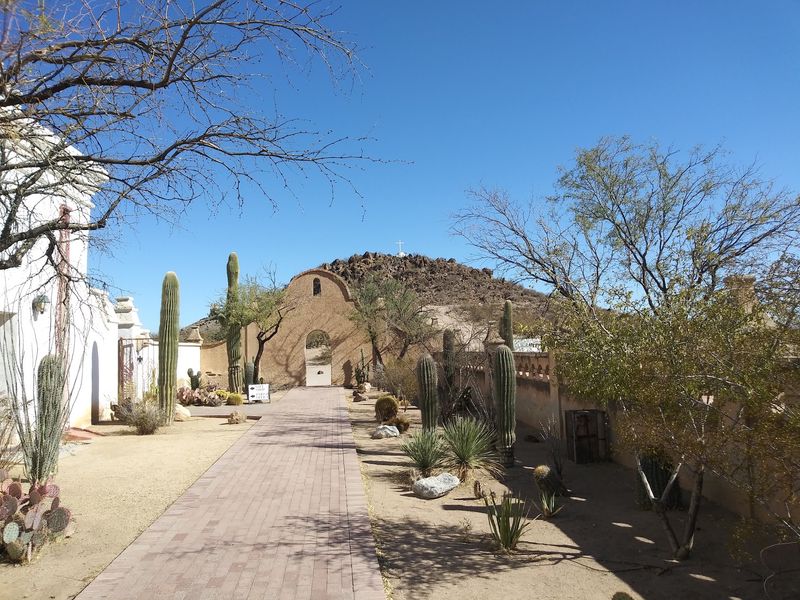
Good news for your wallet: there’s no admission charge to visit. Donations are gladly accepted, and they help keep this historic treasure in good shape.
You’ll find the mission at 1950 W San Xavier Rd, Tucson, AZ 85746. Parking is free, and the lot is roomy enough to take the stress out of arriving.
The church, museum, and restrooms are typically open daily from 9 AM to 4 PM. The gift shop usually runs a little longer, from 8 AM to 5 PM.
Free docent-led tours are offered every day except Sunday, usually in the morning. The tour doesn’t go inside the church itself, since the sanctuary is an active place of worship.
Self-guided visits are easy too. Staff members are often around to answer questions if something sparks your curiosity.
Remember that the mission sits on tribal land, so local rules and customs deserve respect. Dress for the weather, because the church has no air conditioning or heating.
Hours and tour times can shift, especially around holidays and Sunday services. A quick check before you leave home can save you a wasted trip.
Why The White Dove Earns A Spot On Your Arizona List
Few places in Arizona pack this much into one free stop. You get 1797 architecture, dazzling Mexican Baroque art, a hilltop view, and frybread, all in a single morning.
San Xavier del Bac Mission also offers something harder to measure. The mood is quiet, reflective, and gentle, even when the plaza fills with families and vendors.
It suits history lovers, architecture fans, and anyone who enjoys a peaceful outing. Families with curious kids can turn the cat-and-mouse carving into an easy game.
Budget-minded travelers will appreciate the value, too. Aside from snacks and souvenirs, the whole experience costs nothing but gas and a little time.
The best way to visit is with an open mind and soft footsteps. Respect the worshippers, learn the full history, and let the beauty speak for itself.
Cooler months bring comfortable weather for wandering the grounds and climbing the hill. Warmer months can mean a clear view of the restored front, as long as you go early.
After more than two centuries, the White Dove of the Desert is still welcoming people south of Tucson. I can’t think of a better reason to finally make the trip.