
This Arizona Mountain Park Gives Your Family 62 Miles Of Saguaro Trails For Free
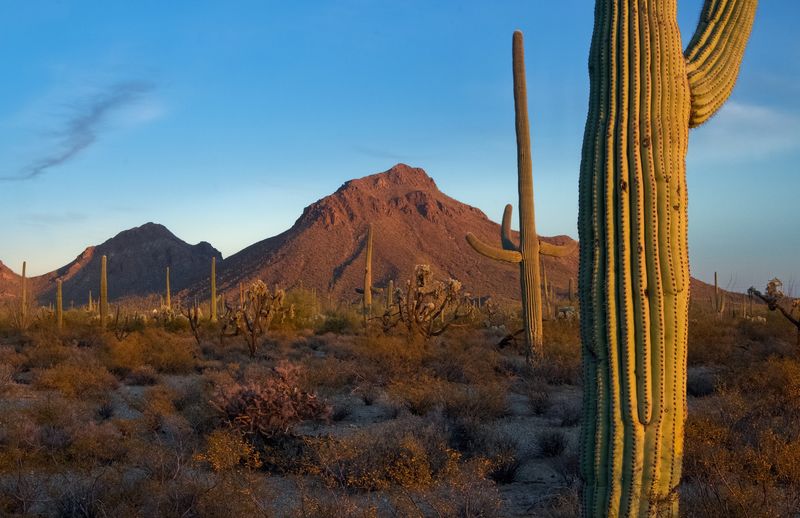
Roughly 62 miles of desert trails wind through saguaro forest here, and nobody will ask you for a park pass. Entry costs nothing.
Not a dime.
The land holds one of the largest saguaro forests on the planet. It also covers about 20,000 acres, which makes it one of the biggest natural areas run by a local government in the country.
I love that this Arizona park feels wild yet sits close to a city. You can hike among cholla and palo verde in the morning.
Then you can watch the mountains glow orange at sunset from a famous overlook.
I can’t imagine a better deal for desert lovers on a budget. So why do so many people drive right past it on their way somewhere pricier?
A Free Desert Playground West Of Downtown Tucson
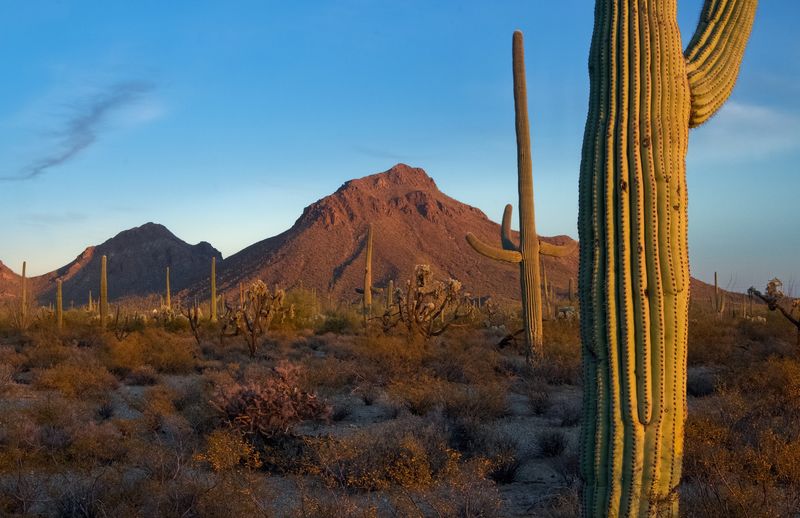
Free admission and 20,000 acres of Sonoran Desert make a pretty convincing opening offer. Tucson Mountain Park sits on the west side of Tucson, Arizona, stretching roughly from Gates Pass to Kinney Road.
Pima County runs the place, not the National Park Service. That detail matters, because it means no entrance fee and no national park pass at the gate.
The scale is hard to wrap your head around. Tucson Mountain Park ranks among the largest natural resource areas in the United States managed by a local government.
Inside, you’ll find dense stands of saguaro, cholla, and palo verde spread across rocky hills. Trails crisscross the whole landscape for hikers, horseback riders, and mountain bikers.
The park also packs in picnic areas, a campground, a scenic overlook, and even archery and shooting ranges. It’s a lot of variety for a place that charges nothing to wander.
And it never feels far from town. You can leave city streets behind and be surrounded by cactus-covered slopes in a short drive.
For anyone who loves Arizona scenery but hates paying for it, that’s a winning combination. The desert is basically holding the door open.
How Mining Fears Saved A Mountain Range Back In 1929
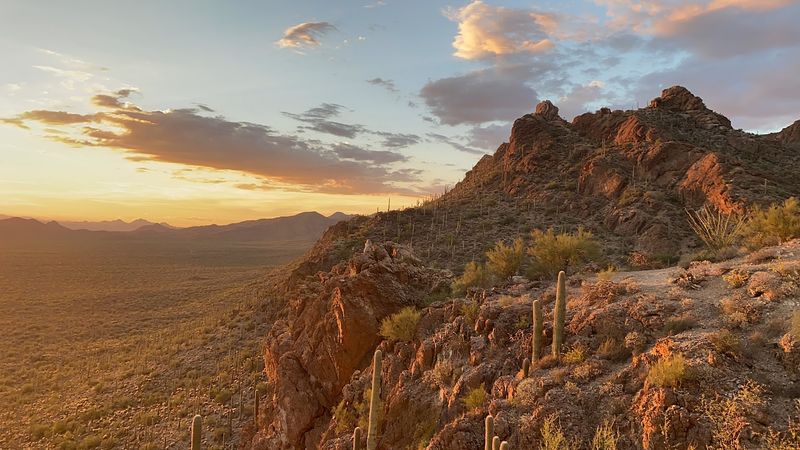
April 1929 is when the story starts. The Pima County Parks Commission set this land aside to protect it from mining and spreading home construction.
That was a forward-thinking move for its time. Without it, these slopes might look very different today.
Then came the Great Depression. During the 1930s, Pima County and the National Park Service teamed up to develop the park.
Workers from the Civilian Conservation Corps, the Works Progress Administration, and the Emergency Conservation Work Program got busy. They built roads, trails, erosion control features, and rustic stone structures for picnic areas.
Some of that historic stonework still stands, and you can spot historic structures at the Gates Pass Overlook. It’s history you can actually touch, which beats reading a plaque any day.
Here’s a twist many folks don’t know. In 1961, 15,360 acres from the northern half of the original park moved to the National Park Service.
That land became the Tucson Mountain District of Saguaro National Monument. It was later upgraded to Saguaro National Park in 1994.
So the famous national park next door was once part of this county park. Tucson Mountain Park stayed separate, free, and proudly local.
Sixty-Two Miles Of Trail And Plenty Of Elbow Room
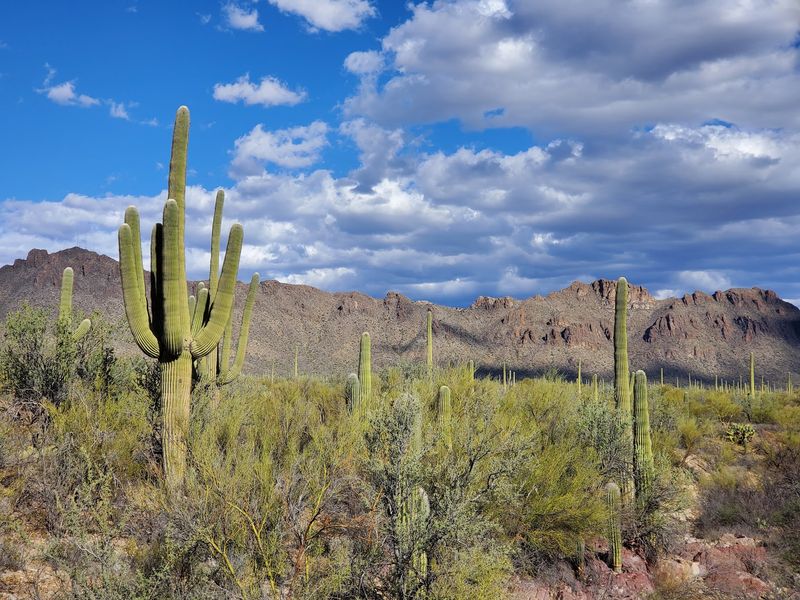
Sixty-two miles. That’s roughly how much non-motorized shared-use trail runs through this park, and every inch is free.
Hikers, equestrians, and mountain bikers all share the routes. The terrain ranges from easygoing strolls to tougher climbs over rocky ground.
Mountain bikers often point toward the Ironwood, Caliche, and Prospector trails. Each offers a different flavor of desert riding.
Hikers have endless choices, too. Hidden Canyon Trail, for example, is a short route near Starr Pass with a hilltop that opens into a full 360-degree view.
A quick heads-up keeps your outing smooth. Trail markings can be confusing in spots, so a trail app or downloaded map is a smart companion.
Watch your footing, as well. Loose gravel and rocks are common, and cactus spines sit close to the path.
Trails here stay open 24 hours a day, year-round. That gives early risers a chance to hike in cooler morning air during warmer months.
In Arizona, timing is everything on a desert trail. Bring more water than you think you need, and the miles will treat you kindly.
Rare Cactus Crowns Worth Hunting Down
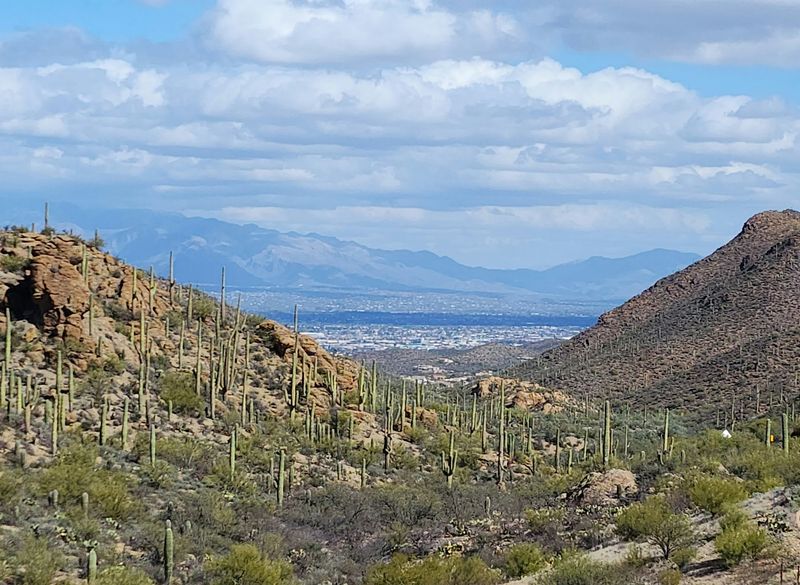
Most saguaros grow arms. A rare few grow something that looks like a fancy, fan-shaped crown instead.
Those odd beauties are called cristate saguaros. The Prickly Poppy trail is a known spot to keep your eyes peeled for them.
Spotting one feels like finding a four-leaf clover, just much taller and pricklier. It turns an ordinary hike into a friendly treasure hunt.
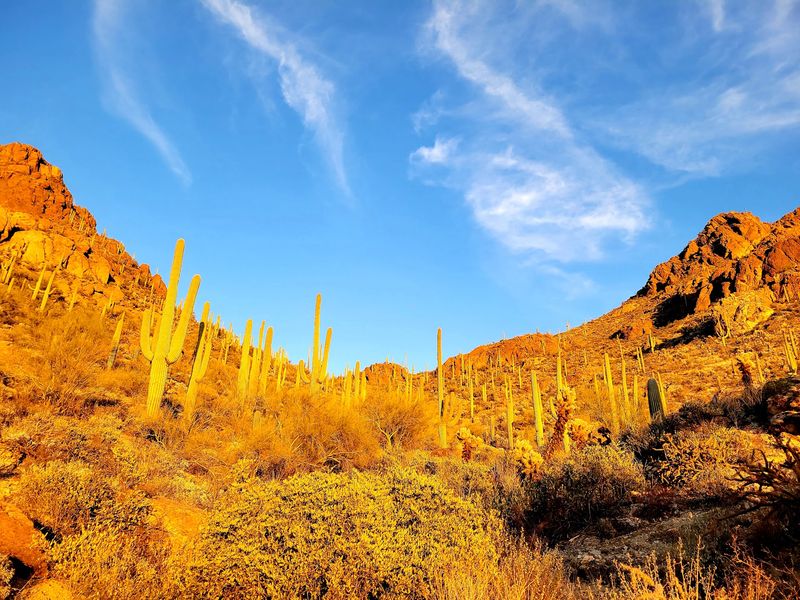
Of course, the regular saguaros put on a show by themselves. This park holds one of the largest saguaro forests in the world.
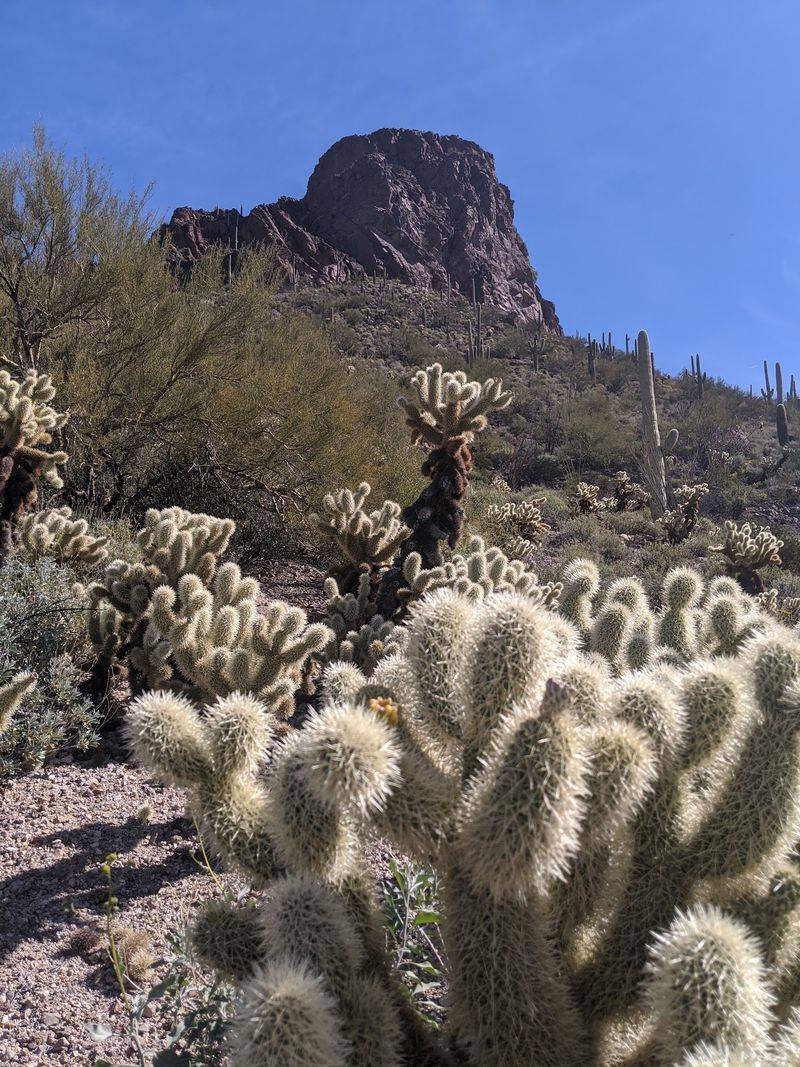
Thick stands cover the hillsides, mixing with cholla and palo verde. The variety of cactus here can keep plant lovers busy for hours.
One plant deserves extra respect. Jumping cholla grows along and sometimes right on the trails.
Its spiny segments latch onto shoes, clothes, and curious pets with surprising ease. Keep a comb or tweezers in your pack for quick removal.
Dog owners may want protective booties for furry hiking partners. Cactus spines and paws are not a good match.
Give the cholla space, and the desert rewards you. Look closely, and you might just meet a crowned saguaro.
Sunset Seats At Gates Pass Come Free Of Charge
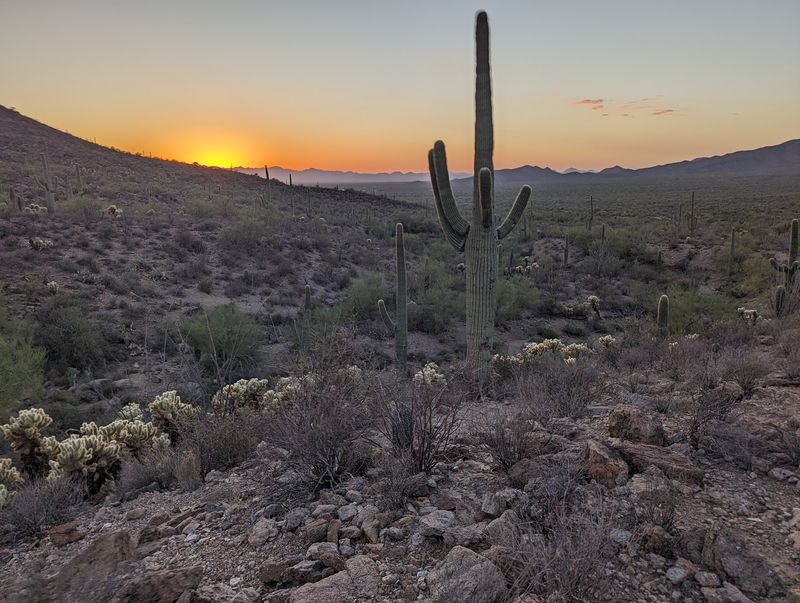
Golden hour at Gates Pass might be the best free show in Tucson. This overlook ranks among the city’s top spots to watch the sun go down.
The view sweeps across desert valleys and rugged mountains. As light fades, the saguaros turn into dramatic silhouettes against the sky.
Later in the day, the light warms the mountains and cactus in a way photographers adore. Colors can shift from gold to orange to soft purple.
The overlook isn’t only about the view. Interpretive displays and historic structures add a little learning to the experience.
There’s a large parking area with accessible spaces and restrooms nearby. Historic markers give you something to read while you wait for the sky to work its magic.
Gates Pass Road itself is part of the fun. It’s a narrow, winding drive with pullouts for photos and short walks among the rocks.
Drive slowly and stay alert. Cyclists often share the road on this scenic route.
Arrive with time to spare before sunset. Good luck finding a more beautiful way to end a day in Arizona without spending a cent.
Grills, Ramadas, And A Desert Lunch Break
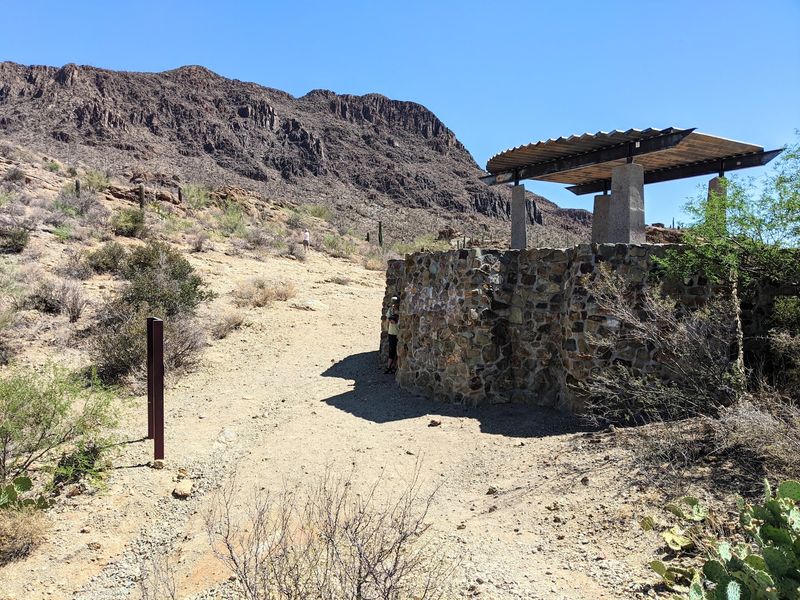
Packing a sandwich suddenly feels fancier when saguaros are your dinner guests. Tucson Mountain Park has three main picnic areas ready for a desert meal.
Juan Santa Cruz, Ironwood, and Brown Mountain each come with tables, ramadas, and grills. That means shade, seating, and a spot to cook.
Shade is a big deal in the Sonoran Desert. A covered ramada can turn a hot afternoon into a pleasant lunch break.
Families can make a whole day of it with a hike, a meal, and a sunset. It’s an easy, budget-friendly plan that doesn’t need tickets or reservations for entry.
Plan ahead for one important closure, though. From October 1 to November 24, 2026, Kinney Road closes between the eastern McCain Loop intersection and the Arizona-Sonora Desert Museum entrance.
That closure is for water line replacement. During that window, the Juan Santa Cruz and Brown Mountain picnic areas will be closed.
Sections of the Orcutt, Cougar, Ringtail, and Brown Mountain Spur trails close then, too. Ironwood offers another option during that stretch.
Check with Pima County before you head out. A little planning keeps your picnic basket from going on a pointless road trip.
Gilbert Ray Campground Puts You Under Desert Skies
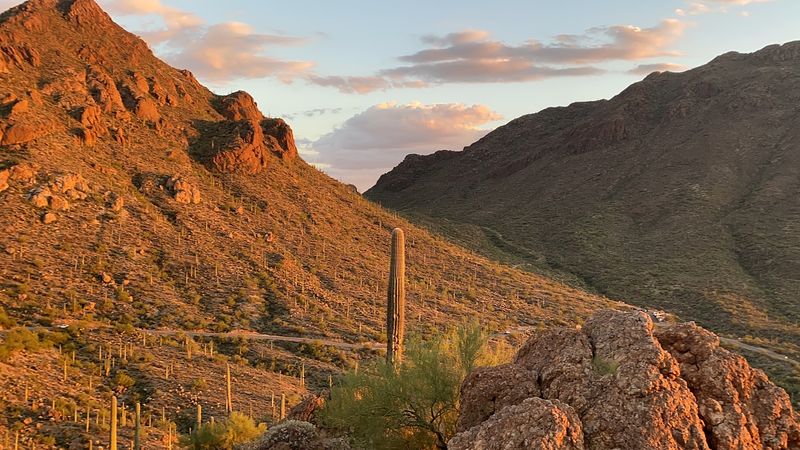
Waking up surrounded by saguaros sounds like a pretty great alarm clock. Gilbert Ray Campground makes that possible right inside the park.
You’ll find it at 8451 W McCain Loop, Tucson, AZ 85735. Sites work for both RVs and tents, framed by mountain views.
Each site has its own picnic table. Water is centrally located, and there’s an RV dump station on hand.
Modern restrooms are available, but showers are not. Pack some wipes and embrace a slightly rugged vibe.
The nightly rate is modest, which keeps the overall trip easy on the wallet. That’s a welcome break compared to many resort-style stays nearby.
Sites are large and spaced fairly well apart. Friendly campground hosts help keep things clean and tidy.
The location is another big plus. You’re close to trails, the Gates Pass area, and the Arizona-Sonora Desert Museum.
Yet the city still isn’t far away for supply runs. It’s a sweet spot between wild and convenient.
For Arizona campers who want desert scenery without a long haul, this campground fits nicely. Just remember the spiny neighbors when you wander after dark.
Famous Neighbors Just Down The Road
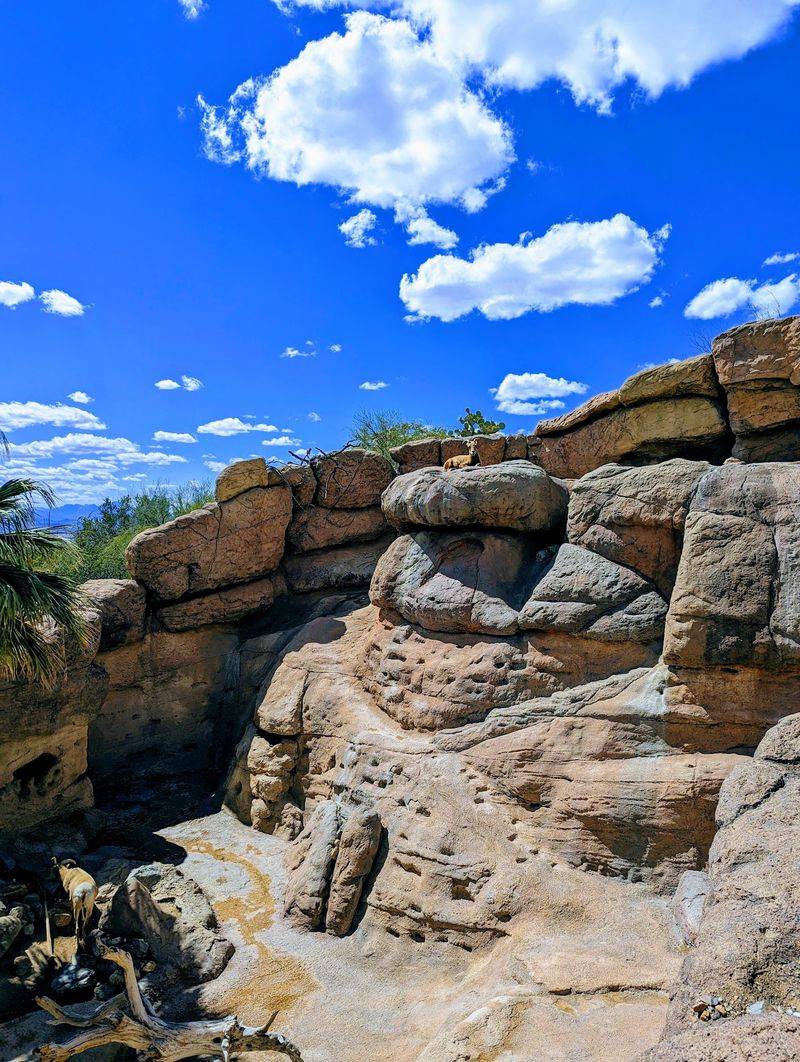
Few free parks have neighbors this well known. The Arizona-Sonora Desert Museum and Old Tucson sit within or right beside the park boundaries.
The Desert Museum is a celebrated stop for learning about Sonoran Desert plants and animals. Old Tucson brings Western film history to the mix.
Both charge their own admission, separate from the park. Tucson Mountain Park itself stays free.
That setup makes for a flexible day. You can hike free trails in the morning, then pick one paid attraction later.
Saguaro National Park’s western district also lies just north. From Gates Pass, the views stretch out toward that direction.
Remember, that land once belonged to this county park before 1961. Now the two sit side by side as separate places.
Visiting both in one trip is easy, though only the national park needs a pass. The scenery blends together so smoothly you’ll barely notice the line.
Planning an Arizona day trip around all these spots stretches your budget wisely. Spend money where you choose, and let the trails fill in the rest.
Coyotes, Archers, And A Range For Target Practice
Not everyone comes here just to hike. The park also hosts a rifle and pistol range plus an archery range.
Those facilities give target sports fans a reason to visit. The staff at the shooting range have a friendly reputation.
Wildlife watchers have plenty to enjoy, too. Wildlife viewing opportunities are abundant across the park’s rugged terrain.
Birds flit between cactus branches, and coyotes roam the open desert. Encounters can happen, so give animals respectful space.
Early mornings and evenings tend to be calmer and cooler. Those hours are also lovely for spotting desert life on the move.
Photographers find endless subjects between the animals and the plants. Biodiversity here can surprise anyone expecting empty sand.
The atmosphere suits many types of visitors. Solo hikers, families, cyclists, campers, and horseback riders all share this space.
It’s a place for quiet reflection as much as adventure. Some folks simply come for meditation and peaceful views.
That mix of activities keeps the park feeling lively without losing its calm. In this corner of Arizona, there’s room for every kind of desert fan.
Gate Times And Smart Tips Before You Roll Out
Getting locked in overnight is not the souvenir you want. Gates Pass Road is gated and open roughly 6 a.m. to 8 p.m. daily.
Vehicles left inside after the gates lock stay stuck until morning. Keep an eye on the clock, especially after sunset.
The park is generally open dawn to dusk. Trails remain accessible around the clock, all year.
Bring plenty of water, sun protection, and sturdy shoes. A trail app helps when signs feel confusing.
Cooler months bring some of the most comfortable hiking weather. Summer outings work best at sunrise or early evening.
So is Tucson Mountain Park worth it? For anyone who loves saguaros, sunsets, and saving money, the answer seems pretty clear.
You get one of the world’s great saguaro forests, historic stonework, and miles of trail. Add free entry, and it’s hard to argue.
Bring a friend, pack a picnic, and time your drive for golden hour. Tucson Mountain Park might quickly become your favorite free escape in Arizona.
Just watch for that jumping cholla on the way out.