
This Hidden Coastal Park In Washington Has The Most Stunning Sunset Views
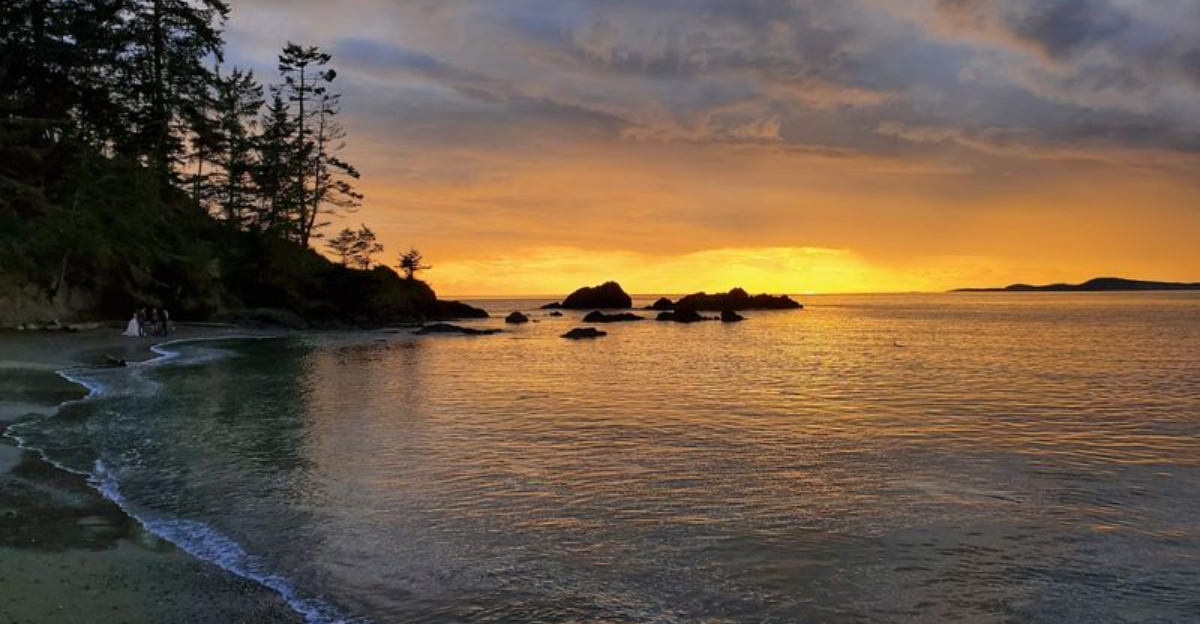
My internal compass is notoriously broken, which explains why I once ended up in a ditch while searching for the perfect evening light. Eventually, I found a hidden stretch of rugged Washington coastline that restored my faith in both my sense of direction and the magic of a fading sun.
There is a specific kind of silence that falls over this place as the light hits the jagged cliffs, turning the churning water into a mosaic of shimmering copper.
It’s the kind of sunset that makes you want to write dramatic poetry, or at least pretend you’re the protagonist in an indie film. Forget the crowded viewpoints; out here, the only thing you have to share the horizon with is a very unimpressed seagull.
The Iconic Deception Pass Bridge
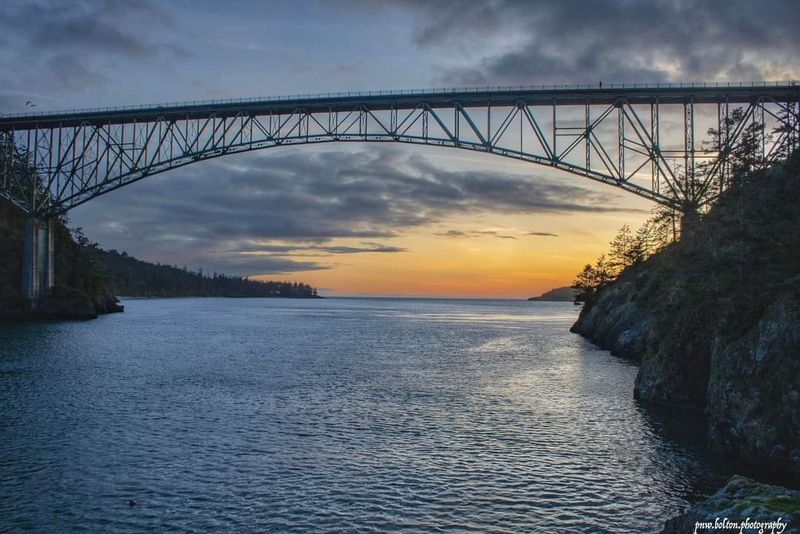
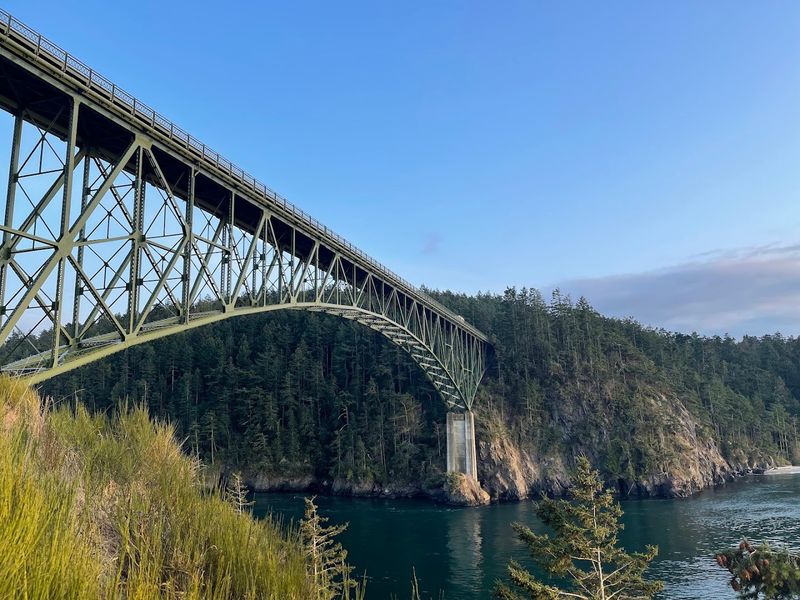
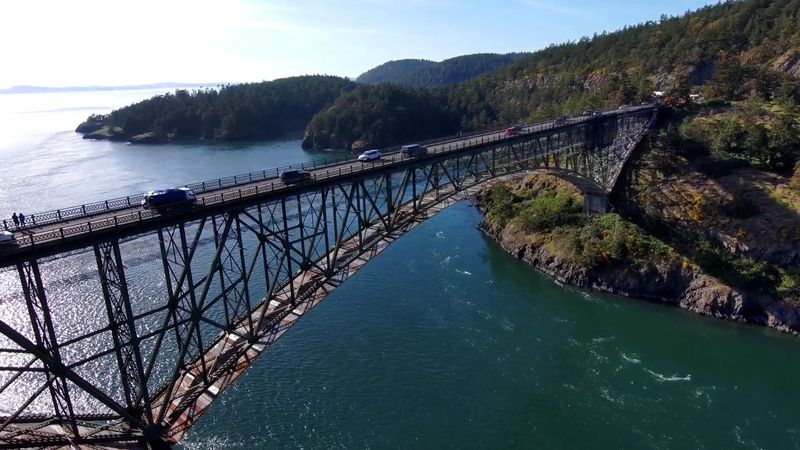
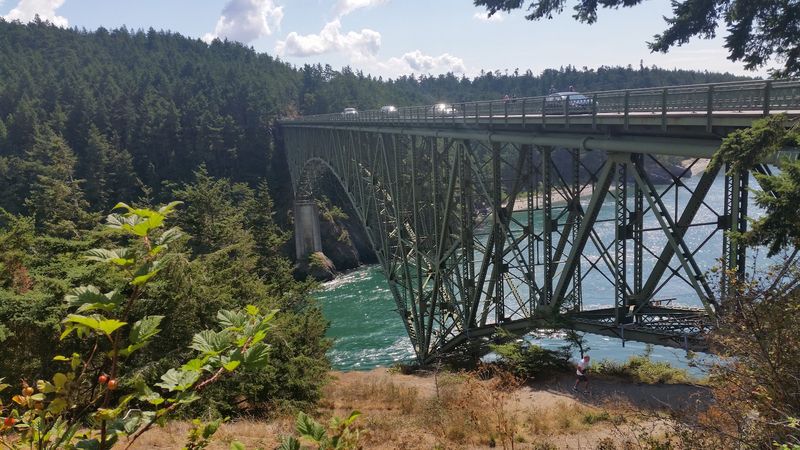
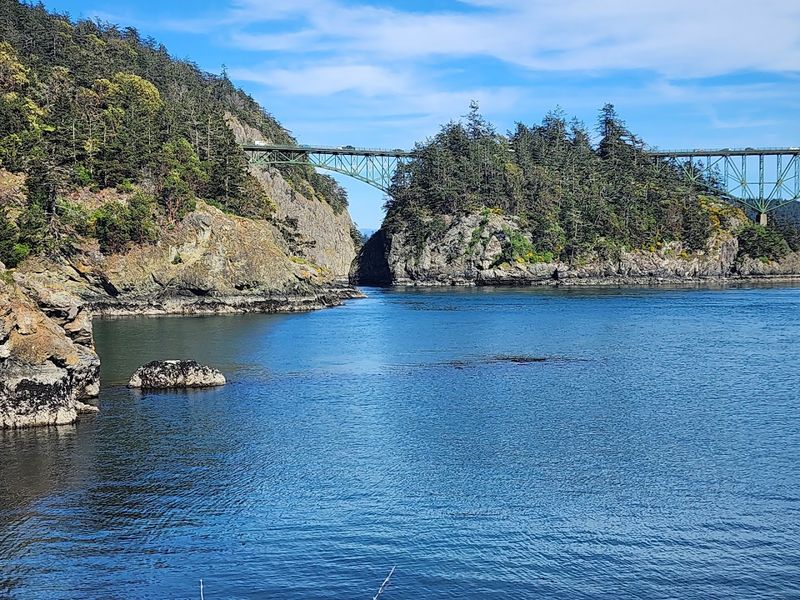
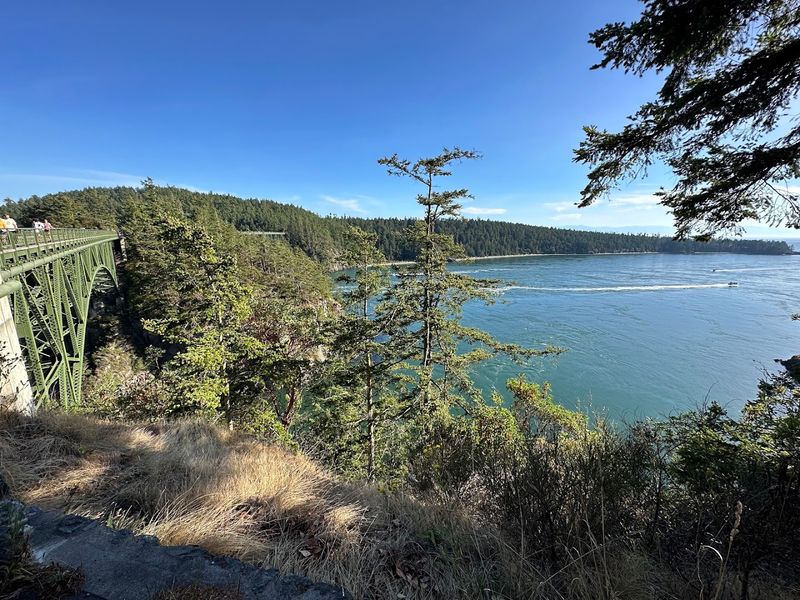
Few structures in the Pacific Northwest carry as much drama as the Deception Pass Bridge, and standing on the pedestrian walkway for the first time, I felt the wind push against me while the tidal waters swirled far below.
The bridge is actually two spans, the Canoe Pass Bridge and the Deception Pass Bridge, connected by Pass Island. Together they stretch across one of the most turbulent waterways in Washington.
Completed in 1935, the bridge was a Public Works Administration project built during the Great Depression, with the Civilian Conservation Corps providing much of the labor. That history alone makes every crossing feel meaningful.
Before it existed, a ferry service was the only way across, and travelers had to strike a saw with a mallet just to summon the boat.
Walking across the bridge is completely free and takes only a few minutes, but the views straight down into the churning pass are absolutely unforgettable. Arrive early in the morning to catch the mist rising off the water for a truly cinematic moment.
Rosario Head Sunset Viewpoint
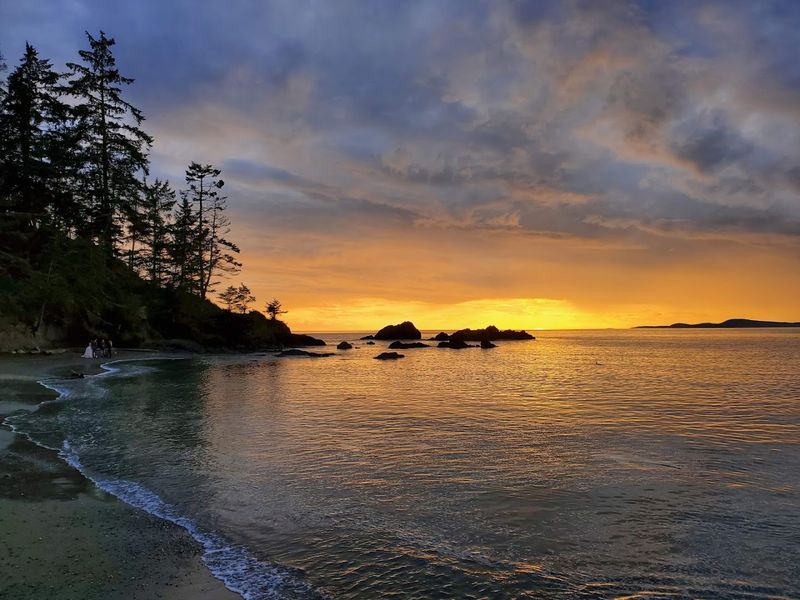
Rosario Head is the kind of place that makes you stop mid-sentence and just stare. Perched at the edge of a rocky headland, this viewpoint delivers some of the most spectacular sunset displays I have ever witnessed anywhere on the West Coast.
The Strait of Juan de Fuca stretches out in front of you, and when the light fades, the whole sky turns into a painting of orange, gold, and deep violet.
Getting there is easy. A short trail from the Bowman Bay parking area winds through coastal scrub and opens onto the exposed headland, where a large carved figure of a Native American woman stands as a tribute to the Samish people who have called this land home for thousands of years.
That cultural connection adds a layer of meaning to the already breathtaking setting.
Sunsets here tend to be best in late summer and early fall when the sky is clearest and the colors are most intense. Bring a jacket, because the wind picks up fast once the sun dips below the horizon.
West Beach And Its Fiery Evening Skies
West Beach is where I planted myself one evening with a thermos of coffee and watched the sky put on an absolute show.
This long, driftwood-lined stretch of saltwater shoreline faces west, which means it catches the full force of every sunset in a way that feels almost theatrical. The sand here is coarse and dark, scattered with massive bleached logs that make perfect natural benches.
Photographers absolutely love this spot, and it is easy to understand why. The wide, unobstructed horizon means you can track the sun all the way down, and the wet sand at the shoreline mirrors the colors overhead for a double-dose of visual magic.
On calm evenings, the reflection stretches out like a mirror all the way to the water line.
West Beach also has a large parking area, restrooms, and picnic tables, making it a practical choice for families who want to enjoy a relaxed evening without a long hike. Arriving at least thirty minutes before sunset gives you the best chance to find a prime spot along the shore.
38 Miles Of Hiking Trails To Explore
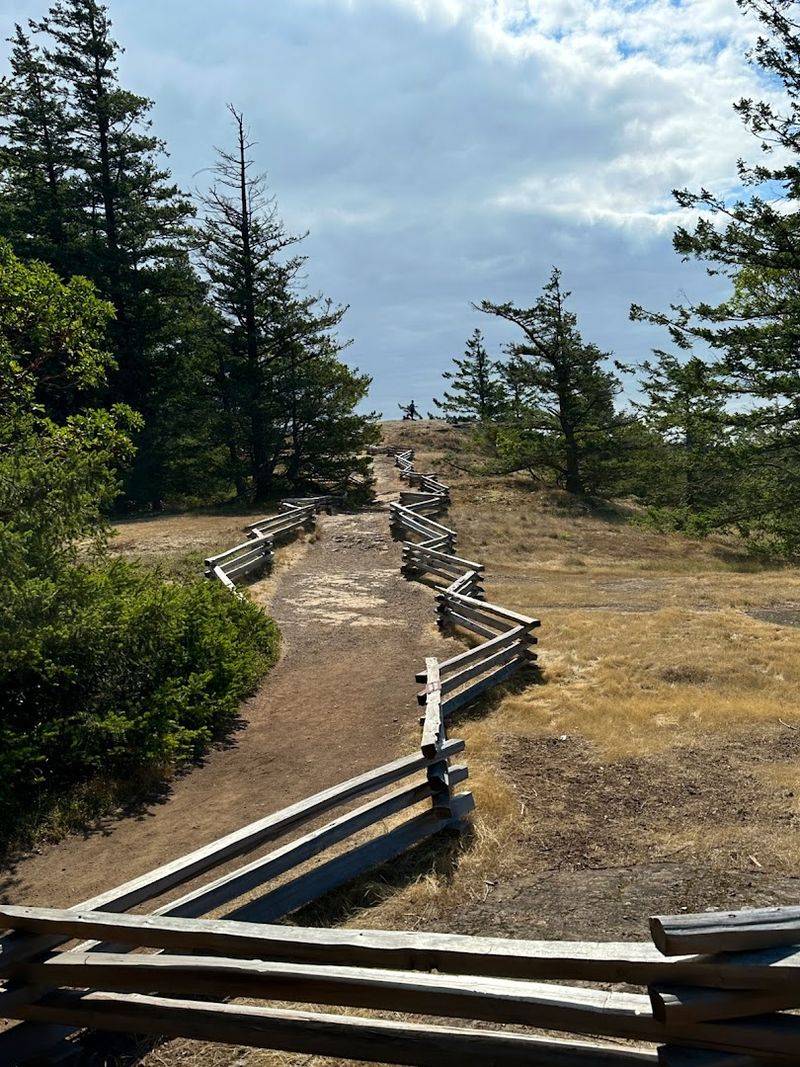
Thirty-eight miles of hiking trails sounds like a lot until you actually start exploring and realize you could easily spend an entire weekend without retracing a single step.
The trail network at Deception Pass State Park ranges from flat, easy nature walks along the shoreline to steep, rocky climbs that reward you with summit views stretching from the Cascade Mountains to the San Juan Islands.
One of my personal favorites is the trail up to Goose Rock, the highest point on Whidbey Island at about 484 feet. The climb takes roughly thirty to forty-five minutes and the panoramic view at the top is genuinely worth every uphill step.
On a clear day, you can spot Mount Baker to the northeast and the Olympic Mountains to the southwest.
For a more relaxed pace, the trail around Cranberry Lake winds through peaceful forest and past bird-watching areas that feel miles away from any crowd. No matter your fitness level, this park has a trail that matches your energy perfectly.
Wildlife Encounters You Will Not Forget
On my very first morning at the park, a bald eagle landed on a log about twenty feet from where I was standing, and I completely forgot to breathe for a solid five seconds. Wildlife sightings at Deception Pass are not rare events reserved for lucky visitors.
They are practically a daily occurrence if you know where and when to look. The park shelters an impressive variety of animals, including great blue herons, river otters, harbor seals, and Steller sea lions along the shoreline.
Patient visitors scanning the waters from the bridge or the rocky headlands have spotted humpback whales, minke whales, gray whales, and even orcas passing through the Deception Pass waterway during migration periods.
The best strategy for wildlife watching is to arrive early, move quietly, and stay near the shoreline or bridge viewpoints. Early mornings and late afternoons are peak activity times for most of the animals here. Keep your camera ready at all times, because the next incredible sighting is never far away.
The Fascinating History Behind The Name
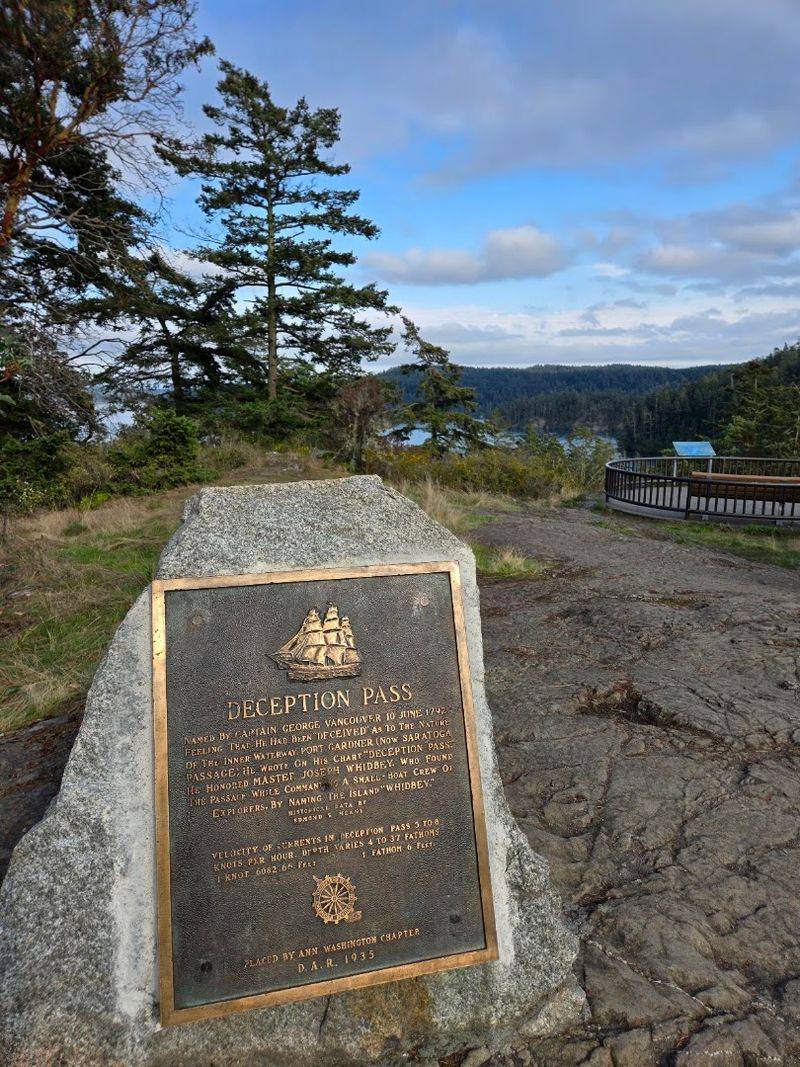
The name Deception Pass is not just catchy. It carries a genuinely interesting backstory rooted in 18th-century maritime exploration.
In 1792, British explorer Captain George Vancouver was surveying the Pacific Northwest coastline and initially believed the narrow waterway here was simply a closed bay. He charted it as such and moved on, confident in his conclusion.
It was Joseph Whidbey, Vancouver’s sailing master, who later discovered that the supposed bay was actually a swift and turbulent tidal pass connecting the Strait of Juan de Fuca to Skagit Bay.
When Vancouver learned of his error, he named the waterway Deception Pass to acknowledge the way the geography had fooled him. The island on the other side was then named Whidbey Island in honor of the man who figured it out.
That story of geographic confusion turned into one of the most visited state parks in Washington, which feels like a satisfying plot twist. Knowing the backstory while standing on the bridge adds a whole new layer of appreciation for the view stretching out below you.
Camping Under The Stars At The Park
Spending a night inside Deception Pass State Park is an experience that changes the way you understand the place.
During the day, the park buzzes with visitors, but after the day-trippers head home, the forest settles into a quiet that feels almost sacred. The sound of distant waves and wind moving through the old-growth firs becomes your evening soundtrack.
The park offers multiple campgrounds, including Bowman Bay and Cranberry Lake, with sites ranging from standard tent spots to full hookup options for RVs. Reservations are strongly recommended during summer months, as sites fill up weeks in advance.
I booked mine about six weeks ahead and still had limited choices, so plan early if you want the best spots near the water.
Waking up at sunrise inside the park is one of those simple pleasures that stays with you long after you leave. The morning light filtering through the trees and the smell of salt air drifting in from the strait make even instant coffee taste like the best cup you have ever had.
Practical Tips For Planning Your Visit
A little preparation goes a long way when visiting Deception Pass State Park, and the most important thing to sort out before you arrive is your Discover Pass.
Washington State requires this vehicle access pass for day use at all state parks, and you can purchase it online or at a self-pay station near the park entrance. Walking across the bridge is always free, which is a nice bonus if you just want a quick visit.
The park’s official address is 41229 State Route 20, Oak Harbor, WA 98277, and it sits right along the highway, making it easy to find without any complicated navigation.
Parking lots fill up fast on summer weekends, sometimes before 10 a.m., so arriving mid-week or during spring and fall shoulder seasons is a smart move for a more relaxed experience.
Cell service inside the park can be patchy in certain areas, so downloading offline maps beforehand is a practical habit. Also, pack layers no matter what time of year you visit, because coastal weather near the Strait of Juan de Fuca shifts quickly and without much warning.
A Closing Thought On Why This Park Stays With You
Some places leave a mark that no photograph quite captures, and Deception Pass is firmly in that category for me. It is not just the sunsets, although those are genuinely extraordinary.
It is the combination of everything working together at once: the roar of tidal water below the bridge, the silence of the old-growth forest, the unexpected sight of a seal surfacing near the rocky shore.
Washington State has no shortage of beautiful parks, but the sheer variety packed into this one destination makes it stand out in a way that keeps drawing people back year after year.
It is technically the most visited state park in Washington, yet its 4,134 acres are large enough that you can still find quiet corners that feel entirely your own.
That sense of discovery, of turning a corner on a trail and gasping at an unexpected view, is exactly what a great park should deliver every single time.