
This Historic Maine Mill Is Full Of Mind-Blowing Architectural Finds
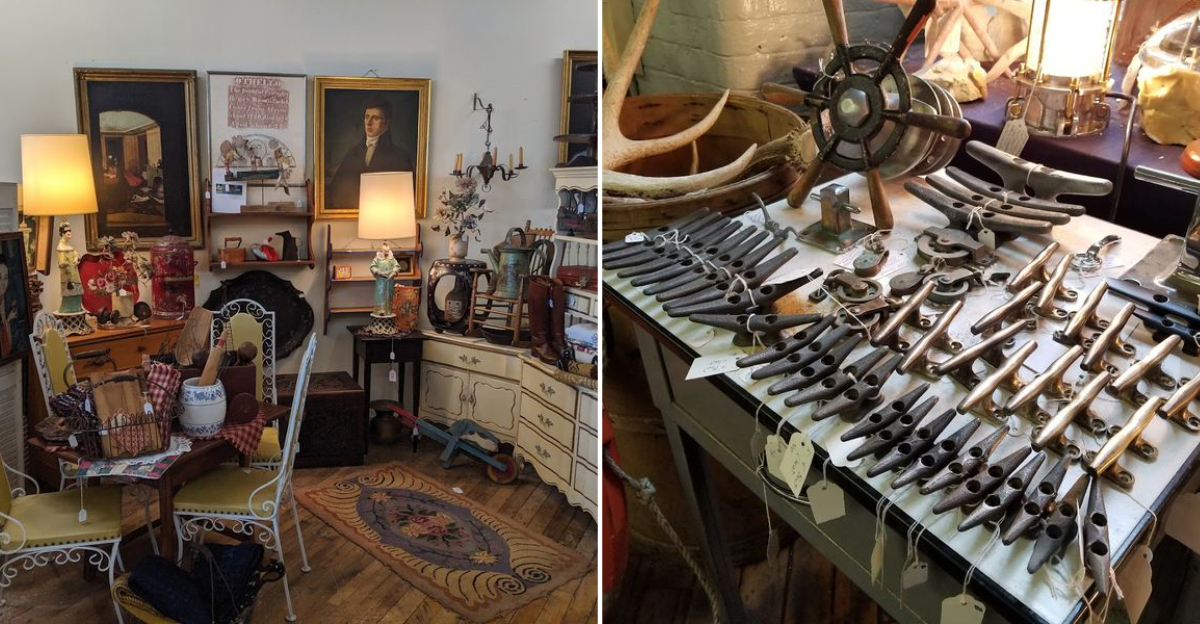
What do river power, old brick, and 160 dealer displays have in common? In Brunswick, Maine, they all meet inside a former 19th-century textile mill turned antiques wonderland.
Set within the landmark Fort Andross mill building beside the Androscoggin River, this sprawling marketplace covers more than 16,000 square feet of vintage furniture, collectibles, architectural details, and unexpected curiosities. The setting adds half the magic.
Historic brick, sturdy mill character, tall windows, and industrial scale make the building feel like part of the hunt rather than just a backdrop. Every aisle feels layered with Maine history, giving visitors the sense that the walls have witnessed just as many stories as the objects now waiting on shelves.
The Fort Andross Mill Building
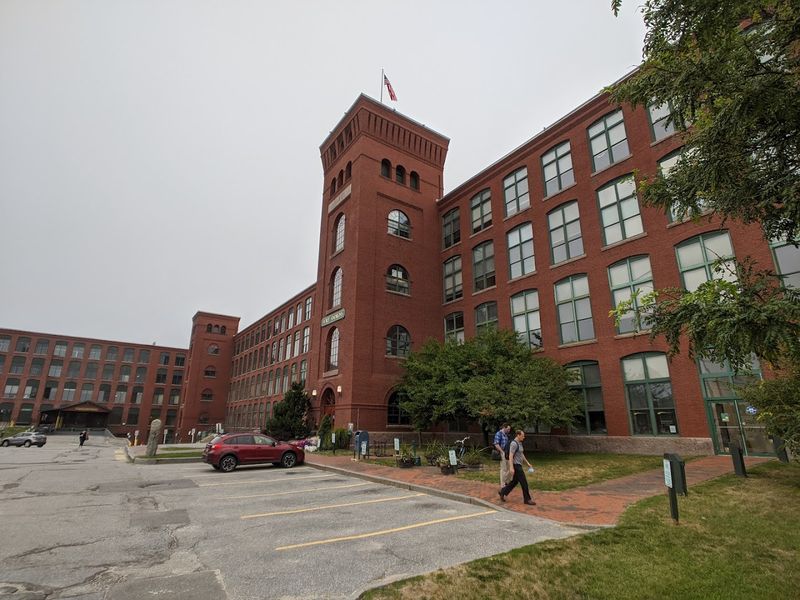
Long before anyone placed a price tag on a Victorian writing desk or a hand-painted milk glass lamp, this building was already making history.
The Fort Andross mill complex in Brunswick, Maine, dates back to the early 19th century, when it served as a major textile manufacturing hub powered by the Androscoggin River.
The Cabot Manufacturing Company once ran operations here, filling the space with the noise of looms and the hum of industrial ambition.
Walking up to the exterior today, you immediately sense that something significant happened inside these walls.
The red brick facade is thick, sturdy, and weathered in the most beautiful way possible. Arched windows line the upper floors, and the building’s sheer scale signals that this was never a modest operation.
Adaptive reuse projects like this one are rare successes. The bones of the mill have been preserved with genuine care, making the architecture itself one of the most compelling reasons to visit Cabot Mill Antiques at 14 Maine St, Brunswick, ME 04011.
Exposed Brick Walls That Tell Stories
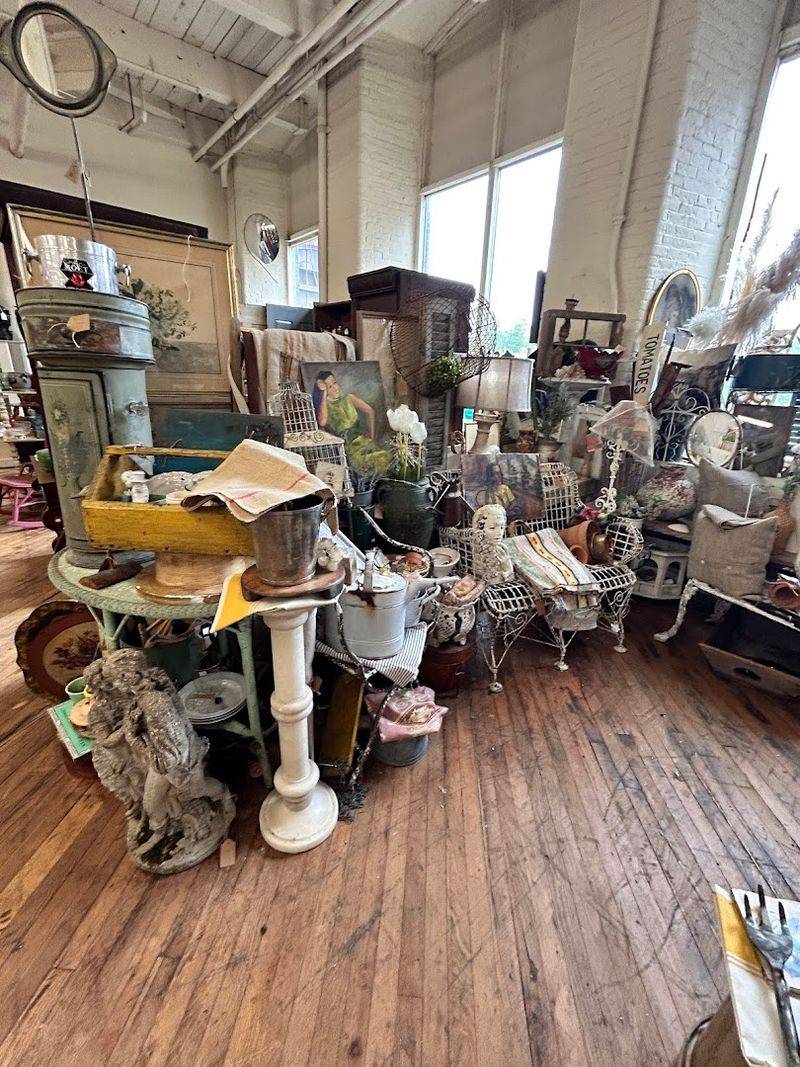
Few architectural details carry as much raw personality as exposed brick, and inside Cabot Mill Antiques, the brick walls are absolutely everywhere.
These are not decorative veneers or carefully curated design choices added during renovation. These are original 19th-century bricks that have absorbed decades of mill work, river humidity, and New England winters.
The texture is remarkable up close. You can spot variations in color from deep burgundy to pale orange, evidence of different construction phases across the building’s long life.
Mortar lines are uneven in the most honest way, a reminder that craftsmen built this by hand long before power tools existed.
What makes the brick walls especially compelling here is the contrast they create with the merchandise. A delicate porcelain figurine sitting against rough, ancient brick creates a visual tension that no modern retail space could manufacture.
The walls are not just a backdrop at Cabot Mill Antiques. They are a conversation between past and present that never gets old.
Original Timber Beams Overhead
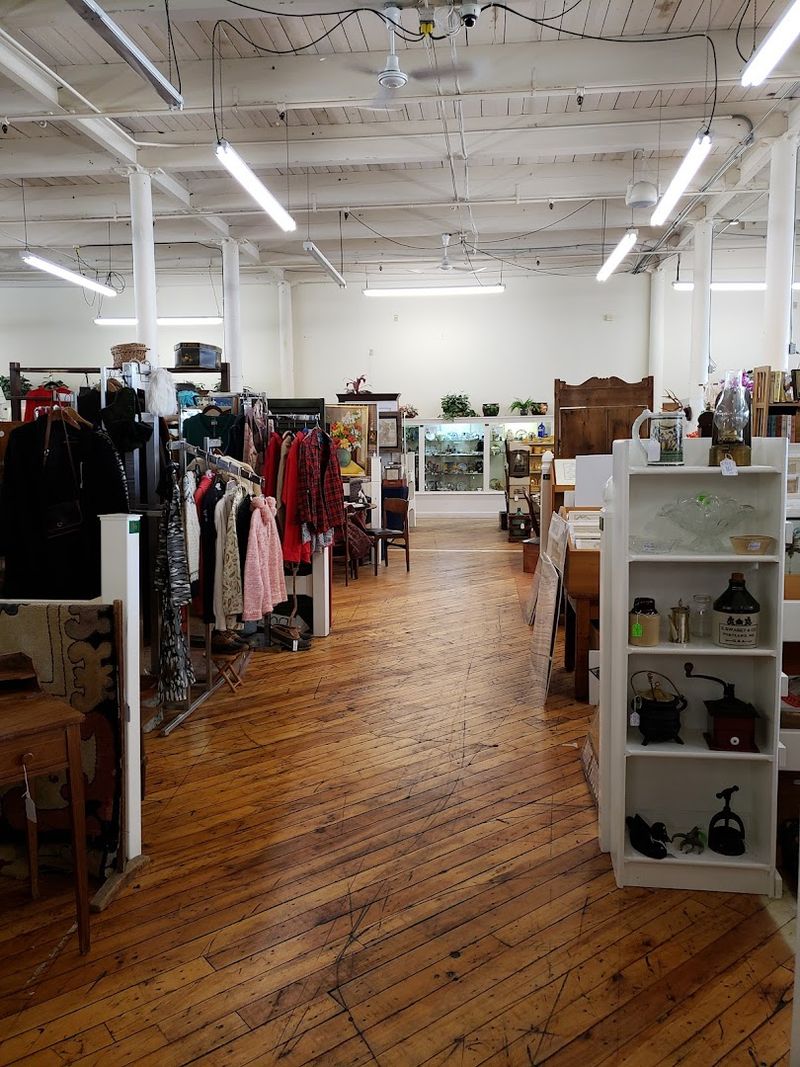
Crane your neck upward at Cabot Mill Antiques and you will find one of the most impressive structural features in any retail space in Maine.
Historic structural elements overhead and throughout the building help preserve the feel of the former mill. Each beam has its own grain pattern, its own knots and imperfections, its own century-long story.
The building was once designed for demanding industrial use, and that sturdy mill character still shapes the shopping experience today.
Today they support a very different kind of weight, which is the accumulated wonder of over 160 antique dealers displaying their finest pieces below.
There is something almost meditative about browsing antiques directly beneath wood that old. The beams ground the experience in a way that is hard to articulate but easy to feel.
It is a reminder that the building at 14 Maine St has always been a place where human effort and craftsmanship matter more than anything else.
The 16,000 Square Foot Floor Plan
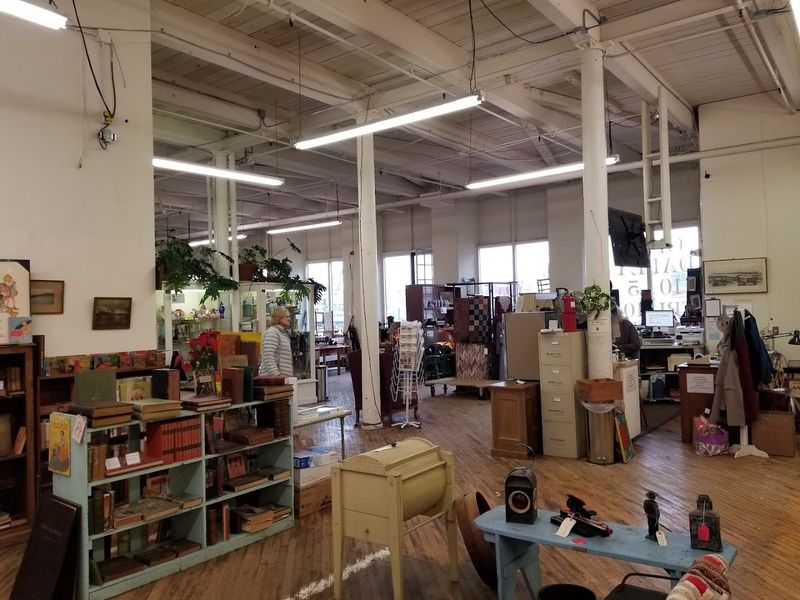
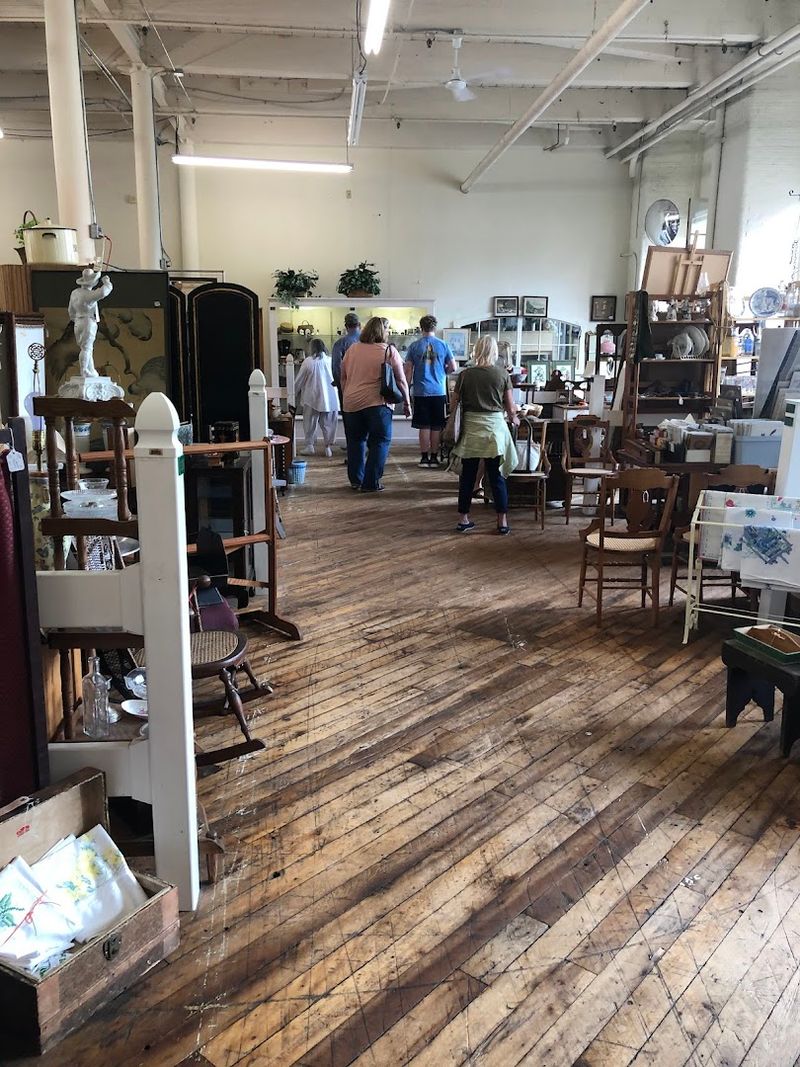
Size matters when you are hunting for antiques, and Cabot Mill Antiques does not disappoint on that front. The entire operation covers 16,000 square feet of browsing space, which is roughly the size of a small grocery store entirely devoted to fascinating old things.
That is a lot of ground to cover, and first-time visitors often find themselves pleasantly surprised by how long they end up staying.
The layout is open and well-organized, which is not always the case in large antique malls. There is enough room between booths that you can move comfortably without worrying about accidentally knocking over a stack of vintage china.
The flow of the space feels natural, drawing you from one section to the next in a way that keeps the browsing experience energized.
With more than 160 individual dealers spread across this footprint, no two visits feel exactly the same. Inventory rotates constantly, so a piece that was not there last month might be waiting for you on your next trip through Brunswick.
Windows Worth Noticing
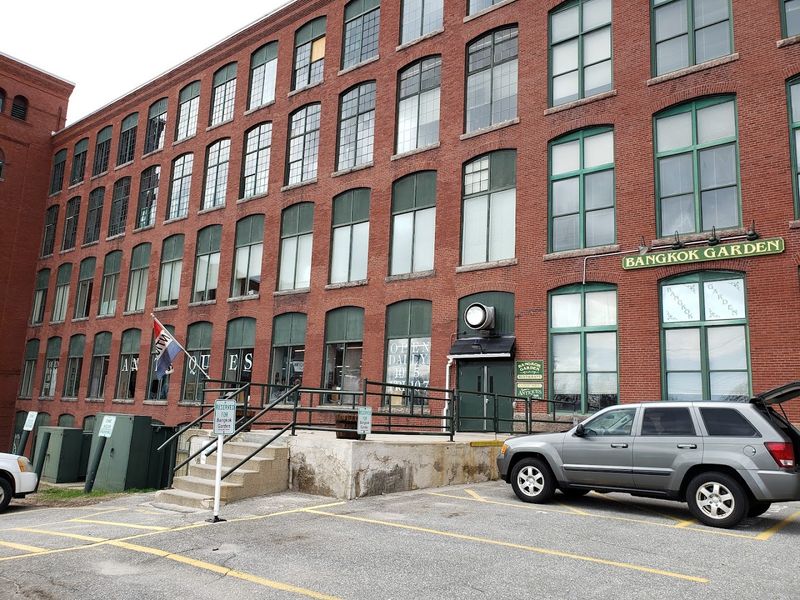
One of the most underappreciated architectural features of Cabot Mill Antiques is the window situation, and it is genuinely spectacular.
Mill buildings of this era were designed with large, evenly spaced windows to maximize natural light for workers who needed to see their looms clearly. That same logic now creates an ideal environment for examining antiques.
Natural light does something for old objects that artificial lighting simply cannot replicate. It reveals true colors in vintage textiles, brings out the patina on antique brass hardware, and gives wooden furniture a warmth that spotlights tend to wash out.
Browsing near the windows on a clear Maine afternoon is one of the more quietly satisfying experiences in antique shopping.
The windows also frame views of the surrounding mill complex and the Androscoggin River, which adds an unexpected scenic element to the shopping experience.
You might be examining a Victorian side table one moment and gazing out at a 19th-century riverscape the next, which is a combination not many antique stores can offer.
The Androscoggin River Setting

The location of Cabot Mill Antiques along the Androscoggin River is not just picturesque. It is historically loaded.
The river was the reason the mill existed in the first place, providing the water power that drove the machinery of the Cabot Manufacturing Company throughout the 19th century.
Rivers like the Androscoggin shaped the entire industrial identity of New England, and Brunswick was no exception.
Today, the river still flows past the Fort Andross complex, offering a serene backdrop to what is now a very different kind of commerce.
There is something quietly poetic about the fact that the same waterway that once powered looms now flows past a building full of the objects those mill workers might have owned and used.
Visiting Cabot Mill Antiques means you are not just shopping in an old building. You are standing at the intersection of geography, industry, and memory.
The river keeps moving outside, indifferent to the decades, while inside the mill, time has been lovingly collected and put on shelves.
Over 160 Individual Dealer Booths
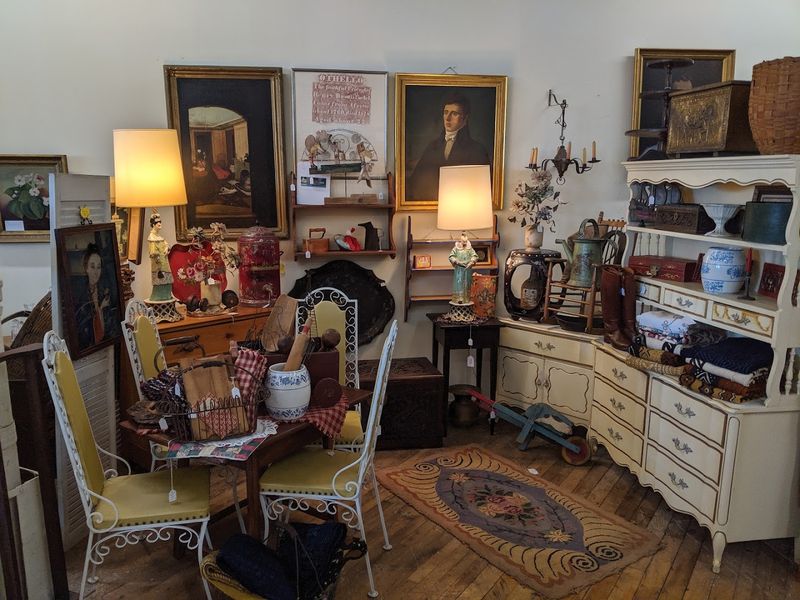
What separates a great antique mall from an average one is often the quality and variety of its dealers, and on that measure, Cabot Mill Antiques is exceptional.
With more than 160 individual booth holders, the range of merchandise on offer is genuinely staggering. You might move from a booth specializing in early American folk art straight into one focused entirely on mid-century modern furniture.
Each dealer curates their own space, which means every booth has its own personality and focus. Some lean heavily into New England regional antiques, offering locally made furniture and tools that reflect Maine’s specific craft traditions.
Others cast a wider net, bringing in pieces from across the country and beyond. Pricing varies from dealer to dealer as well, which keeps the browsing experience lively and sometimes surprisingly rewarding.
Architectural salvage pieces, vintage clocks, and rare hardware items appear regularly across the booths, making Cabot Mill Antiques a particularly worthwhile stop for anyone with an eye for design history and structural craftsmanship.
Hardware With History
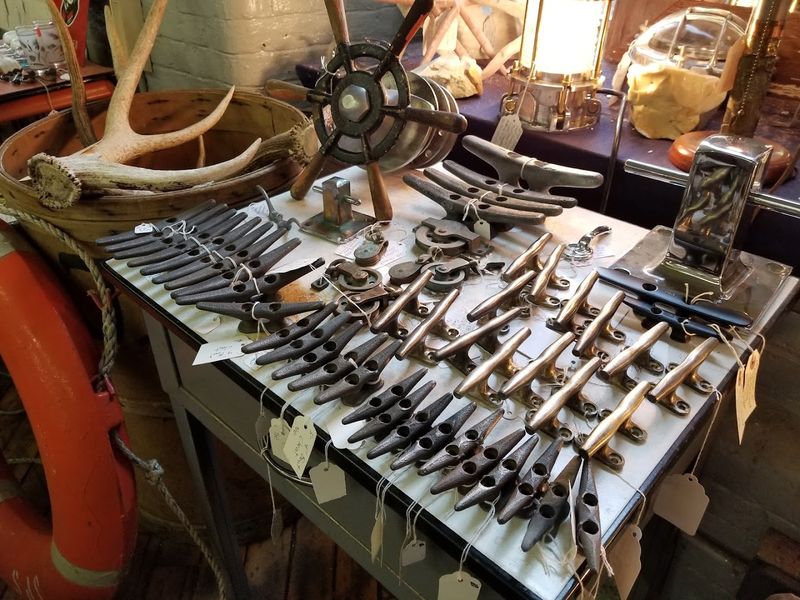
For anyone restoring an old home or simply fascinated by the craft details of historic buildings, the architectural salvage available at Cabot Mill Antiques is a serious draw.
Old handles, doorknobs, hardware, and other architectural pieces sometimes appear among the dealer displays, making the shop worth checking for restoration finds.
Finding original hardware for a century-old home is harder than most people realize. Mass-produced modern replacements rarely match the proportions, finish, or weight of antique originals, so tracking down a matching set of period door knobs or original cabinet pulls can feel like a genuine triumph.
The breadth of inventory here makes that kind of discovery genuinely possible.
The architectural salvage angle also connects beautifully to the building itself. Shopping for historic building materials inside a preserved 19th-century mill creates a satisfying sense of continuity.
The place does not just sell old things. It actively helps people keep old buildings alive, one carefully sourced hardware piece at a time.
Furniture Across The Decades
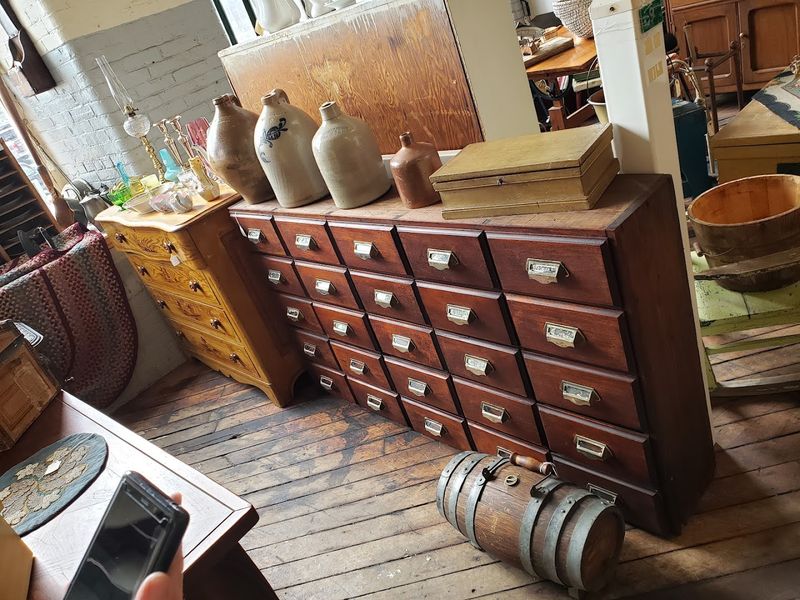
Furniture hunters who visit Cabot Mill Antiques rarely leave disappointed. The selection spans an impressive range of periods and styles, from heavy Victorian parlor pieces with carved mahogany details to sleek mid-century modern dressers with clean lines and original hardware.
Finding that kind of range under one roof is genuinely uncommon, even in major antique markets.
The scale of the building works in the furniture department’s favor. High ceilings mean that tall armoires and four-poster beds do not feel cramped or out of place.
Large pieces can be viewed from a comfortable distance, which makes assessing proportions and condition much easier than in tighter spaces.
Prices on furniture here tend to be competitive, particularly when compared to similar pieces in larger urban markets. The inventory turns over regularly, so returning visitors often find that the furniture floor looks meaningfully different from one season to the next.
If a particular piece catches your eye during a visit, the general wisdom is to act quickly rather than wait for a second trip.
Steps From Downtown
One of the most practical things about Cabot Mill Antiques is where it sits in relation to the rest of Brunswick.
The mill complex at 14 Maine St is within easy walking distance of downtown Brunswick, which means a visit here can slot naturally into a broader day of exploring one of Maine’s most charming MidCoast towns.
The combination of antique shopping and downtown wandering makes for a full and satisfying outing.
Brunswick itself has a lot going for it as a destination. Bowdoin College lends the town a lively intellectual energy, and the downtown area is lined with independent shops, cafes, and historic architecture that rewards slow exploration.
The Fort Andross complex, where Cabot Mill Antiques is located, also includes other businesses, so there is plenty to keep you occupied even after you have finished browsing the antiques.
You can reach Cabot Mill Antiques by phone at +1 207-725-2855, and more information is available online. The store is open every day, making it an easy addition to any Maine itinerary without complicated planning.