
This North Carolina Village Feels Like Early America With Working Trade Shops And Centuries-Old Streets
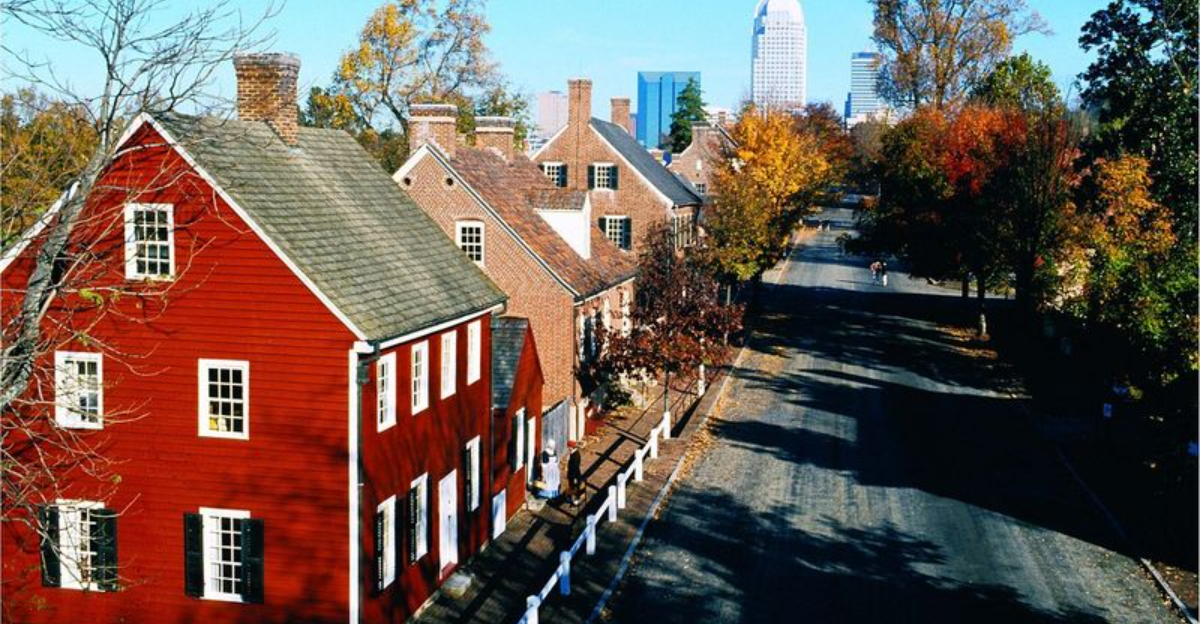
If you’ve ever wished history had a doorway you could just walk through, there’s a place in Winston-Salem, North Carolina that gets uncomfortably close. Not a museum behind glass.
More like a town that forgot to stop being 1766. Cobblestone paths, candlelit workshops, and wooden buildings still standing exactly where they were placed centuries ago.
Nearly a hundred restored structures line the original streets, where interpreters in period clothing still shape, bake, and build the way they once did. Bread comes out of a wood-fired oven that’s been running since the early 1800s.
Tools still clatter in workshops that feel untouched by time. It doesn’t feel like learning history.
It feels like accidentally stepping into it. And just like that, North Carolina hides a place where the past never fully left.
It just kept living quietly in plain sight.
The Moravian Roots That Built An Entire Town From Scratch
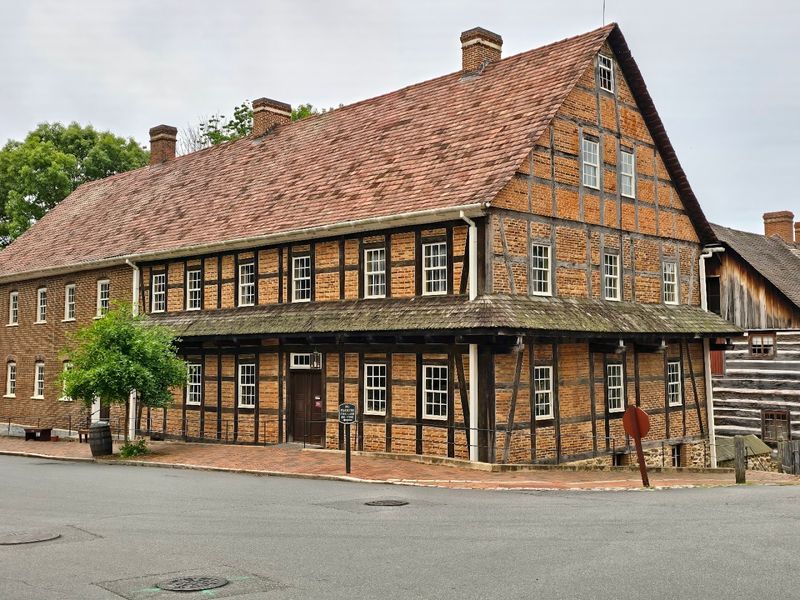
Long before Winston-Salem became a city, a group of deeply committed Moravian settlers arrived in the North Carolina Piedmont and built something extraordinary. In 1766, they established Salem as a planned, church-owned community where every building, every street, and every trade was organized with intention and purpose.
The Moravian Church, originally from Central Europe, brought a strong work ethic and a collective spirit that shaped every corner of this town. What you walk through today is not a recreation.
These are the actual structures, restored rather than rebuilt, which is a rare distinction in the world of historic preservation.
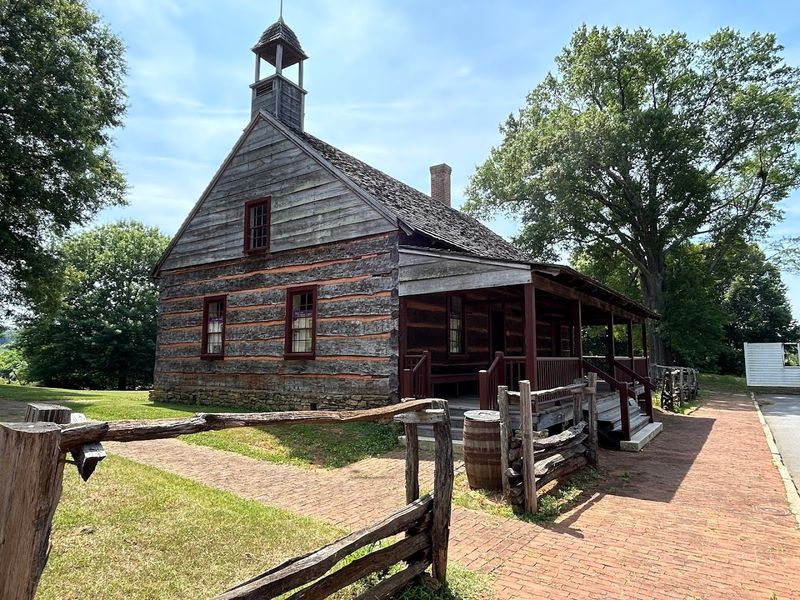
The architecture tells the story beautifully. Half-timbered frames, steeply pitched roofs, and a mix of brick and clapboard exteriors reflect a blend of European heritage and colonial practicality.
The nearly 100 acres and almost 100 restored buildings make this one of the most intact early American communities in the Southeast. Old Salem was designated a National Historic Landmark District in 1966 and expanded in 2016, cementing its place as a landmark of national significance.
Walking these streets feels less like a field trip and more like a genuine encounter with the past.
Where History Literally Smells Delicious
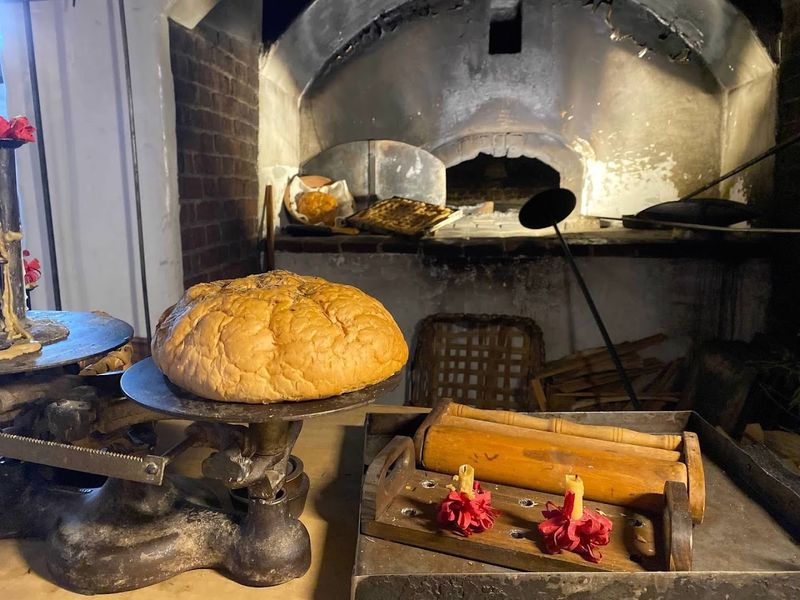
There are bakeries, and then there is Winkler Bakery, one of the oldest continuously operating bakeries in the entire United States. Established in 1807, this place has been pulling fresh bread, sugar cake, and the legendary Moravian cookies from a wood-fired oven for over two centuries.
That is not just impressive, that is practically mythological.
The Moravian sugar cake alone is worth the trip to Old Salem. Soft, pillowy, and topped with cinnamon and brown sugar, it comes straight from a recipe tradition that has survived wars, revolutions, and the invention of the internet.
The thin Moravian cookies are equally iconic, crisp and spiced in a way that feels both old-fashioned and completely addictive.
The wood-fired oven itself is a historic artifact, radiating heat and that unmistakable scent of baking bread that drifts out onto the street and pulls you in like a cartoon character floating toward a pie on a windowsill. Winkler Bakery is free to enter, which means even without a museum ticket, you can stop in, breathe it all in, and leave with a bag of cookies that will not last the drive home.
The Single Brothers’ House And The Trades That Kept Salem Running
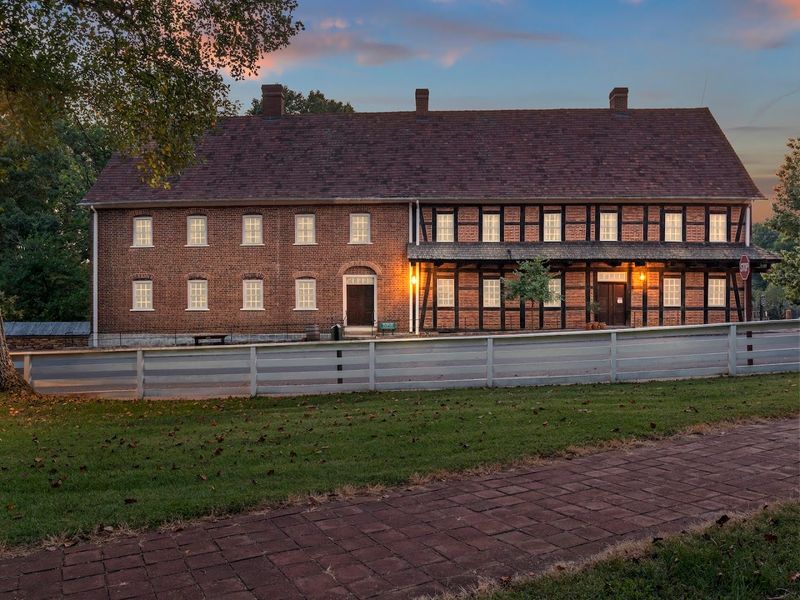
The Single Brothers’ House is one of the most fascinating buildings in all of Old Salem, and the story behind it is genuinely unlike anything you will find in a typical history book. Unmarried Moravian men lived and trained here together, learning skilled trades under a communal system that was both highly organized and surprisingly forward-thinking for the 1700s.
Today, the building functions as a core exhibit space where visitors can watch live demonstrations of joinery, gunsmithing, and pottery. Interpreters in period clothing work at actual benches with period-appropriate tools, and the whole scene has an energy that feels more like a working workshop than a museum display.
You can ask questions, watch the process unfold, and genuinely understand how these crafts sustained an entire town.
The trades practiced here were not hobbies. They were the economic engine of Salem from its founding in 1766 straight through the Industrial Revolution.
Joinery produced furniture, gunsmithing kept the community protected, and pottery became a significant commercial enterprise throughout the Carolinas. Seeing these skills demonstrated in real time, in the actual building where they were once practiced daily, is the kind of experience that rewires how you think about early American life.
Cobblestone Streets And Walking Trails That Take You Back In Time
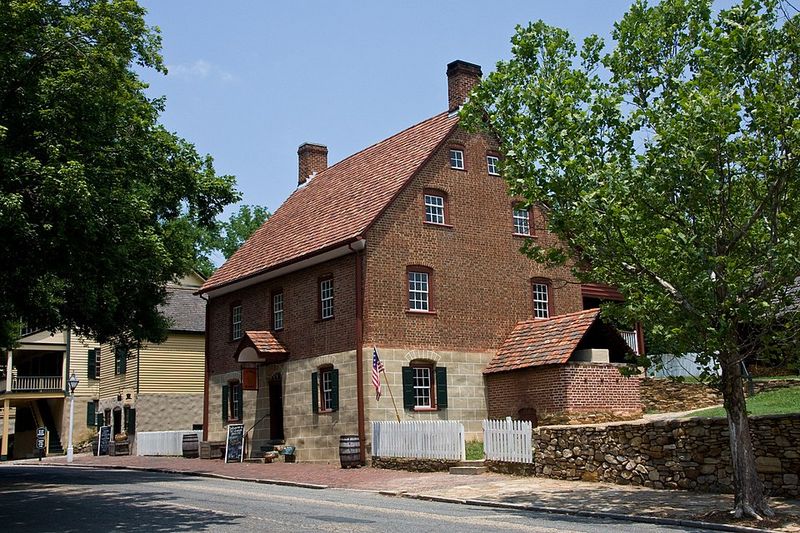
The moment your feet hit the uneven brick sidewalks of Old Salem, something shifts. The streets here are not smooth or modern.
They are the original paths, worn and weathered by more than 250 years of foot traffic, and they have a texture that no theme park could ever replicate.
The walking trails wind through restored homes, trade shops, and gardens across nearly 100 acres of preserved landscape.
The whole town spans about one mile end to end, making it very walkable without feeling rushed. Every turn reveals something worth pausing over, whether it is a carved doorway, a kitchen garden, or the sudden quiet of a side street that feels completely removed from the 21st century.
Exploring freely without a ticket is genuinely satisfying here. The exterior architecture, the gardens, the general store, the visitor center, and the bakery are all accessible without paying for admission.
For those who want to go deeper, ticketed access opens up the interior of historic homes and exhibit buildings. Either way, the streets themselves are the main event, and walking them slowly, without a schedule, is absolutely the right approach.
Pottery, Tinsmithing, And Trades You Did Not Know You Needed To See
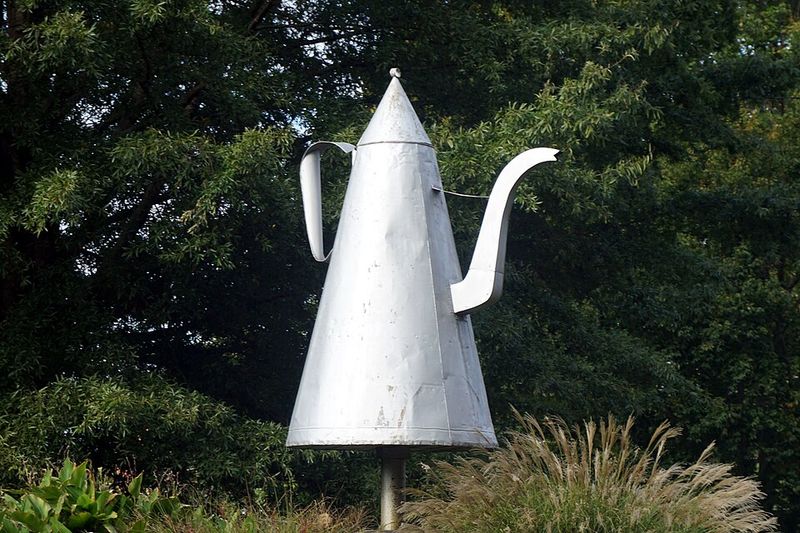
Not every museum can say that its craft demonstrations changed the commercial landscape of an entire region, but Old Salem can. Pottery produced here became one of the most sought-after goods throughout the Carolinas in the 18th century, and the tradition of making it by hand in the same style is still demonstrated today.
Beyond pottery, visitors can observe tinsmithing and pewtering, shoemaking, tailoring, and apothecary work.
Each trade has its own space and its own story, and the interpreters who demonstrate them are genuinely knowledgeable about the history and technique behind every piece they produce.
Watching someone shape metal or stitch leather by hand with period tools is unexpectedly captivating.
What makes these demonstrations stand out is the context. These were not decorative arts.
They were survival skills performed by Moravian craftsmen, by women at the Single Sisters’ House, and by both enslaved and free African American artisans whose contributions are now recognized as central to Salem’s history.
Old Salem’s mission is to tell that full, complex story, and the trade demonstrations are a key part of how that mission comes to life every single day.
The Museum Of Early Southern Decorative Arts Inside The District
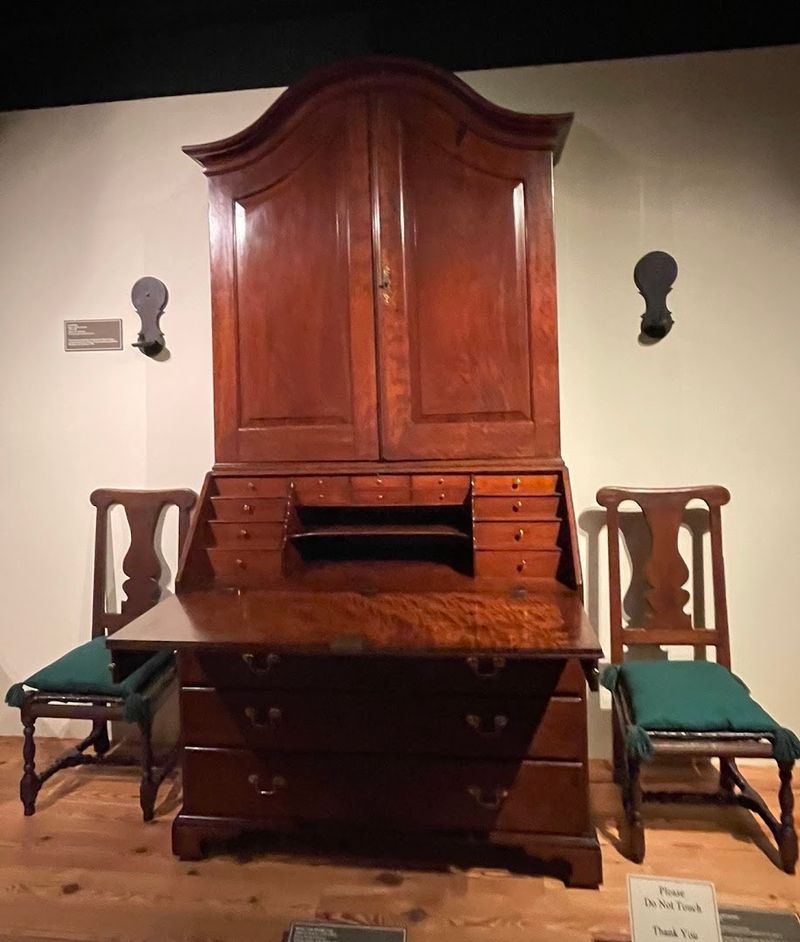
Right inside the Old Salem district sits one of the most specialized museums in the country. The Museum of Early Southern Decorative Arts, known as MESDA, holds an extraordinary collection of furniture, ceramics, silver, textiles, and paintings produced in the American South before 1860.
It is the kind of place that makes decorative arts feel genuinely exciting.
The collection is organized into period room settings that recreate the interiors of actual Southern homes, workshops, and public spaces.
Walking through them gives a vivid sense of how people lived, worked, and expressed creativity through the objects they made and used every day. The craftsmanship on display is remarkable, and the research behind the collection is equally impressive.
MESDA also functions as a serious research center, with a database of Southern craftspeople that scholars and genealogists use regularly.
For the casual visitor, though, the museum simply delivers a beautifully curated window into Southern material culture that you will not find anywhere else. Pairing a visit to MESDA with a walk through the historic district creates a layered experience that covers both the everyday life and the artistic achievement of early Southern communities in one afternoon.
Gardens, Seasonal Events, And The Best Time To Visit
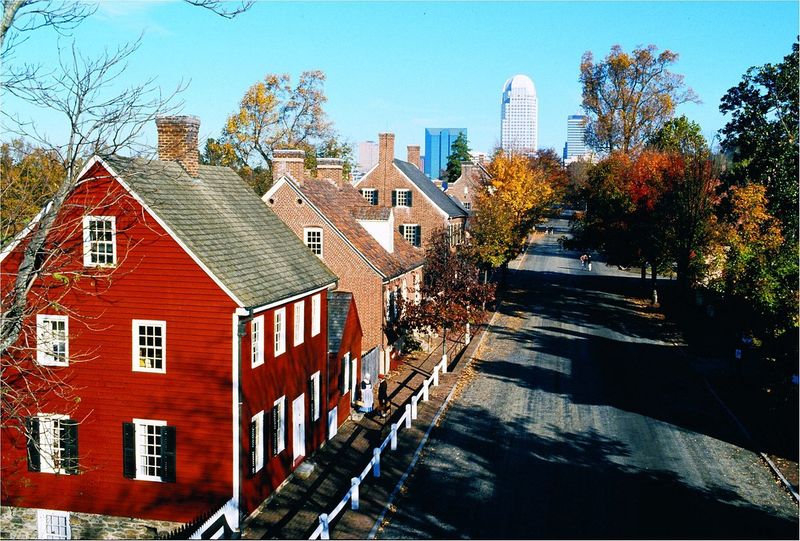
Old Salem is not just a winter destination or a summer detour. It genuinely rewards a visit in any season, though the gardens are especially worth seeing when things are in bloom.
The historic kitchen and herb gardens are planted in traditional Moravian style, and they add a layer of sensory beauty to the walking experience that photographs cannot fully capture.
The site comes alive during seasonal events, particularly in the fall and during the holiday season. The Christmas celebrations at Old Salem have a long tradition and draw visitors from across the region, with candlelight tours and seasonal baking at Winkler Bakery creating an atmosphere that feels straight out of a storybook.
Spring and early summer tend to bring more active programming across the trade shops and exhibit buildings.
For the best experience, arriving when the site opens at 9 AM on weekdays gives you the most time to explore before the buildings break for midday. The museum is open Thursday through Saturday, with Wednesday hours as well, so planning ahead matters.
Spending a full day here is absolutely possible and genuinely rewarding, especially if you take your time with each trade demonstration and garden space.
Planning Your Visit To 900 Old Salem Road, Winston-Salem
Getting to Old Salem is straightforward, and the experience begins the moment you pull up to 900 Old Salem Road in Winston-Salem. The visitor center is the ideal starting point, with historical displays, a gift shop, and all the information you need to navigate the nearly 100-acre district confidently.
Tickets for interior building access are available here, and the all-access pass is genuinely worth considering if you plan to spend a full day.
Walking around the exterior of the historic district, including the streets, gardens, bakery, and general store, is completely free.
For those who want to go inside the restored homes and exhibit buildings, ticketed admission opens up a much deeper experience. The site is open Thursday through Saturday from 9 AM to 4 PM, and Wednesday hours are also available, so checking the current schedule at oldsalem.org before your visit is a smart move.
Wear comfortable shoes because the cobblestone paths are beautiful but uneven.
Plan for at least two to three hours at minimum, and budget more time if history tends to pull you in. Old Salem is one of those rare places that earns every hour you give it, so why not give it a whole day?