
This Ohio Heritage Farm Feels Like A Perfect June Afternoon (A Pure Summer Relaxation)
The first clue that this place runs on farm time is the quiet.
In central Ohio, a living-history farm lets June slow down without asking permission. Draft horses work the fields.
Heritage crops grow in neat rows. Staff in 1880s clothing keep the day moving with real chores, not staged little moments.
There are barns, a smokehouse, a farmhouse, and enough old-fashioned detail to make your phone feel wildly unemployed. Nothing here rushes you, which may be the whole charm.
Spend an afternoon wandering the paths, and the appeal becomes obvious. It is calm, earthy, and refreshingly unplugged, like summer found a rocking chair and decided to stay awhile.
A Farm That Actually Works
Most historical sites feel like museums where you read plaques and move on. This place is different from the moment you arrive.
Slate Run Living Historical Farm operates as a fully functioning 1880s farm, which means the staff actually plows fields, tends crops, cares for livestock, and preserves food using methods from over a century ago. Nothing here is staged for show.
The work is real, the animals are real, and the seasonal rhythm of the farm follows genuine agricultural patterns from the era.
Every visit feels different depending on the time of year, which is part of what makes it so compelling. Spring brings planting and baby animals.
Summer brings field work and harvesting. From April through September, the farm operates Tuesday through Sunday, with hours running from 9 AM to 6 PM on Tuesday, Wednesday, Thursday, and Sunday, and from 9 AM to 7 PM on Friday and Saturday.
Best of all, admission is completely free. The farm sits within Slate Run Metro Park at 1375 OH-674, Canal Winchester, OH 43110, and parking is plentiful.
A visit here rewards curiosity, patience, and anyone who appreciates watching real skill in action.
The Story Behind The Farm
The 1880s were a defining decade for American agriculture, and Slate Run Living Historical Farm was designed to capture exactly that moment in time.
The farm represents a typical central Ohio family farm from that era, when horse-drawn equipment had replaced hand tools but modern machinery had not yet arrived. Every structure, every crop variety, and every technique used here reflects that specific window of agricultural history.
The farm became part of the Columbus and Franklin County Metro Parks system, which has maintained it with remarkable dedication over the decades.
Visitors who have been coming here since the late 1980s describe it as a place that never loses its authenticity or its charm. That kind of long-term loyalty says a lot.
The farm manager and staff invest serious physical effort into keeping the operation honest and historically grounded.
Understanding this backstory before you arrive makes the whole experience richer. You are not just watching people in costumes.
You are watching a carefully preserved chapter of American rural life being kept alive through genuine daily labor.
The Grounds And Layout
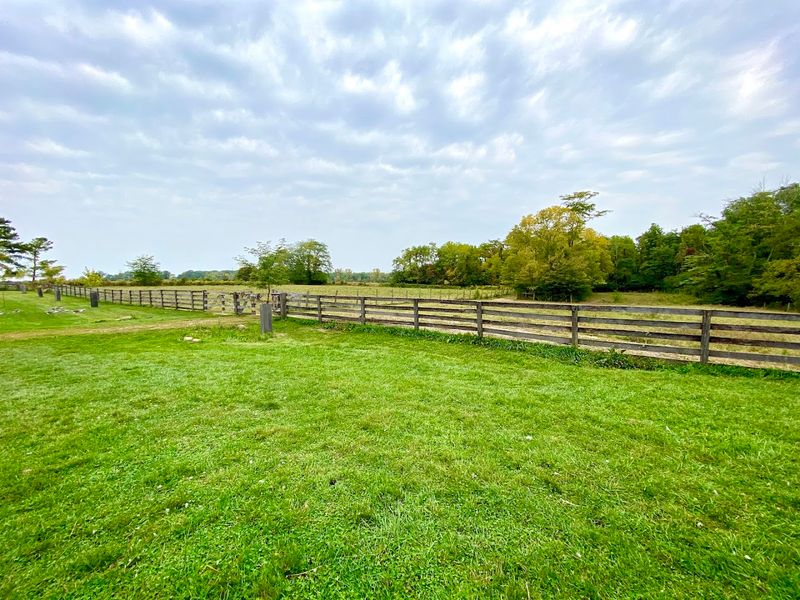
The farm covers a generous amount of ground. The layout rewards slow exploration rather than a quick loop around the property.
A detailed map is available at the entrance, and every building is clearly labeled with signage that explains its purpose and historical context. There is an alphabetized version of the map designed with younger visitors in mind, which makes it easy for kids to navigate on their own.
The main farmhouse anchors the property, surrounded by an impressive collection of outbuildings that includes a smokehouse, root cellar, barn, and various storage structures.
The orchard adds a particularly lovely touch to the landscape, especially in early summer when the trees are full and green. Dirt paths connect everything naturally, and the whole property has a relaxed, open feel rather than a crowded or cramped one.
On a Wednesday or Thursday, you might have large stretches of the property nearly to yourself. The shaded picnic areas nearby make it easy to turn a morning visit into a full afternoon.
Bring snacks, because there are no concessions on-site.
The Animals That Steal The Show
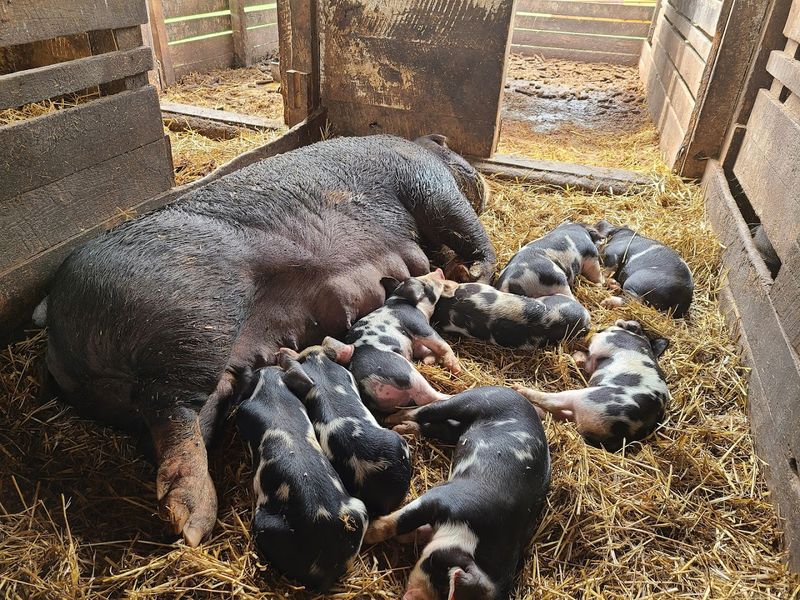
Honestly, the animals are the heart of this place. They can make every visitor forget about their phone entirely.
The farm is home to a variety of heritage livestock including horses, cows, pigs, sheep, geese, chickens, and turkeys. The large draft horses are a particular highlight.
Watching them work alongside staff members, pulling equipment across the fields, delivers a kind of quiet power that photographs cannot fully capture. The turkeys, apparently, are a crowd favorite among toddlers, which tracks completely.
Spring visits reward you with baby animals, and the energy around the farm during that season carries a special kind of excitement. Even outside of spring, the animals are active, visible, and well-integrated into the daily operations of the farm rather than confined to a petting zoo corner.
Staff members are generally happy to answer questions about the animals and their roles on a working farm.
The whole setup gives kids a hands-on understanding of where food comes from and how rural life actually functioned, which is a genuinely valuable lesson delivered in the most enjoyable way possible.
The Farmhouse And Period Interiors
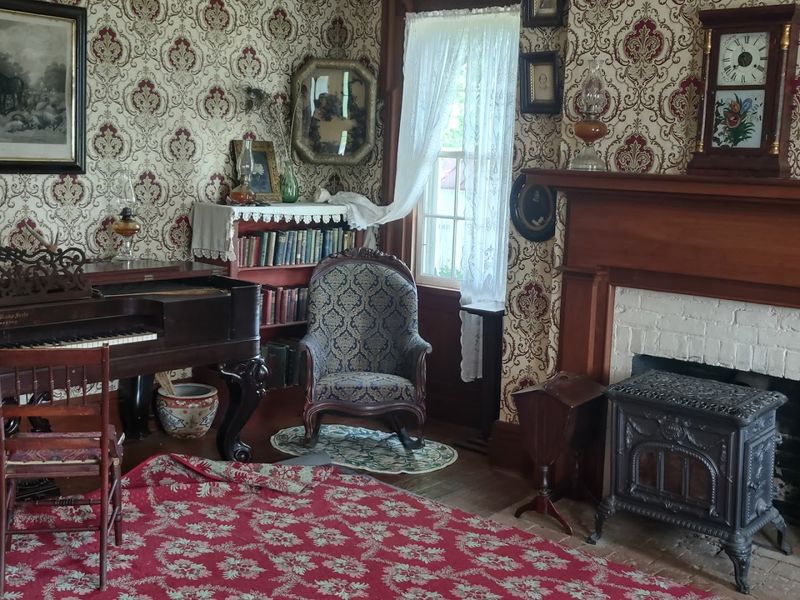
The main farmhouse at Slate Run is the kind of building that makes you pause at the doorway and just take it all in before stepping inside.
Every room is furnished with period-appropriate items that reflect the domestic life of an Ohio farm family in the 1880s.
Cast iron cookware, hand-stitched textiles, wooden furniture, and oil lamps fill the space with a texture that feels genuinely lived-in rather than sterile or overly curated.
The attention to detail here is remarkable, and it extends to small touches that most visitors might walk past without noticing.
Staff members stationed in and around the house are knowledgeable about the history of each item and the daily routines that shaped life in that era. The conversations that happen naturally in this setting tend to be some of the most memorable parts of a visit.
For anyone who grew up hearing stories about grandparents or great-grandparents living on farms, the interior of this house carries a nostalgic weight that is hard to shake.
It is the kind of space that connects generations in a quiet, unhurried way that feels entirely appropriate for a June afternoon.
The Smokehouse And Root Cellar
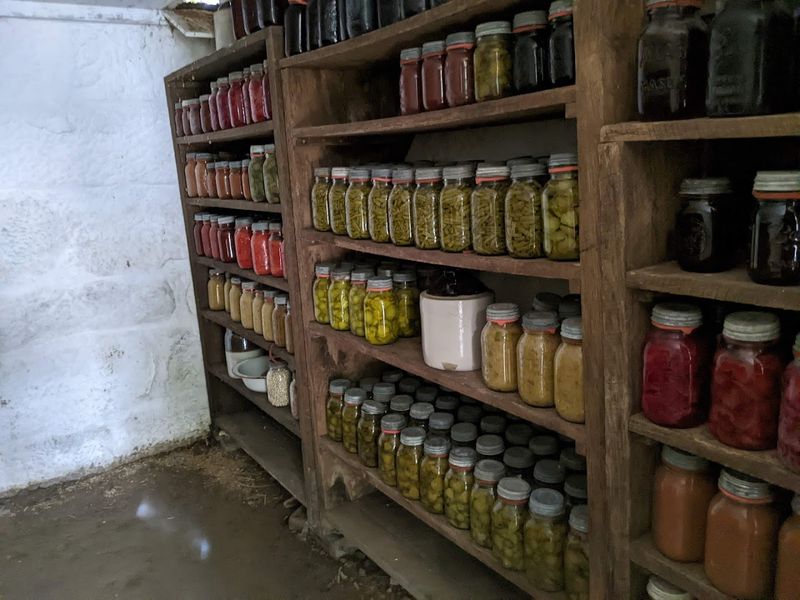
Two of the most fascinating structures on the property are also two of the easiest to overlook if you are moving too quickly through the grounds.
The smokehouse and root cellar represent the food preservation systems that kept farm families fed through long Ohio winters before refrigeration existed.
The smokehouse is a compact, darkened structure with that distinctive aged-wood smell that hits you the moment you lean through the door.
The root cellar, partially dug into the earth, demonstrates how temperature and earth were used as natural refrigerants for storing vegetables, preserves, and other perishables.
Both structures are clearly labeled with informative signage that explains the preservation techniques used and the types of food each building was designed to hold.
Staff members sometimes offer demonstrations or explanations when groups pass through, adding a layer of depth that the signs alone cannot fully provide.
These two buildings quietly illustrate just how much planning, labor, and ingenuity it took to sustain a family through a full year on a 19th-century farm.
They are small in size but enormous in historical significance, and they tend to spark some of the best conversations between parents and kids.
The Barn And Farm Equipment
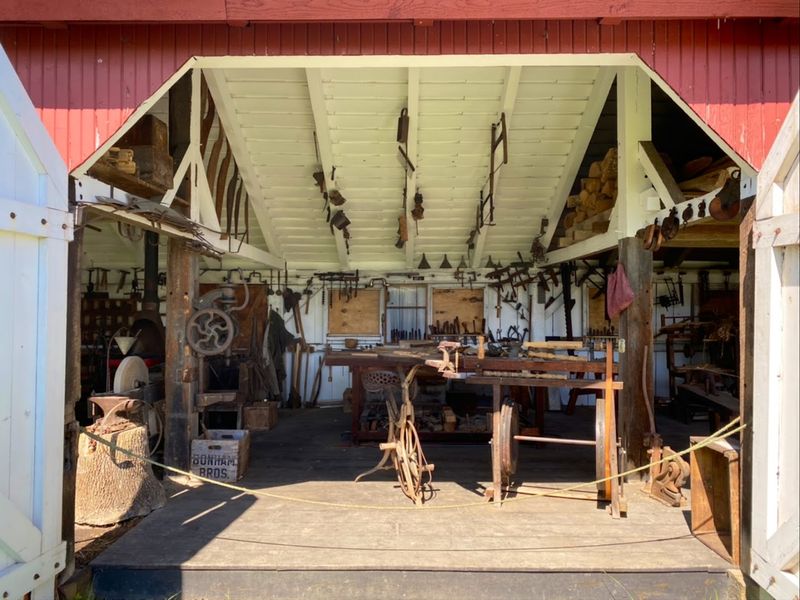
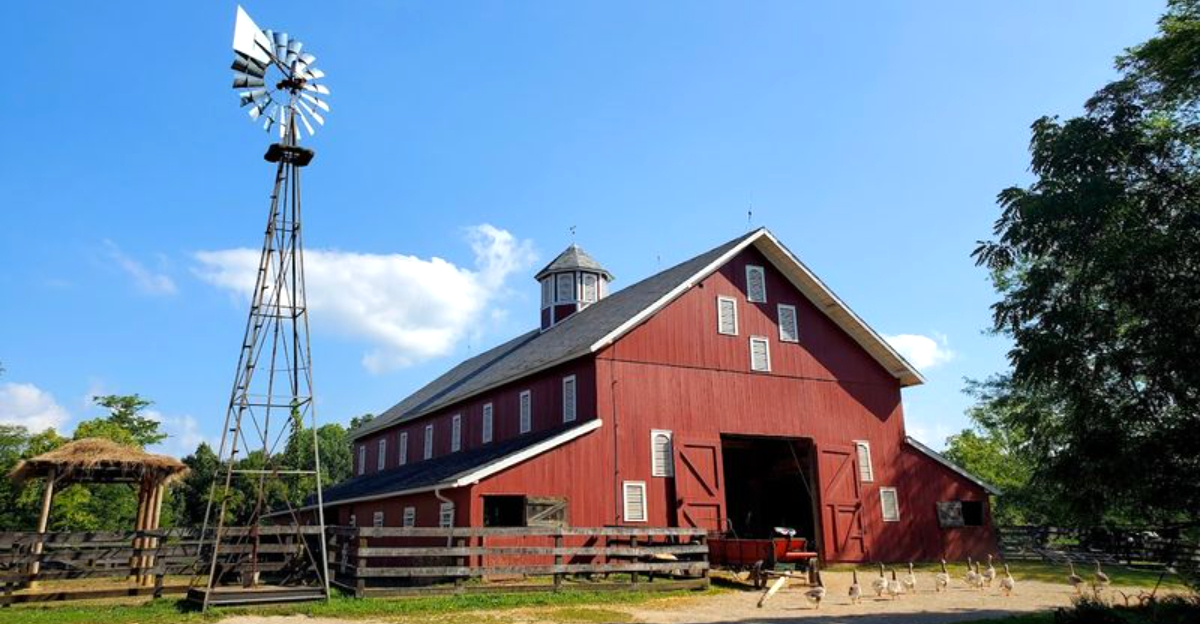
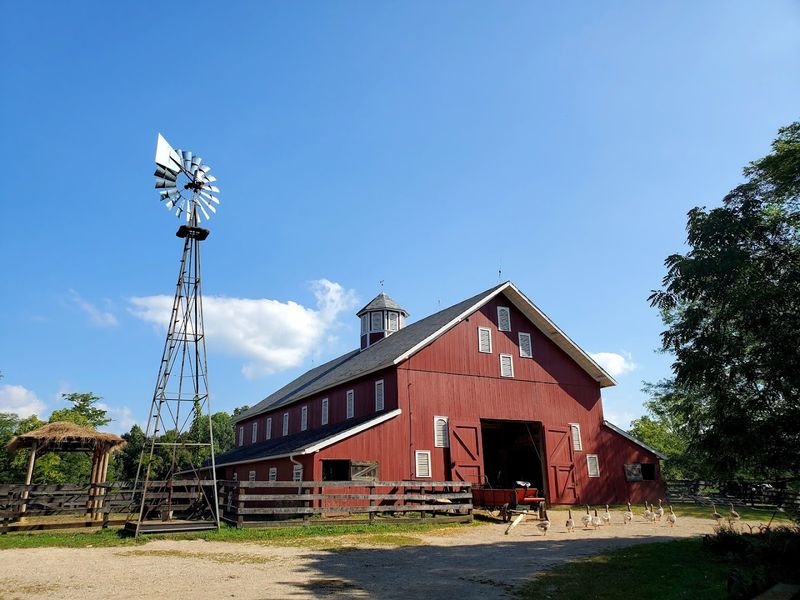
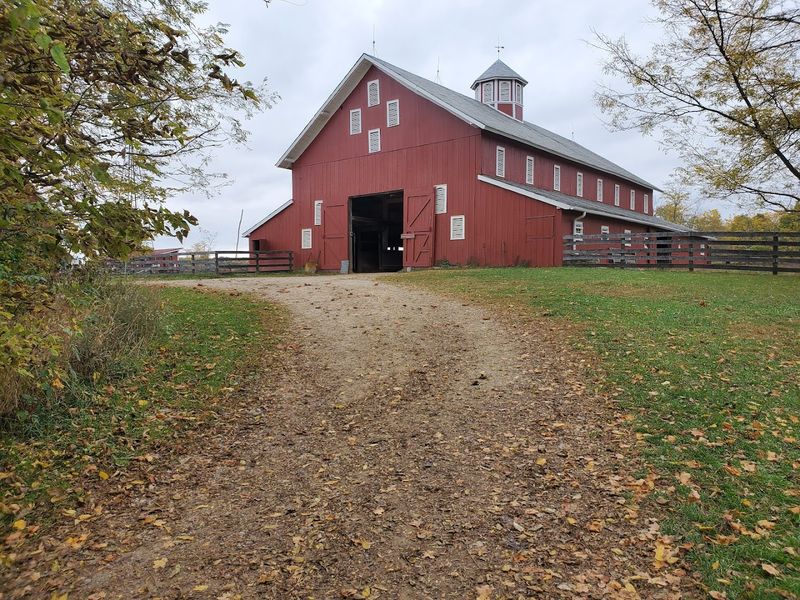
The barn at Slate Run is the kind of structure that commands attention from the moment it comes into view across the property.
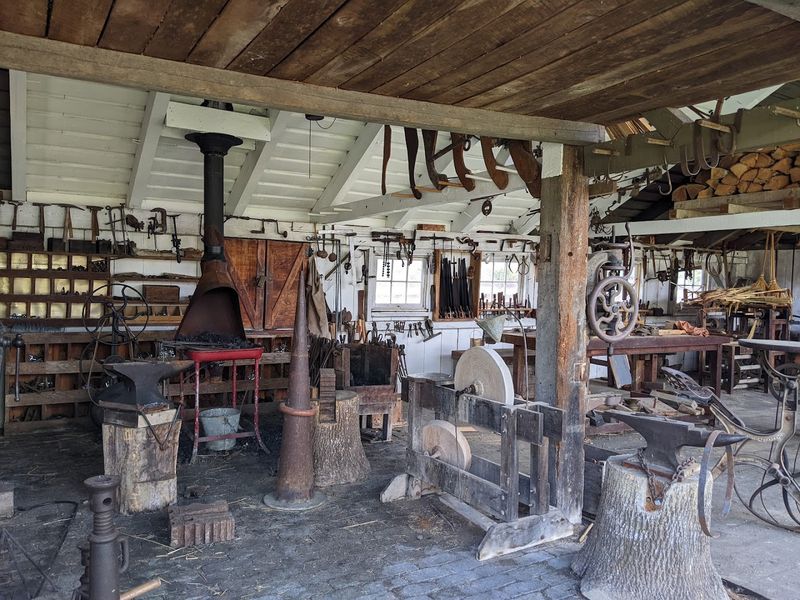
Inside, the space holds an impressive collection of antique farm equipment, much of it horse-drawn and in remarkably preserved condition.
Plows, cultivators, wagons, and hand tools from the 1880s are displayed in context rather than behind glass, which means you can get close enough to really appreciate the craftsmanship and the scale of the work these tools represented.
The wooden stalls, the smell of hay, and the sounds of animals nearby create an atmosphere that feels genuinely immersive.
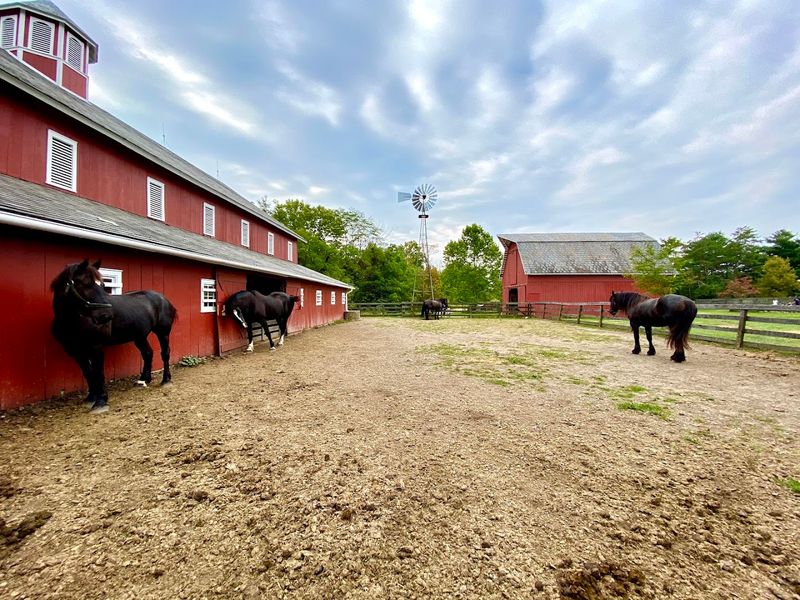
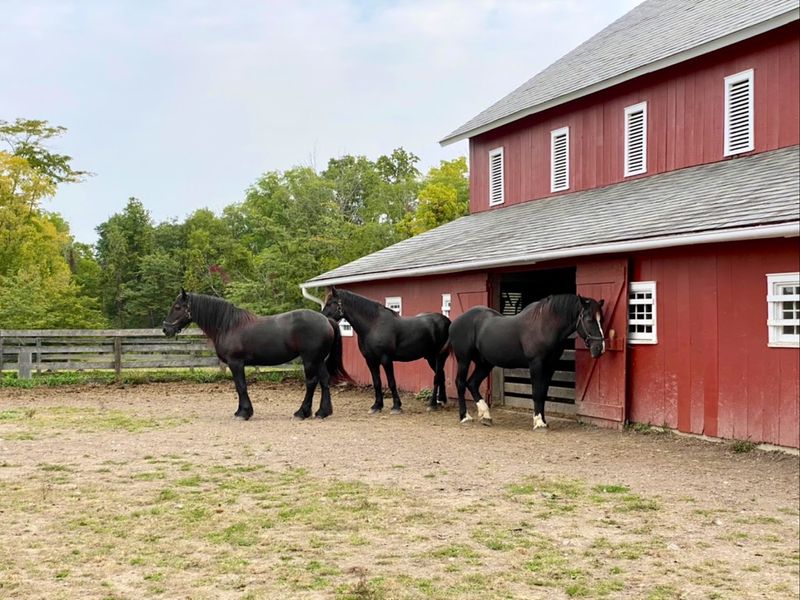
The farm’s draft horses are often housed here, and seeing them up close in their natural working environment is a different experience from seeing horses at a typical stable.
These animals were the engines of 19th-century agriculture, and the barn setting makes that role feel tangible and real.
Families with kids who are curious about how things work tend to spend a long time in the barn.
The equipment invites questions, and the staff members who work in this area are consistently described by visitors as both friendly and deeply knowledgeable about the tools and their uses.
A Self-Guided Tour Worth Taking Slowly
The self-guided format at Slate Run is one of its greatest strengths. It works especially well for visitors who prefer to set their own pace.
The map provided at the entrance covers every building and point of interest on the property, and the alphabetized version designed for kids turns the whole visit into a low-key scavenger hunt.
There is no pressure to follow a set route or stick to a schedule, which gives the experience a relaxed, exploratory feel that suits the farm’s overall atmosphere perfectly.
Some visitors spend an hour here. Others stretch it into most of the afternoon, circling back to watch the horses work or catching a demonstration they missed on the first pass.
The open format also means that families with young children can move at whatever pace works for them without feeling rushed or out of place.
The signage throughout the property is thorough and well-written, so even without a guide, you leave with a solid understanding of how each part of the farm functioned.
That said, stopping to chat with staff members whenever you get the chance adds a dimension to the experience that no sign can replicate.
Best Times To Visit
Timing a visit to Slate Run can genuinely shape what kind of experience you have, and there are a few windows that stand out above the rest.
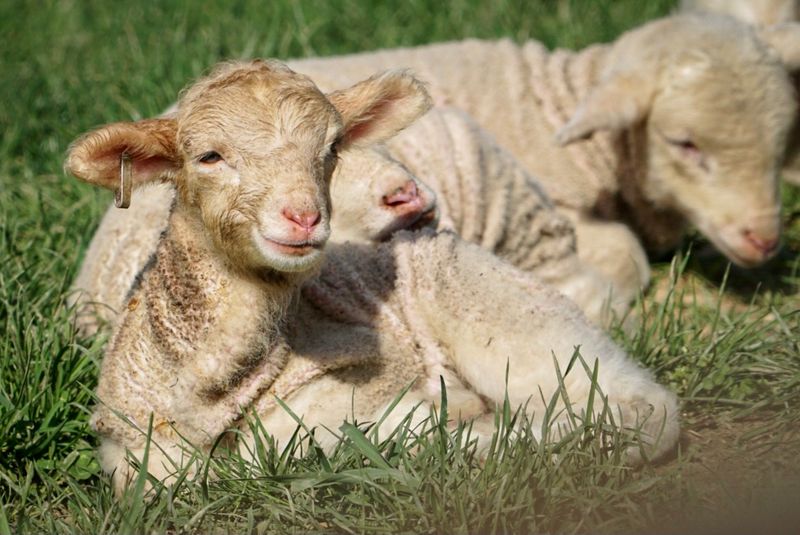
Spring is widely considered the most exciting season, when baby animals arrive and planting season begins in earnest. The energy on the farm during those months carries a particular liveliness that is hard to match at other times of year.
Early summer, especially June, brings lush green fields, active crop work, and comfortable temperatures that make spending several hours outdoors genuinely pleasant rather than exhausting.
Weekday visits, particularly on Wednesdays and Thursdays, tend to be quieter, which means more access to staff and a more relaxed atmosphere overall.
Friday and Saturday hours extend to 7 PM during the April through September season, making those days ideal for visitors who want a longer afternoon without feeling rushed toward closing time.
The farm is closed on Mondays, so plan accordingly. Autumn visits bring harvest season activities that have their own distinct appeal.
Whatever season you choose, arriving early in the morning gives you the best chance of catching the farm at its most active and least crowded.
Practical Tips For Your Visit
A few practical details can make the difference between a good visit and a genuinely great one.
Admission is free, which is remarkable given the quality and depth of the experience. Parking is plentiful and well-organized, so arriving with a large group or multiple vehicles is not a problem.
Restrooms on-site are described by visitors as clean and relatively new, which is a small but meaningful comfort on a warm summer day.
There are no food concessions on the property, so bringing snacks or a full picnic is strongly recommended. The shaded picnic areas within Slate Run Metro Park are genuinely lovely and make for a natural extension of the farm visit.
Comfortable walking shoes are a must, since the paths are unpaved and the grounds cover a fair amount of terrain.
The farm can be reached by phone at +1 614-833-1880, and the official website at metroparks.net provides updated seasonal programming information.
Children of all ages find something engaging here, but the experience tends to resonate especially strongly with kids between the ages of three and twelve.
Why This Place Stays With You
Some places are enjoyable while you are there and forgotten by the time you reach the car. Slate Run is not one of those places.
There is something about spending time in a space where the pace of life is genuinely slower, where the work happening around you is physical and purposeful, and where the connection to the past is tangible rather than decorative.
Visitors who came here as children describe bringing their own children and grandchildren decades later, which says more about the lasting impression of the place than any review could.
The farm holds a 4.8-star rating across 139 reviews, and the consistency of that praise across years and generations reflects something real. People are not just enjoying the novelty of a farm visit.
They are leaving with a sense of perspective, a quiet reset, and sometimes a little nostalgia for a way of life that moved at the speed of seasons rather than notifications.
A summer afternoon at Slate Run has a way of reminding you what relaxation actually feels like, and that kind of reminder is worth far more than the price of admission, which, again, is absolutely nothing.