
This Remote Michigan Forest Preserve Hides A Rare Water Cave
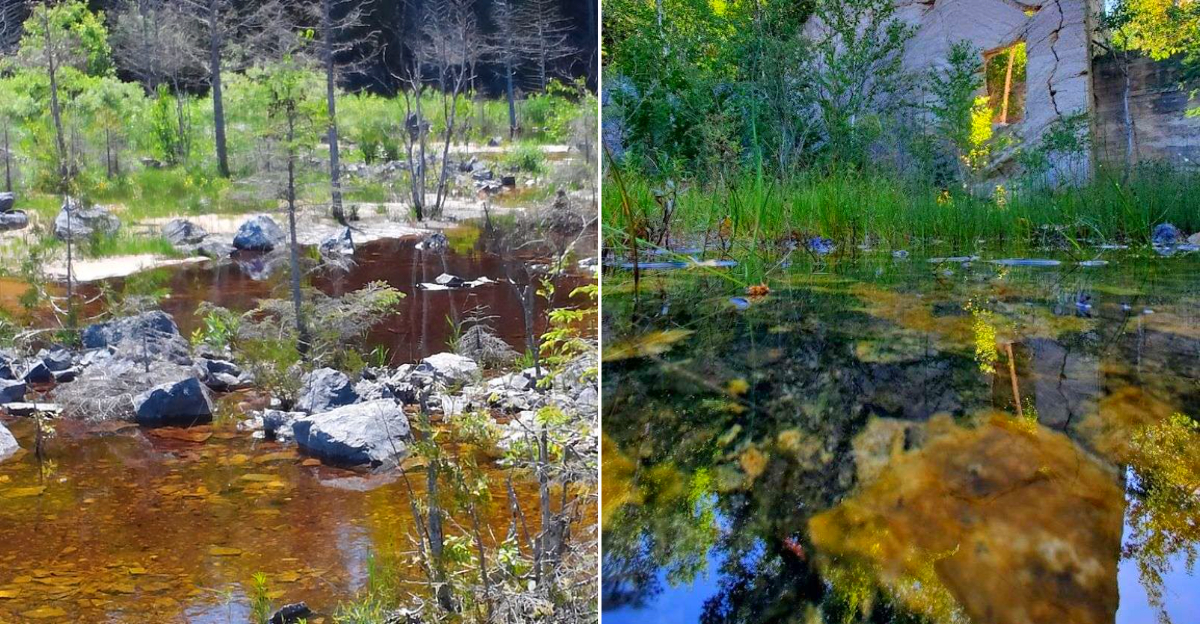
Deep in the heart of the Upper Peninsula, there is a place where the earth doesn’t just sit still, it swallows the landscape whole.
I’ve always been a sucker for a good mystery, and there’s something undeniably haunting about walking through a forest where streams suddenly vanish into the limestone beneath your boots.
This is a world of dramatic sinkholes and hidden subterranean passages, where the air grows cool and the acoustics take on a damp, cathedral-like quality.
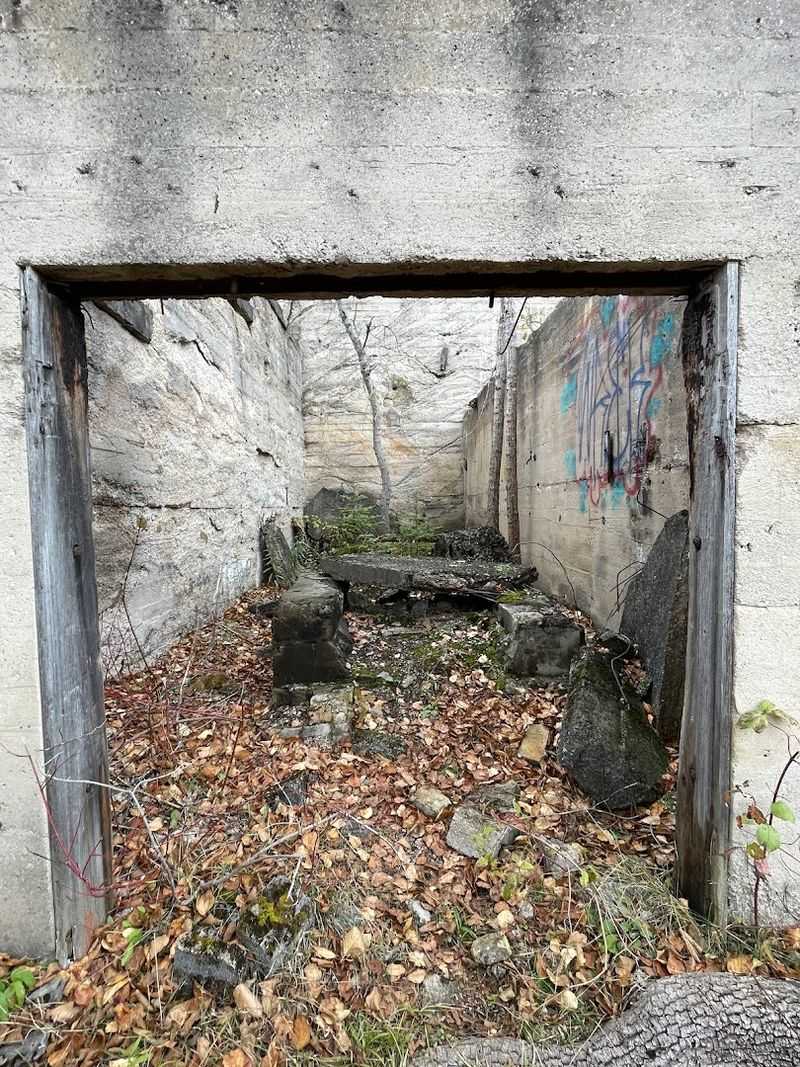
As you wander past the crumbling relics of an old quarry, where vibrant moss and faded graffiti fight for space on ancient stone walls, you can almost hear the water writing its slow, patient stories in the darkness below.
Michigan’s premier karst preserve hides sinkholes, historic limestone ruins, and the fascinating underground caves of the Upper Peninsula. You’ll want to lace up your sturdiest, most waterproof shoes before venturing into this bat-friendly territory.
Forest Quiet, Water Below
The first thing you notice is hush. Wind threads the maples and cedar while water murmurs somewhere invisible, slipping through limestone joints toward the Hendrie River Water Cave. Trails feel casual until you spot sinkholes and swallow points where streams simply vanish.
Fiborn’s landscape was quarried for limestone in the early 1900s, and those scars now frame the preserve’s geologic show. I like to pause where the forest opens and imagine the stone traveling into cement kilns, then decades later returning as moss and birds.
Let the quiet recalibrate your pace, and you will hear the subterranean route revealed in drips, trickles, and the occasional hollow echo underfoot. It is subtle, persistent, and completely magnetic.
Michigan’s Underground Frontier
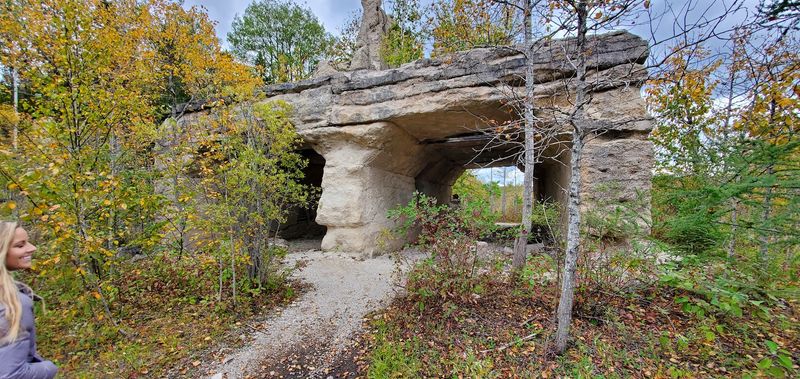
Reaching Fiborn Karst Preserve at Naubinway Rd, Naubinway, MI 49762 is an adventure into a remote section of the Upper Peninsula’s Mackinac County. Located about an hour west of the Mackinac Bridge, the journey takes you down quiet forest roads that lead to the site of an abandoned 1900s limestone quarry.
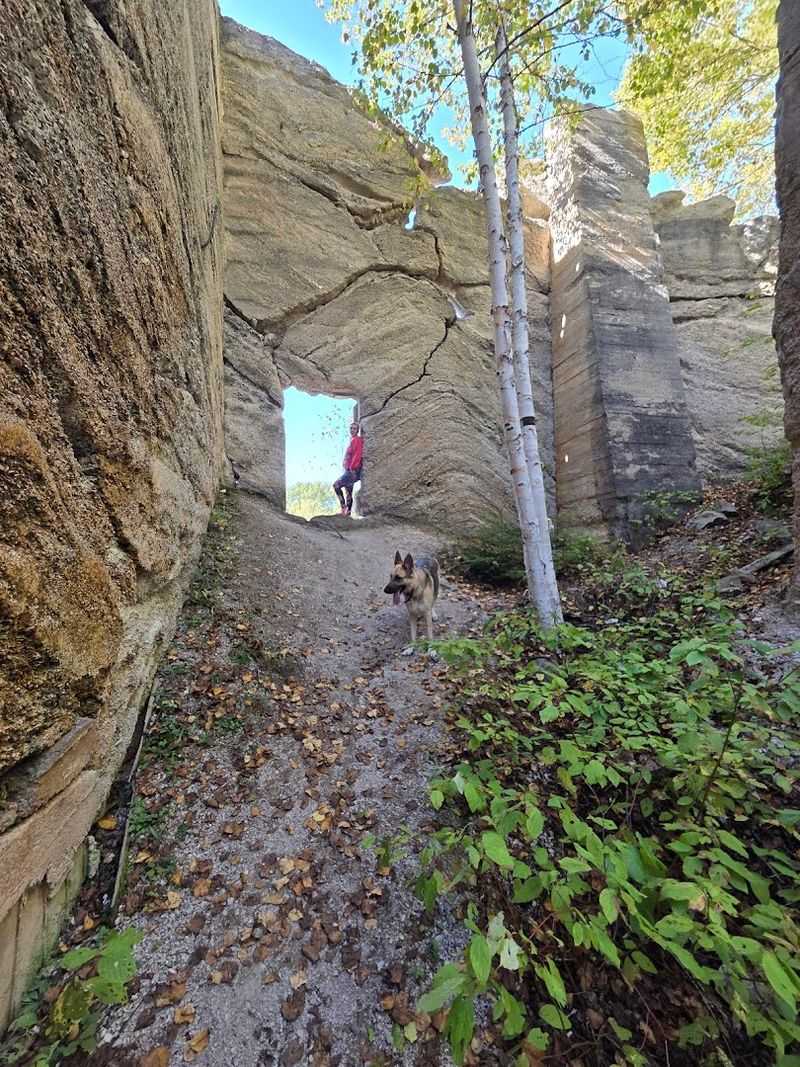
The first sound you notice is the subtle gurgle of “sinking streams” disappearing into the limestone earth. Within minutes, the Sinkhole Trail or the Barbara Ann Patrie Memorial Trail leads you past jagged rock faces and deep depressions that define this unique geological landscape.
Pro tip: wear sturdy, waterproof boots, as the trails through the quarry ruins and sinkholes can be exceptionally wet and uneven.
Quarry Rim Perspectives
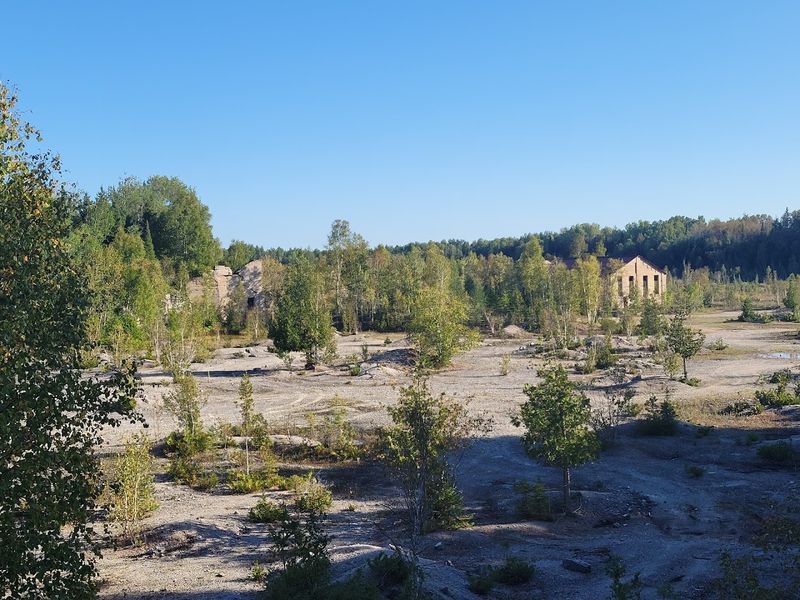
The west rim of the old quarry offers layered views of pale stone, emerald moss, and dark pools gathering at the floor. Broken kiln foundations and loading platforms bracket the amphitheater like stage wings. Sound behaves oddly here, bouncing off walls so footsteps arrive from unexpected angles.
By the early twentieth century, limestone blocks left this pit to feed regional industry, and rail spurs once threaded the woods.
Today, the rim path is narrow and uneven, with loose gravel that rolls underfoot. Keep a respectful distance from edges, especially after freeze thaw cycles. Photograph textures instead of leaning for sweeping shots, and you will take home details most visitors miss. Morning light angles nicely across the benches.
Hendrie River Water Cave Reality
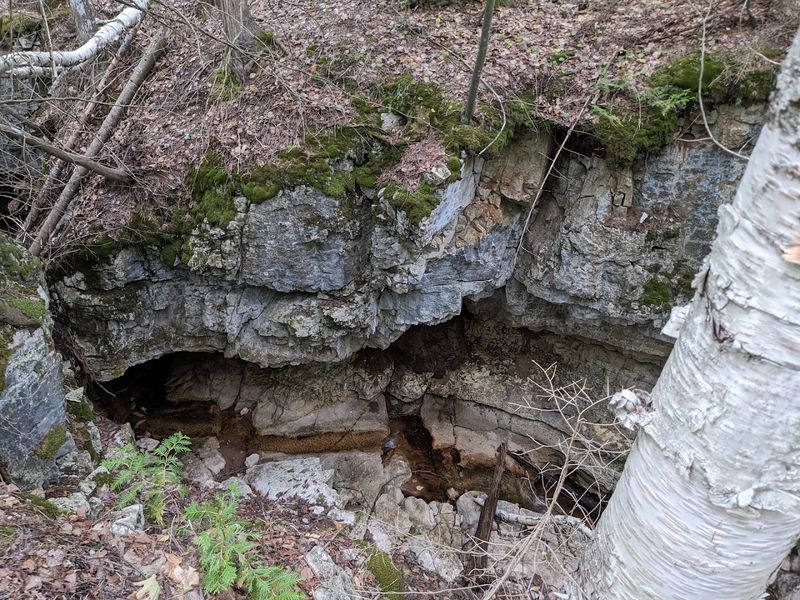
Michigan’s longest known cave, the Hendrie River Water Cave, snakes roughly 1,500 feet under the preserve, but it is not a casual stroll. Water flows through tight passages, temperatures stay cold, and bats use parts of the system seasonally.
Surface signs point to the sink entrance, yet responsible exploration begins with restraint. Even from above ground, the landscape hints at hidden movement and a geology that keeps working out of sight.
I treat this cave as a living river corridor, not an attraction. Unless you are trained, equipped, and joining qualified cavers with permission and current conditions, admire the hydrology from outside.
Protect bat hibernation by avoiding winter entry, and never disturb roosts. Watch how streams disappear and reappear nearby instead; the disappearing act is the real show, and it is safer for everyone. That wider view often leaves a stronger impression than forcing a closer look ever could.
Reading Stone Walls
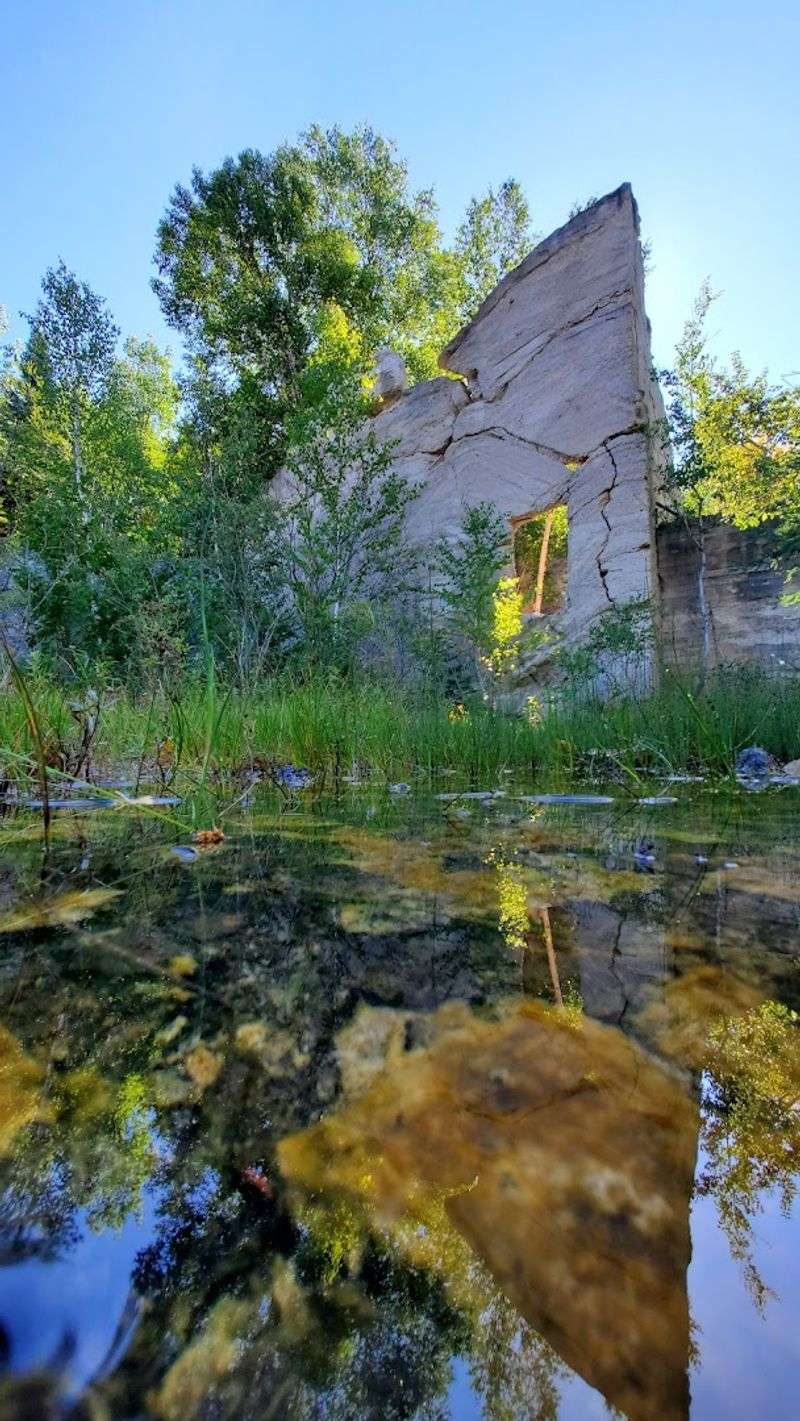
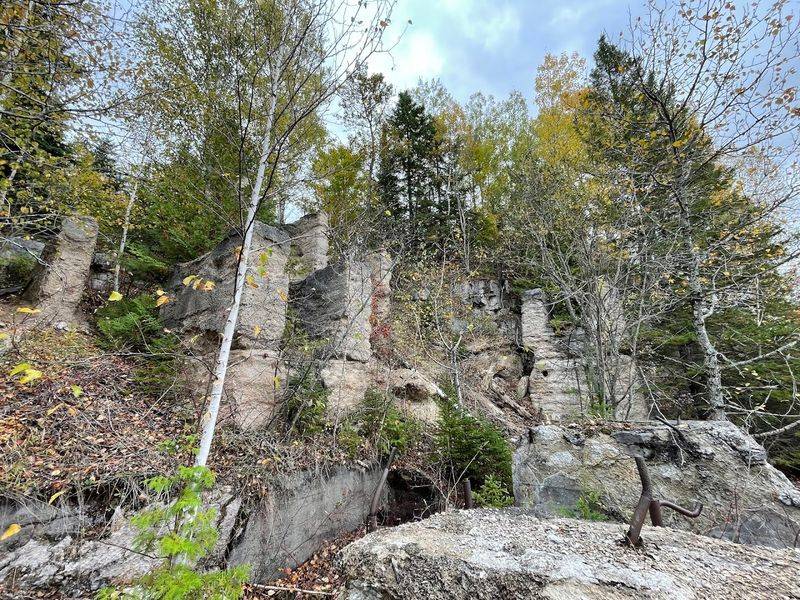
The crumbling buildings near the quarry are stitched from local limestone blocks that weather like coarse sugar. Doorways lean, window arches loosen, and rusted hardware dots the surfaces. Lichen maps creep over mortar lines, turning industry into topography.
These structures belonged to a short but intense period of quarrying and processing in the early 1900s, when Fiborn supplied material for cement and construction.
Avoid climbing or entering unstable ruins. View craftsmanship from a safe perimeter and notice tool marks, chisel scars, and the size variance in hand set stone. A flashlight held low across a wall at dusk pulls out textures that bright midday light tends to flatten. Watch your footing around fallen lintels and hidden holes.
Water Sounds And Odd Echoes
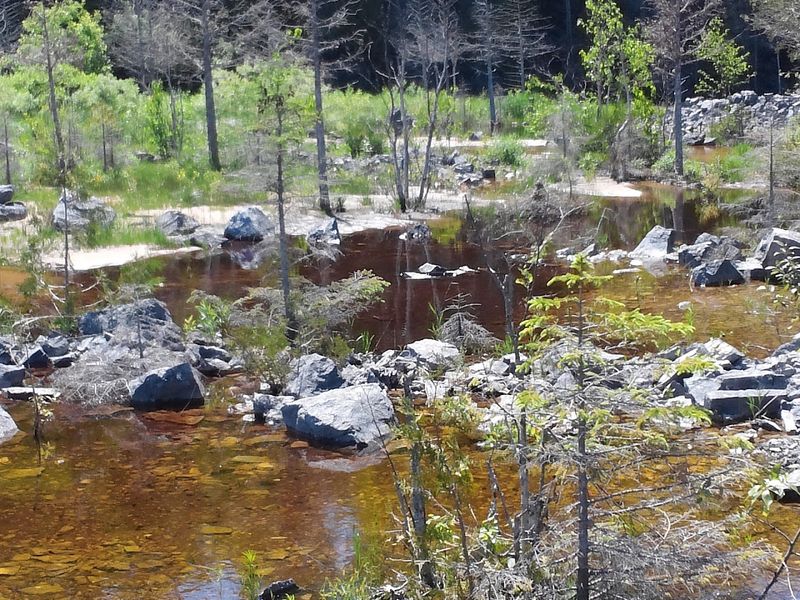
In the preserve’s hollows, a drip can sound like a metronome you cannot find. The quarry bowl throws echoes sideways, while sinkholes swallow sound until a raven calls and the whole place replies. After rain, trickles braid into short lived rills that vanish at grikes and fissures.
That acoustic oddity is a karst calling card, shaped by fractured limestone and open voids beneath the forest. Keep conversations low to notice it, and step softly on loose rock.
If you carry a map, use stones and water sounds as orientation cues in addition to landmarks. Pack a dry bag for electronics; stray splashes and mist in shaded cuts accumulate faster than you expect. It sharpens navigation instincts.
Seasonal Bugs, Snow, And Boots
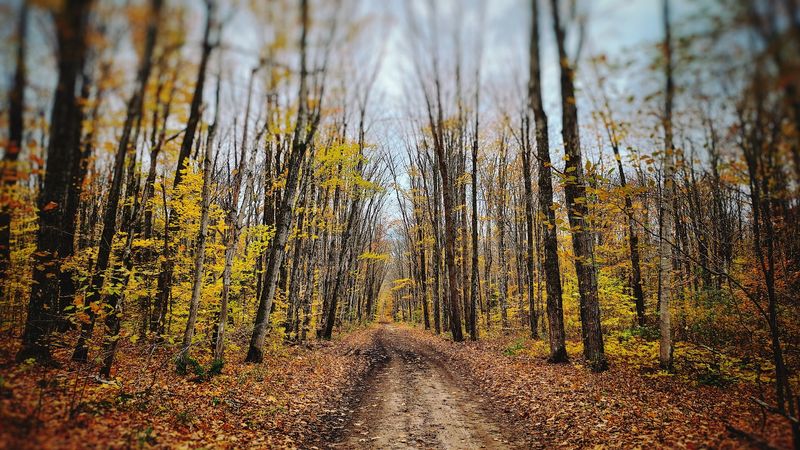
Summer brings mosquitoes that treat shady sinkholes like lounges, while spring delivers mud pockets disguised by leaves. Winter can be glorious, with crisp air, quiet trails, and packed snow highlighting sink edges and old rail beds.
Shoulder seasons demand patience with thaw, ice lenses, and slippery limestone.
I carry bug spray, gaiters, and traction cleats, swapping as conditions change. Wear tough soled boots that mute the stone’s sharpness and give confidence on rubble.
In winter, mark trail junctions on your map as blazes can vanish behind snow coats. Whatever the season, check daylight and weather in Naubinway before committing, because the forest seems to hold time differently once you pass the gate. Early starts keep both bugs and crowds manageable.
Maps, Signs, And Self-Reliance
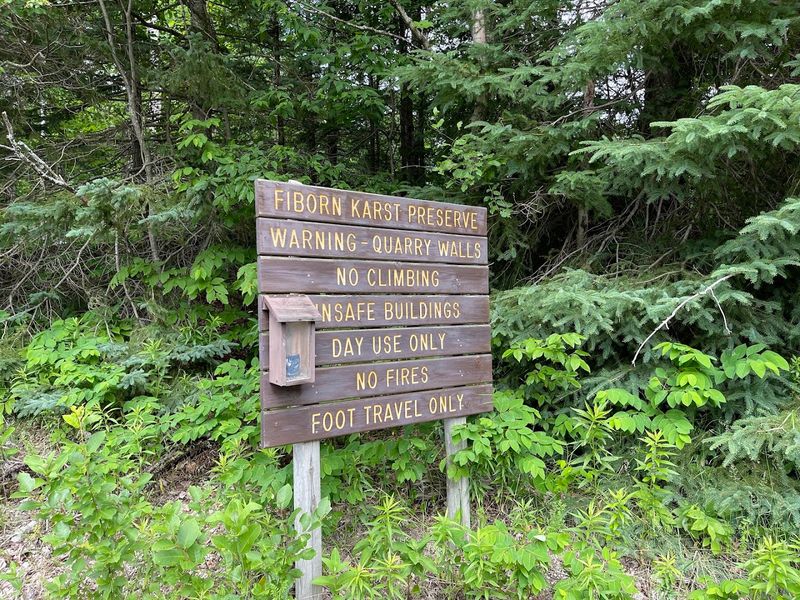
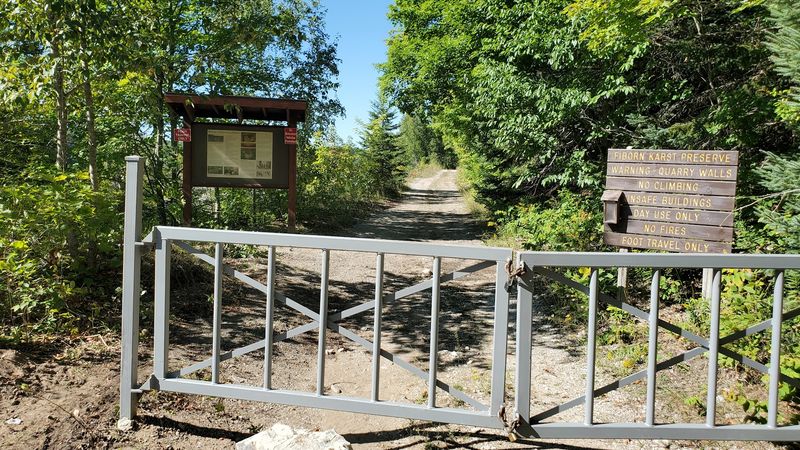
Wayfinding at Fiborn is intentionally light. A few kiosks and posted notes describe karst features, but secondary paths multiply near the quarry and along low ridges. Expect privacy more than guidance and plan accordingly.
Bring a printed map, a charged phone with offline layers, and the coordinates of the main gate and quarry rim. Let someone know your plan because cell service flickers. Trail etiquette matters on narrow stretches, so yield on slippery grades, and protect soft edges after rain.
Private lands patchwork the wider region, so remain within preserve boundaries and secure any needed permissions if researching beyond. Self reliance here is part safety plan, part old fashioned respect. Sign snapshots at the gate help later.
Underground Wildlife Etiquette
Fiborn’s karst supports bats, amphibians, and invertebrates that rely on stable temperatures and darkness. The Little Brown Bat and Northern Long Eared Bat have used regional caves for hibernation, making disturbance more than a courtesy issue.
Oils from hands and flashes can disrupt behaviors, and noise carries further underground than expected.
Observe wildlife at a distance and stay out of restricted areas. Disinfect gear to prevent spreading pathogens like white nose fungus if you caving elsewhere.
Reduce light, avoid loud voices near entrances, and keep group sizes small. On the surface, stick to durable ground around sinkholes to protect fragile edges. Quiet attention will show you more than chasing a photo ever can. That restraint protects the entire system.
Local Context And Respect
Naubinway sits west of the preserve along U.S. 2, anchoring services like fuel, snacks, and quick weather checks from the lakeshore. Logging and quarrying histories mingle across the Upper Peninsula, and Fiborn is part of that working landscape turned study site.
Trails and ruins feel remote, yet they exist because labor once pulsed here. I keep that context in mind and tread lightly. Pack out everything, close gates if you find them closed, and resist moving artifacts or rocks. If you meet researchers or stewards, ask questions and give space; data collection can be delicate.
A respectful visit keeps access open and ensures the place continues teaching long after our footprints fade. Kindness travels well in the woods.
What To Pack For Curiosity
Curiosity thrives on simple tools. A bright headlamp, a backup light, and spare batteries help with shaded ruins and late exits. Waterproof notebook, pencil, and a pocket map make observations stick. Lightweight gloves protect hands when scrambling limestone.
Add bug spray, sunscreen, a small first aid kit, and layers for the peninsula’s quick mood swings. Sturdy boots prevent rolled ankles on rails and rubble. For photos, choose a wide lens and keep a microfiber cloth ready for mist. Bring water and snacks because there are no concessions on site.
Lastly, patience belongs in every pack; karst reveals its secrets steadily, and rushing only shortens what the rock is ready to show. Let the landscape set the tempo.