
This Short Pennsylvania Trail Leads To One Of The State’s Most Remarkable Native American Heritage Sites
Some trails are short in distance but enormous in what they reveal. This Pennsylvania walk leads to a heritage site that makes the past feel close, quiet, and deeply important.
It is the kind of place where a simple outing becomes more than fresh air and scenery. Every step feels connected to people, stories, and history that shaped the land long before modern maps gave it names.
The power here is not in a dramatic climb or a flashy overlook. It is in realizing that a remarkable piece of Native American heritage can be reached through such an approachable path.
Places like this deserve attention because they make history feel human instead of distant.
I always remember the walks that leave me quieter than when I started, because those are the ones that feel like they taught me something without saying much at all.
The Rockshelter That Rewrote North American History
Some discoveries change everything we thought we knew, and the rockshelter at Meadowcroft Rockshelter and Historic Village is one of those discoveries.
Tucked beneath a massive rock ledge above Cross Creek in Avella, Pennsylvania, this prehistoric shelter preserves evidence of humans dating back as far as 19,000 years ago.
That places human presence here well before many previously accepted timelines for North American habitation.
Archaeologist James Adovasio began formal excavations at the site in 1973, and the findings quickly sent ripples through the scientific community across the country and beyond modern Pennsylvania itself.
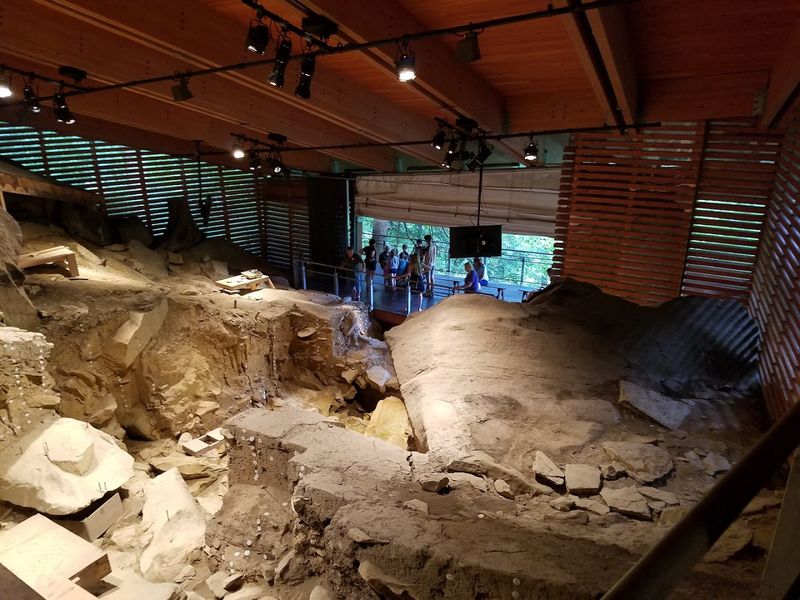
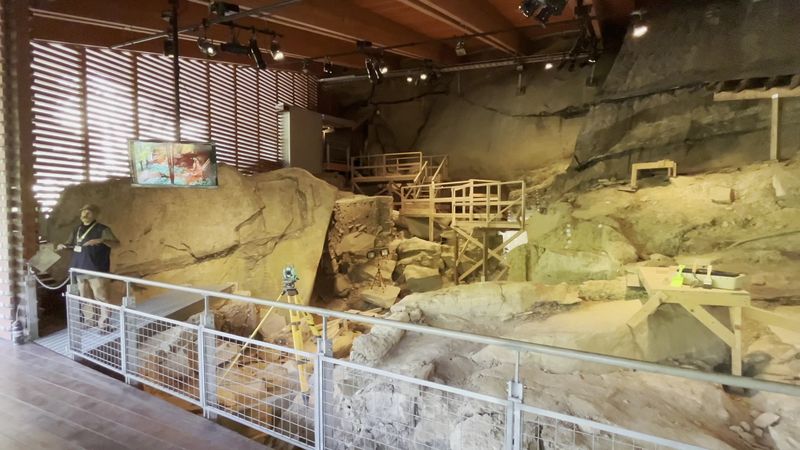
Today, visitors can stand near the actual dig site, look at exposed soil layers, and hear staff explain how each layer represents a different era of human life.
It is a genuinely humbling experience that makes ancient history feel remarkably close.
A Protective Roof With A Purpose
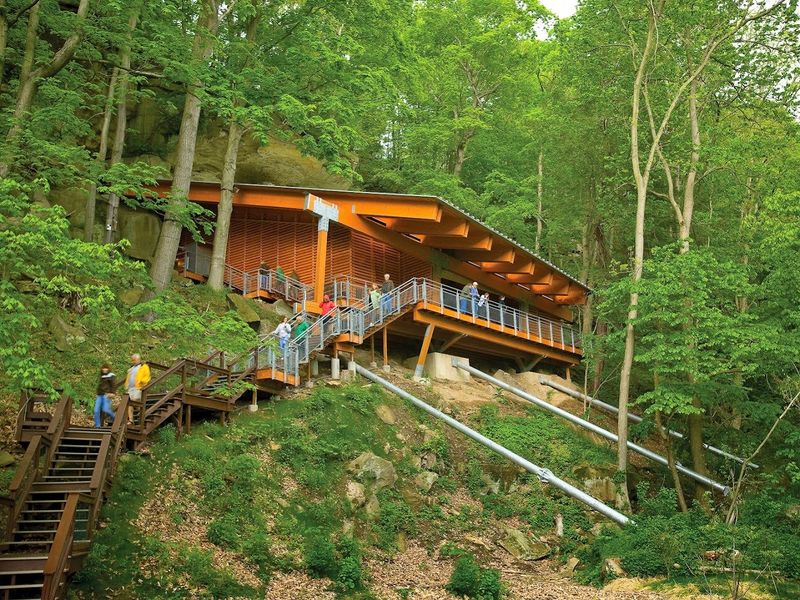
One of the first things you notice when approaching the rockshelter is the striking protective enclosure built over it. This structure is not just for show.
It shields the irreplaceable archaeological layers beneath from rain, erosion, and the kind of environmental damage that could erase thousands of years of recorded human history.
The modern enclosure and elevated walkways let visitors see the excavation clearly while protecting the site from accidental damage.
Visitors walk along platforms that give clear sightlines down into the excavation area without disturbing the site itself. The design keeps history visible for everyone without inviting unnecessary wear over time.
That careful preservation approach helps explain why Meadowcroft remains such an important public archaeological destination today.
The site had already earned National Historic Landmark status in 2005, before this visitor facility opened. That designation is well earned.
Layers Of Soil That Tell A 16,000-Year Story
Archaeology is all about reading the earth like a book, and the soil layers at Meadowcroft Rockshelter and Historic Village are some of the most fascinating pages ever uncovered in North America.
Each distinct layer in the excavation corresponds to a different period of human use, separated by centuries of accumulated sediment.
Artifacts and ecofacts recovered from the site include ancient stone tools, pottery fragments, and evidence of Ice Age fire pits, all carefully studied through radiocarbon analysis.
The dating process is what made the findings so controversial and so significant when they were first published.
Researchers spent years debating the results before Meadowcroft became widely recognized as a major early habitation site.
Standing at the railing and peering down into those layers, it is hard not to feel a sense of awe at the sheer depth of human time compressed into one hillside.
The Eastern Woodland Indian Village Reconstruction
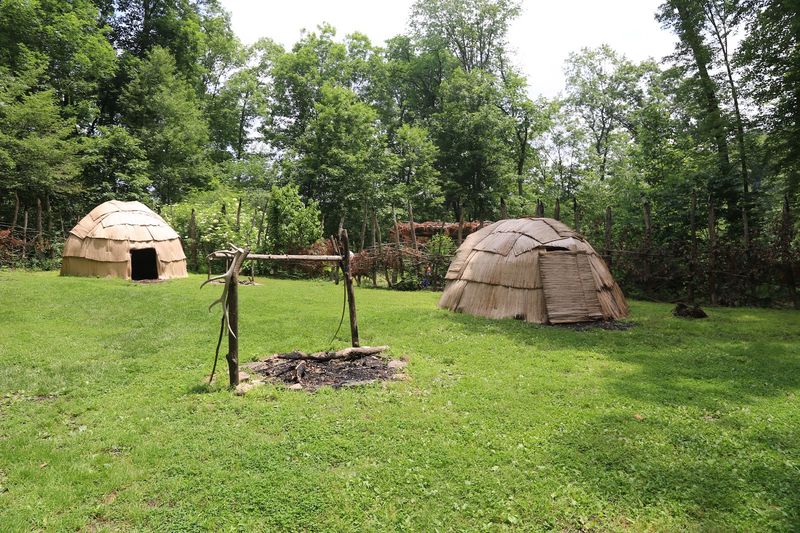
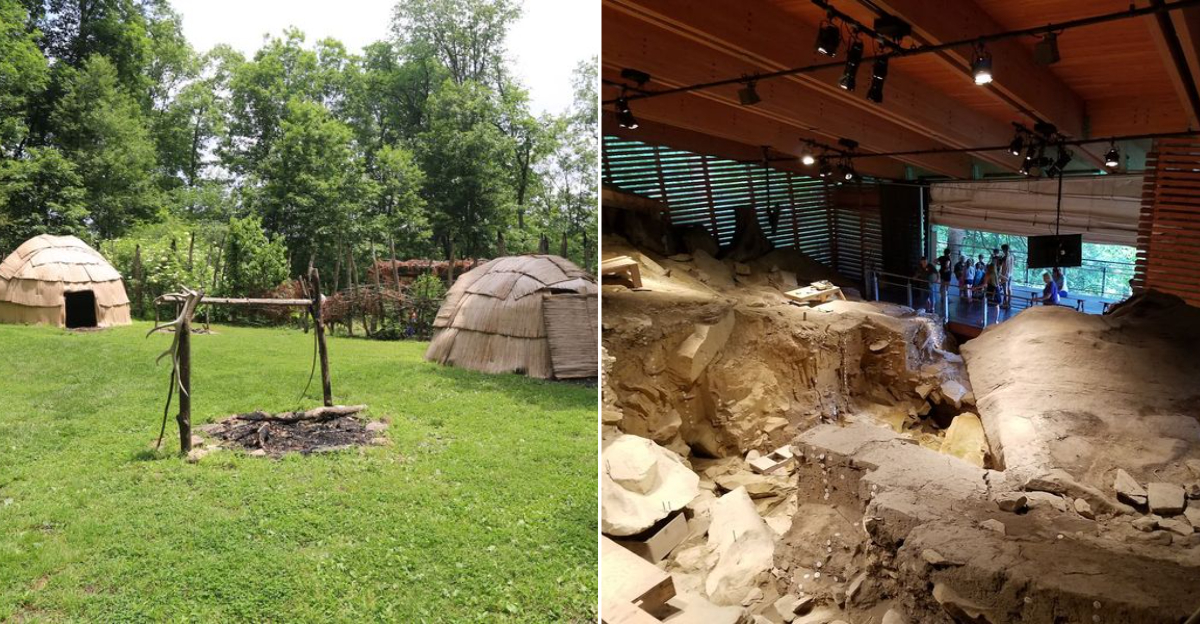
Just up the hill from the rockshelter, a reconstructed 16th-century Eastern Woodland Indian Village brings pre-contact Native American life into vivid, tangible focus.
Wigwams and village features have been built to show traditional construction methods, giving visitors a real sense of how Indigenous communities in this region organized their living spaces.
Staff explain the cultural practices, tools, and daily rhythms of Eastern Woodland peoples during regular tours there, and some demonstrations include the use of an atlatl, a spear-throwing device that predates the bow and arrow by thousands of years.
Trying one yourself is surprisingly tricky and completely unforgettable.
The village represents a time period that bridges the prehistoric rockshelter era and the later colonial period, which makes it an essential stop on the chronological journey through Meadowcroft Rockshelter and Historic Village.
Visitors consistently describe this section as one of the most immersive parts of the entire experience.
The 19th-Century Frontier Village And Its Living History
Walk a little further through the property and you step into a completely different century.
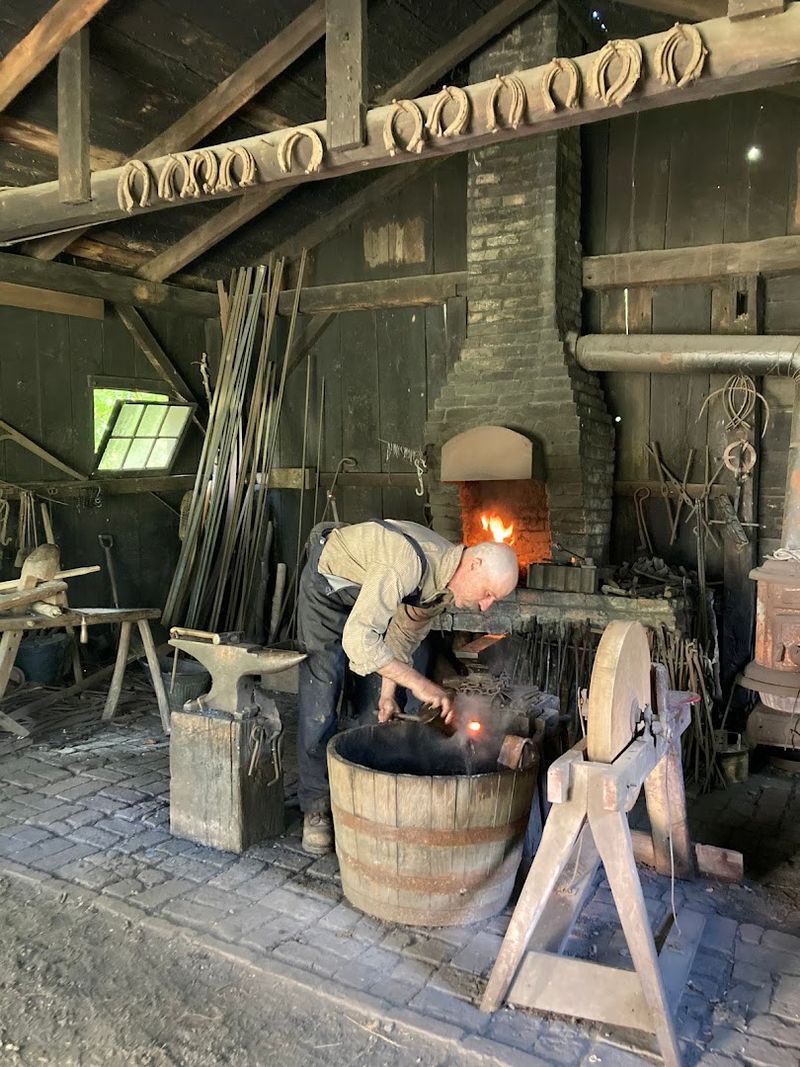
The 19th-century Historic Village at Meadowcroft Rockshelter and Historic Village features a collection of period structures gathered for the site today, including a log house, one-room schoolhouse, blacksmith shop, covered bridge, church, and more.
Historical interpreters bring each building to life with demonstrations, conversations, and seasonal programs for curious visitors.
The blacksmith forge is a particular crowd-pleaser, with the sight of hot iron and the ring of the hammer creating an atmosphere that no museum display case can replicate.
Visitors can take a lesson in the one-room schoolhouse and watch demonstrations on guided walks that give a real feel for everyday frontier life across generations.
The level of detail in this village rivals strong living history sites across the mid-Atlantic region, and it rewards curious visitors who take their time exploring.
The One-Room Schoolhouse Experience
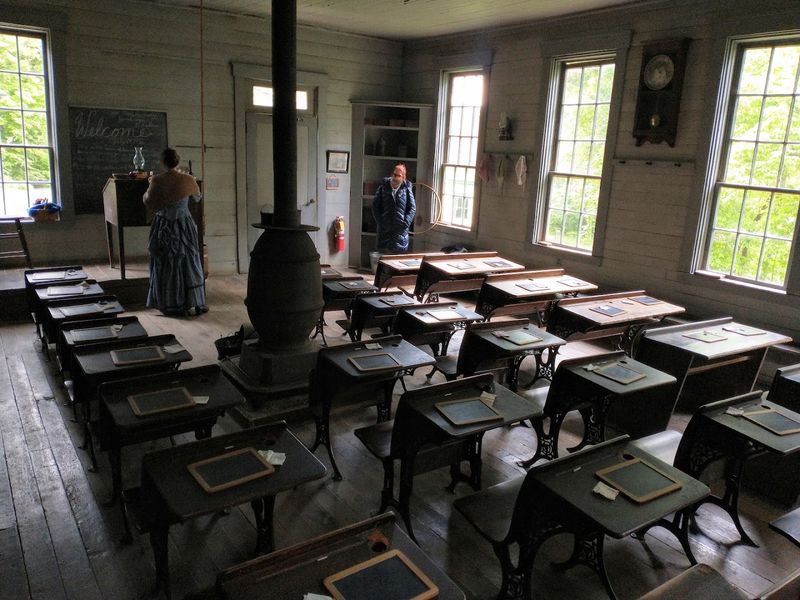
There is something unexpectedly charming about stepping inside the one-room schoolhouse at Meadowcroft Rockshelter and Historic Village.
The worn wooden desks, the simple classroom setup, and the teaching tools on display paint a clear picture of what education looked like for rural Pennsylvania children in the late 1800s.
Guides here do not just point and explain. They turn the schoolhouse into an interpretive stop where visitors can imagine lessons, chores, rules, and rhythms of a rural classroom from another era during a visit.
It sounds simple, but the setting has a way of turning even the most skeptical adult into a curious participant.
This kind of interactive approach is what separates a good historical site there from a great one.
Families often find that the schoolhouse gives kids a much more personal connection to American history than a textbook alone can provide, without needing a long lecture or script.
The Significance Of Cross Creek And Its Natural Setting
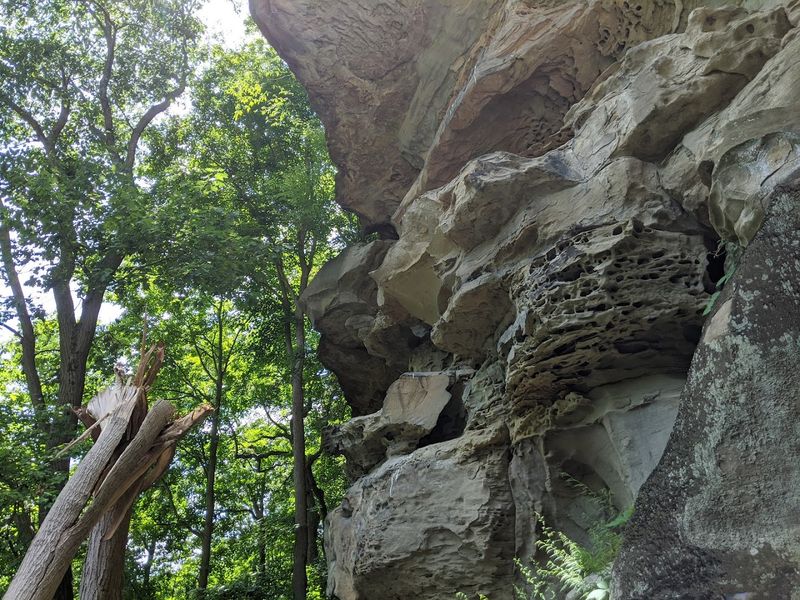
The natural landscape surrounding Meadowcroft Rockshelter and Historic Village is not just pretty scenery. It is a key reason why humans chose this location for shelter over thousands of years.
Cross Creek runs through the valley below the rockshelter, providing a reliable water source that would have supported both prehistoric communities and later settlers.
The wooded hillsides, rich with hardwood trees and native plants, offered food, building materials, and game for hunting throughout the centuries.
That same ecosystem is still largely intact today, giving the site an atmosphere that feels genuinely connected to its ancient past rather than artificially preserved.
Walking the path from the parking area down to the rockshelter, the sounds of the creek and the canopy of trees overhead create a mood that is hard to manufacture.
It is the kind of natural setting that reminds you why early humans were so good at finding exactly the right spot to call home.
National Historic Landmark Status And What It Means
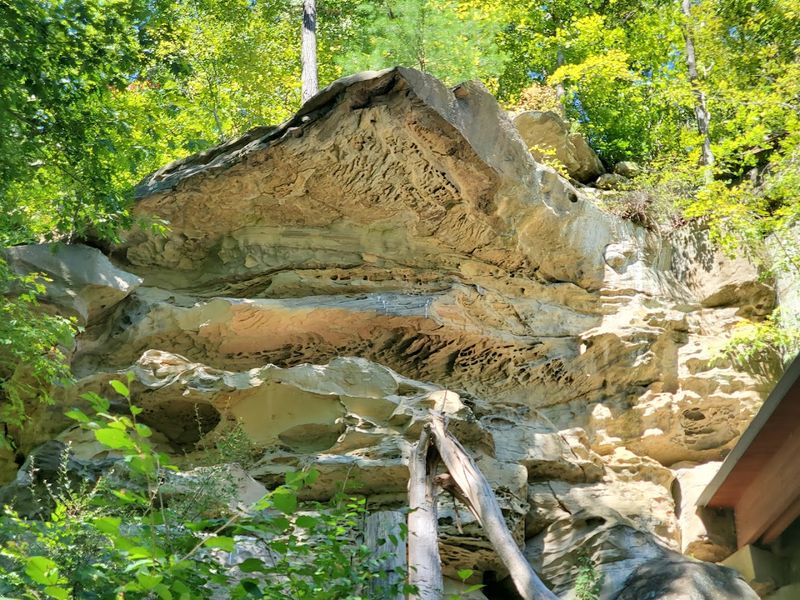
Not every archaeological site earns the title of National Historic Landmark, but Meadowcroft Rockshelter and Historic Village has held that designation since 2005.
That recognition reflects the site’s extraordinary scientific and cultural significance, placing it in the same category as some of the most important historical locations in the entire United States.
The landmark status recognizes the site’s national importance and helps strengthen public awareness of why its preservation matters.
For a property of this complexity, that kind of institutional recognition matters enormously today in responsible and meaningful ways for visitors, researchers, and educators.
Researchers from universities and institutions across the country continue to reference Meadowcroft in academic discussions about early human migration into North America. The designation is not ceremonial.
It reflects recognition that what happened here, and what continues to be interpreted here, belongs to all of American history, not just Pennsylvania’s.
Visiting Practicalities And What To Expect On Arrival
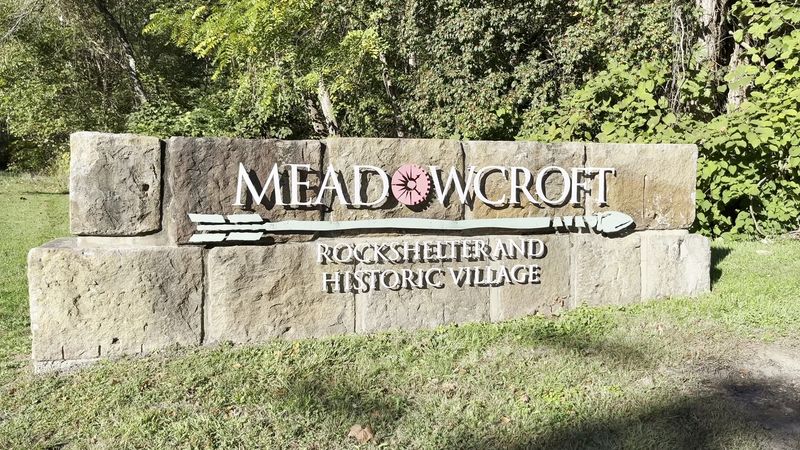
Planning a visit to Meadowcroft Rockshelter and Historic Village is straightforward once you know the basics.
The site is located at 401 Meadowcroft Rd, Avella, PA 15312, and is open seasonally from May through November, with specific days changing before and after summer.
Comfortable walking shoes are strongly recommended because the property involves a fair amount of terrain, including a descent to the rockshelter itself.
Bringing a packed lunch is a smart move since picnic tables are available on the grounds.
Visitors should budget at least two to three hours to cover the main areas without rushing during any seasonal visit.
The staff are consistently praised for being knowledgeable and genuinely enthusiastic, which makes the entire visit feel personal rather than scripted.
Why This Site Matters Beyond Pennsylvania’s Borders
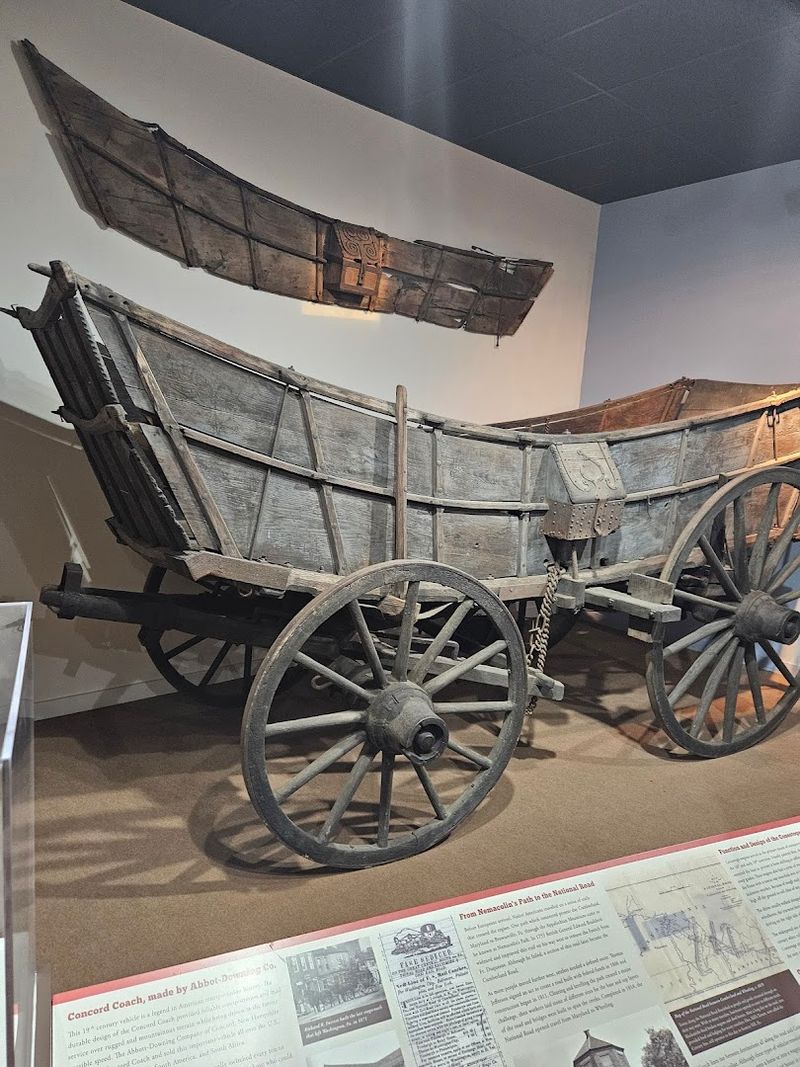
The story told at Meadowcroft Rockshelter and Historic Village is not just a Pennsylvania story. It is a story about all of humanity in the Western Hemisphere.
The evidence of human presence here, stretching back potentially 19,000 years, pushes the timeline of when people first arrived in North America further back than many traditional models ever suggested.
That makes this small site in Avella a genuinely global conversation starter.
Scholars across the United States continue to cite Meadowcroft findings in research and discussions that reach readers on multiple continents.
For the everyday visitor, none of that academic weight diminishes the simple pleasure of walking through centuries of history in a single afternoon.
Meadowcroft Rockshelter and Historic Village earns its reputation not through spectacle, but through substance and careful interpretation.
And in a world full of loud attractions, a place that speaks quietly but says something truly important is worth every mile of the drive.