
This Six-Story Michigan Shrine Of The Snowshoe Priest Overlooks Keweenaw Bay From A Red Rock Bluff
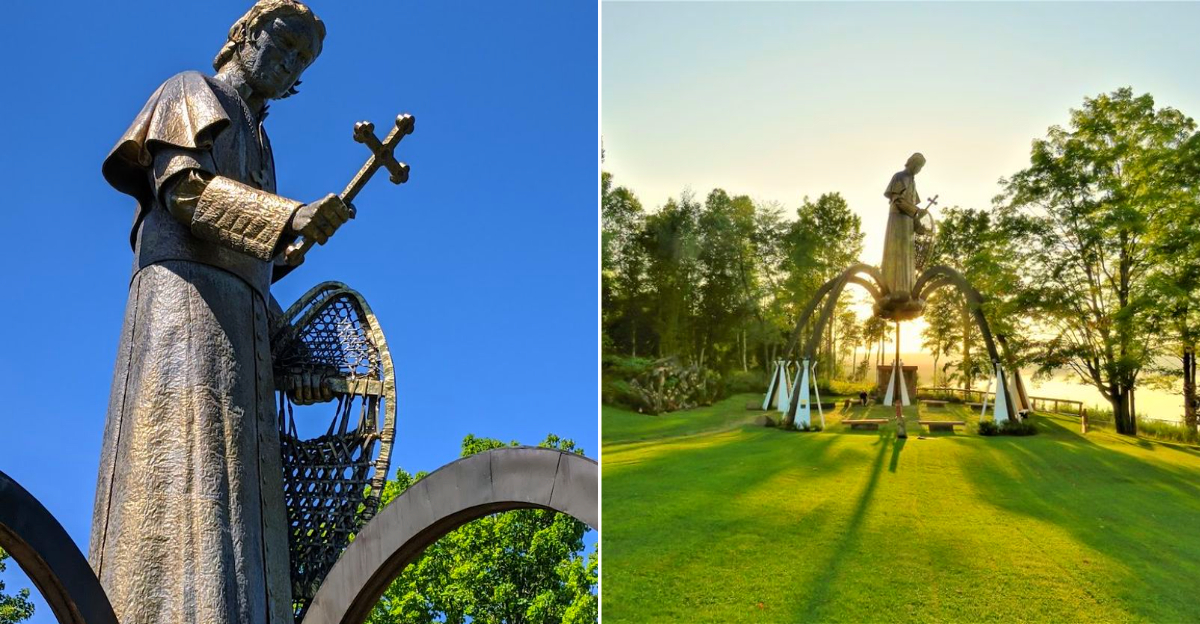
Six stories of gleaming silver rise from a red rock bluff where Lake Superior bends into Keweenaw Bay, marking the legacy of a man who walked thousands of miles on snowshoes to reach remote communities.
The shrine honors Bishop Frederic Baraga, a missionary who arrived from Slovenia in the 1830s and spent decades traveling between settlements across the Upper Peninsula when the only reliable transportation was a pair of snowshoes plus enough willpower to survive sub-zero nights alone.
The statue is visible from the highway below, catching sunlight in a way that makes drivers pull over without quite knowing why.
The view stretches across the bay toward the Keweenaw Peninsula, plus the surrounding rock formations turn shades of deep red and orange that make the scene feel more painted than real.
Michigan does not have many shrines this dramatic, plus fewer still with a story this determined behind them.
See The Bluff Before The Statue
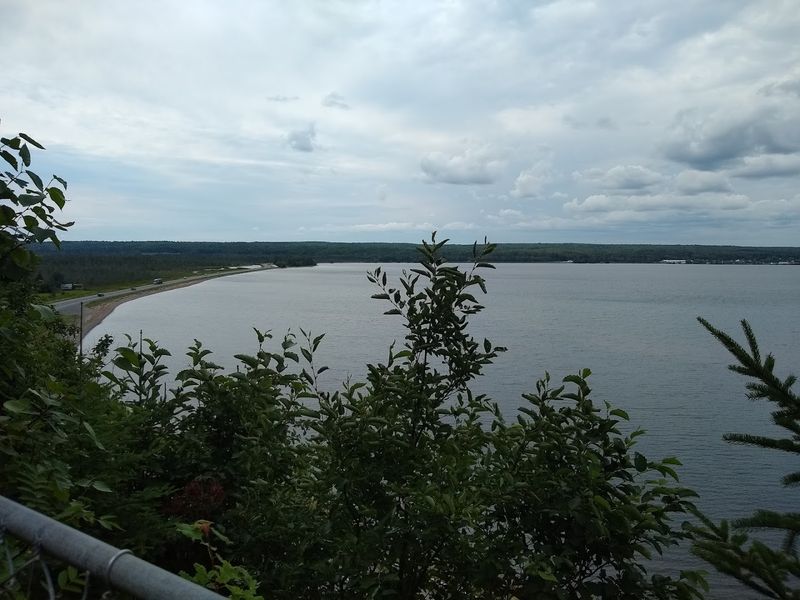
Before you study the monument, take a minute to face the bluff. Keweenaw Bay spreads out below in a broad, cold-looking sheet of blue-gray, and the elevation gives the whole stop a sense of air and distance.
The site sits high above Red Rocks Bluff, so the landscape does part of the storytelling before the statue even enters the frame.
That order matters more than you might expect. Bishop Baraga traveled enormous distances across the Upper Peninsula, often in severe weather, and the exposed view helps you feel the scale of the country he served.
If you arrive in a hurry, resist the reflex to snap one photo and leave. Let the bay set the mood first, then turn toward the six-story shrine.
When The Giant Snowshoe Priest Appears, Take The Turn
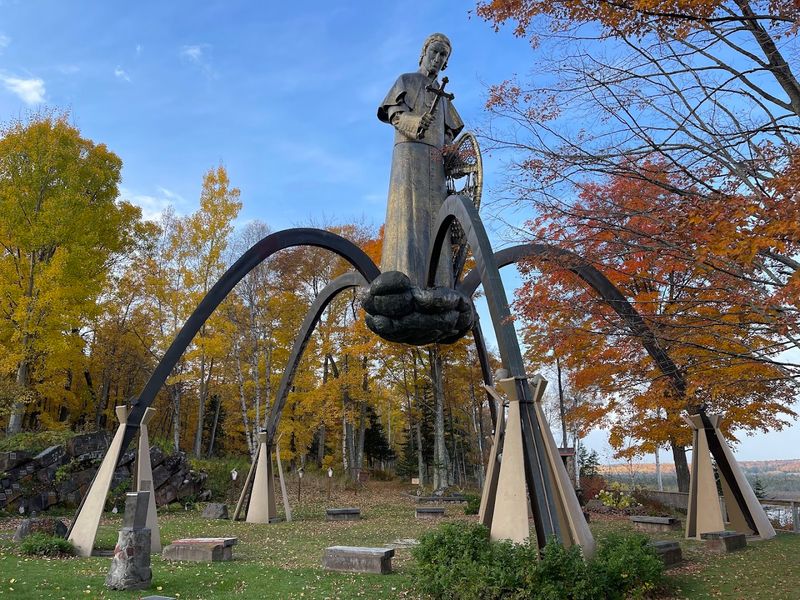
Bishop Baraga Shrine is reached from US-41 near Baraga and L’Anse, Michigan, overlooking Keweenaw Bay. This is not a downtown stop, so let the highway do most of the work and watch the shoreline and trees for the shift in scenery.
Approaching from Baraga, follow US-41 north toward L’Anse. If you are coming from L’Anse, head west on US-41 and look for the shrine signs and the distinctive roadside entrance near Lambert Road.
Turn onto Lambert Road and follow it toward the parking lot. The final approach climbs away from the highway, and the huge statue on its snowshoe-like arches confirms you have found the right bluff.
Learn Why He Was Called The Snowshoe Priest
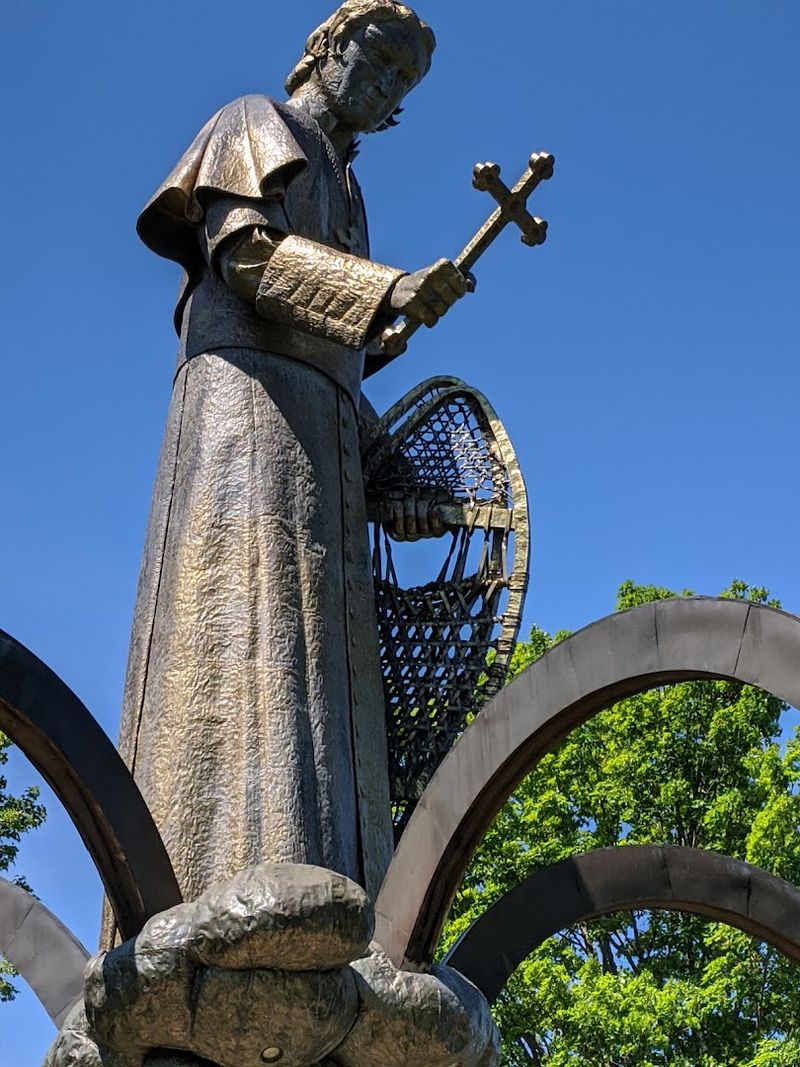
The nickname can sound quaint until you read what it actually meant. Frederic Baraga traveled across a vast region by snowshoe in winter, sometimes covering more than 700 miles in a season to minister to Ottawa and Chippewa communities and to copper miners.
Suddenly the oversized snowshoes in the statue stop being decorative and start feeling almost documentary.
Baraga was born in present-day Slovenia in 1797 and arrived in the Great Lakes region in 1830, later becoming the first Bishop of the Upper Peninsula in 1853. He was also a linguist who helped develop written forms of Native languages, including a Chippewa grammar and dictionary still in use.
Read the story panels carefully. They turn a giant roadside figure into a specific human life.
Treat It As A Place To Walk, Not Just Stop
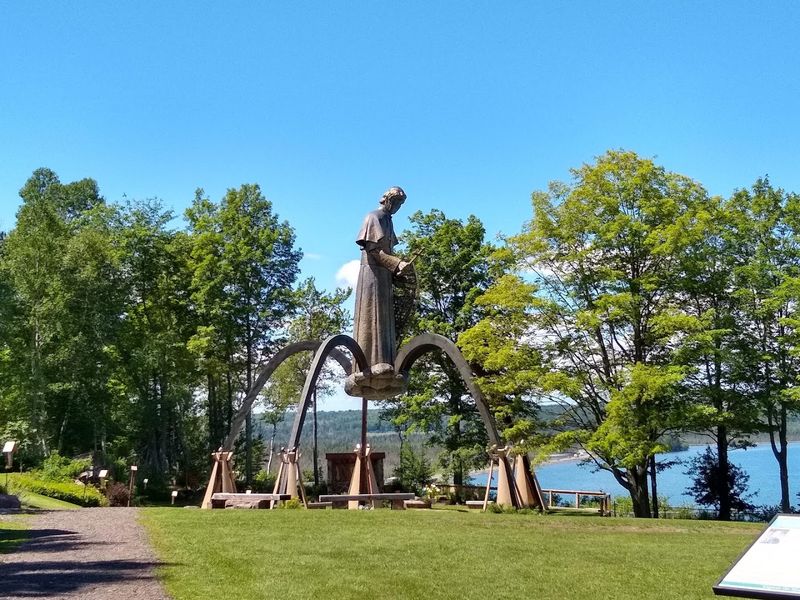
The shrine works best when you give it more than parking-lot attention. There are walking paths on the grounds, including Stations of the Cross and a Memorial Grotto, and the wooded sections soften the monument’s scale in a pleasing way.
A brief walk changes the experience from sightseeing to something more reflective, even if you are not visiting for explicitly religious reasons.
I liked the contrast between the open bluff and the enclosed tree cover behind it. One moment you are looking out toward Keweenaw Bay, and the next you are in a quieter pocket where footsteps and wind seem louder than traffic.
Plan for a little extra time, especially in fair weather. The stop is free, open year-round, and more layered than its roadside visibility suggests.
Go Beyond The Big Photo Angle
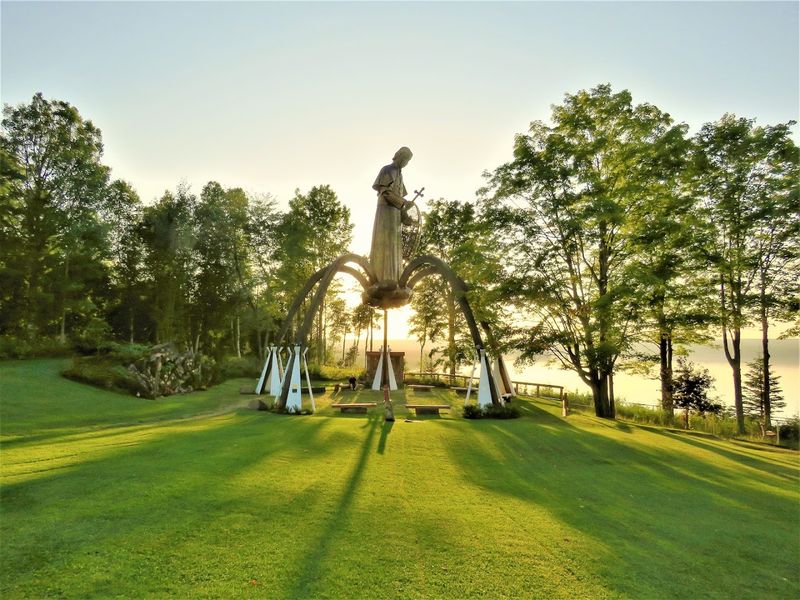
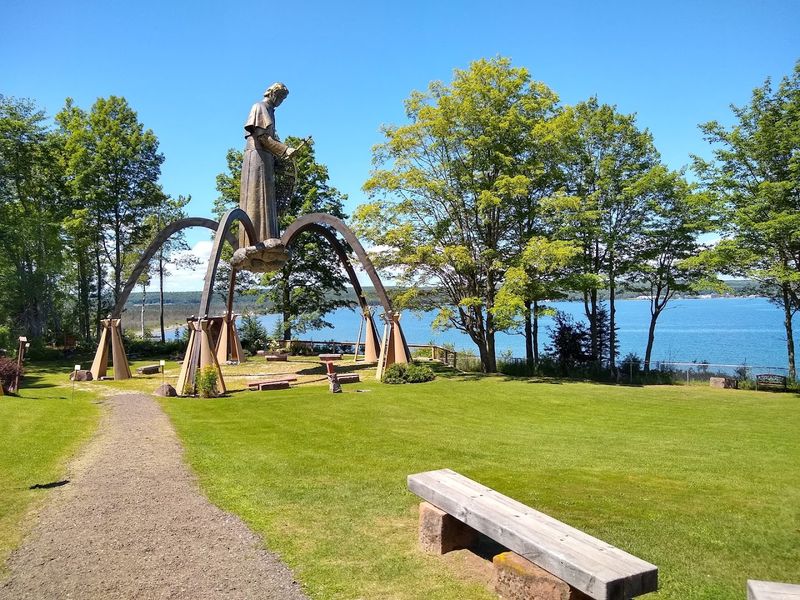
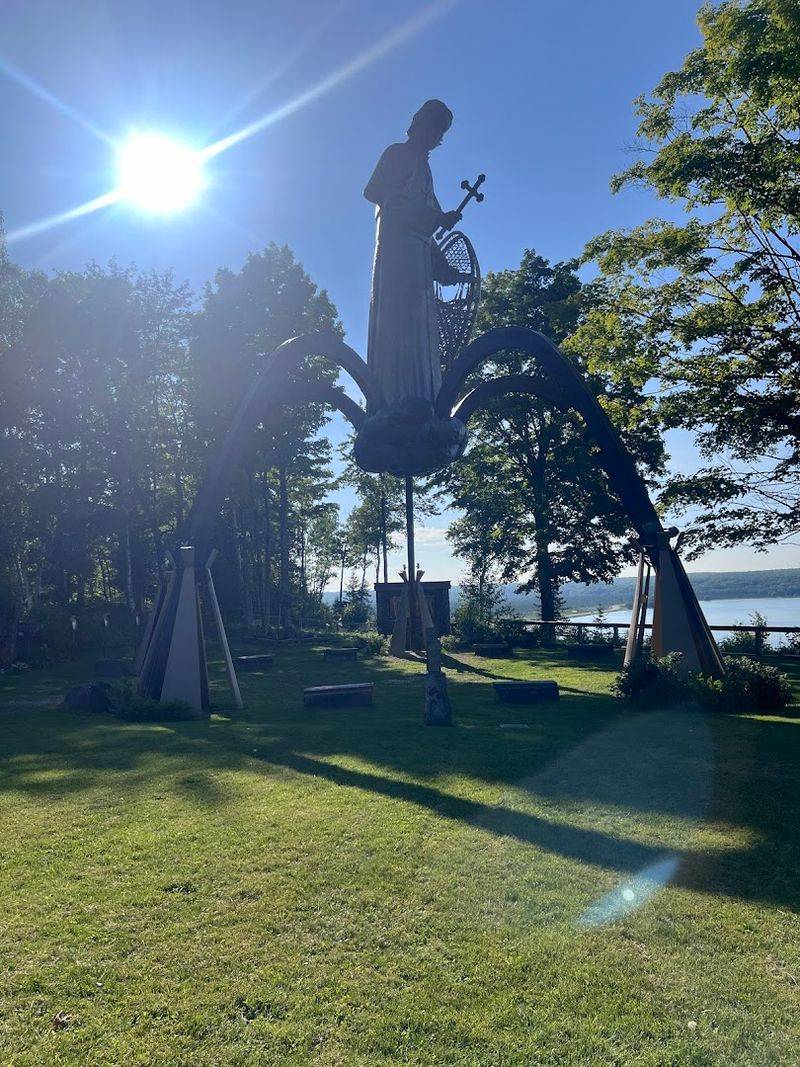
The obvious photograph is the full statue against the sky, and yes, you should take it. But the more memorable images come from side angles where Keweenaw Bay, the support beams, and the cloud structure all enter the frame together.
That is when the monument stops looking merely large and starts looking conceptually bold.
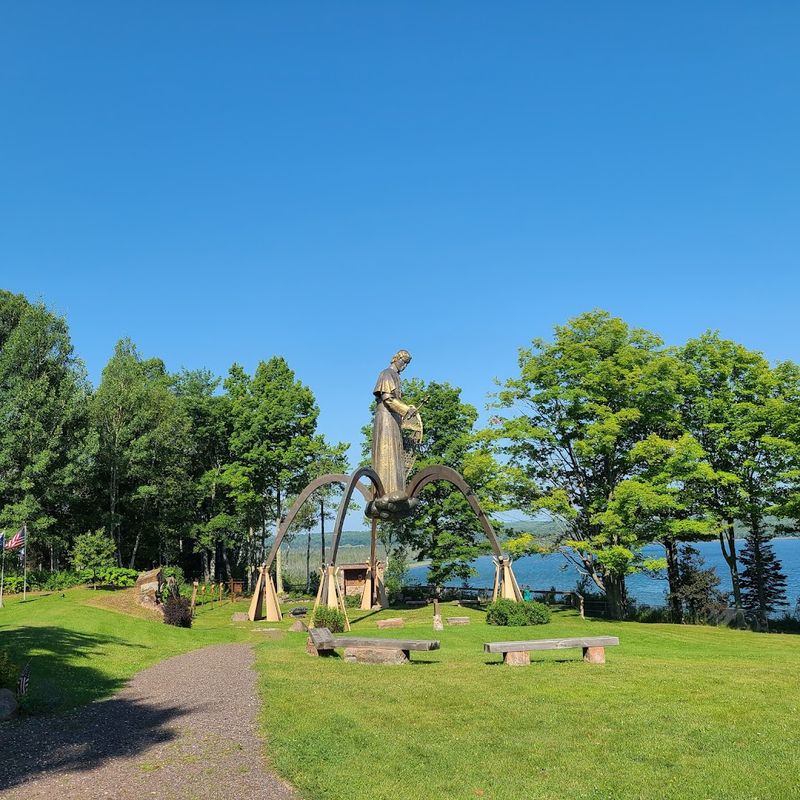
On a clear day, copper, steel, wood, water, and evergreen tones create a tidy Upper Peninsula palette without trying too hard. Lower viewpoints make the figure feel almost airborne, while wider shots explain how the bluff contributes to the effect.
If you enjoy photographing public art, walk the perimeter once before committing. The shrine is one of those places where composition improves quickly when you stop aiming only at the center.
Notice How Public And Private The Place Feels
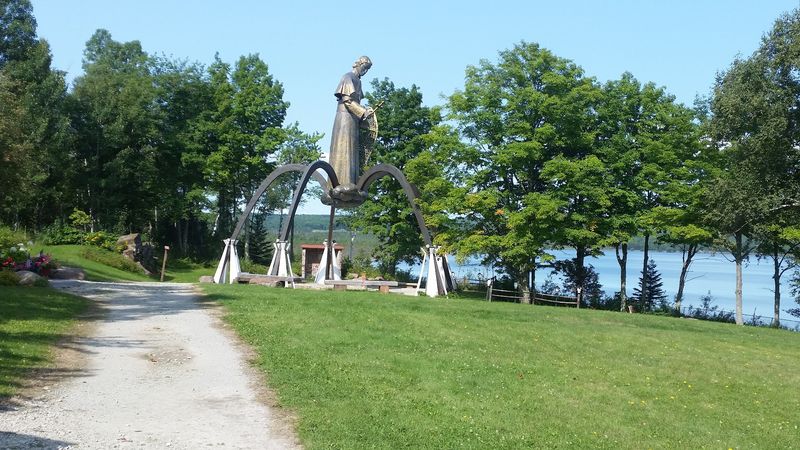
Few roadside stops manage this balance: visible, easy, and still genuinely quiet. The shrine sits right off US-41 and is open 24 hours, yet the atmosphere stays more contemplative than bustling, partly because the grounds are arranged to slow your pace naturally.
You can arrive as a curious traveler and still feel the place asking for a little restraint.
That blend makes it accessible without flattening its purpose. The site is non-denominational, but it remains unmistakably a shrine rather than a generic scenic overlook, and that distinction gives the visit its particular dignity.
I found it useful to treat the space as both artwork and devotional landscape. If you do the same, practical details such as parking and access stay simple, while the experience feels deeper than a quick roadside checkmark.
Pay Attention To The Materials
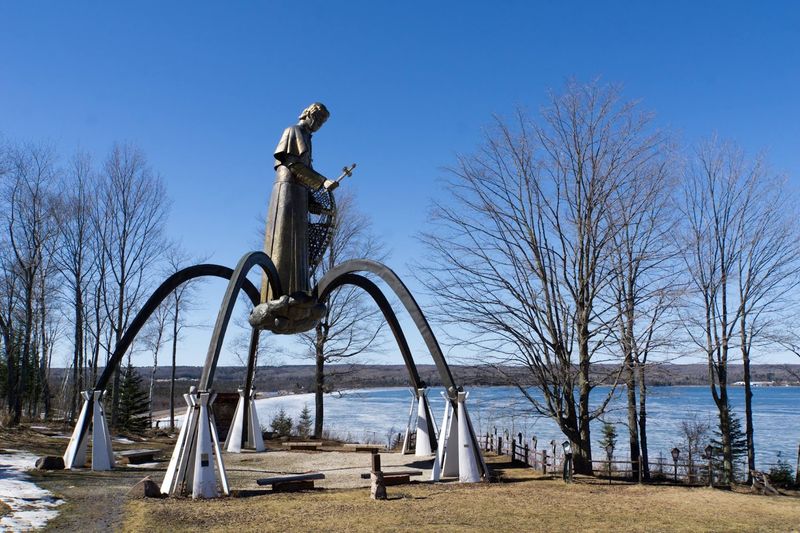
What surprised me most was the material conversation happening in plain sight. The shrine combines copper, stainless steel, wood, and concrete, which sounds severe on paper but looks unexpectedly graceful against northern sky and lake light.
Each material carries its own visual temperature, and together they keep the monument from feeling heavy or inert.
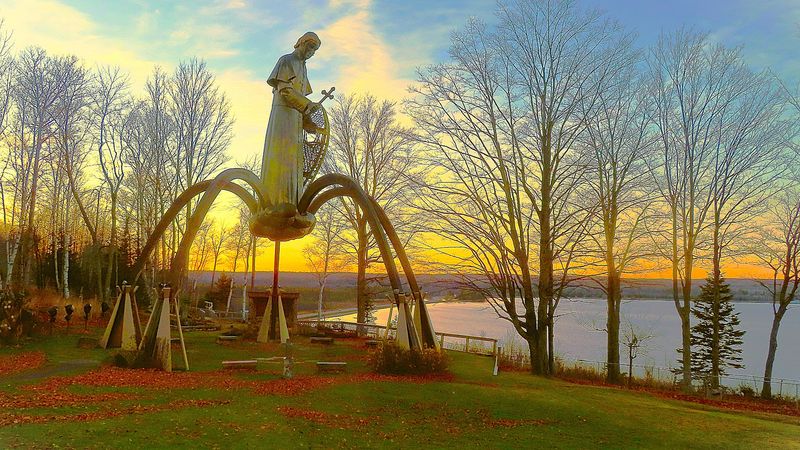
The copper figure has warmth and gravitas, while the steel cloud introduces a brighter, almost improbable lift. Then the laminated wood beams bring organic texture to an otherwise monumental structure, with the concrete teepees grounding the whole arrangement at the base.
It is worth circling slowly just to watch those surfaces change in different light. This is a religious monument, yes, but also a thoughtful piece of mid-20th-century design with a very specific local setting.
Use The Seasons To Shape Your Visit
This site changes character with the season more than many quick attractions do. In warmer months, the overlook feels open and expansive, and the seasonal gift and snack shop is typically operating from about May 15 through October 15.
In cooler weather, the bluff and trees bring a sharper, quieter mood that suits the monument’s history surprisingly well.
Because the grounds are open year-round, you are not limited to peak travel season if solitude matters more to you than amenities. A fall visit, especially, can make the copper statue and evergreen backdrop look unusually vivid above the bay.
Check conditions, dress for wind, and do not assume a casual highway stop means mild weather. Keweenaw Bay has a way of reminding you that scenic and brisk often arrive together.
Read The Site As Upper Peninsula History
It would be easy to file this under religious monument and move on, but the site opens into a broader Upper Peninsula story. Baraga’s travels connected Indigenous communities, mission work, and mining settlements across a difficult landscape, so the shrine points outward to regional history rather than inward to one narrow narrative.
That wider frame gives the stop unusual depth.
His work with Native languages is especially important to understand because it adds intellectual labor to the physical legend of the snowshoes. Baraga was not simply enduring distance; he was also listening, translating, writing, and building lasting tools such as a Chippewa grammar and dictionary.
Spend time with the interpretive material instead of relying on the monument alone. The facts complicate the image in the best possible way.
Keep Expectations Simple And Time Flexible
This is not a place packed with activities, and that is exactly why it works. You come for the monument, the bay view, the paths, and the chance to absorb a piece of history in a setting that does not overprogram your attention.
If you expect a compact stop with room to breathe, the shrine delivers very well.
Access is straightforward from US-41, and the grounds are easy to incorporate into a longer drive through the area. Some visitors stay briefly, while others wander the paths and read every sign, so your timing can be as light or deliberate as you like.
I would budget at least half an hour, more if the weather is good. The shrine rewards unhurried curiosity far better than checklist efficiency.
Leave Room For The Quiet Afterward
Some places peak the moment you see them. This one lingers later, once you are back in the car and the road starts unspooling along the bay.
The combination of unusual engineering, exposed landscape, and Baraga’s improbable life gives the shrine an aftereffect that feels larger than the stop itself.
That may be the best reason to pull over here instead of promising yourself some future visit. The monument is visually dramatic, but the site’s real strength is how it invites thought without demanding a particular script from you.
I left with sharper questions than I arrived with, which is usually a good sign. If a travel stop can offer scenery, art, and history while also quieting your pace, it has done something rare.