
This Small Arizona Town Has The Steep Streets And Storybook Charm Of A European Village
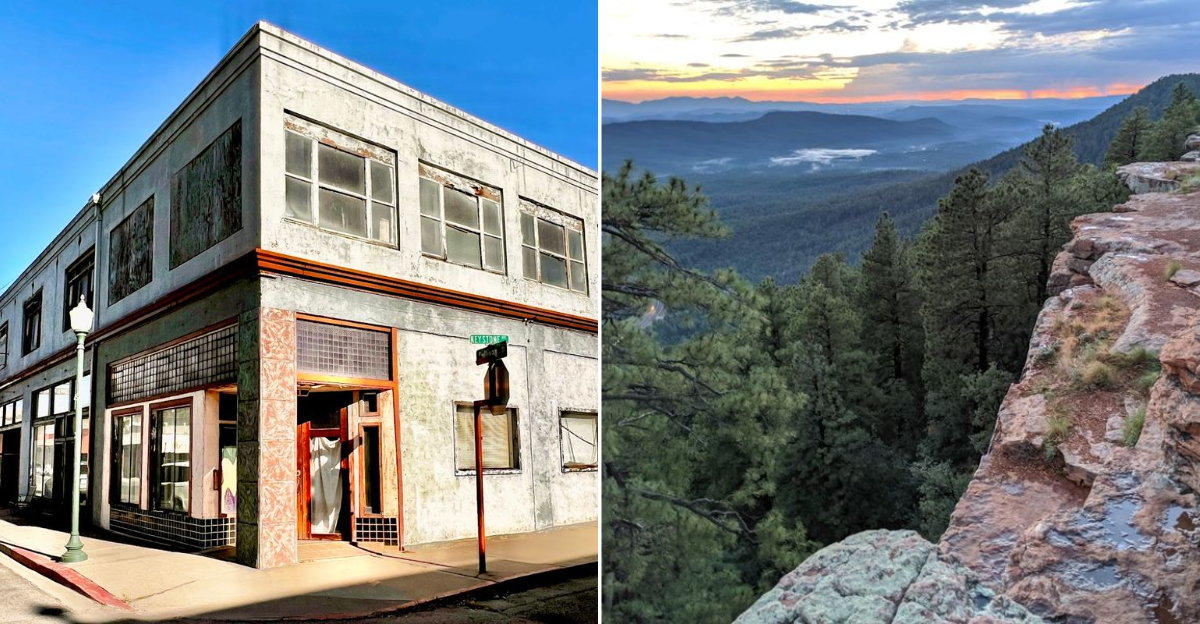
Forget the flat, sprawling suburban landscapes that dominate much of Arizona; there is a hidden pocket of this state that prefers to look up toward the clouds.
Climbing the streets of this historic town is a workout, but the reward is a collection of charming, mismatched homes that seem to cling to the mountainside like barnacles on a ship. It has all the character of an old-world village, complete with narrow paths, sudden staircases, and a sense of history that seems to seep out of the surrounding stone walls.
There is something delightfully eccentric about a community that chose to build on such dramatic slopes, yet that exact choice makes it one of the most scenic and enchanting stops you could ever hope to stumble upon.
Outdoor staircases climb above rooftops, historic cottages cling to hillsides, and a downtown packed with 20th-century architecture makes you feel like you have wandered somewhere far older and far more romantic than a small Arizona copper town.
The Keystone Stairs And The Art Of Climbing History
Some staircases carry you from one floor to another. The Keystone Stairs in Miami, Arizona, carry you straight through more than a century of living history.
Built between 1910 and 1915, these rugged outdoor concrete steps were constructed so that miners could reach the shafts above town and so that hillside residents could get down to the business district without navigating the steep, winding roads.
Standing at the base, looking upward, the stairs seem to disappear into the mountain itself. The steps are weathered and uneven in that satisfying way that only comes from decades of real, daily use.
I climbed them slowly, partly out of respect and partly because the elevation gain is genuinely humbling at 3,678 feet above sea level.
At the top, the view of the downtown below and the mountains beyond is the kind of payoff that makes every step worth it. Few travelers know these stairs exist, which makes the discovery feel entirely your own.
Forrest Stairs And 112 Steps Of Pure Perspective
If the Keystone Stairs are the headliner, the Forrest Stairs are the equally impressive opening act that most visitors walk right past.
At 112 steps, this outdoor concrete staircase is a serious climb that rewards the persistent with sweeping views over the rooftops of downtown Miami and into the mountain terrain beyond.
What struck me most was not the steps themselves but what surrounds them. Modest historic homes sit just feet away, their small yards pressed up against the hillside as if holding on for dear life.
It feels intimate and lived-in, like you are passing through someone’s neighborhood rather than a tourist attraction, because you genuinely are.
The Forrest Stairs are a reminder that necessity often produces the most enduring architecture. These steps were not built to be scenic; they were built because people needed to get somewhere. That honest purpose is exactly what makes them so compelling to walk today.
Bring good shoes and a little patience.
Downtown Sullivan Street And Its Antique Treasure Hunt

Sullivan Street is the beating heart of downtown Miami, and spending an afternoon here feels less like shopping and more like archaeological fieldwork.
The street is lined with antique shops tucked inside buildings that date back to the early 1900s, when Miami was a booming copper town drawing workers and merchants from across the country.
I wandered into three different shops and came out with stories each time. One owner showed me a collection of old mining tools still coated in original dust.
Another had framed photographs of the town from the 1920s that looked almost unrecognizable compared to the quieter, smaller community it is today.
The merchandise is genuinely eclectic, ranging from vintage furniture to turquoise jewelry pulled from nearby mines.
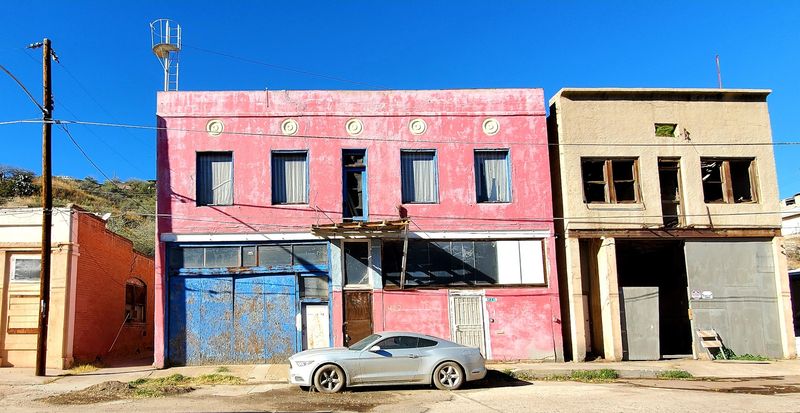
Even if you are not a committed antique hunter, Sullivan Street rewards a slow stroll. The storefronts themselves are worth admiring, with their original facades and hand-painted signage offering a window into a version of Arizona that most of the state has long since paved over.
Bullion Plaza Cultural Center And Museum
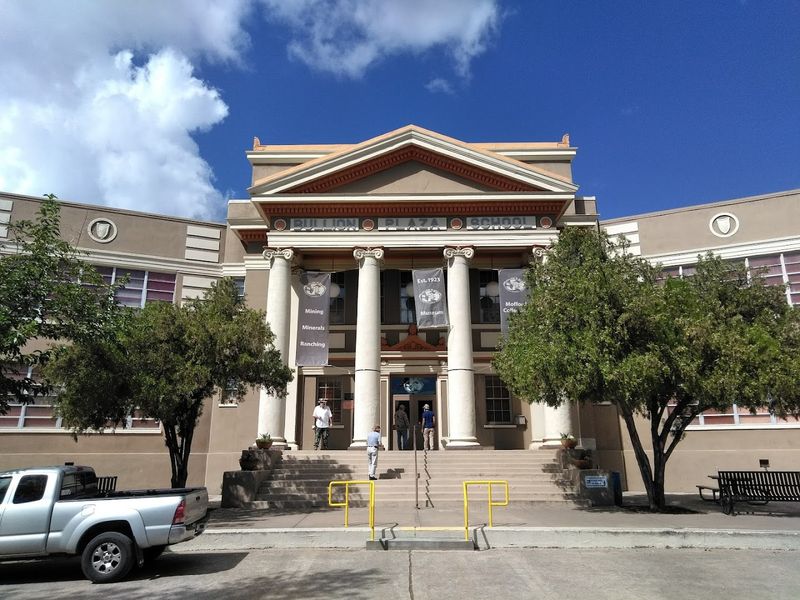
There is a particular kind of museum that feels like a conversation rather than a lecture, and the Bullion Plaza Cultural Center and Museum in Miami is exactly that.
Housed in a building with its own historic character, the museum focuses on the cultural, mining, and ranching heritage of the Miami-Globe area in Gila County, Arizona.
Walking through its exhibits, I got a genuine sense of how layered this community’s story really is. The copper mining history is front and center, naturally, with displays covering the tools, techniques, and human stories behind the industry that built the town.
But the museum also gives real attention to the ranching culture and the diverse communities that shaped life here over more than a century.
Local volunteers staffed the museum during my visit, and their personal connections to the stories on display added a warmth that no exhibit label can manufacture. Plan to spend at least an hour here; it is the kind of place that rewards curiosity and slow looking.
Hillside Architecture That Tells A Story
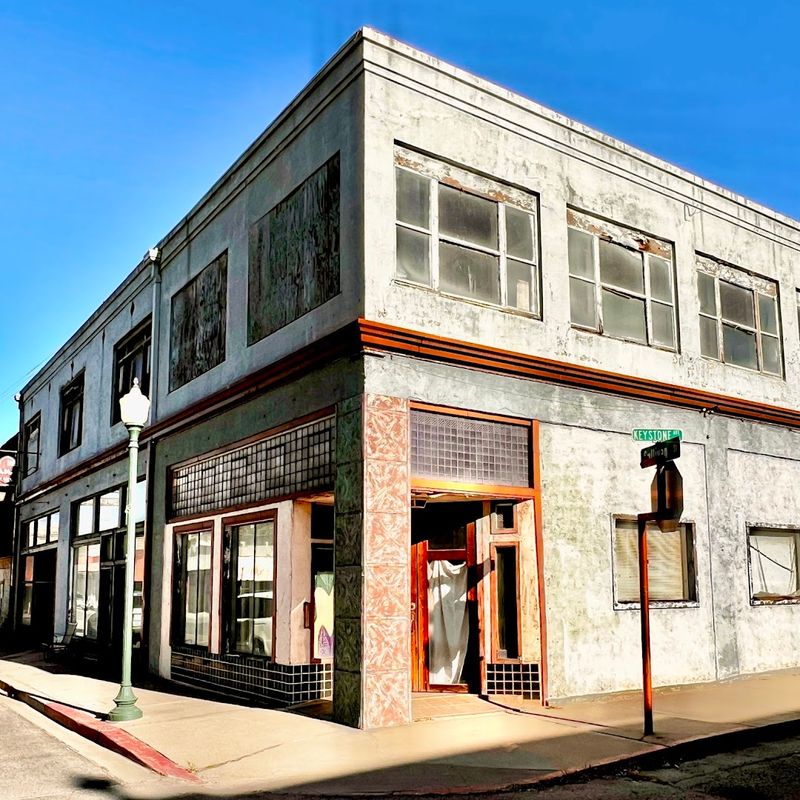
One of the most unexpected pleasures of walking through Miami is the architecture.
The hillside neighborhoods are dotted with historic cottages and homes that carry traces of Victorian styling and mission-influenced design, built during the copper boom years of the early 20th century when the town was growing fast and workers needed places to live.
These are not grand mansions. They are modest, human-scaled homes with front porches, pitched roofs, and small yards carved into slopes that would challenge most modern builders. What makes them remarkable is their survival.
Many retain original details, including decorative trim, old window frames, and exterior finishes that have faded into beautiful, sun-bleached palettes.
I spent a full morning just wandering the residential streets above downtown, photographing details that most people drive past without a second glance.
The steep grades between houses give every block a slightly theatrical quality, as if the neighborhood were arranged on a stage. It is the kind of place that rewards slow, deliberate walking above almost anything else.
Our Lady Of The Blessed Sacrament Catholic Church
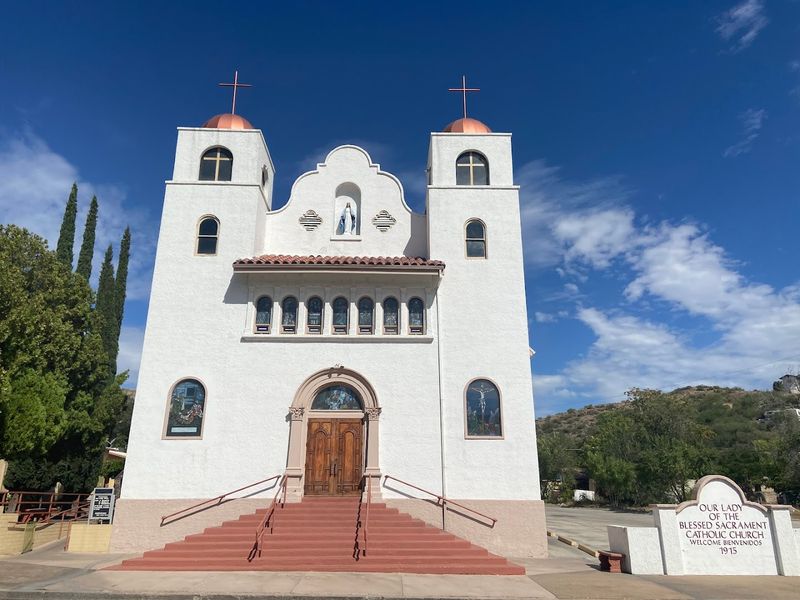
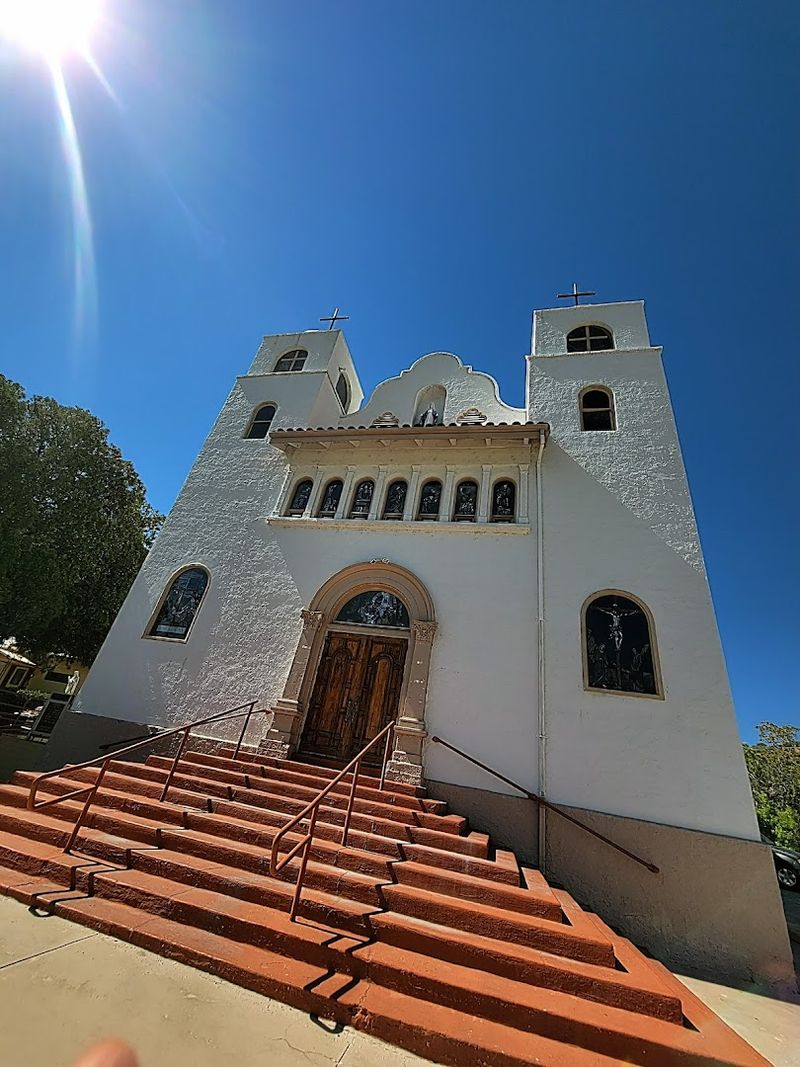
Dedicated in 1917, Our Lady of the Blessed Sacrament Catholic Church is one of Miami’s most visually striking landmarks and one of the clearest reminders of just how quickly this mining town grew in its early years.
The church was built to serve a rapidly expanding community of workers and families who brought their faith with them from across the country and around the world.
The building’s architecture has a quiet dignity that stands out against the surrounding desert terrain. Its solid construction and careful detailing reflect the ambitions of a community that intended to stay, not just to extract copper and move on.
Standing outside it on a bright Arizona morning, I found myself thinking about all the different people who had passed through its doors over more than a century.
The church remains an active part of the Miami community today, which gives it a living quality that purely preserved historical sites sometimes lack. It is a landmark that still earns its place on the landscape every single week.
Tonto National Forest
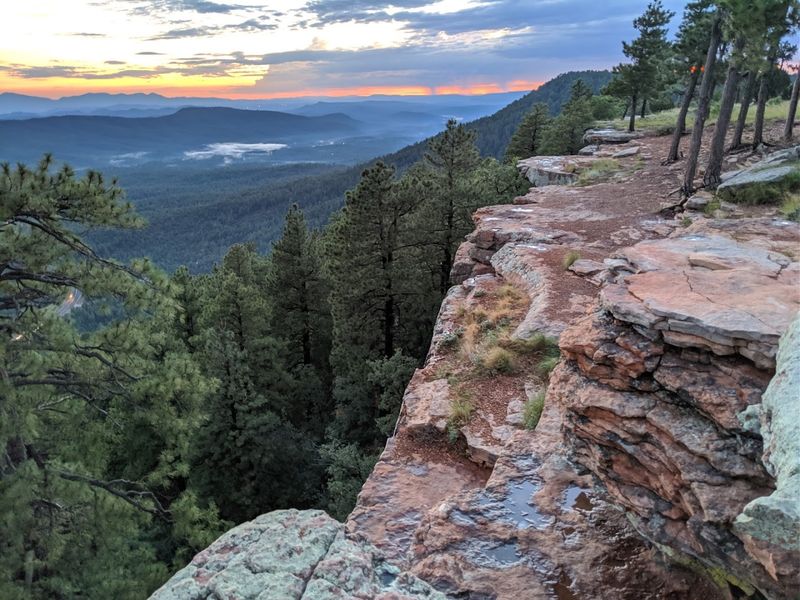
One of the most underrated things about Miami, Arizona, is what sits right outside its city limits.
The town is essentially wrapped by the Tonto National Forest, one of the largest national forests in the United States, and the outdoor access this provides is genuinely spectacular for a community of fewer than 2,000 people.
The Pinal Mountains rise immediately to the south and east, offering hiking trails with dramatic elevation changes and views that stretch for miles across the high desert. The old section of the Superior-Miami Highway, now incorporated into the Legends of Superior Trail, is a particular highlight.
That historic road cuts through cliff faces with tight curves and steep grades, dropping 666 feet over just 2.5 miles, and it offers a vivid sense of how challenging travel through this region once was.
Whether you spend an hour or a full day outdoors here, the forest provides a striking contrast to the town’s compact, historic streets. The wilderness and the townscape together create a travel experience that feels genuinely complete.
Copper Heritage And The Economy That Built It All
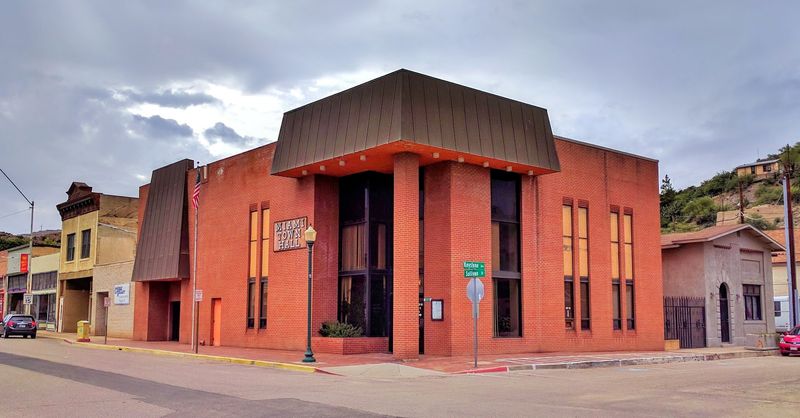
Miami did not appear on the map by accident. The town was founded in 1907 because of copper, and that mineral still defines much of what the community is and how it functions today.
Freeport-McMoRan, one of the world’s largest copper producers, remains a major employer in the area, and the presence of active mining operations gives Miami an industrial energy that sits in interesting contrast to its storybook streetscapes.
Beyond copper, the surrounding hills hold deposits of turquoise, chrysocolla, and quartz, making this part of Gila County a genuine destination for rockhounds and mineral enthusiasts.
Local shops along Sullivan Street often carry specimens pulled from nearby mines, and conversations with shop owners quickly reveal how deeply the mining culture runs through everyday life here.
Understanding the mining history does not just add context to a visit; it completely changes the way you see the town. Every staircase, every hillside cottage, and every weathered downtown building exists because someone, somewhere, was following a seam of copper through the rock.
That is a remarkable foundation for a place this charming.