
This Small Washington Town Has 1,000-Year-Old Cedars Waiting Just Down The Road
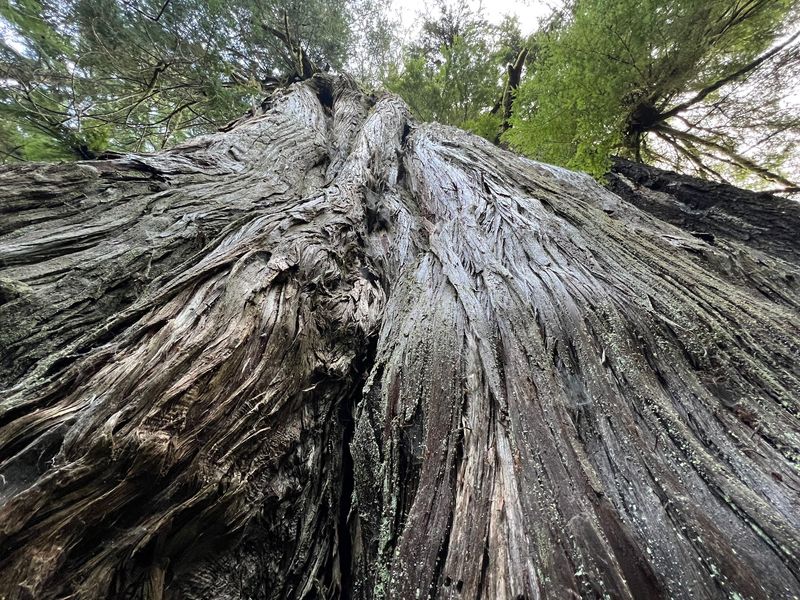
A tree trunk about 10 feet wide is waiting at the end of an old logging road. A whole cluster of them, actually, and some are over 1,000 years old.
The catch is that the parking spot barely fits three cars. The pullout sits beside a bridge, and it’s so plain that plenty of drivers cruise right past it.
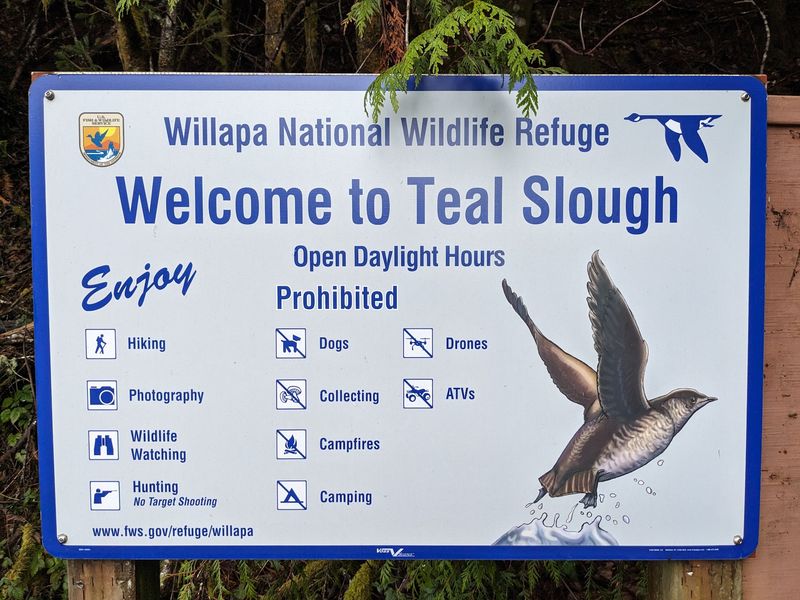
I love that a grove this ancient hides behind something so ordinary. In southwest Washington, the trailhead sign simply says Welcome to Teal Slough, and that’s about all the fanfare you get.
The walk takes around 20 minutes out and back. The first stretch climbs, then the forest closes in, and the giants start showing up.
I can’t imagine a better excuse to pull over on a road trip. So how many times have you already driven right by?
A Quiet Pullout Near Naselle With Giants Up The Hill
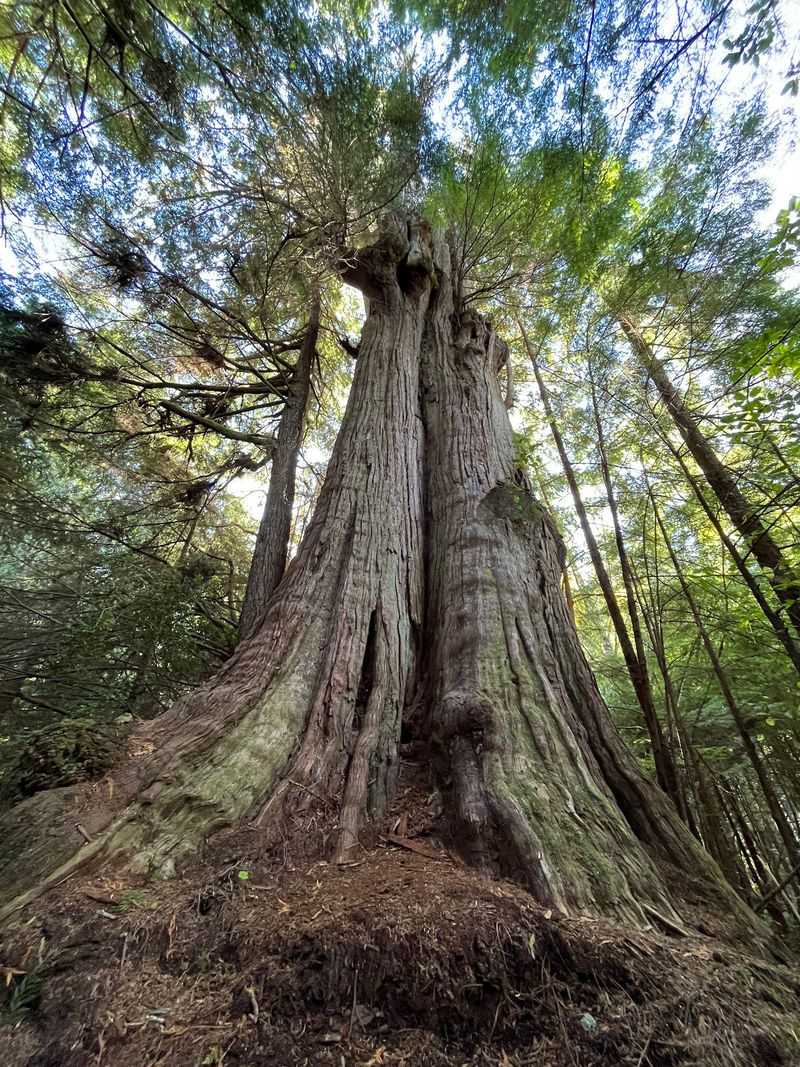
Old Growth Big Cedars is the kind of stop that never asks for attention. It sits near the small town of Naselle, in the lush southwest corner of Washington.
The official address is a plus code, which tells you plenty about how low-key it is. Google lists it simply as a scenic spot, with no visitor center, gift shop, or ticket booth in sight.
What you get instead is a short trail and a stand of enormous western red cedars. Some of these trees are estimated to be more than 1,000 years old.
That’s older than most castles in Europe, and they’re living right off a quiet road. Honestly, that alone earns a spot on any Washington road trip list.
The trailhead greets you with a sign reading Welcome to Teal Slough. So if your map says one name and the sign says another, don’t panic.
You’re in the right place. The grove is part of that Teal Slough area, and the cedars are the headline act.
Think of it as a short, free, no-fuss detour. It packs more wow per minute than a lot of longer hikes.
Why A Thousand Years Feels Different In Person
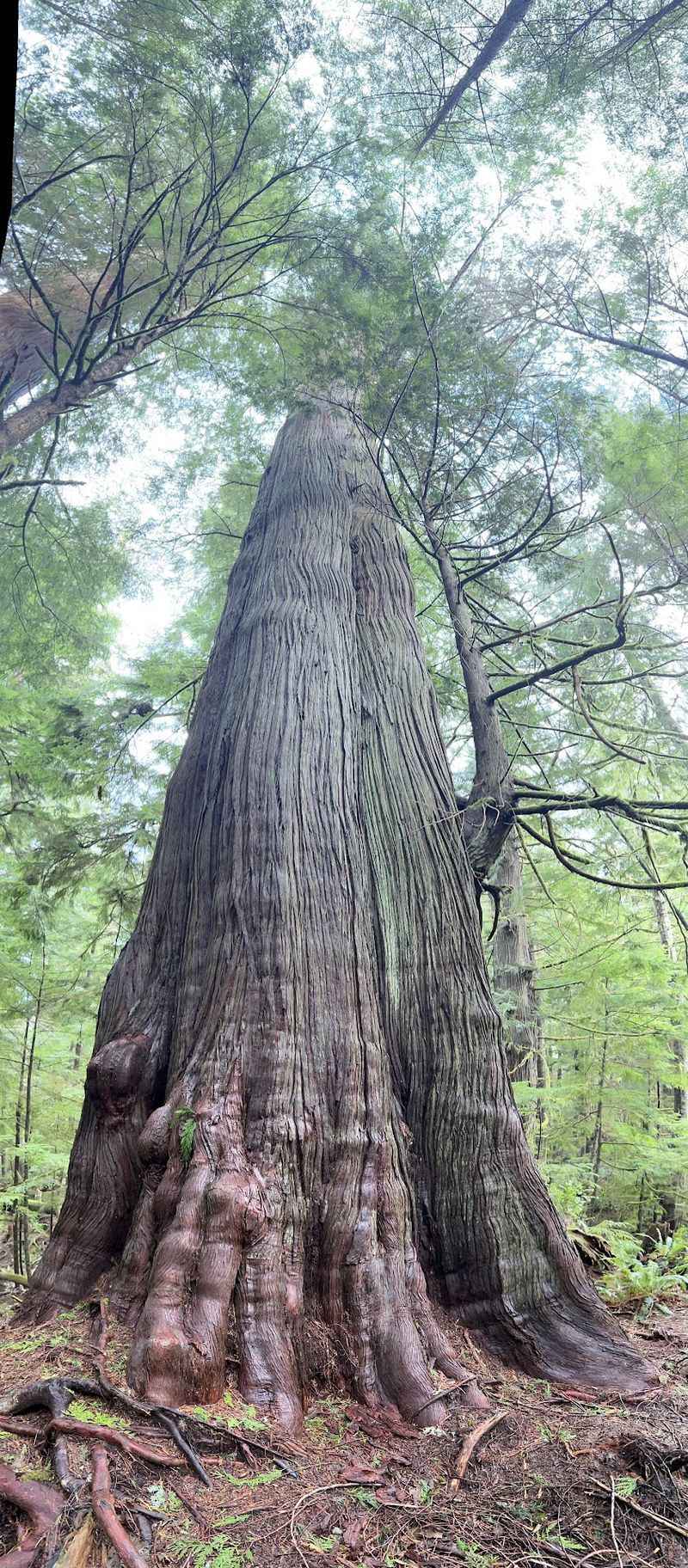
Ten feet. That’s roughly how wide some of these cedars measure at the base, and the number lands harder once you stand beside one.
A trunk that size started growing long before anyone drew a map of Washington. It has weathered centuries of coastal storms, rain, and wind.
I find that kind of age hard to wrap my head around. You can read the number a dozen times, but seeing the bark up close does the real explaining.
The grove holds about eight of these big cedars. That might not sound like a lot until you notice how much space each one takes up.
These aren’t skinny trees reaching for sunlight. They’re wide, rooted, and settled into the hillside like they own it, which, fair enough, they kind of do.
Plenty of forests in the region were logged over the last century. Finding trees this old still standing feels like spotting a rare survivor from another chapter of history.
So the real attraction here isn’t a view or a waterfall. It’s time itself, wrapped in bark and standing patiently in the woods.
The Old Logging Road That Turned Into A Forest Path
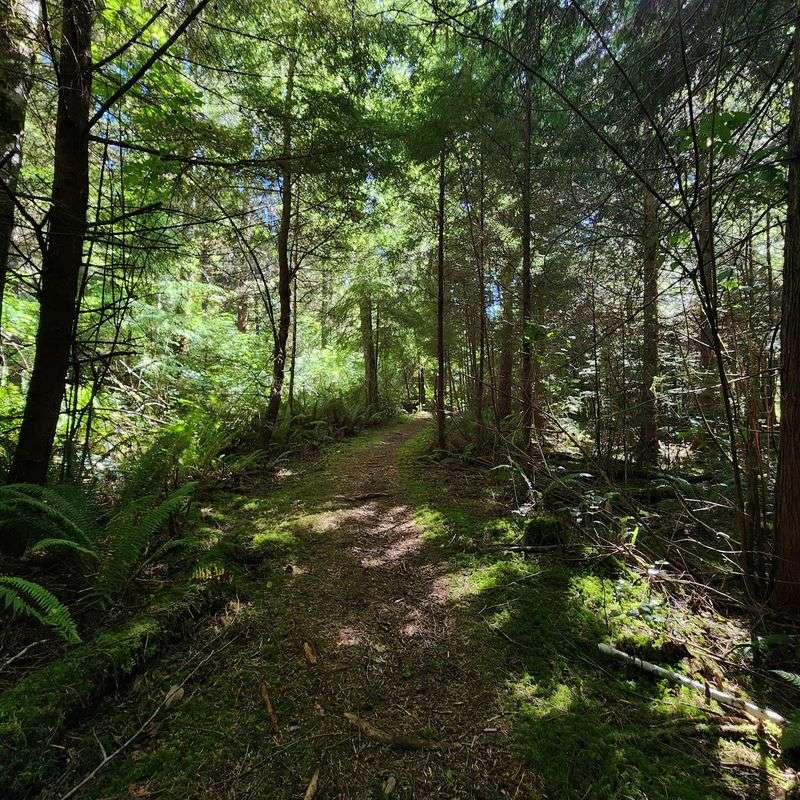
Here’s a fun twist of history. The trail to these ancient cedars follows an old logging road bed.
That means the same kind of route once used to haul timber out now leads people in to admire trees that were spared. It’s a nice bit of irony to chew on while you walk.
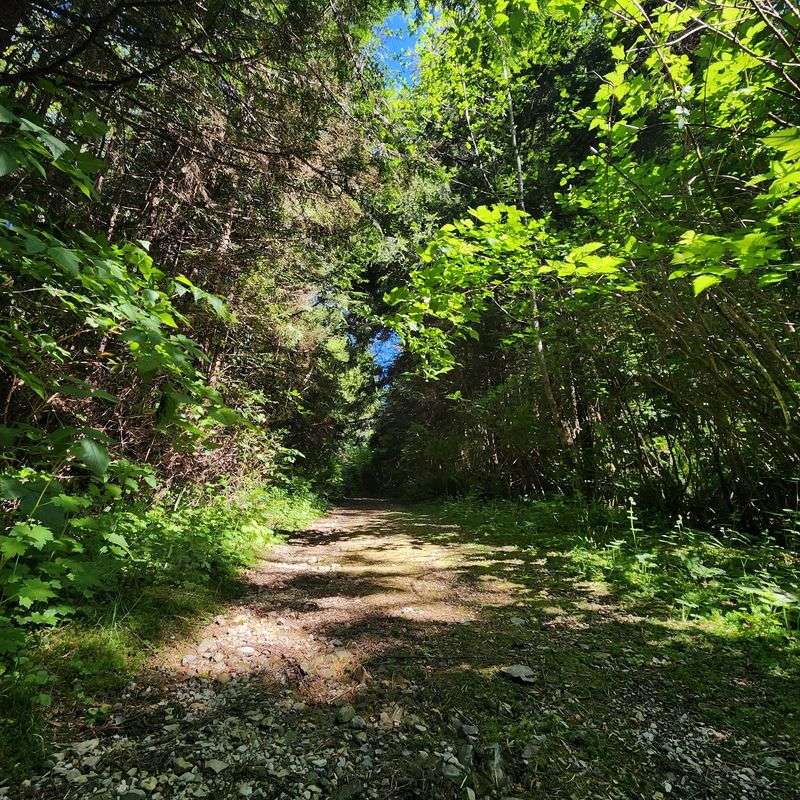
You can still tell the path started life as a road. It’s wider at first, with a firm base that makes footing feel solid.
As you go deeper, the forest has clearly reclaimed some ground. The trail narrows, and greenery crowds in from both sides.
Logging shaped much of the landscape around Naselle and the wider Pacific County area. Knowing that makes the surviving giants feel even more special.
They mark what these hills looked like before chainsaws and log trucks arrived. Every step on the old road bed nudges you toward that older picture.
I like how the trail tells a story without a single plaque. The ground under your feet hints at the past, and the cedars at the end finish the tale.
Brace Yourself For The First Couple Hundred Yards
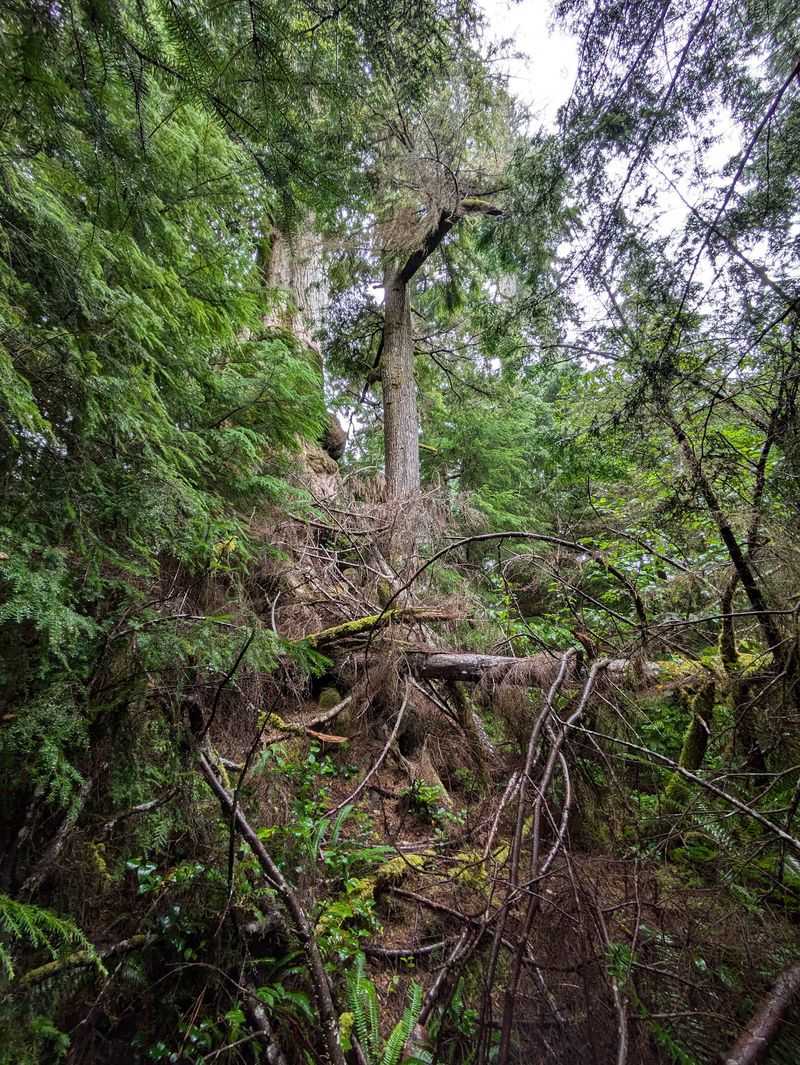
Fair warning, your calves will notice the start. The first 200 to 250 yards are the steepest part of the whole walk.
It’s a short climb, not a mountain. Still, it’s enough to get your heart pumping before the trees even come into view.
The good news is that the hard part comes first. Once you push past that opening hill, the grade eases and the walk feels much friendlier.
Getting to the big trees is honestly not bad after that. Most able-bodied walkers should handle it with a few pauses to catch their breath.
Take it slow if you need to. There’s no prize for sprinting up a hill that’s been sitting there for ages.
Families with kids can treat the climb like a mini adventure. A little effort at the beginning makes those giant trunks feel well earned.
Sturdy shoes help, especially in this rainy corner of Washington. Damp ground on a slope can get slick, so good tread is a smart call.
Then the reward shows up, and that hill becomes a funny memory.
Watch For The Little Sign With A Tree On It
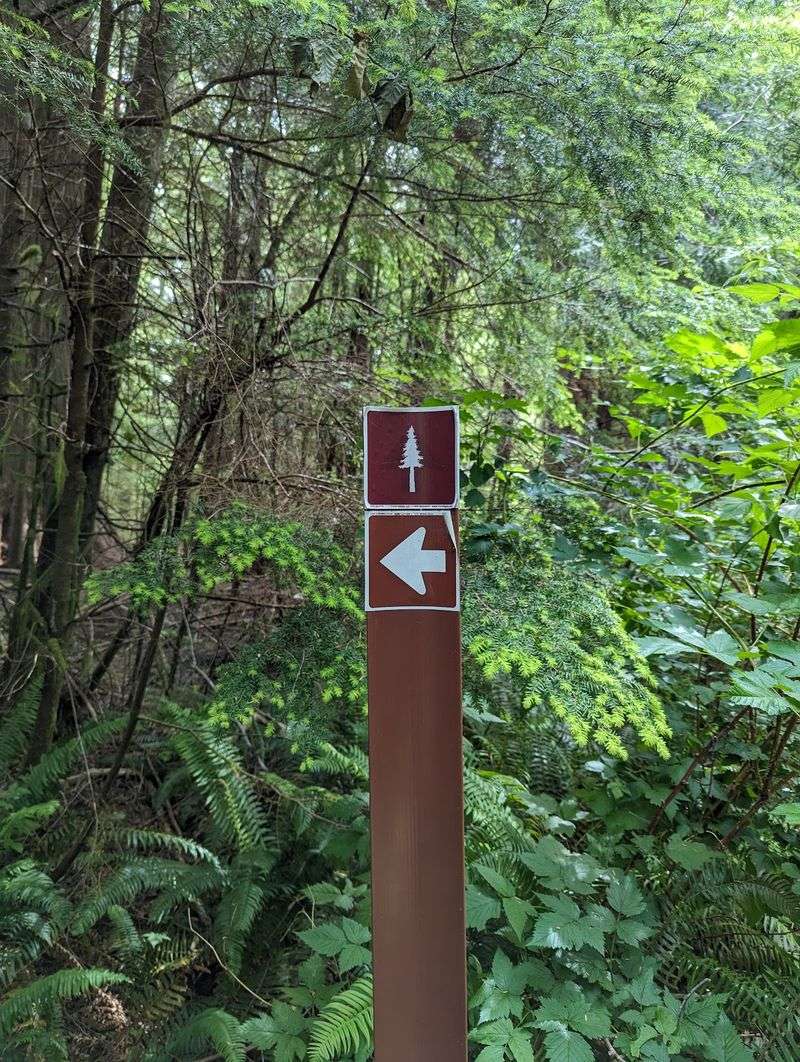
Directions don’t get much more charming than this. Look for the sign that points left with a tree on it.
That simple marker steers you toward the grove. Miss it, and you might wander along the old road wondering where the giants went.
Thankfully, the trail stays visible and well marked as you go. Even when the path narrows, it’s easy enough to follow.
The signage keeps things simple, which suits the place. Nobody needs a giant billboard when the trees themselves are the billboard.
Keep your eyes up as well as ahead. A sign with a tree on it is easy to blend into a forest full of actual trees, which is either clever or slightly cheeky.
Once you make that left turn, the walk feels more intimate. The forest grows thicker, and the anticipation builds with every step.
A handful of hikers have walked away underwhelmed, likely without reaching the cedar cluster. So stick with the markers and keep going.
The trees are there. You just have to follow the little arrow to meet them.
Douglas Firs Warming Up The Crowd
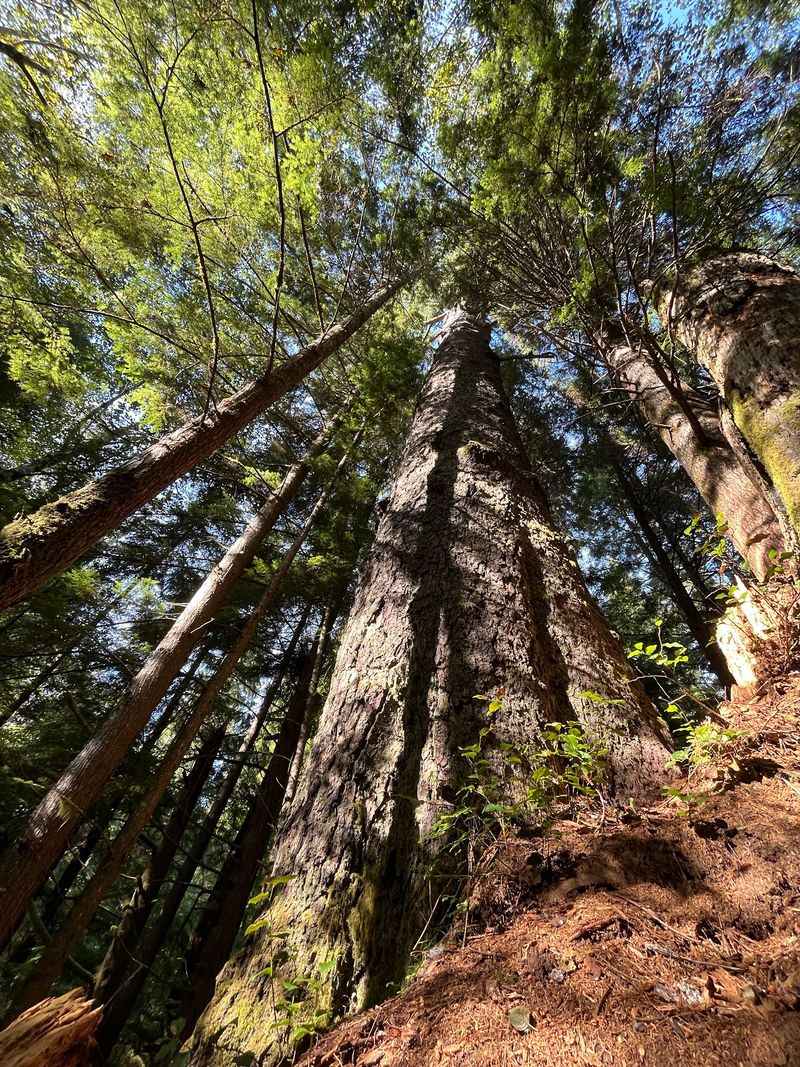
Before the cedars take the stage, a couple of older Douglas firs show up along the way. Consider them the opening act.
Douglas firs are a big deal in Washington forests. They grow tall and straight, with thick, ridged bark that looks almost carved.
Spotting them on the climb gives you a taste of what’s coming. It’s like the forest is warming you up for the main event.
Kids might enjoy a quick tree identification game here. Cedar bark looks stringy and reddish, while Douglas fir bark has deep grooves and a darker tone.
That little lesson makes the walk more fun. Suddenly, everyone is checking trunks and calling out guesses.
Having both species nearby shows off the variety in this rainforest. Each tree brings its own texture and personality to the scene.
The firs are impressive in their own right, so don’t rush past them. Snap a photo, give them a nod, and then keep heading toward the cedars.
Trust me, the headliners are worth the wait. But the warm-up act deserves some applause too.
Meet The Grove Of Western Red Cedars
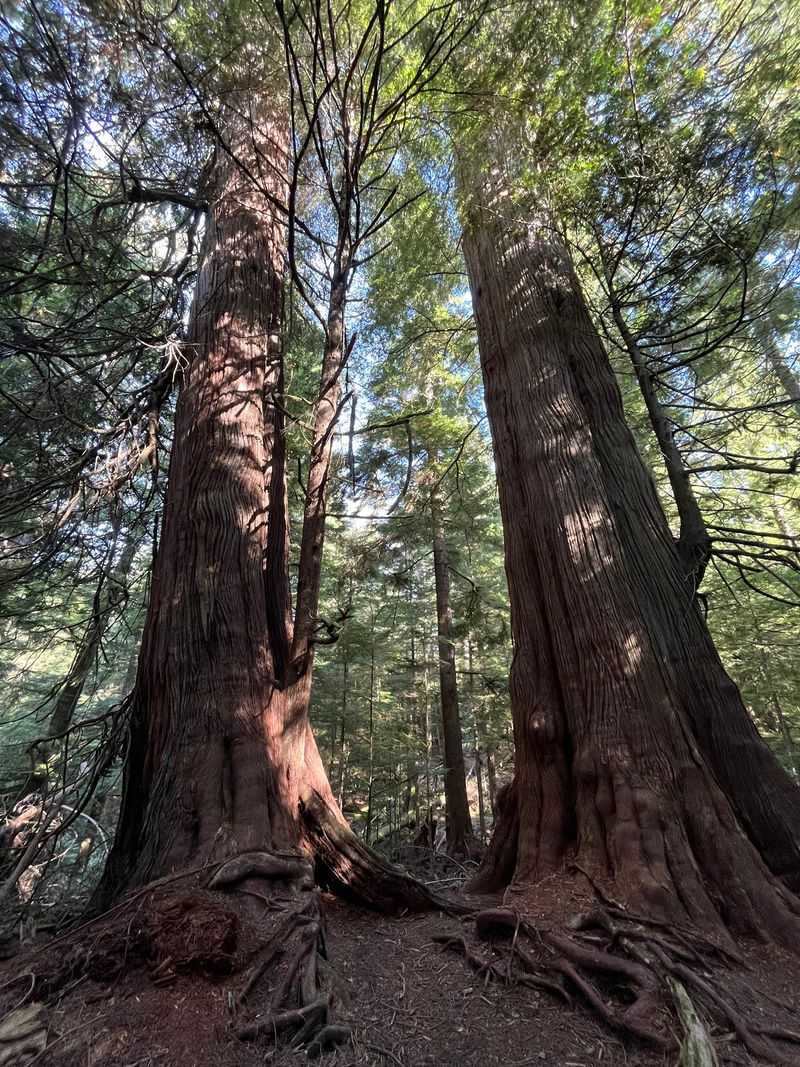
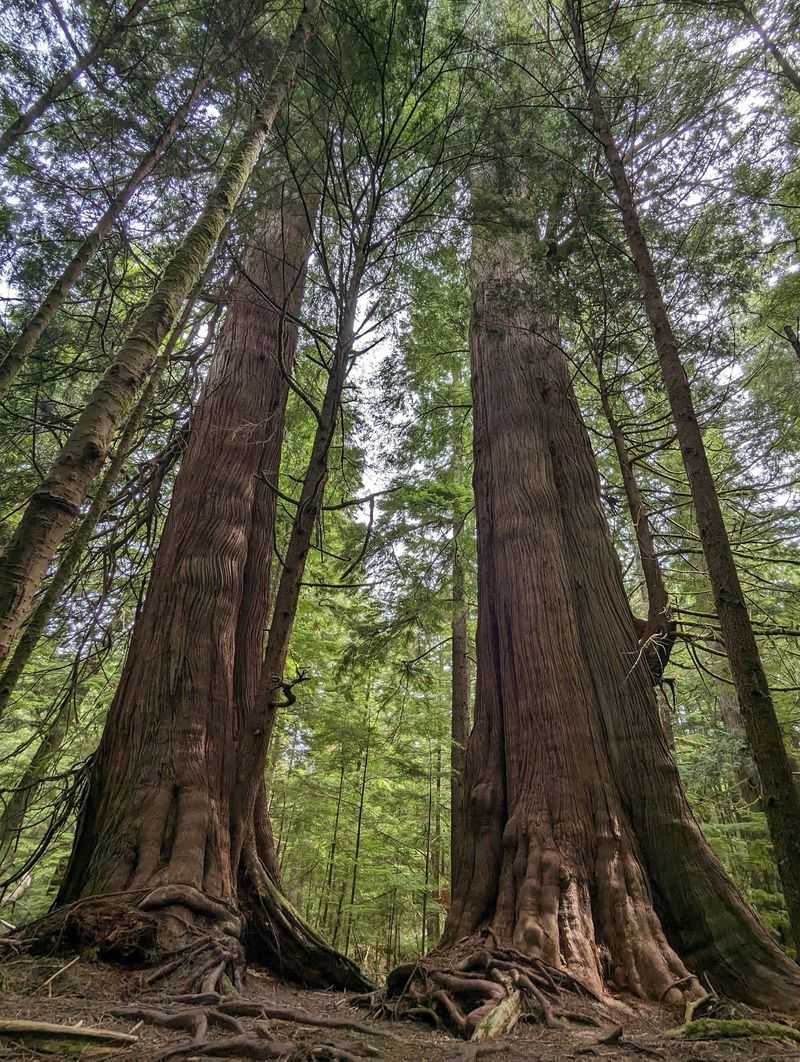
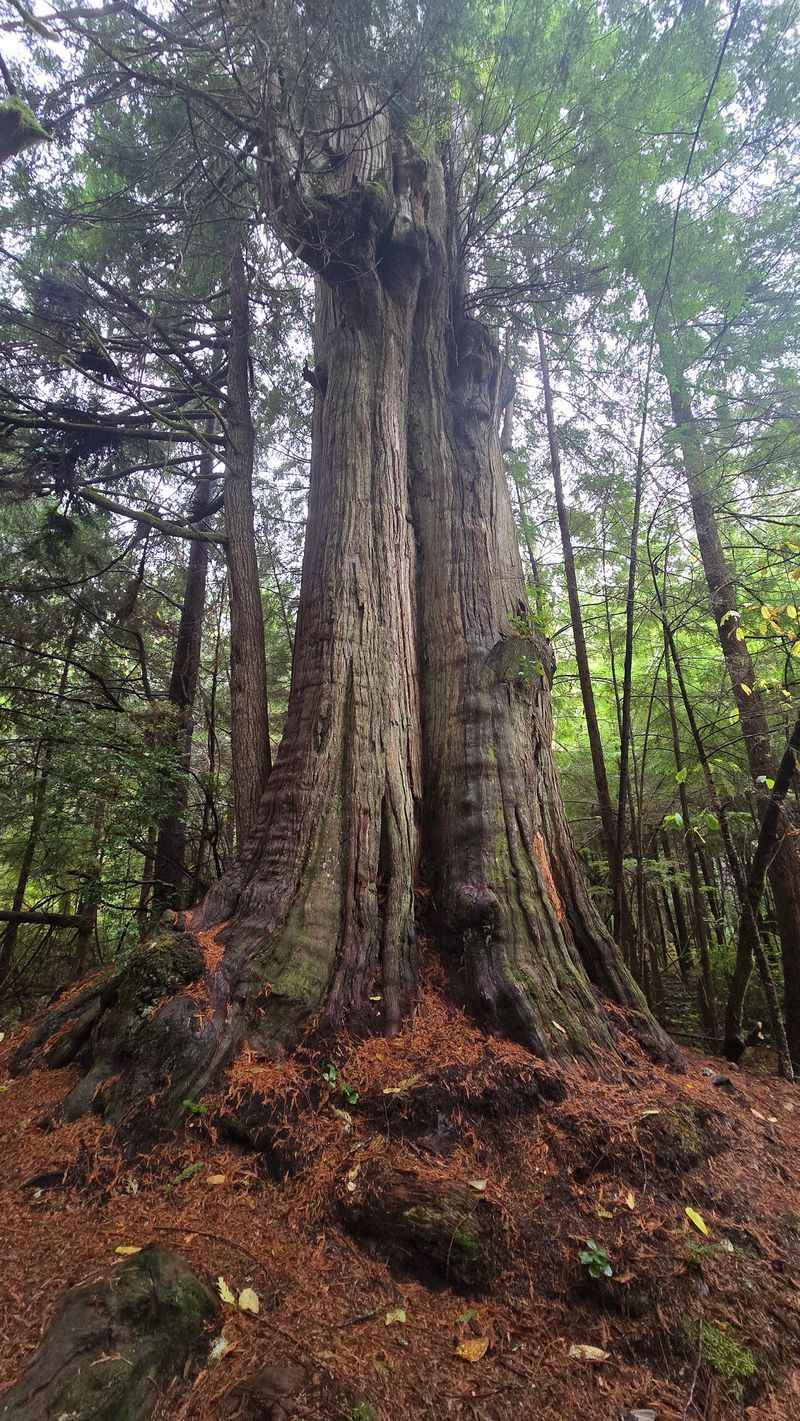
Around eight huge cedars stand together at the heart of this walk. Several measure about 10 feet wide at the base.
These are western red cedars, one of the signature trees of the Pacific Northwest. Their trunks flare out near the ground, giving them a sturdy, grounded look.
Standing among them feels like visiting a small gathering of elders. Each tree has its own shape, lean, and pattern of bark.
The grove isn’t sprawling, and that’s part of the appeal. You can take in the whole cluster without hiking miles to find the next giant.
Western red cedar has deep roots in the region’s culture too. Its wood has long been valued for canoes, homes, and carvings by Native peoples of the Northwest.
Seeing living examples this old adds weight to that history. These trees were already mature when generations came and went around them.
Bring a camera, but don’t expect one photo to capture the scale. A friend standing at the base helps show just how massive these trunks really are.
A Quirky Little Name Mix-Up
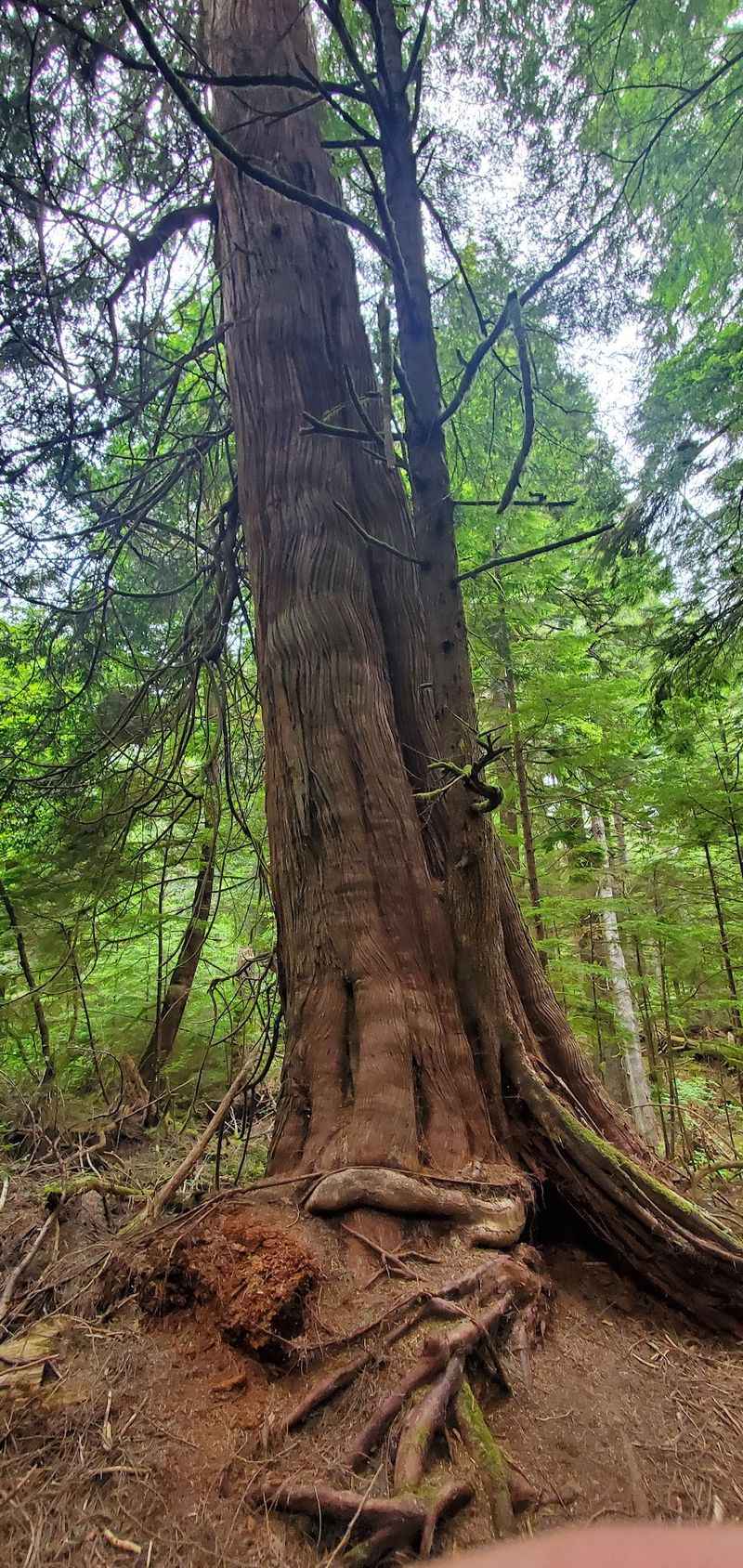
Did you know these famous cedars aren’t technically cedars at all? Western red cedar belongs to a group of trees called Thuja.
True cedars belong to a different genus entirely, and they mostly grow in places like the Mediterranean and the Himalayas. The name stuck here anyway, likely thanks to early European settlers and explorers.
The scientific name for western red cedar is Thuja plicata. Plicata refers to the folded, braided look of its flat, scaly leaves.
So the next time someone points and says cedar, you can share a fun fact. Just try not to sound like a know-it-all on the trail.
Honestly, the label doesn’t make these trees any less amazing. A thousand-year-old giant earns respect no matter what we call it.
I like little surprises like this one. They make a short walk feel like a trivia night in the woods.
Kids especially tend to love a good name mix-up. It’s a great way to get young hikers curious about how trees are grouped and named.
Rainforest Atmosphere That Practically Hugs You
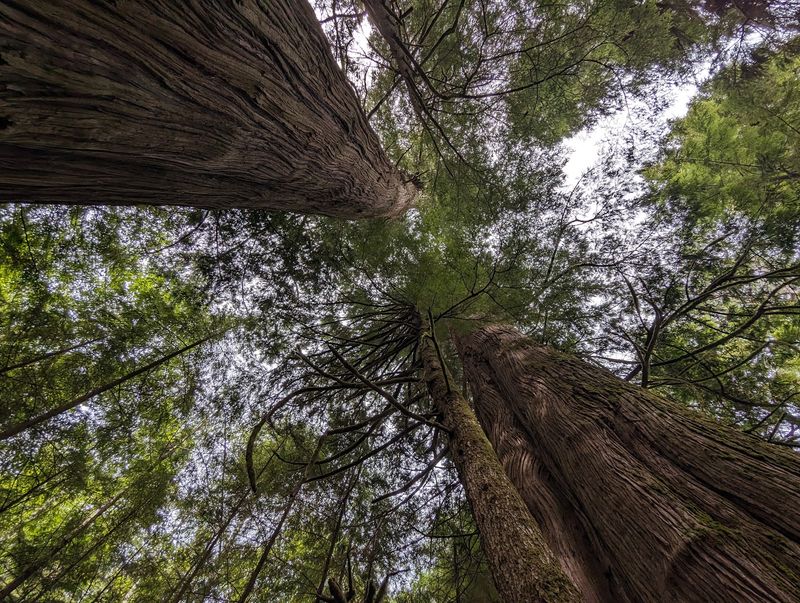
Green on green on green. The forest around these cedars is dense, damp, and alive with layers of plant life.
Southwest Washington gets plenty of rain, and the woods show it. Moss, ferns, and thick undergrowth fill in nearly every gap.
Walking through it feels like a mini forest bath. The pace slows down, and the noise of the road fades fast behind you.
That quiet comes partly from the tiny parking area. With room for only a few cars, the trail rarely feels packed.
You might have the grove mostly to yourself, depending on timing. That kind of calm is rare at more famous old-growth spots.
I believe the best part is how quickly the mood shifts. Just minutes from the pavement, you’re surrounded by towering trunks and soft green light.
It’s an ideal break for stiff legs on a long drive. A few deep breaths among these trees can feel more refreshing than any rest stop coffee.
Bring a light rain jacket just in case. In this corner of the state, it’s always a sensible accessory.
Perfect For Road-Trippers, Families, And Tree Lovers
Short on time but craving something memorable? This walk fits neatly into almost any schedule.
The whole out-and-back takes around 20 minutes. That makes it a great leg stretcher between coastal towns or on the way to Long Beach Peninsula fun.
Families can tackle it together, as long as everyone is ready for that first uphill push. Kids usually love the sheer size of the trees once they arrive.
Budget-minded travelers will appreciate the price tag too. There’s no admission listed for this scenic spot, which makes it a wallet-friendly outing.
Retirees looking for a calm nature break can enjoy it at their own pace. Just plan for the steeper start and take breaks as needed.
Photographers and tree fans get a real treat. Ancient cedars like these are becoming harder to find in Washington.
One group should stay home, though. The trail isn’t dog approved, so leave your four-legged hiking buddy with a sitter for this one.
Everyone else, pack some patience for the hill and enjoy the giants.
Parking Is Tiny, So Plan Ahead
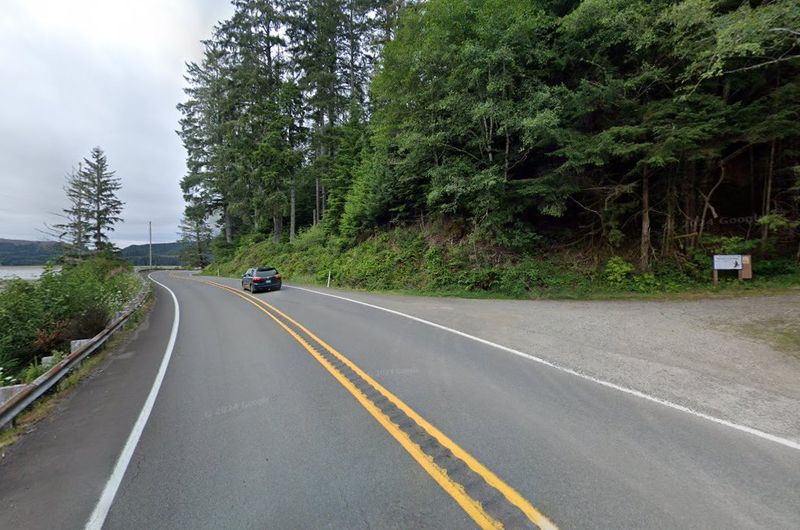
Two, maybe three, maybe four cars. That’s about all the tiny pullout can handle.
The parking area sits right on the road by a bridge. It’s easy to mistake for a random shoulder rather than a trailhead.
If the spaces are full, be patient or circle back later. Squeezing into a risky spot along the road isn’t worth it.
The small lot can catch people off guard. It’s so modest that some drivers assume the trail must be closed.
It isn’t, at least according to everything listed for this scenic spot. The lack of fanfare is simply part of its personality.
Arriving earlier in the day may improve your odds of grabbing a space. Weekdays could also work in your favor if your schedule allows.
Compact cars have an easier time fitting into the pullout. If you’re driving a large RV, plan for the possibility that it simply won’t fit.
Once you’re parked, the hard part is basically over. Well, except for that hill, but we already talked about that.
Finding The Trailhead Without Driving Right Past It
Blink, and you’ll miss it. The turnoff is small and not especially noticeable from the road.
Your best clue is the trailhead sign that reads Welcome to Teal Slough. Spot that, and you’ve found Old Growth Big Cedars.
The full address is C3HM+H7, Naselle, WA 98638. Plugging that plus code into your map app is the easiest way to land in the right place.
Driving slowly as you approach helps a lot. Look for the bridge and the tiny pullout tucked beside it.
Naselle sits in Pacific County, near the southwest edge of Washington. It makes a handy stop for anyone exploring the coast or heading toward the Columbia River region.
Cell service can be spotty in rural areas, so it’s smart to load directions before you leave. A downloaded map can save you from guessing at every bend.
Once you spot that sign, the adventure starts almost instantly. The trail begins right from the pullout, climbing into the trees.
Few trailheads are this humble. Even fewer lead to something quite this grand.
Smart Tips Before You Hit The Trail
Good shoes come first. The steep opening stretch and damp rainforest ground call for solid tread.
A light rain layer is another wise pick. Southwest Washington weather can shift quickly, even on days that start out bright.
Leave the dog at home for this outing. The trail isn’t dog approved, so plan ahead before loading up the car.
Hours and fees aren’t posted for this scenic spot. Daylight is the most sensible window, since you’ll want to see those giant trunks clearly.
Keep the visit short and sweet if you’re road-tripping. Around 20 minutes covers the walk, with extra time for photos and staring upward.
Pack out anything you bring in. A grove this old deserves to stay as clean and peaceful as it is now.
Stay on the marked trail too. Fragile roots and forest plants can suffer when people wander off the path.
Finally, bring a sense of wonder. It costs nothing, weighs nothing, and makes the giants feel even bigger.
Worth Every Minute Of The Detour
Honestly, it’s hard to beat 20 minutes that end with thousand-year-old trees. Old Growth Big Cedars delivers a lot for very little effort.
The pullout is plain, and the parking is tight. The first hill will make you huff a bit, but the payoff is enormous.
Around eight massive western red cedars wait at the top. Some stretch about 10 feet wide at the base, and their age is truly staggering.
Add a couple of older Douglas firs, a quirky naming fact, and a lush rainforest setting. That’s a pretty great lineup for a free roadside stop.
I believe places like this make Washington road trips special. They reward curiosity and a willingness to pull over.
It won’t replace a full day in a national park. But as a quick, memorable detour near Naselle, it’s tough to top.
So next time you’re cruising through southwest Washington, keep an eye out for that Teal Slough sign. The giants have been waiting a very long time.
They can wait a little longer. Just don’t keep them waiting forever.