
This Tennessee Fossil Site Was Discovered By Accident During Road Construction
Imagine tearing into the ground to build a road and accidentally uncovering a prehistoric jackpot. That’s basically how this Tennessee story begins.
What was supposed to be a construction project turned into something much bigger when workers discovered fossils buried beneath the landscape.
Evidence of an ecosystem that existed millions of years before anyone was worrying about traffic, detours, or who forgot to bring the coffee. And here’s where it gets wild.
The site has produced an astonishing collection of fossils, including animals that give scientists a rare look at what life in this part of Tennessee was like long before humans showed up.
One wrong turn for a bulldozer, and suddenly you’ve got a window into the ancient past.
Talk about finding something you definitely weren’t expecting on the job. Some road construction causes delays. This one uncovered millions of years of history.
The Accidental Discovery That Stopped Traffic Forever
Nobody plans to find a five-million-year-old watering hole under a road. Yet that is exactly what happened in May 2000, when Tennessee Department of Transportation crews were widening State Route 75 near Gray, Tennessee.
Their equipment hit an unusually dark, sticky, clay-rich deposit that stopped everyone in their tracks.
The black clay was unlike anything geologists in the region had encountered before. Bones and fragments started appearing, and soon identifiable fossils like mastodon and tapir remains confirmed something major was happening underground.
An alligator skull eventually surfaced, signaling the site was far older than anyone had guessed.
Roadwork was halted, scientists were called in, and state officials made the bold decision to reroute the construction project entirely. The road could be moved.
The fossils could not. That single choice preserved one of the most significant paleontological sites in North America.
East Tennessee State University later took stewardship of the site, transforming an accidental roadside find into a globally recognized research destination. Sometimes the best discoveries are the ones nobody saw coming.
A Prehistoric Sinkhole With A Five-Million-Year Secret
Tucked away at 1212 Suncrest Dr, Gray, TN 37615, the Gray Fossil Site sits above one of the most perfectly preserved prehistoric environments ever found in the eastern United States.
The fossils here date back an astonishing 4.5 to 4.9 million years, placing them firmly in the Early Pliocene Epoch.
The secret behind the incredible preservation is the ancient sinkhole itself. Limestone bedrock beneath the area gradually dissolved, forming a depression that filled with water and became a pond.
That pond created a low-oxygen, sediment-rich environment where organic material was gently buried before it could fully break down.
Fine sediments slowly covered everything that fell into or near the water, protecting remains from scavengers and decay. The result is a fossil record so detailed and complete that researchers can reconstruct not just individual animals, but entire ecosystems.
Remarkably, this is the only known fossil site of its specific age from the entire Appalachian region. That makes Gray not just a local treasure, but a one-of-a-kind scientific landmark on the global stage.
The Ancient World That Looked Nothing Like Tennessee Today
Forget the rolling green hills and crisp mountain air you picture when you think of East Tennessee. Around five million years ago, this region looked more like a warm, humid subtropical forest than anything recognizable today.
The climate was significantly warmer, and the landscape supported dense, lush woodland packed with ancient oaks, hickories, and pines.
At the center of this prehistoric world was a sinkhole pond that functioned as the neighborhood watering hole. Animals from across the surrounding forest gathered there, which is exactly why so many different species ended up preserved in the same spot.
The diversity of fossils found here reflects a thriving, interconnected ecosystem operating at full capacity.
Plant fossils recovered from the site confirm this picture, with around 100 identified species helping scientists reconstruct the ancient flora in remarkable detail. Evidence of fungi and algae adds even more texture to the ecological story.
While grasslands were spreading across much of North America during this period, Gray’s ancient forest held its own, preserving a rare snapshot of Appalachian life during a time of major continental change. It is basically Tennessee’s lost world.
Massive Prehistoric Beasts That Once Roamed East Tennessee
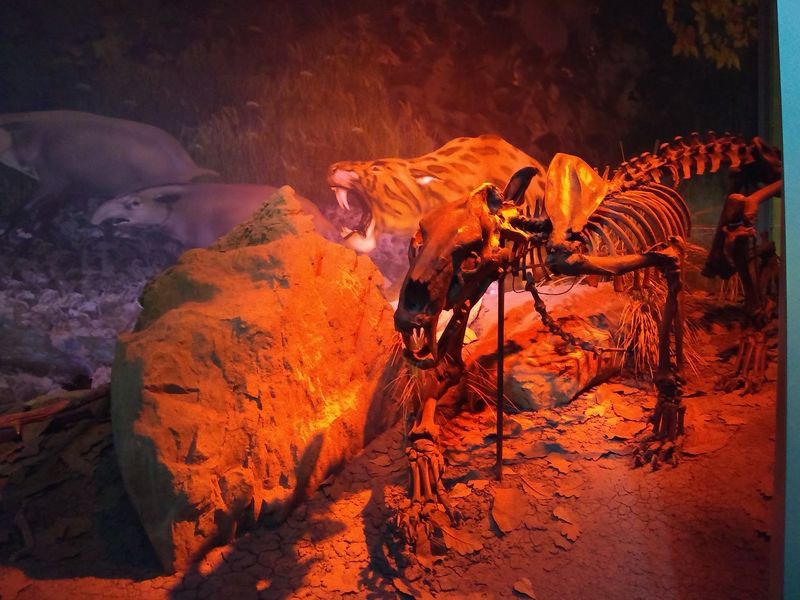
If you thought Tennessee wildlife was impressive now, wait until you hear what was roaming around here five million years ago. The Gray Fossil Site has produced fossils from roughly 200 species of animals and plants, and some of the headliners are absolutely enormous.
A nearly complete mastodon weighing around ten tons was unearthed, giving researchers an extraordinary look at one of prehistoric North America’s most iconic giants.
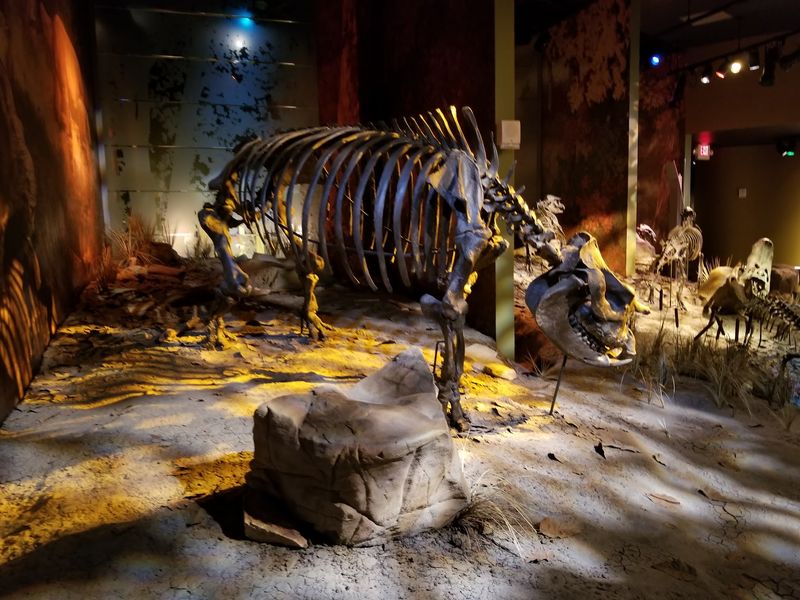
Rhinos also called this ancient Tennessee forest home. A nearly complete rhino specimen was found in 2004, and researchers later identified a brand new species from the site called Teleoceras aeypsoma, a wide-bodied rhino unlike any previously known.
Alligators lurked near the pond as well, and their fossilized remains provide crucial clues about just how warm the climate was during this period.
The site also holds the world’s largest known assemblage of fossil tapirs, with over 100 individuals identified so far.
These ancient tapirs were a staple of the ecosystem, and their abundance tells researchers a great deal about what life around that prehistoric watering hole looked like on a daily basis. Tennessee was wild in the most literal sense.
Tiny Creatures And Brand-New Species That Rewrote The Books
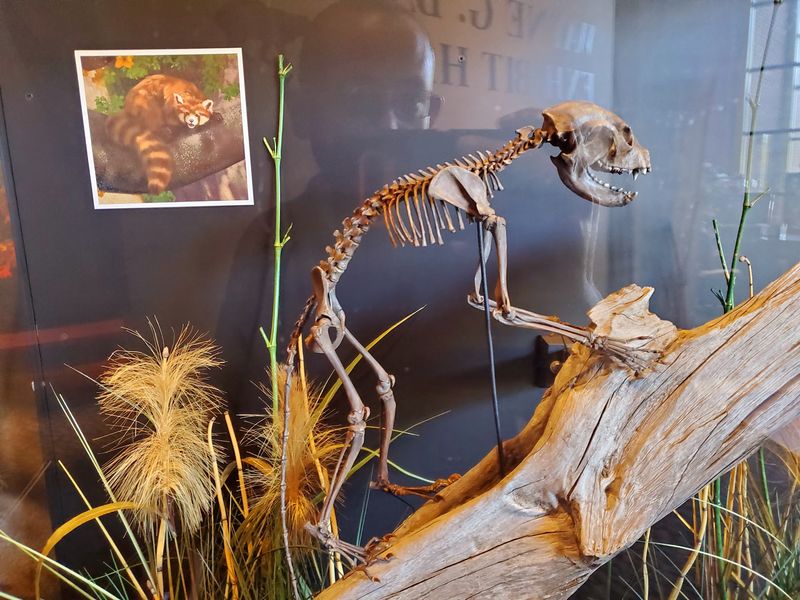
Not every headline fossil is the size of a school bus. Some of the most exciting discoveries at Gray are the smaller, stranger creatures that nobody expected to find in Tennessee.
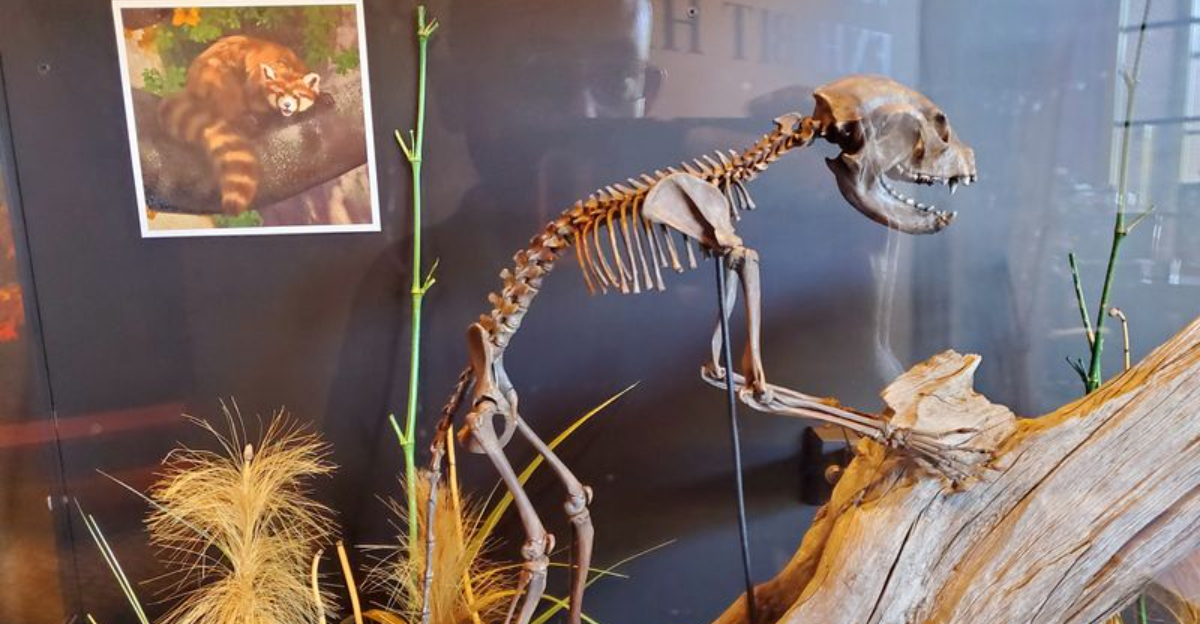
The site produced Pristinailurus bristoli, the only completely known fossil red panda ever found in the Americas. This ancient red panda was noticeably larger than its modern relatives and represents a fascinating chapter in the evolutionary story of the species.
Researchers also identified Gulo sudorus here, recognized as the oldest known fossil wolverine ever discovered.
That alone would make Gray extraordinary, but the surprises kept coming. A fossil deer named Eocoileus gentryorum was recently unearthed, representing one of the earliest known records of the deer family in North America and likely an ancestor of today’s white-tailed deer.
Giant flying squirrels also made an appearance in the fossil record, adding to the unexpected richness of the site’s biodiversity.
Every new find reshapes the scientific understanding of ancient North American ecosystems. Gray is not just confirming what researchers already knew.
It is actively filling gaps in the fossil record that scientists did not even know existed until these remarkable creatures came to light.
Ancient Plants That Painted A Full Ecosystem Picture
Animals get most of the glory in paleontology, but the plant fossils at Gray are equally extraordinary. Around 100 species of ancient plants have been recovered from the site, offering a detailed botanical portrait of what this prehistoric forest actually looked like.
These are not just background details. They are essential pieces of a complex ecological puzzle.
Researchers have found evidence of oak, hickory, and pine among the recovered plant material. Even more remarkably, traces of fungi and algae have been identified, filling in the microbial layer of the ancient ecosystem.
Together, these finds allow scientists to reconstruct the forest with a level of specificity that is rarely possible at fossil sites of this age.
What makes the plant record at Gray especially significant is its rarity. During the Early Pliocene, grasslands were expanding rapidly across North America, replacing many forested environments.
The Gray site preserves evidence of a forest ecosystem that was holding on during that transition, making it an invaluable reference point for understanding how North American landscapes changed over millions of years. Plants rarely get the spotlight, but here they absolutely earn it.
An Active Dig Where New Discoveries Happen Every Single Day
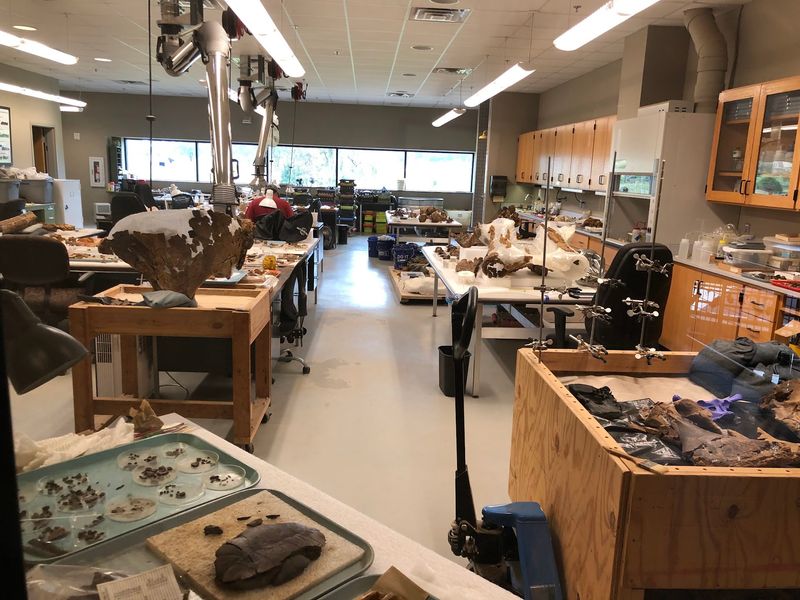
Most museums show you what has already been found.
Gray lets you watch the finding happen in real time. The Gray Fossil Site remains an active excavation, operated by East Tennessee State University’s Center for Excellence in Paleontology, where researchers are still pulling new fossils out of the ground on a regular basis.
Thousands of bags of screened sediment are waiting to be sifted for micro-fossils alone.
Visitors can get an up-close look at ongoing paleontological work, which is genuinely rare for a public museum.
The site’s Big Dig program takes the experience even further by letting guests try their hand at actual fossil recovery. Participants get to excavate, clean specimens, classify finds, and even examine sediment under lab conditions for micro-fossils.
There is something deeply satisfying about visiting a place where the story is still being written. Every new layer of sediment could contain something that changes scientific understanding entirely.
Gray has already produced multiple brand-new species and world-record fossil assemblages.
The fact that researchers believe significant portions of the site remain unexcavated means the most exciting chapters may still be ahead. History is literally still being made here.
Inside The Museum Where Ancient Tennessee Comes To Life
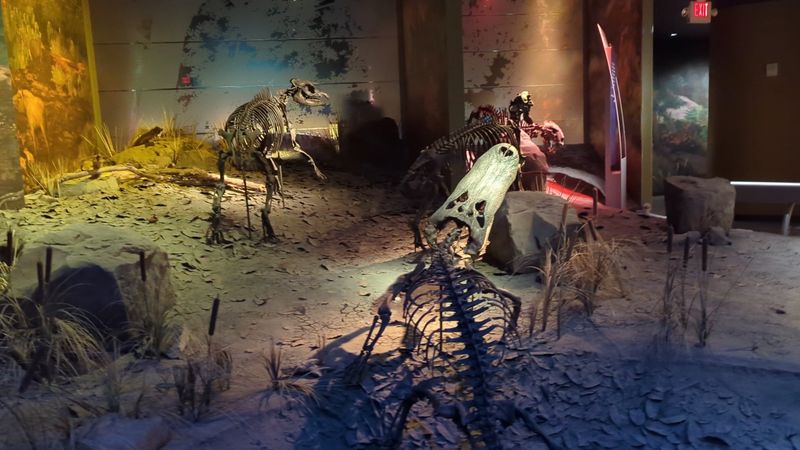
Walking into the Gray Fossil Site Museum feels like stepping through a time portal with much better lighting. The museum officially opened in 2007 and has been wowing visitors ever since with its combination of real fossils, life-sized replicas, and genuinely interactive exhibits.
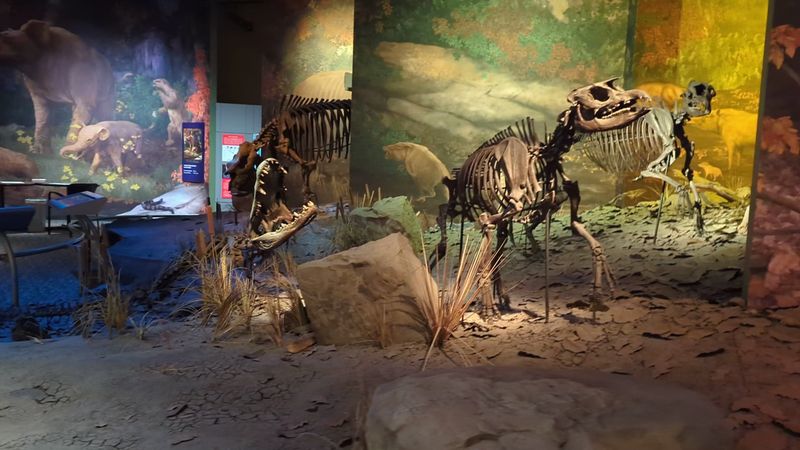
The fossil hall features articulated replicas of specimens found right on the property, including full reconstructions of ancient tapirs, alligators, and rhinoceros.
One of the most unique features is the three-story Paleo Tower, which lets visitors climb through replicated fossil layers and discover specimens along the way.
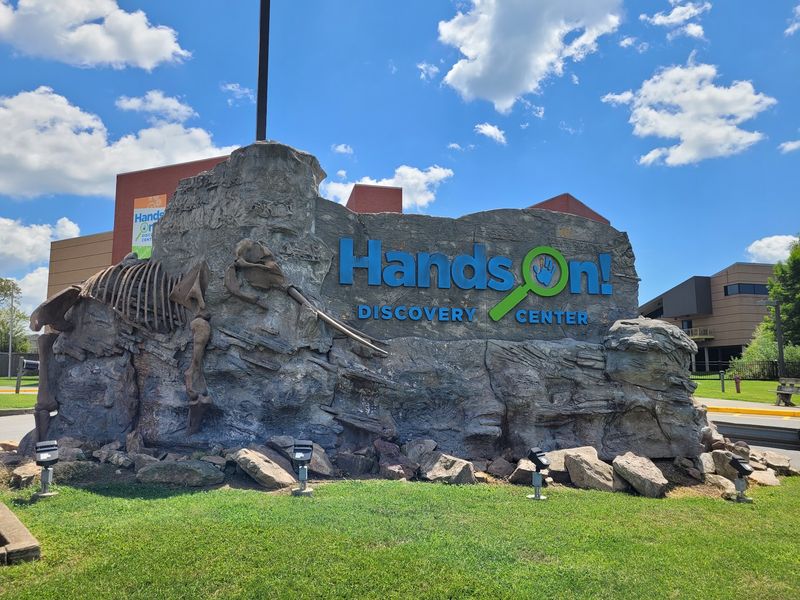
Viewing windows into the active paleontology labs give guests a transparent look at real scientific work happening just a few feet away. The museum also partners with the Hands On!
Discovery Center, an all-ages science facility that adds immersive art and science exhibits to the experience, including a musical Tesla coil that tends to leave a lasting impression.
Guided tours of the fossil site are available for those who want a deeper understanding of the excavation process.
The museum opens Tuesday through Saturday from 10 AM to 5 PM, with Sunday hours from 1 to 5 PM. Plan your visit and give yourself more time than you think you need.
Why This Place Matters Far Beyond Tennessee’s Borders
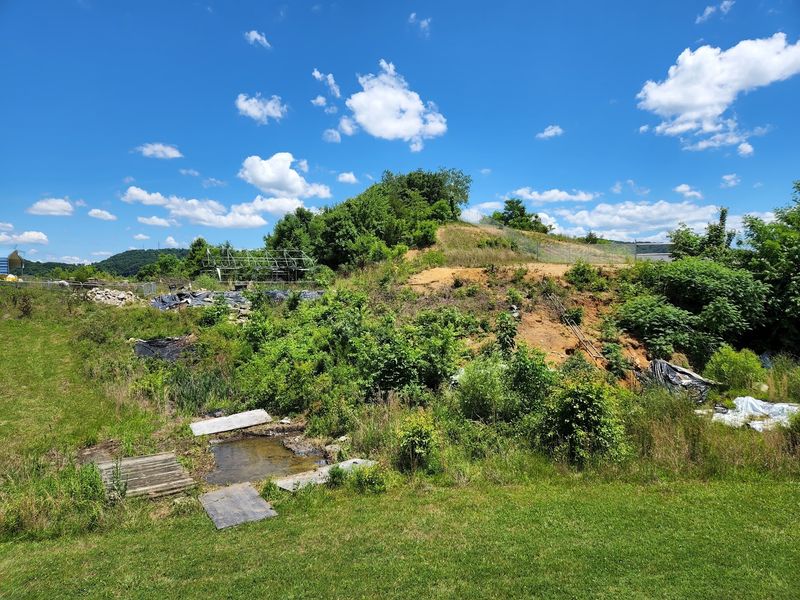
Some places exist to entertain. Gray Fossil Site exists to genuinely advance human knowledge, and that distinction matters.
The museum and research center together hold over 45,000 cataloged fossils, making it one of the most significant collections of Early Pliocene material anywhere in the world. Researchers are continuously publishing new studies based on finds from this single site, filling real gaps in the North American fossil record.
The educational mission here goes far beyond school field trips. The site fosters community partnerships, supports ongoing university-level research, and runs programs designed to spark curiosity in people of all ages.
The Hands On! Discovery Center component ensures that the science is accessible and engaging, not just impressive from a distance.
What began as an accidental discovery during a routine road project has grown into a world-class institution that contributes meaningfully to global paleontology.
The stories preserved in that ancient Tennessee sinkhole are still being told, interpreted, and shared with new audiences every single year. If you have ever wondered whether one unexpected moment can change everything, the Gray Fossil Site is your answer.
Have you ever visited a place that genuinely made you see the world differently?