
This Tucked-Away Washington Coastal Haven Is A Must-Visit For Nature Lovers
Surviving the steep descent down a winding trail is the hilarious physical toll required to earn a seat on this pristine driftwood throne.
While others are busy fighting for parking spots at mainstream piers, savvy explorers are busy scouting tide pools and watching eagles circle above the canopy. Washington breathes through this untamed coastal edge, acting as a living, emerald lung that keeps the urban chaos at a comfortable distance.
Everything about this spot screams “undiscovered,” even though the crashing waves have been busy sculpting the shoreline for centuries longer than we’ve been worrying about our screen time.
It is the perfect place to pretend that modern life is just a faint rumor while the wind whips your hair into a magnificent, salty disaster. I visited on a crisp spring morning and left completely hooked, already planning my next trip back.
The Story Behind Fort Lawton
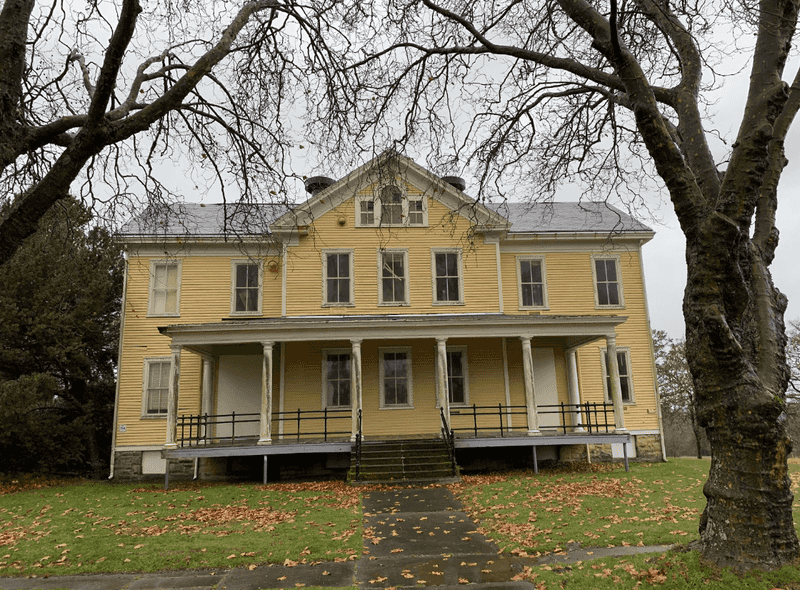
Long before hikers and birdwatchers claimed this land, Fort Lawton served as a U.S. Army post established in 1896 to protect Seattle from potential naval attacks.
The fort grew into something much larger over the decades, and by World War II it had become the second-largest port of embarkation on the entire West Coast.
More than one million soldiers passed through this very ground during the war years, a staggering number that puts the site’s history into sharp perspective. Walking these trails today, it is easy to forget that the peaceful meadows and forest paths once buzzed with military activity on a massive scale.
In 1973, community advocates pushed hard for a different future, and 534 acres of the former fort were transferred to the City of Seattle and dedicated as Discovery Park.
That decision transformed a military installation into one of the Pacific Northwest’s most beloved natural spaces. The park’s layered past adds a quiet depth to every visit that most city parks simply cannot offer.
The Beach Trail Down To The Shore
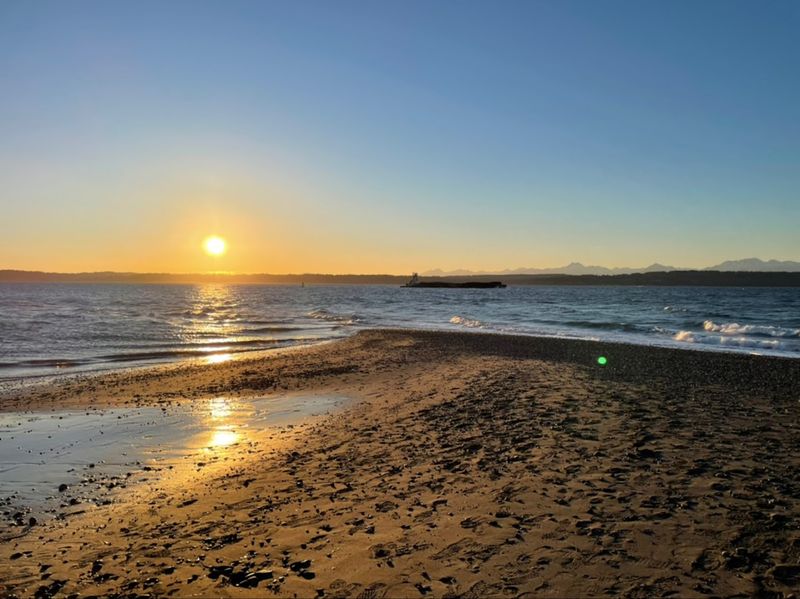
Getting to the beach is half the adventure at Discovery Park. The Beach Trail drops roughly 250 feet from the main park area down to the shoreline, threading through thick forest groves and past dramatic sea cliffs that make every step feel like a small reward.
I will be honest with you: the walk back up is a genuine workout. The trail is entirely uphill on the return, so wearing comfortable shoes and bringing water is genuinely important rather than just polite advice.
That said, the descent is so scenic that most people barely notice the effort going down. A free summer beach shuttle runs on Saturdays from June 7 to August 30, 2025, operating between 11 a.m. and 5:30 p.m. and looping between the East, North, and Beach parking lots.
The last trip from the beach departs at 5:15 p.m. Strollers and service animals are welcome, but pets, coolers, and bulky gear like paddleboards are not permitted on the shuttle.
What The Shoreline Actually Looks Like
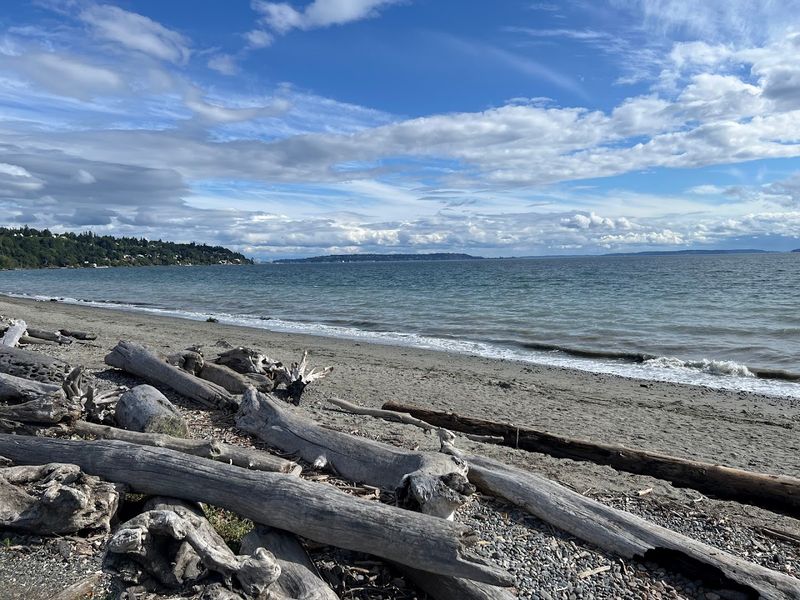
If you are picturing a sandy tropical-style beach, Fort Lawton Beach will pleasantly surprise you with something far more interesting. This is a true Northwest beach, defined by smooth rocks, chunky driftwood logs, and tidal pools that beg to be explored one careful step at a time.
Turning over rocks in the tidal zone reveals a miniature world of crabs, sea stars, anemones, and small creatures that most people never get to see up close. Kids absolutely love this part, and honestly so do most adults who give themselves permission to crouch down and look.
The beach stretches across two miles of protected tidal shoreline, giving visitors plenty of room to spread out and find their own quiet patch.
Dramatic sea cliffs rise above the water nearby, and the open views across Puget Sound toward the Olympic Mountains create a backdrop that feels almost cinematic. No two visits look quite the same, since tides, light, and seasons constantly reshape the experience in small but meaningful ways.
Birdwatching At One Of Seattle’s Best Spots
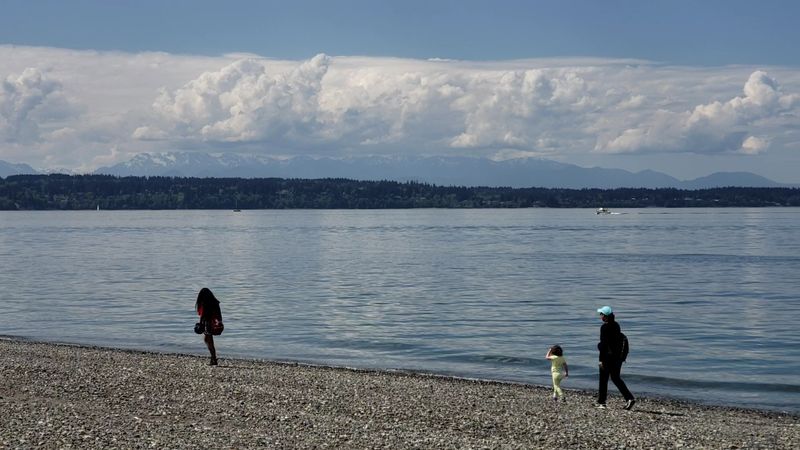
Over 270 bird species have been recorded in Discovery Park, making it one of the top birding destinations in the entire Seattle area. That number is remarkable for an urban park, and it reflects just how carefully the land has been managed and restored over the past several decades.
Bald eagles are a year-round presence, often spotted soaring above the meadows or perching on bluff-edge trees with the kind of casual confidence that only apex birds seem to carry.
Great blue herons patrol the shoreline with their slow, deliberate steps, and pileated woodpeckers hammer away in the interior forests with a sound that carries surprisingly far.
Spring brings an excellent warbler migration that draws serious birders from across the region, while summer raptors are frequently seen hunting over the South Meadow.
Binoculars and a field guide tucked into your daypack will turn a casual walk into something far more rewarding. Early morning visits tend to produce the most active and varied sightings throughout the year.
Marine Wildlife Along The Water’s Edge
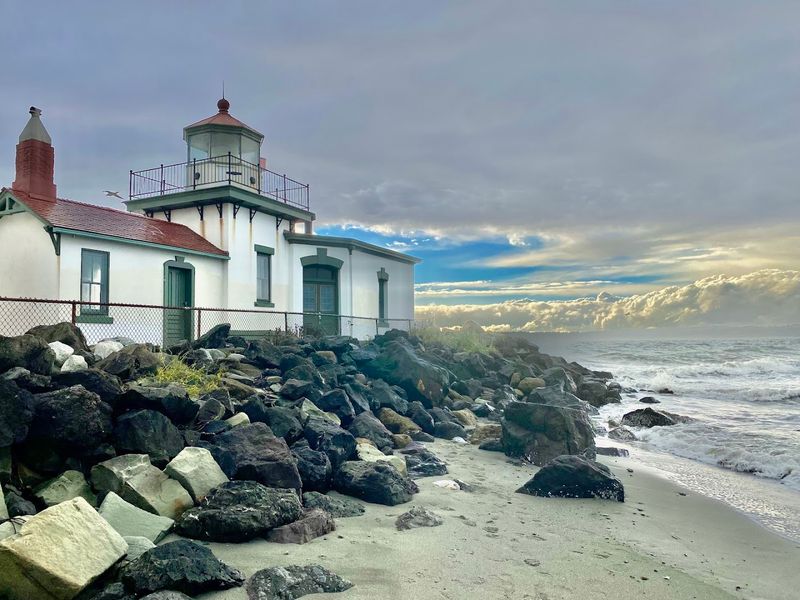
Harbor seals are regulars near the beach and the rocks around West Point, hauling out year-round with an endearing laziness that makes them look like they own the place. Watching a group of seals loll around on sun-warmed rocks while waves lap quietly nearby is one of those simple pleasures that somehow never gets old.
California sea lions pass through seasonally, adding variety to what you might spot on any given visit. Perhaps the most thrilling possibility, though, is an orca sighting.
Orcas are visible from the park’s beaches and bluffs, particularly during summer months, and even a distant dorsal fin cutting through the sound is enough to stop your breath for a moment.
The combination of resident and seasonal marine life means that no two visits to the shoreline produce exactly the same wildlife experience. Patience is your best tool here. Bring a pair of binoculars, find a comfortable spot on the driftwood, and let the water do the entertaining for a while.
The West Point Lighthouse And Its Long History
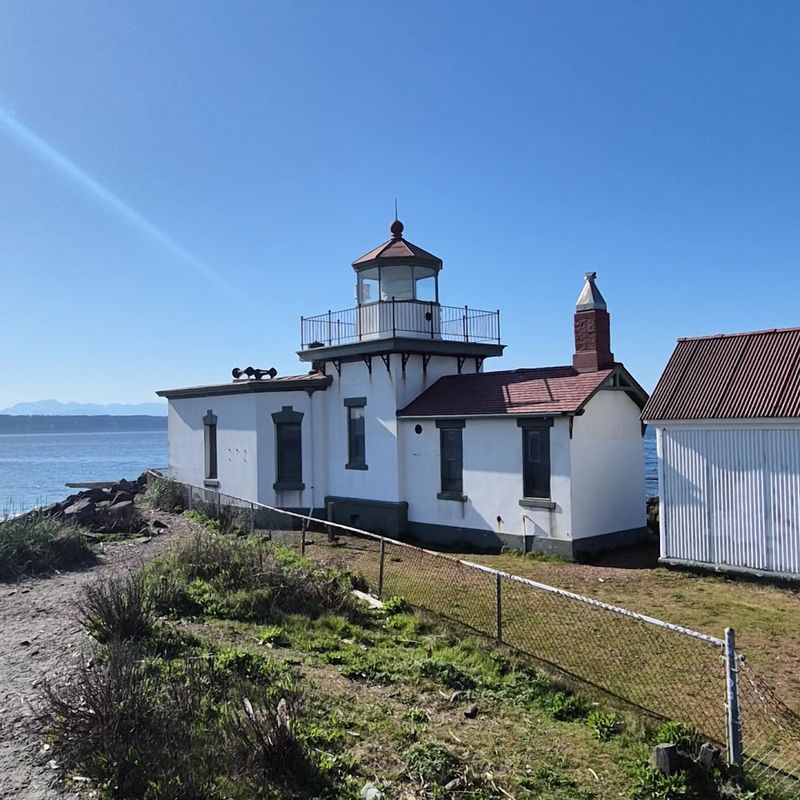
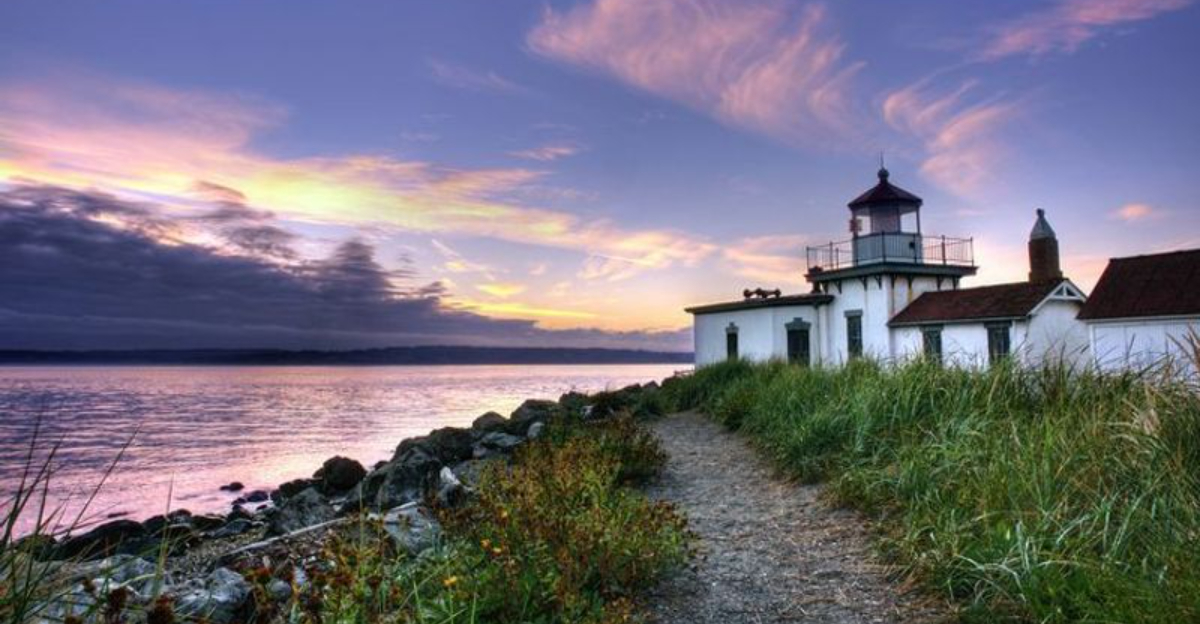
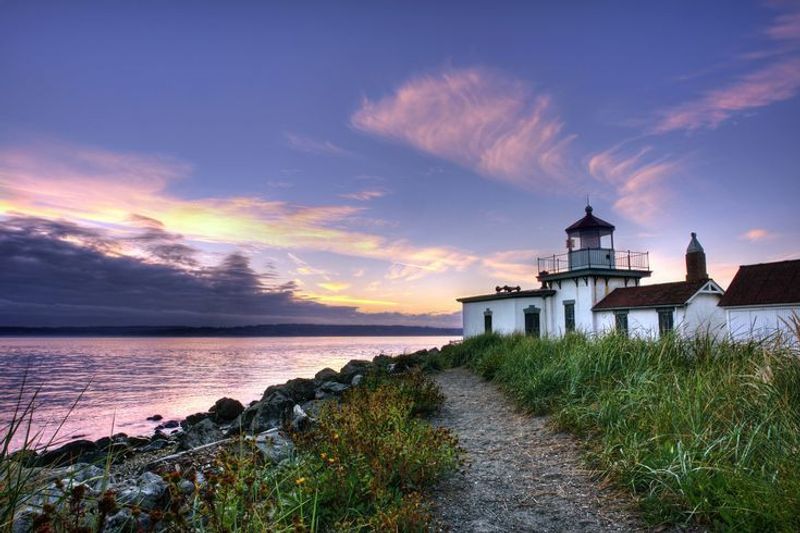
Built in 1881, the West Point Lighthouse stands at the tip of the point where the Beach Trail meets the water, and it is one of the oldest lighthouses still operating in Washington State. Reaching it at the end of the trail feels like arriving at a genuine reward after the descent through the forest.
The structure has a classic Pacific Northwest lighthouse look, with a white tower and a red-roofed keeper’s house sitting right at the water’s edge.
The light still operates as an active navigational aid, which means this is not just a preserved relic but a working piece of maritime infrastructure that continues to guide vessels through the sound.
Standing near the lighthouse and looking back toward the bluff gives you one of the best views of the park’s dramatic sea cliffs.
The combination of historic architecture, crashing water, and mountain backdrops in the distance creates a scene that photographers tend to linger over far longer than they originally planned. Arriving near sunset rewards visitors with spectacular light on the water.
Getting The Most Out Of The Park
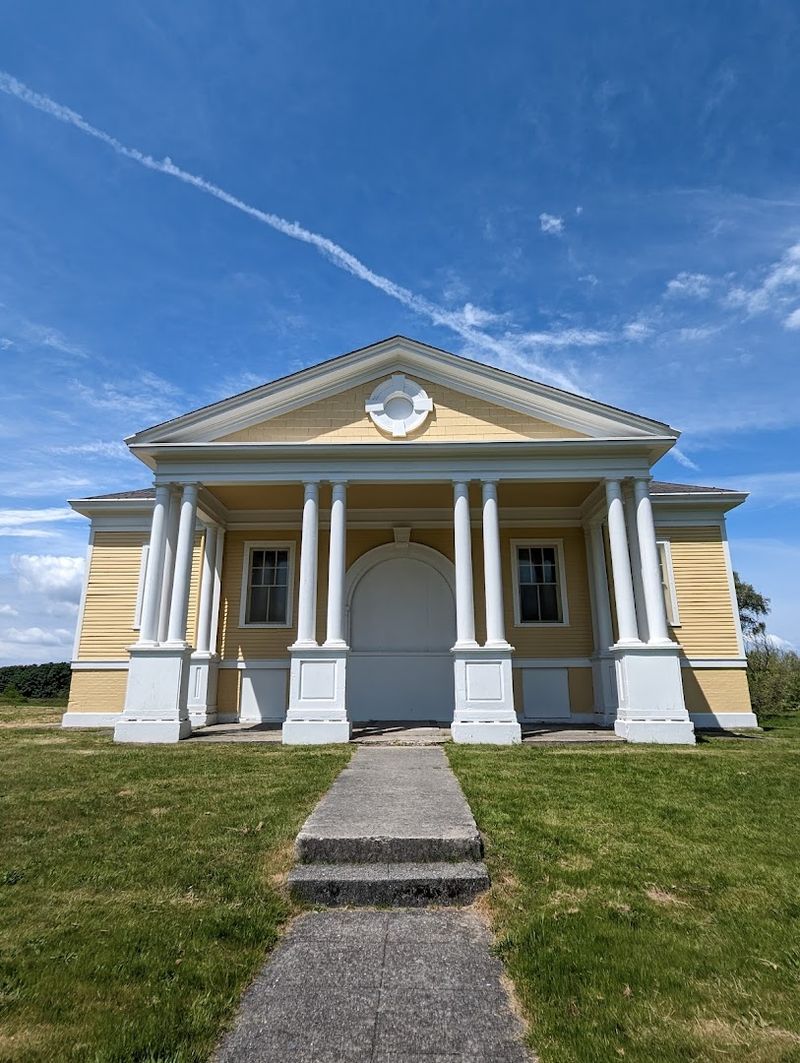
Discovery Park is located on Magnolia Bluff in Seattle, Washington, and the address for the main entrance is 3801 Discovery Park Boulevard, Seattle, WA 98199.
The park offers 11.8 miles of trails for walking and biking, so there is no shortage of ground to cover across multiple visits.
Parking is available at the North, East, and South lots, and beach parking is reserved exclusively for ADA users.
The Environmental Learning and Visitor Center is currently closed due to flooding and is not expected to reopen until Summer 2027, so planning your route in advance using the park’s online trail maps is a smart move before heading out.
Mornings on weekdays tend to be the quietest times, particularly for wildlife viewing and photography. Layers are always a good idea since Puget Sound weather shifts quickly even in summer.
Wear sturdy shoes for the Beach Trail, bring your own water and snacks, and give yourself at least three to four hours to genuinely explore what this remarkable corner of Seattle has to offer.
Wildflower Meadows And Forest Trails
Somewhere between the blufftop views and the rocky shoreline, Discovery Park hides one of its quieter treasures: sprawling meadows bursting with wildflowers each spring.
Native species like camas and red clover create patches of color that feel almost out of a storybook. These open grasslands also attract butterflies and small mammals, making every walk feel like a mini wildlife encounter.
The forested trails weave through groves of towering Douglas firs and red alders, offering cool shade even on warmer Seattle days. Fallen logs, mossy rocks, and fern-lined paths give the whole experience a wonderfully wild, untouched feeling that keeps visitors coming back season after season.
The variety is what makes the park feel so generous, with open fields giving way to cool forest in just a few minutes. You can move from bright sunshine to deep green shade without ever leaving the trail system.
That mix of meadow, woods, and shoreline makes the landscape feel bigger than a city park should. It is the kind of place where a simple walk can turn into a slow, curious wander.