
This Hidden Canyon In Maine Will Absolutely Surprise You
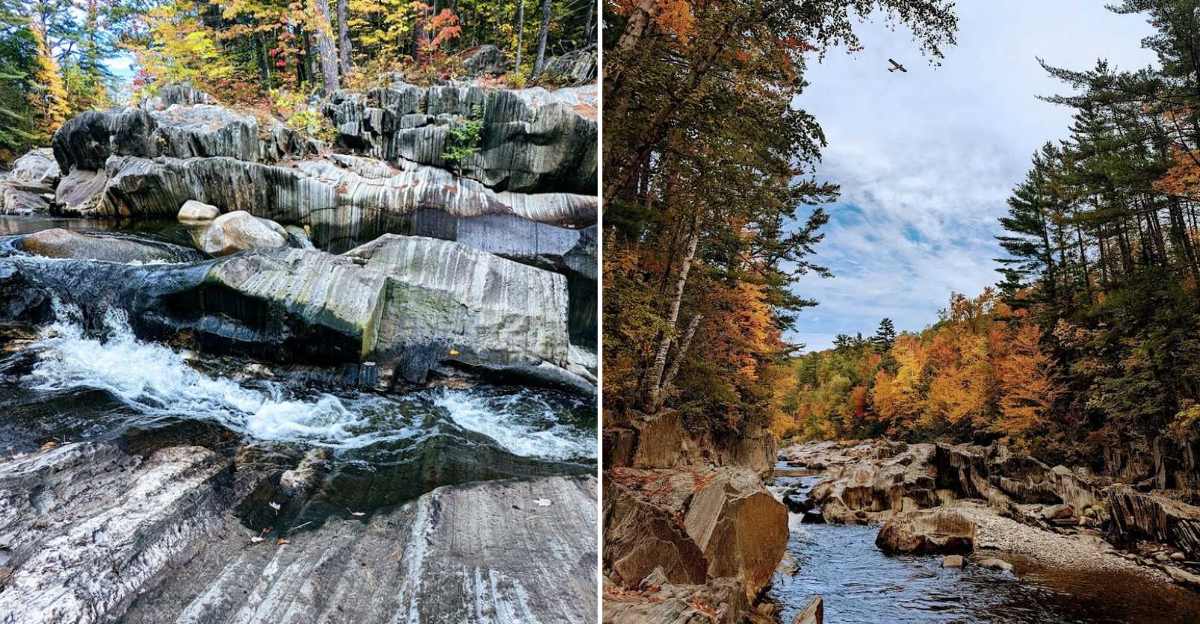
Maine gets plenty of attention for its lobster shacks and postcard-perfect harbor towns, but one of its coolest surprises sits much farther inland.
I’m talking about a hidden gorge in the western mountains, tucked near a quiet road, where rushing water cuts through ancient stone in a way that almost doesn’t look real. I nearly missed it.
One minute I was driving through the hills, and the next I was standing above clear water, smooth rock ledges, and carved pools that looked shaped by hand. It is not the polished, touristy side of Maine.
It feels wilder, quieter, and a little more secret. The whole place has that rare feeling of stumbling onto something special.
I spent an afternoon wandering around, and these details made me appreciate it even more.
Canyon Carved Over Millions Of Years
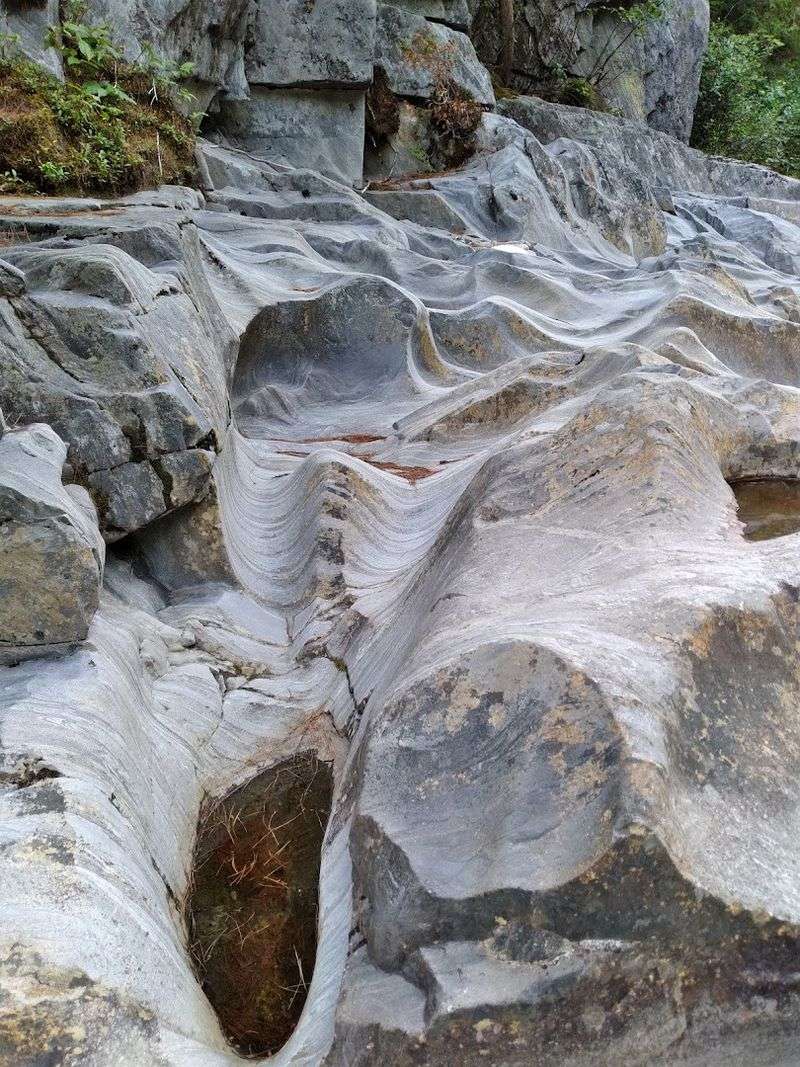
Not every impressive landscape was built in a hurry. The bedrock at Coos Canyon along the Swift River in Byron, Maine, was shaped over an immense stretch of time, as the river cut through metamorphic rock made largely of quartzite and schist.
The result is a series of smooth, swirling rock walls and carved channels that look almost sculpted by hand. You can run your fingers along the curved stone and feel the story of millions of years pressed into every groove.
What makes this particularly striking is how the rock changes color depending on the light. In morning sun, the walls glow pink and gold.
By afternoon, the shadows turn everything a deep charcoal gray. Geologists consider this area a prime example of fluvial erosion, and even if science is not your thing, standing at the edge of that canyon will make the timeline feel very real.
There’s Gold In The Gravel
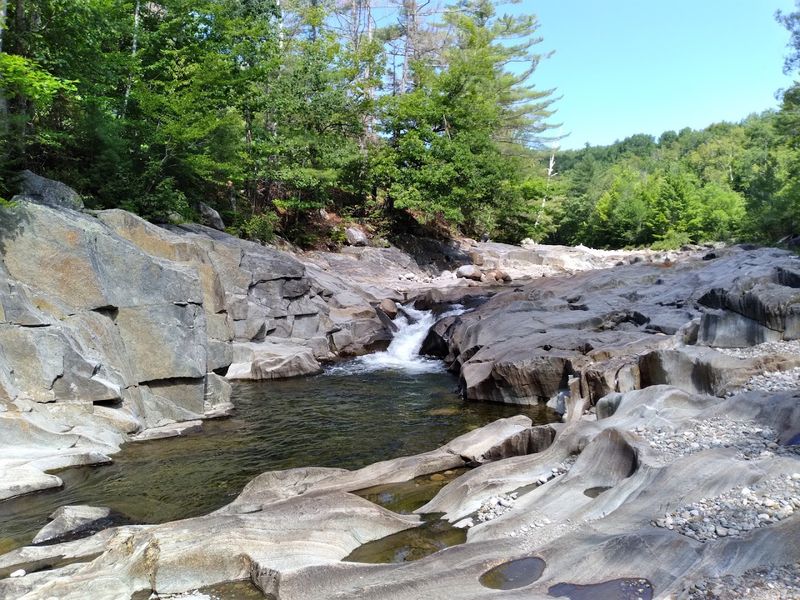
Here is a fact that genuinely surprised me: Coos Canyon is located in one of Maine’s most historically active gold-panning regions.
The Swift River corridor in Oxford County has been a destination for amateur prospectors since the 1800s, and small flakes of placer gold have been found in the riverbed gravel here for generations.
You do not need fancy equipment to try your luck. A basic gold pan and a little patience are all it takes.
Many visitors spend a few hours crouched at the river’s edge, swirling gravel and water in slow circles, hoping to catch a glint of yellow at the bottom of the pan.
I tried it myself, and while I did not walk away rich, the process was genuinely meditative and fun. Even if you find nothing, the act of searching connects you to a long line of hopeful prospectors who stood in this same cold river chasing the same small dream.
The Swift River
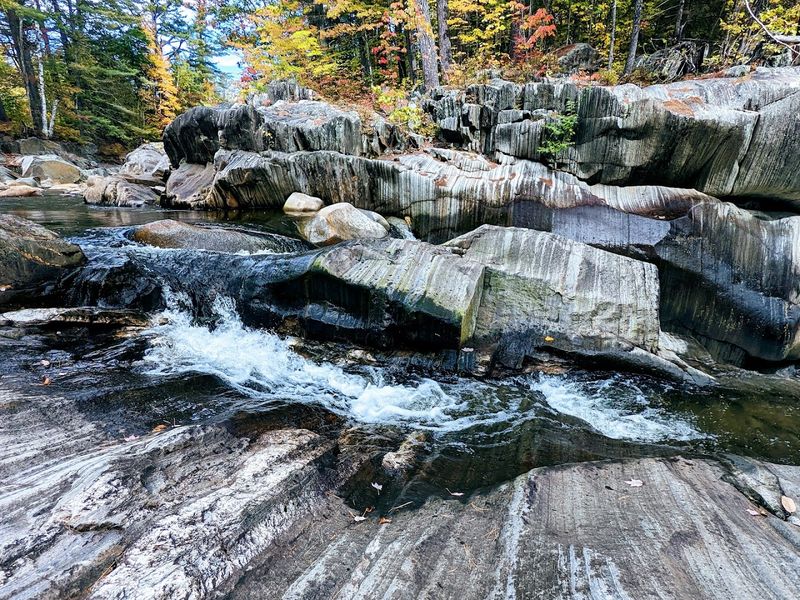
The Swift River is the beating heart of this canyon, and the name is not just for show. The water moves fast through the narrow gorge, especially in spring when snowmelt from the surrounding mountains pushes the current to impressive speeds.
Standing on the rock ledges above it, you can feel the spray on your face and hear the constant roar of water below.
By midsummer, the river calms down considerably, and the pools between the rock formations become clear and inviting.
The water is cold even in August, fed by mountain streams that stay chilly all season long. Wading in up to your knees is a popular move, and it feels like a full-body reset after a hot drive through the hills.
The river also creates some beautiful photography opportunities at every bend. Light filters through the tree canopy and bounces off the moving water in ways that make every shot look like it was planned by a professional.
It Is A Free And Publicly Accessible
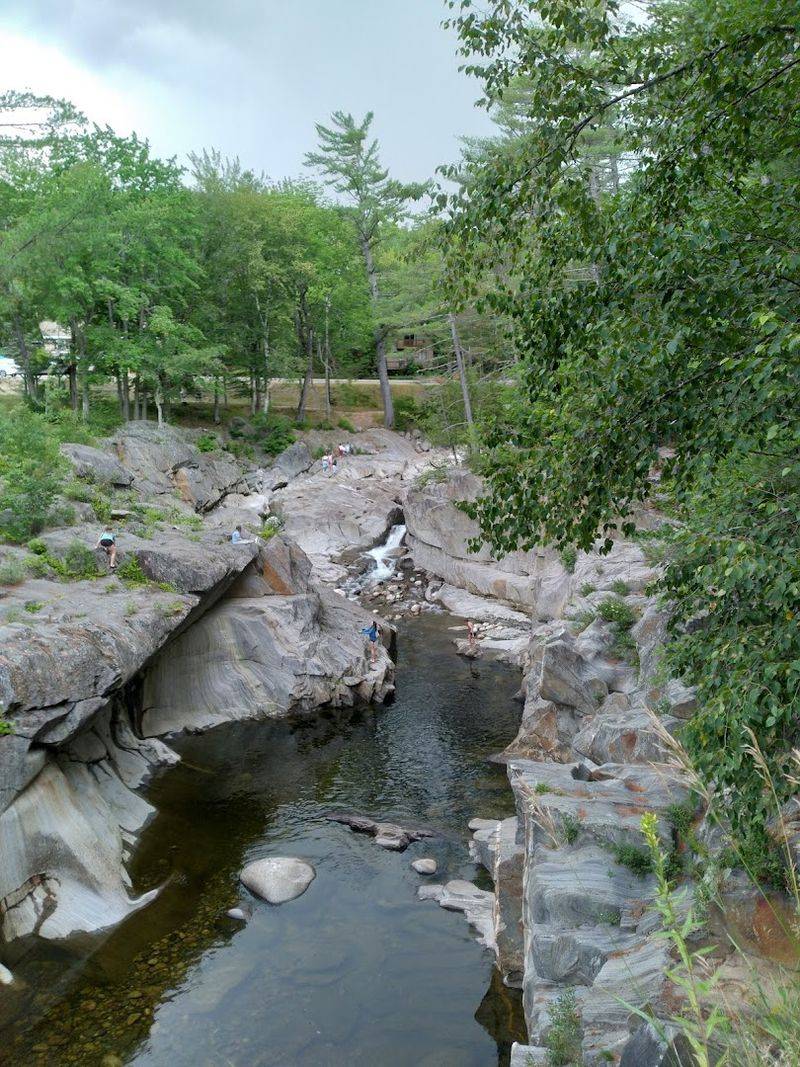
One of the best things about Coos Canyon is that it costs absolutely nothing to visit. The site is maintained as a roadside rest area and public natural attraction by the State of Maine, and there are no entry fees, no ticketing systems, and no reservations required.
You simply pull off Route 17 in Byron and walk right in.
This accessibility makes it a fantastic stop for road-trippers passing through western Maine who want something memorable without spending extra money.
Families, solo travelers, and couples all show up here on summer afternoons, drawn by the combination of dramatic scenery and zero financial commitment.
The parking area is modest but functional, and a short path leads you directly to the canyon overlooks and riverbank access.
There are basic facilities on site as well. It is the kind of place that rewards spontaneous decisions, and honestly, some of the best travel moments happen when you stop somewhere you almost skipped entirely.
Nature Drilled These Stone Bowls
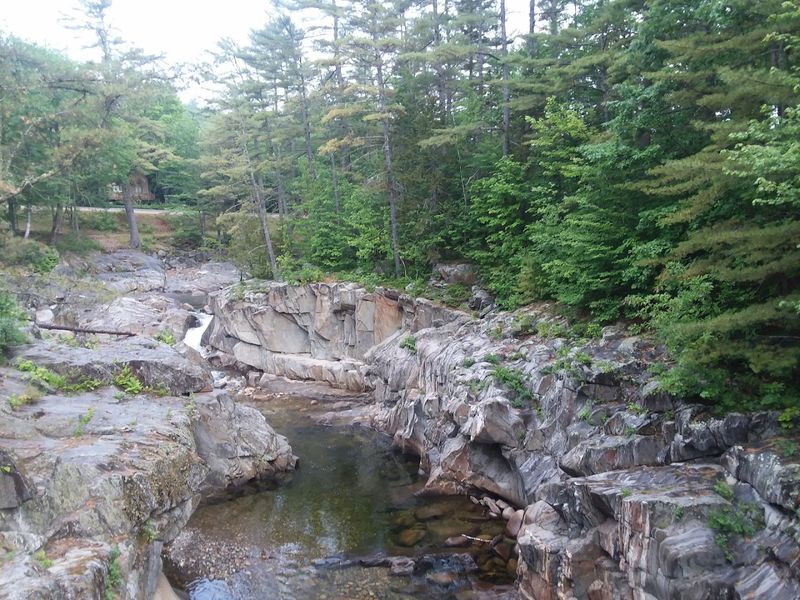
If you look closely at the rocky surface of Coos Canyon, you will notice something that seems almost impossible: perfectly circular holes drilled straight down into the solid stone.
These are called potholes, and they form when small rocks get trapped in a depression and spin endlessly in the current, grinding the hole deeper and wider over thousands of years.
Some of the potholes at Coos Canyon are large enough to sit in, which plenty of visitors actually do on warm summer days.
They hold water between river surges, creating natural rock basins filled with cool, still water that reflects the sky above.
Seeing them up close makes you rethink what slow and steady really means. A rock spinning in a current over long periods of time can carve a bowl into stone that looks machine-made.
I spent a surprisingly long time just crouching down and staring into these formations, trying to wrap my head around the patience of geology.
Fall Foliage Turns This Spot Into A Painting
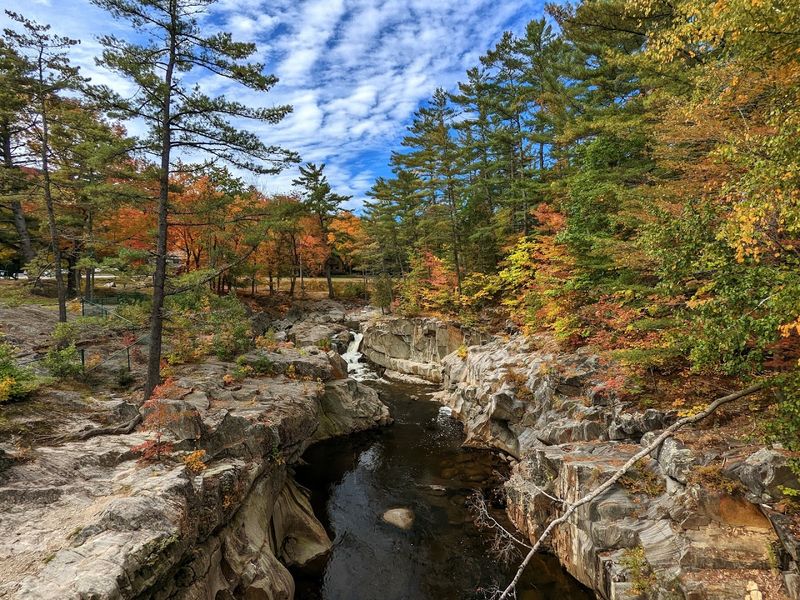
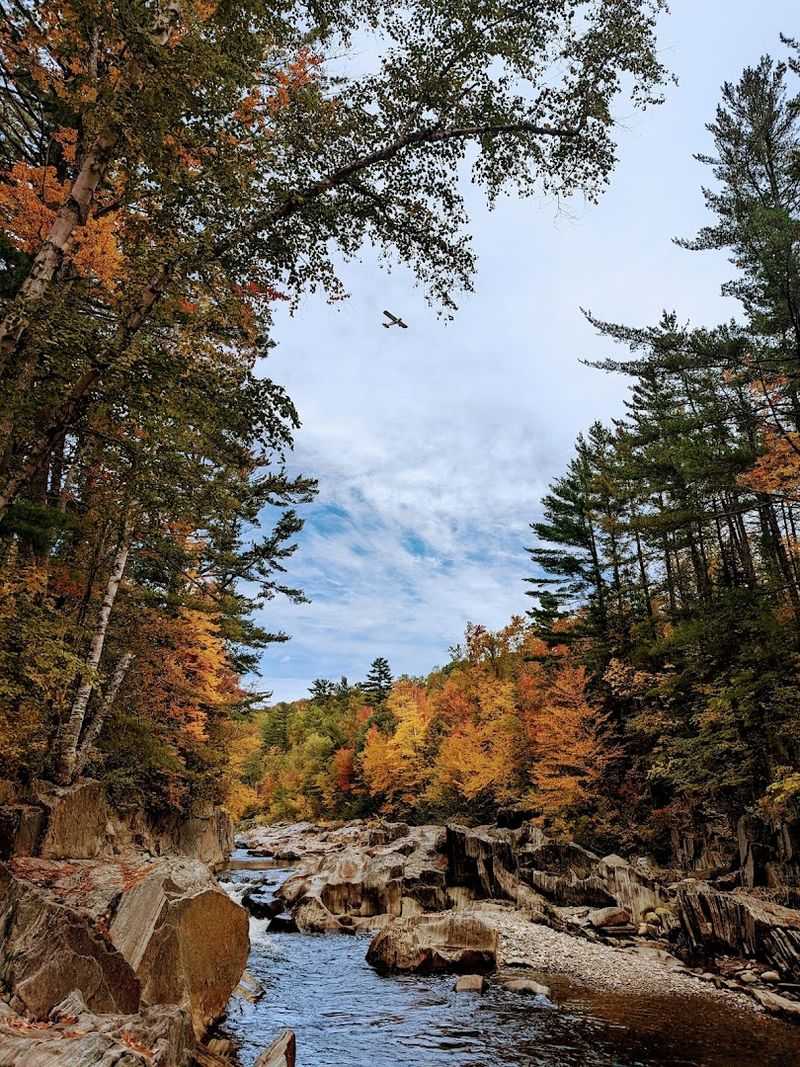
Western Maine is already one of the best places in the country to watch autumn arrive, and Coos Canyon sits in the middle of all that color. When the maples and birches turn in late September and early October, the canyon transforms into something that looks more like a painting than a real place.
The red and orange canopy above the gorge reflects off the river water below, doubling the color in a way that makes the whole scene feel almost surreal. The contrast between the warm foliage and the cold gray rock of the canyon walls is genuinely dramatic and worth planning a trip around.
I visited on a mid-October afternoon when the light was low and golden, and the entire canyon glowed like something out of a storybook.
If you are a photographer, a hiker, or just someone who appreciates a spectacular view, timing a visit to peak foliage season in Byron might be the smartest travel decision you make all year.
The Locals Come Here To Swim
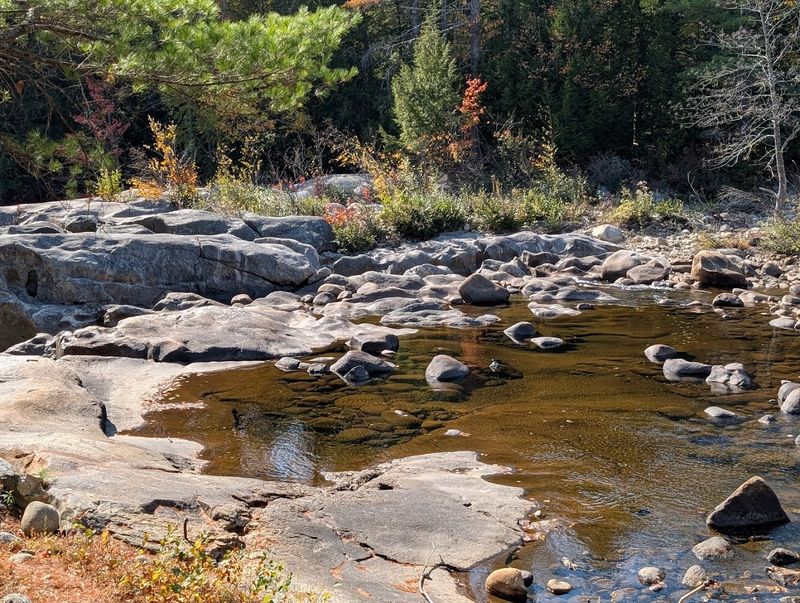
Long before it became a geological attraction, Coos Canyon was simply a place where people came to cool off. Local families have been swimming in the pools and along the rocky banks of the Swift River here for generations, and that tradition is very much alive today.
The swimming spots are not formal beach areas with lifeguards and rope lines. They are natural, tucked between boulders and carved ledges, and you find them by exploring the riverbank on your own.
The water is bracingly cold, which feels like a gift when the summer heat settles into the valley and the air gets thick and still.
Kids especially love scrambling over the rocks to find the best entry points, and the shallower pools near the canyon edges are perfect for younger swimmers who want to splash around without fighting a strong current.
The whole experience feels refreshingly unstructured, like summer the way it used to be before everything required a reservation and a waiver.
Keep An Eye On The Riverbank
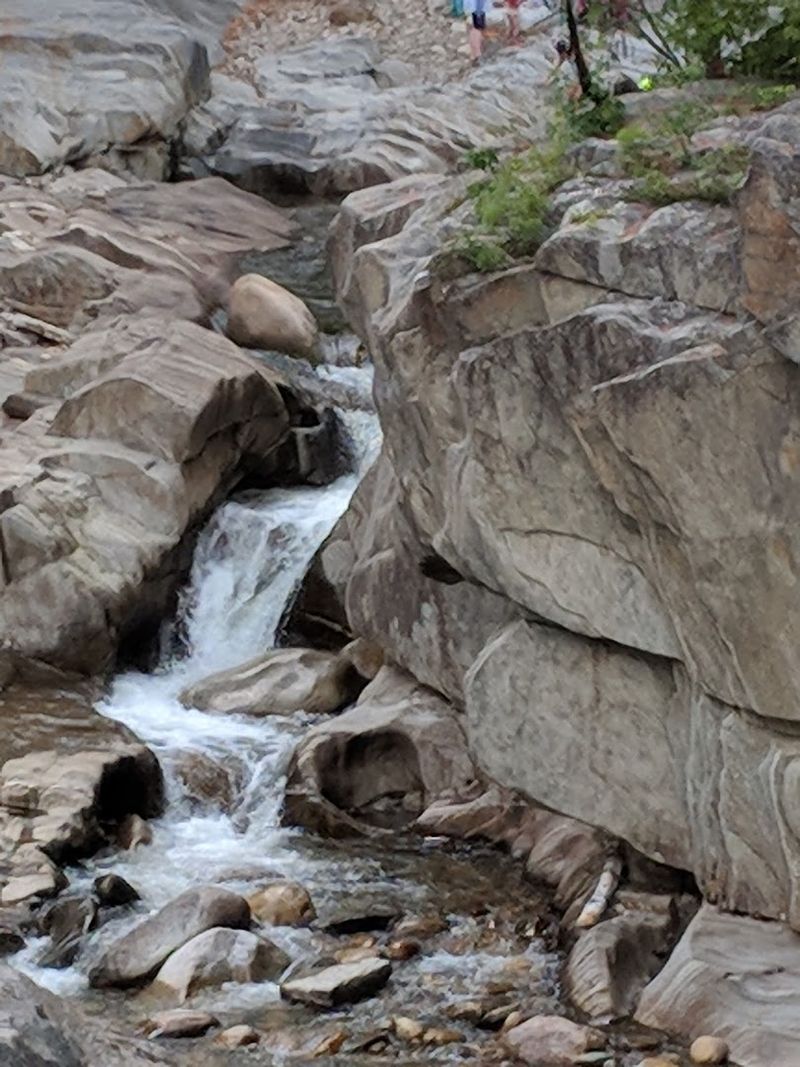
The canyon and the surrounding forest create a layered habitat that supports a wide range of wildlife, and if you move quietly and take your time, you are likely to see more than just rocks and water.
Great blue herons are a frequent sight along the river, standing motionless in the shallows with the patience of experienced fishers.
Mink, river otters, and white-tailed deer have all been spotted near the water, particularly in the early morning hours before day visitors arrive.
The forest edges around the canyon also attract warblers, thrushes, and other songbirds during the spring migration, making this a worthwhile stop for anyone who travels with binoculars.
I spotted a kingfisher on my visit, darting back and forth across the river in flashes of blue and orange. It was one of those small moments that reminded me why slowing down in a place like this matters.
The canyon does not just reward the eyes with geology, it rewards patience with living, moving color.
Route 17 Drops You Right There
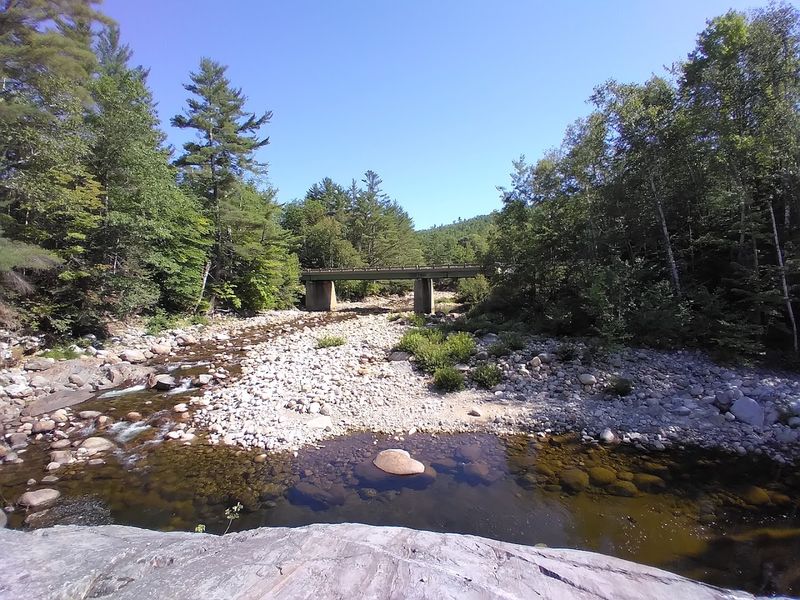
Getting to Coos Canyon does not require a four-wheel drive or a detailed backcountry map. The site sits right along Route 17 in Byron, Maine, making it one of the more accessible natural attractions in the western part of the state.
If you are driving between Rumford and Rangeley, you will pass directly by it without even needing to detour.
Route 17 itself is one of the more scenic drives in Maine, winding through mountain forests and past several overlooks before descending into the Swift River valley.
The road is well-maintained and manageable for any standard vehicle, which means the canyon is genuinely reachable for anyone willing to make the drive to Oxford County.
Byron is a small, quiet town with a population of just a few hundred people, so there is a real sense of getting away from it all even before you step out of the car. The remoteness is part of the charm, and Route 17 delivers you there on a road that earns its own reputation as a destination.
Make It A Western Maine Weekend
Coos Canyon works beautifully as a standalone stop, but it also sits in the middle of an outdoor recreation corridor that extends in every direction through western Maine.
The Rangeley Lakes region is just a short drive north, offering paddling, fishing, and hiking across a landscape of connected lakes and boreal forest.
The Appalachian Trail crosses through this part of Maine as well, and several trailheads within reasonable driving distance give you access to backcountry hiking that ranges from casual afternoon walks to serious multi-day routes.
Tumbledown Mountain and Bald Mountain are two popular peaks in the area that reward hikers with wide open summit views.
For anglers, the Swift River and the surrounding tributaries are known for wild brook trout fishing, and the canyon stretch of the river has long attracted fly fishers who appreciate both the scenery and the challenge.
Spending a full weekend in this corner of Maine using Coos Canyon as your base camp is a plan that will not disappoint.