
This Unassuming Canal In Phoenix, Arizona Becomes The Stage For An Unforgettable Nightly Wildlife Show
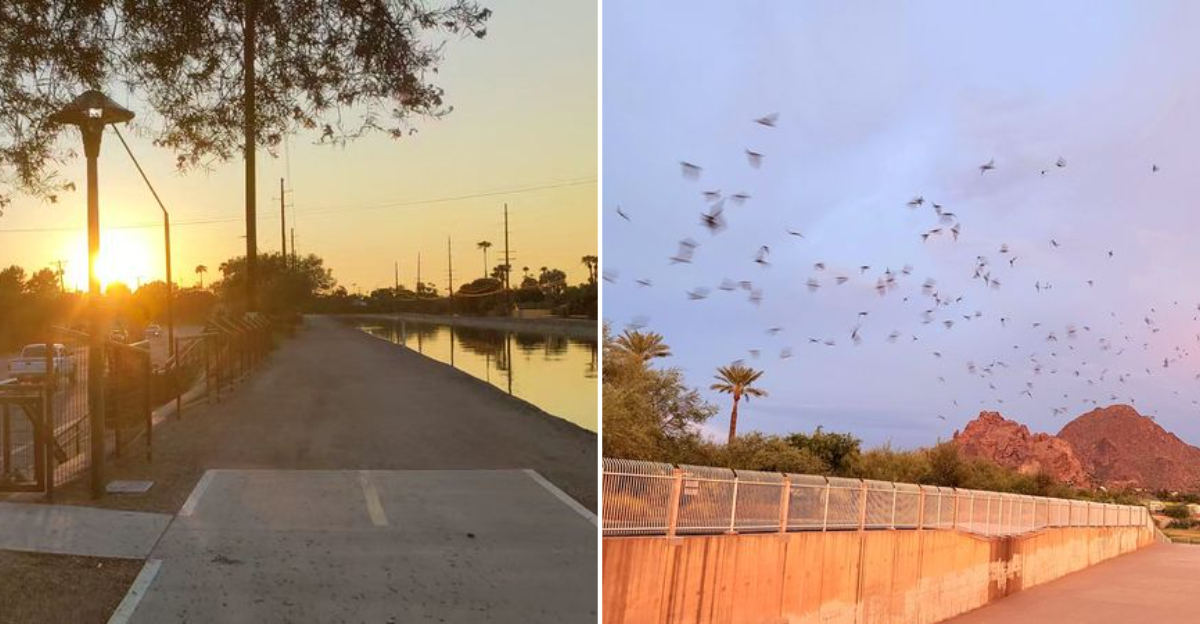
Most people assume that nature documentaries are best enjoyed from the comfort of a couch, yet the most thrilling show in Arizona is happening right in an ordinary neighborhood.
Beneath a nondescript bridge along a local canal, a secret migration occurs every single evening as the sun dips below the horizon.
It starts with a few fluttery scouts, but within minutes, a literal cloud of living velvet erupts into the night air.
There is something deeply satisfying about watching a creature so misunderstood turn into the star of its own blockbuster performance.
Forget the fancy equipment or the travel plans. All you really need is a little bit of patience and a willingness to stand near a canal while the local residents put on a masterclass in aerial acrobatics.
This flood control tunnel built in 1994 has quietly become one of the most spectacular free wildlife shows in the entire Southwest.
Up to 20,000 Mexican free-tailed bats pour out of this concrete tunnel each night at dusk in a swirling, living ribbon that leaves first-time visitors completely speechless. I stumbled onto this place by accident, and I am so glad I did, because it changed the way I think about urban wildlife forever.
The Surprising Story Behind The Tunnel
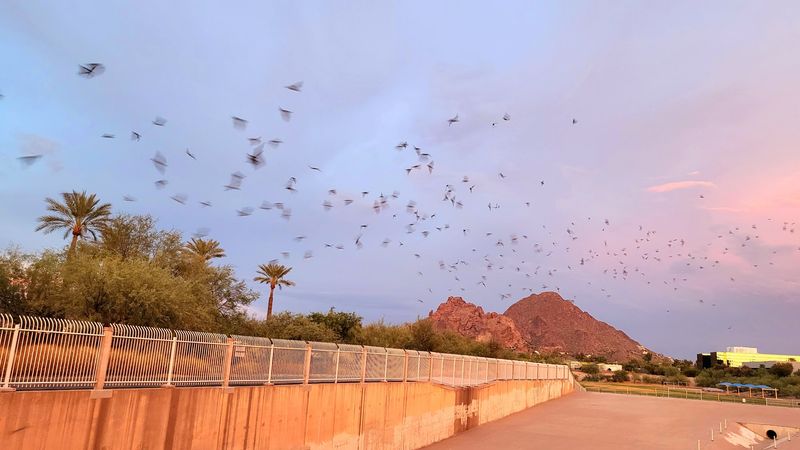
Most people picture a cave carved into a mountainside when they hear the words “bat cave,” so learning that Phoenix’s version is actually a Maricopa County flood control tunnel stopped me in my tracks the first time I heard about it.
The tunnel was completed in 1994, built purely to manage stormwater runoff in central Phoenix. Nobody planned for bats. Nobody drew them on the blueprints.
By the late 1990s, Mexican free-tailed bats had discovered the structure on their own and decided it was perfect.
The tunnel offers darkness, warmth, and protection from predators, which is everything a bat colony could want in a summer home. Females use it specifically as a maternity colony, giving birth and raising their pups inside its concrete walls each season.
What started as pure infrastructure quietly became one of the city’s most beloved natural attractions. The tunnel is a reminder that wildlife does not wait for an invitation, and sometimes the most extraordinary things grow from the most practical beginnings.
Meet The Mexican Free-Tailed Bat
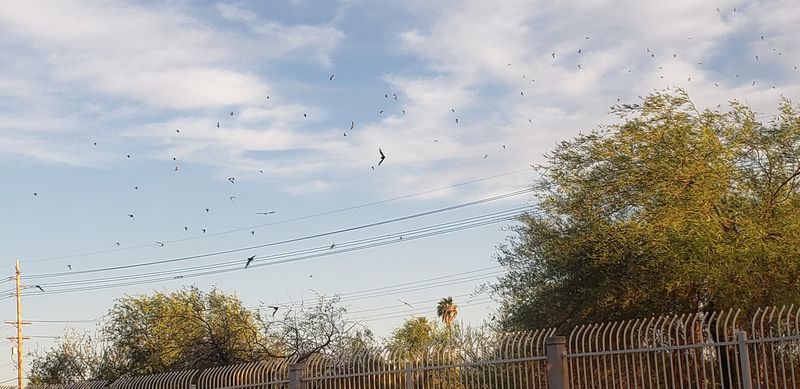
Small, fast, and surprisingly charming once you get over any initial jitters, the Mexican free-tailed bat is the undisputed star of the Phoenix canal show. These bats typically measure about 3.5 inches in body length with a wingspan of around 12 inches, making them quick and highly maneuverable fliers.
Their long, narrow wings are built for speed, and watching them zip through the air is genuinely thrilling.
Each bat can consume thousands of insects in a single night, including moths, mosquitoes, wasps, ants, and beetles.
That means the colony of up to 20,000 bats at this tunnel is doing some serious pest control work for the surrounding neighborhoods every evening without anyone asking them to. Canyon bats may also use the tunnel on occasion, though Mexican free-tails dominate the population.
Their seasonal migration pattern takes them south to Mexico each winter, making their presence at the Phoenix tunnel a May-through-October gift that the city gets to enjoy every single summer.
Finding The Spot And Getting There
Getting to the Phoenix Bat Cave requires just a little bit of planning, and the effort is absolutely worth it. The tunnel sits near the intersection of 40th Street and Camelback Road in central Phoenix, tucked behind Phoenix Country Day School on the north side of the Arizona Canal.
There is no grand entrance or flashing sign to guide you in. From the Camelback and 40th Street intersection, follow the canal path heading northwest along the north bank.
The walk is short and easy, and you will likely spot information signs posted near the tunnel that explain the bat colony and its habits. Informational signage makes this feel like a proper nature experience rather than just stumbling around in the dark.
Parking requires a bit of creativity since there is no dedicated lot for bat watchers. The public parking area at Chelsea’s Kitchen at 5040 N. 40th Street is a popular option, as are visitor spaces in the nearby business park. Comfortable shoes are a must for the canal path walk.
Timing Your Visit For The Best View
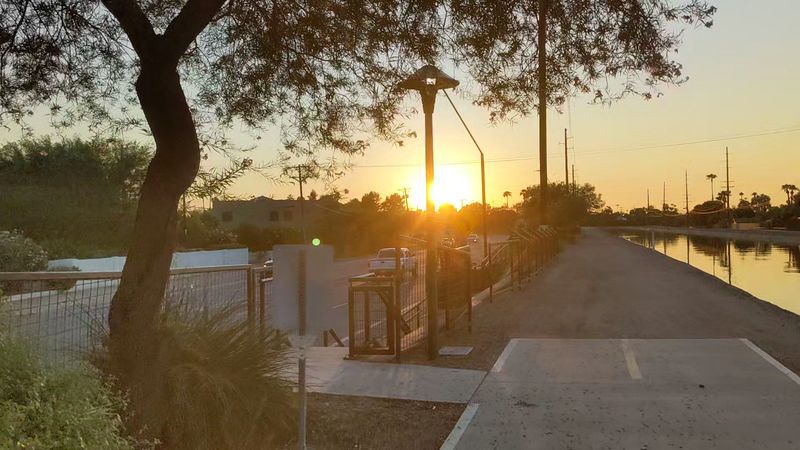
Timing is everything at the Phoenix Bat Cave, and arriving even slightly too late means missing the main event. The bats emerge each evening around sunset, but the window can shift by 15 to 40 minutes depending on the night.
Arriving by 6:30 to 6:45 p.m. during summer, or roughly 20 to 45 minutes before sunset, gives you the best chance of catching the full emergence from the very beginning.
The show itself lasts about 20 minutes and consists of a continuous stream of bats pouring out of the tunnel opening in one flowing, spiraling mass.
The June through August window offers the most dramatic viewing because the colony is at its peak size, swelled by the season’s new pups joining their mothers on nightly foraging flights.
Weeknights tend to feel more peaceful than weekends, when curious crowds can get larger. Either way, the bats perform on schedule regardless of audience size, which makes every visit feel like a private show even when it is not.
What To Bring For A Comfortable Evening

Standing on a canal path in Phoenix during summer means preparing for heat, even after the sun starts to drop. Bringing water is non-negotiable, and sunscreen matters if you plan to arrive early enough to catch some of the late afternoon light before the bats appear.
The path has no shade structures, so a hat helps too. Because the emergence lasts about 20 minutes and you will want to stay for the whole thing, a lightweight folding chair or a blanket to sit on transforms the experience from a standing wait into a relaxed evening outing.
There are no benches, no concession stands, and no restrooms near the viewing area, so coming prepared makes a noticeable difference in how much you enjoy the night.
A small flashlight or a phone with a bright torch setting is useful for navigating the canal path after the sun fully sets and the bats have disappeared into the sky. Pack light, stay comfortable, and the evening practically takes care of itself from there.
The Atmosphere And The Experience Itself
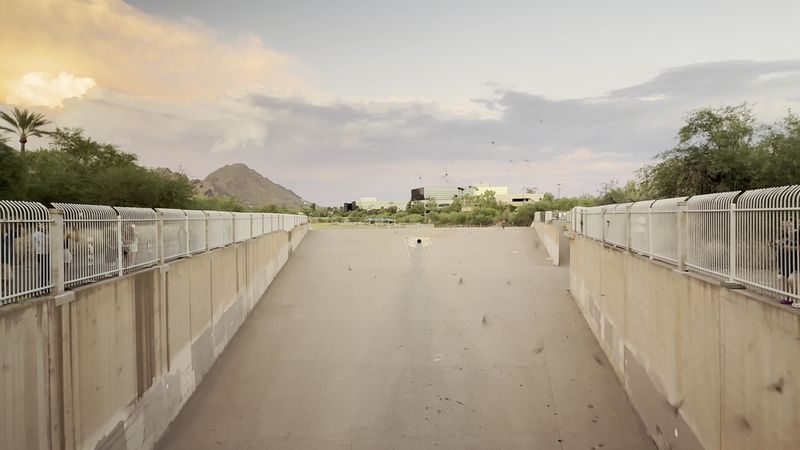
Nothing quite prepares you for the moment the first bats begin to trickle out of the tunnel. It starts slowly, just a few dark shapes flicking out into the fading light, and then the trickle becomes a torrent.
Within minutes, thousands of bats are pouring out in a dense, swirling column that spirals upward and fans out across the sky in every direction.
Standing at the south side of the fence at the end of the flood tunnel puts you directly beneath the flight path, which means bats dart overhead close enough to feel the air move. It is thrilling in the best possible way, and first-timers often let out an involuntary gasp when the full scale of the colony becomes clear.
The sound is subtle but real, a soft chittering mixed with the rush of wings. The whole scene carries an energy that is hard to describe but easy to feel, like the city pausing for a moment to let nature remind everyone who was here first.
Respecting The Wildlife And Visiting Responsibly
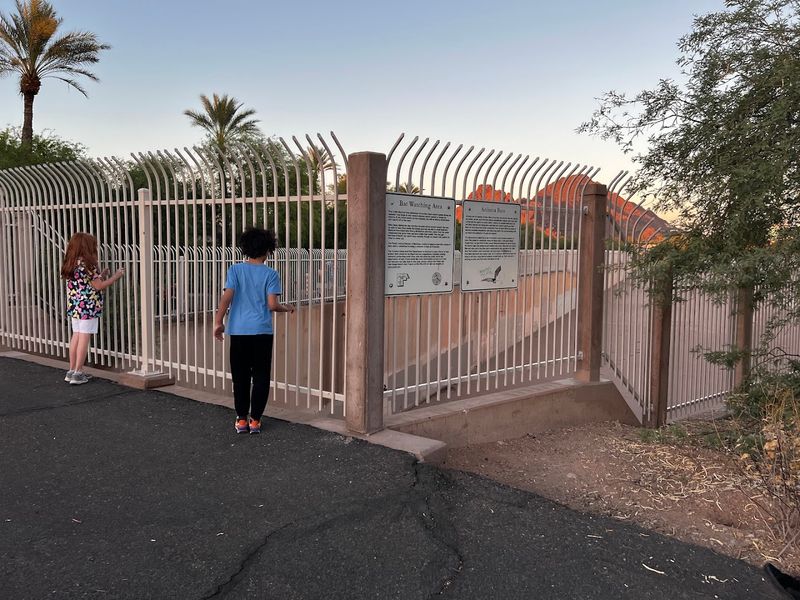
The Phoenix Bat Cave earns its reputation partly because visitors have treated it with genuine respect over the years. Entering the tunnel is strictly prohibited, and that rule exists for a very good reason.
Disturbing the colony, especially during maternity season when mothers are nursing pups, could cause the bats to abandon the site permanently.
Keeping noise to a minimum during the emergence is something every visitor should take seriously. Loud voices and sudden movements can interrupt the bats’ natural behavior and stress the animals during a critical nightly routine.
Watching quietly also happens to make the experience far more immersive for the people standing nearby.
Pets should be left at home or kept well away from the tunnel area, and flash photography is widely discouraged since bright lights can disorient the animals mid-flight.
The city of Phoenix has something genuinely special in this canal-side colony, and a little mindfulness from each visitor helps ensure that future generations will get to witness the same breathtaking show every summer evening.