
This Hidden Arkansas Spot Feels Too Beautiful To Be Real
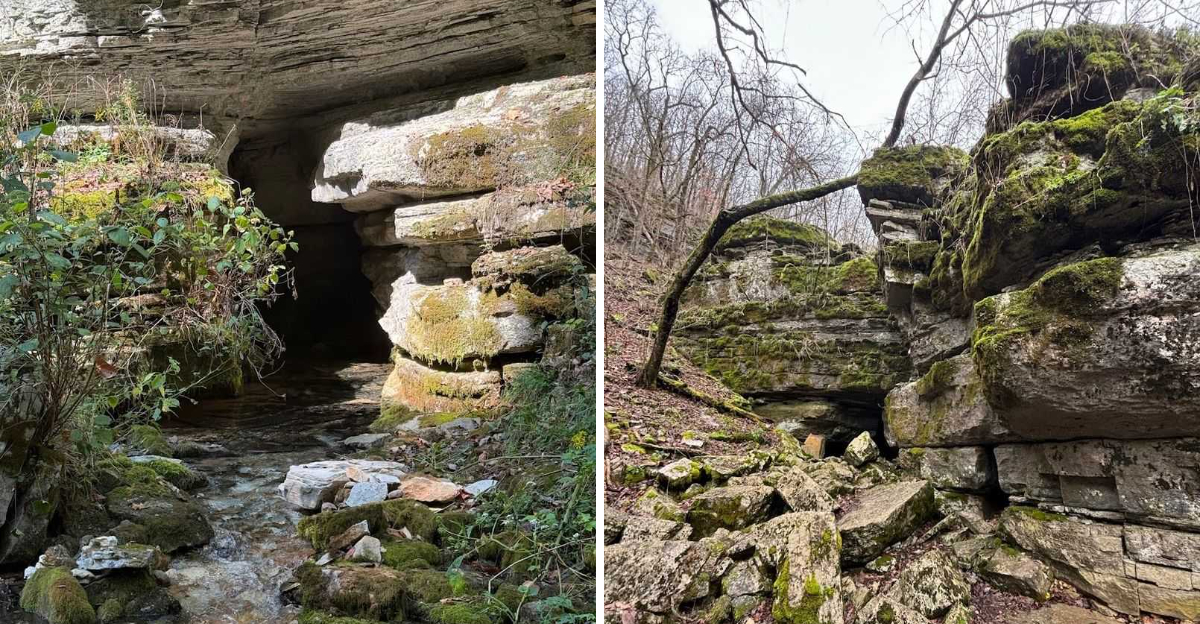
Some places don’t give you a warning. You just step in and stop.
That’s exactly what happened here in the Arkansas Ozarks. One second it’s a normal trail, the next you’re surrounded by towering limestone walls and water so clear it barely looks real.
I went on a whim after seeing a quick mention online. No big expectations.
Then I hit that first stretch of creek and just stood there. Completely still.
The reflections, the quiet, the way everything feels almost untouched. Ferns line the path, caves appear out of nowhere, and the whole place feels bigger than it should be.
You don’t rush it. You can’t.
Every few steps pulls your attention somewhere new. I kept thinking it would level out, that the views would settle, but they didn’t.
It just kept building, slowly and quietly, until I realized I hadn’t checked my phone once.
First Glimpse Of Towering Limestone Bluffs Above Quiet Water
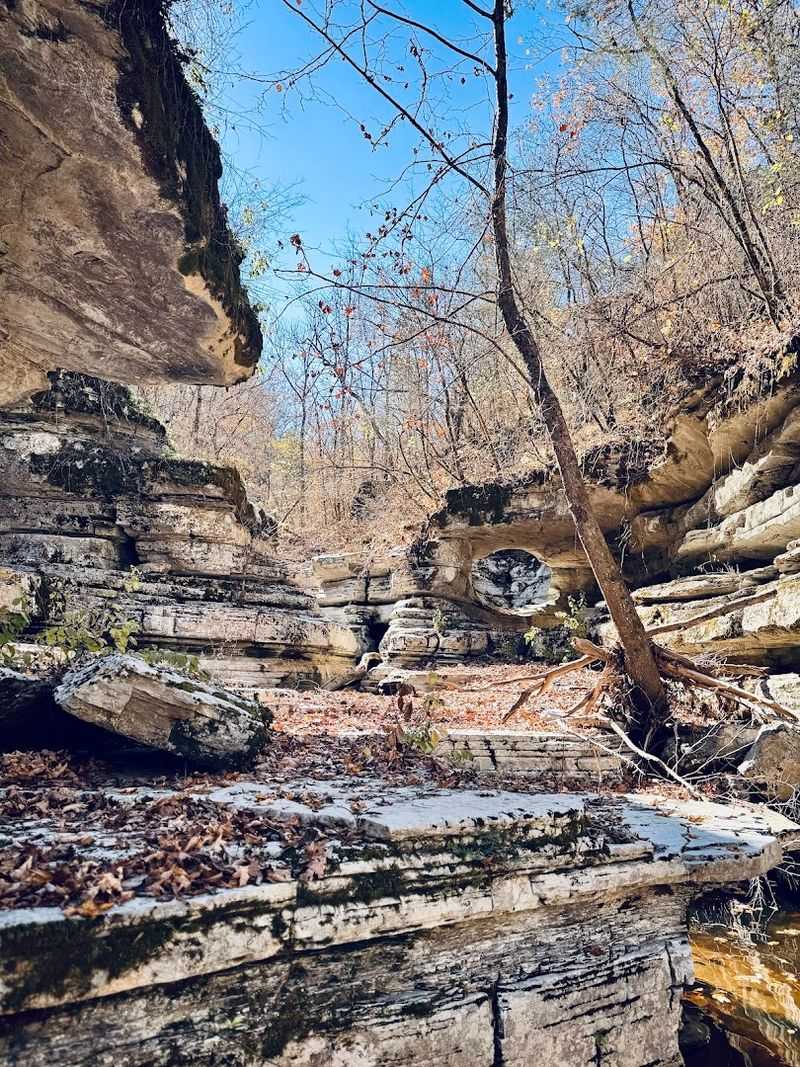
Nothing prepares you for the moment the trees part and the bluffs rise above you like the walls of a cathedral you never expected to find.
At the base of these limestone formations, I kept tilting my head back further and further, trying to take in the full vertical sweep of pale gray rock stacked in dramatic layers above the creek.
The stone itself tells a slow story, with horizontal bands of sediment pressed together over millions of years into shapes that look almost architectural.
Mosses and small ferns cling to every crack and ledge, softening the hard edges and adding streaks of deep green against the pale rock face.
The creek below runs quietly at the base of these formations, its gentle sound bouncing off the stone in a way that makes the whole canyon feel like a natural amphitheater.
Photographers will want to arrive when morning light angles low across the bluff faces, because the texture and shadow play at that hour are genuinely extraordinary.
This is the first dramatic payoff of the trail, and it sets the tone for everything that follows at Hell Creek Natural Area near Mountain View in Stone County, Arkansas.
Spring Fed Pools With Unusually Clear Blue Green Depth
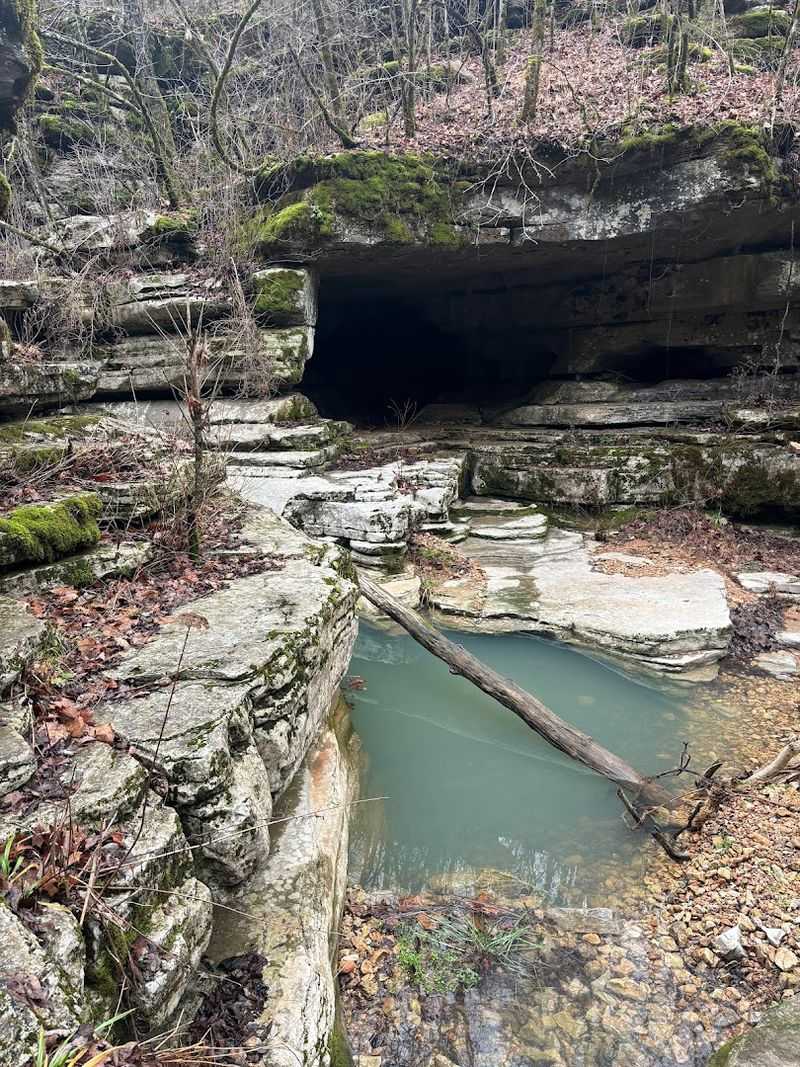
Looking into a spring-fed pool here feels almost unreal, especially when the rocky bottom remains visible several feet below the surface.
The water carries a distinctive blue-green tint that comes from cold, mineral-rich springs moving through limestone, creating a striking contrast against the earthy browns and greens of the surrounding forest.
At the edge of one pool, I watched faint currents move through the water, hinting at the steady underground flow feeding the creek system.
The temperature of the water is noticeably cooler than the air, especially on a warm summer afternoon, and even dipping a hand in feels refreshingly sharp.
Spring-fed flow helps maintain clarity in the creek, even after light rain, although conditions can vary depending on recent weather patterns.
Hikers who follow the creek corridor often encounter both karst features and areas where the spring influence is most visible.
Sitting quietly beside one of these pools and watching light shift across the surface is an experience that costs nothing and lingers for a long time afterward.
Shaded Forest Corridor Filled With Ferns Moss And Wild Growth
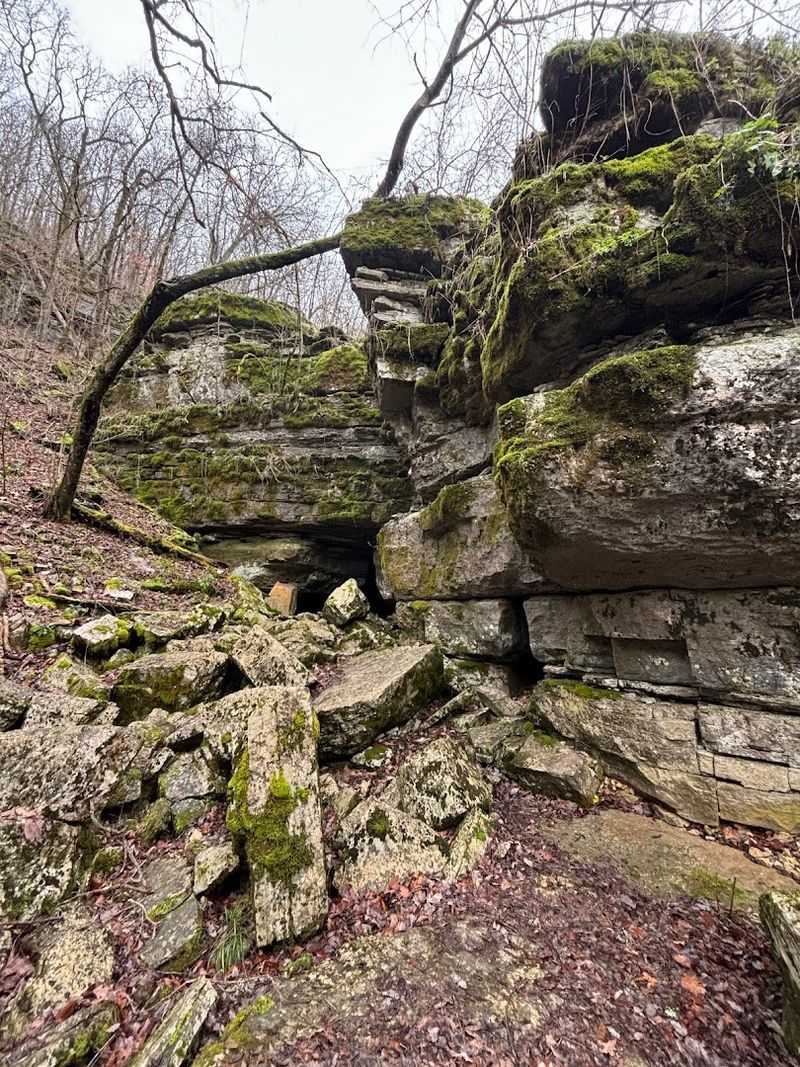
Before the bluffs reveal themselves, the trail pulls you through a long shaded corridor that feels almost like walking through a living green tunnel.
Ferns blanket the forest floor in dense, overlapping waves, and every fallen log and exposed root system is coated in thick cushions of bright moss that practically glow in the filtered light.
The canopy overhead is dense enough in summer to block most direct sunlight, creating a cool, humid atmosphere that smells richly of soil, plant matter, and fresh water.
Wild growth pushes in from both sides of the trail, and in places the path feels more like a suggestion than a cleared route, which only adds to the sense of genuine wilderness.
I stopped several times just to photograph the layered textures here, because the combination of fern fronds, mossy stone, and dappled light creates compositions that are endlessly interesting from almost any angle.
This section of the trail moves at a steep downward pitch in places, so the lush scenery around you is best appreciated on the return climb when you are not watching your footing as closely.
The forest corridor alone makes the hike worthwhile for anyone who finds beauty in the quieter, more intricate details of a natural landscape.
Narrow Trail Sections Winding Along Steep Natural Rock Walls
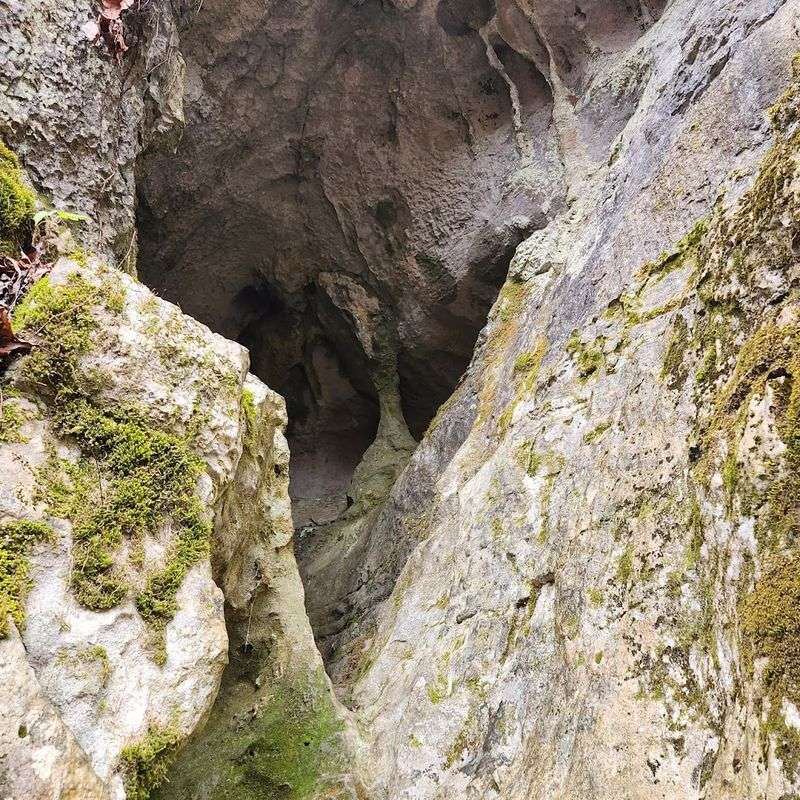
Certain stretches of this trail place you between a sheer rock wall on one side and a steep drop on the other, creating a passage that feels both thrilling and humbling.
The rock walls here are not shaped by any human hand; they are raw limestone faces worn smooth in some places and deeply furrowed in others by centuries of water and weather.
Careful footwork becomes essential along these narrow sections, especially after rain when slick surfaces can quickly turn a confident stride into a cautious shuffle.
At several points, I found myself pressing one hand lightly against the rock wall, not out of fear but as a natural way to stay balanced and grounded.
The rock walls also act as sound barriers, so the creek below comes through in softened pulses rather than a constant roar, adding to the enclosed feeling.
Trail markers are limited and can change over time, so paying close attention to navigation and bringing a reliable map is important.
These sections are where the trail earns its reputation as a hike suited for those looking for a more demanding outdoor experience rather than a casual walk.
Seasonal Water Flow Creating Gentle Falls And Hidden Channels
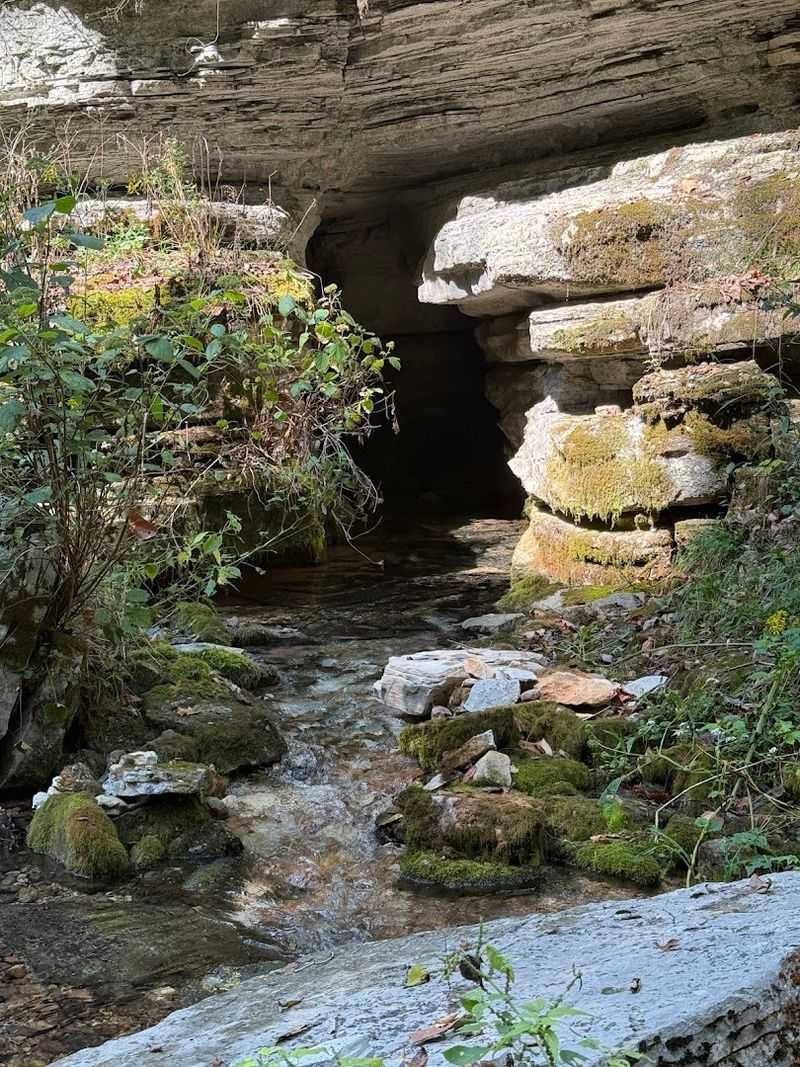
Water behaves differently here depending on the season, and that variability is part of what makes repeat visits feel like entirely separate experiences.
After spring rains or during wetter stretches of the year, the creek bed fills with moving water that spills over ledges and creates a series of small, layered falls that catch the light beautifully.
These are not the kind of dramatic waterfalls that appear on postcards, but something quieter and more personal, the type you stumble across around a bend and feel like you discovered entirely on your own.
Hidden channels appear in the rock where water has carved narrow paths through the stone over long periods, and tracing these channels with your eyes reveals just how actively water continues to shape this landscape.
During drier months, some of these channels run thin or disappear entirely, leaving behind smooth-worn rock surfaces and dry pools that still carry the visual memory of water.
Visiting after a few days of rainfall is widely considered the best approach for seeing the full range of water features in their most active and photogenic state.
The sound of water moving through rock and pooling in natural basins gives the whole canyon a rhythm that feels alive and quietly insistent no matter what time of year you arrive.
Trailhead Access And Limited Parking Considerations
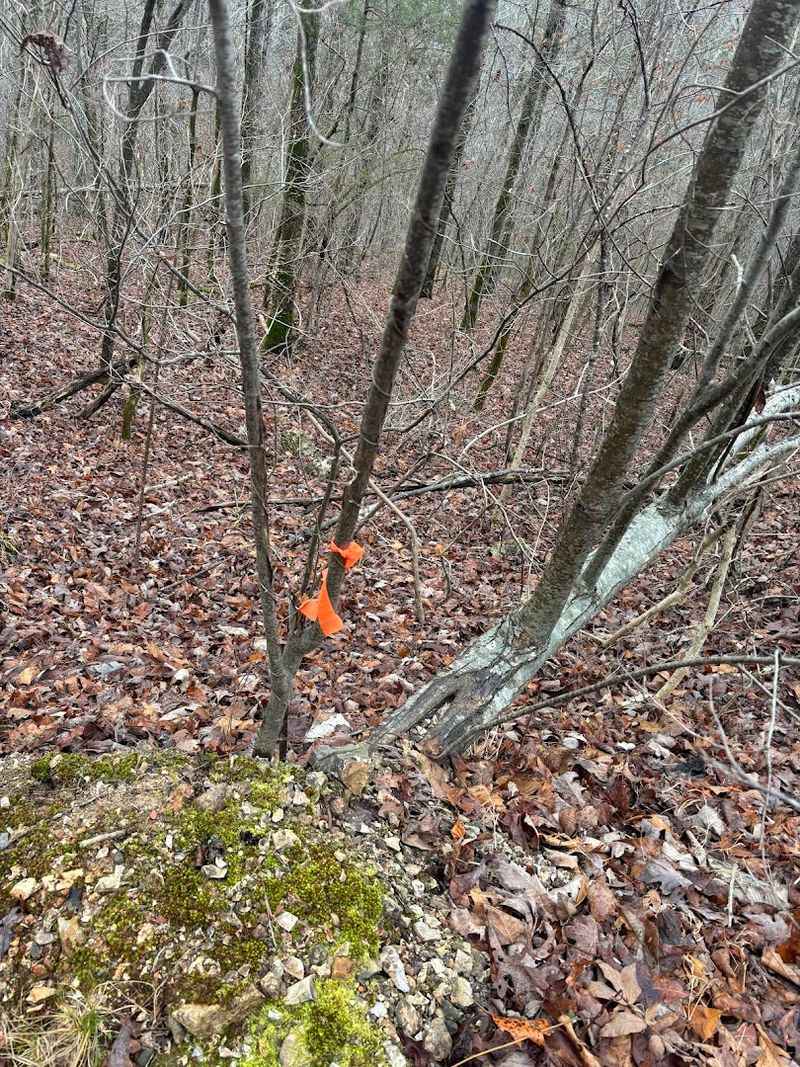
Reaching this location requires a bit more preparation than simply entering an address into a standard GPS and following directions without question.
Some navigation apps have been known to lead visitors to incorrect or private locations, which makes using verified coordinates or a trusted trail map especially important.
The parking area is small and unpaved, with space for only a limited number of vehicles, so arriving early on weekends or during peak seasons can make a noticeable difference.
Access to the trail begins along a wooded route that connects briefly with an old road before dropping steeply into the canyon.
Clear signage is minimal or absent at the trailhead, which can create confusion for first-time visitors unfamiliar with the layout.
Preparation with offline maps and a general understanding of the route before arrival helps avoid unnecessary delays or misdirection.
Taking a few extra minutes to confirm your starting point can turn a potentially frustrating arrival into a smooth and confident beginning to the hike.
Best Visiting Windows For Color Light And Comfortable Conditions
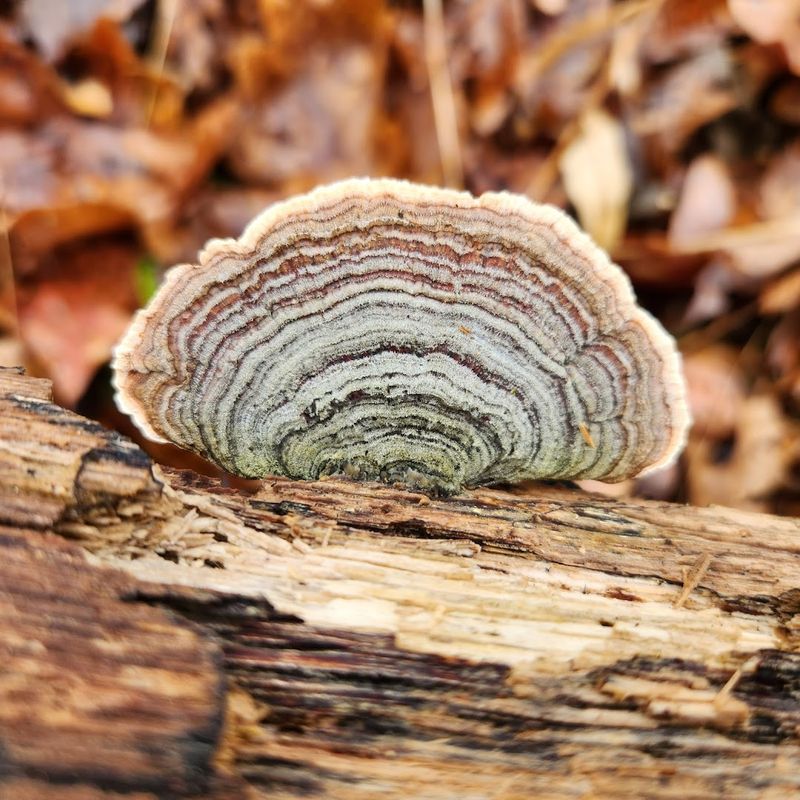
Timing a visit to this natural area thoughtfully makes a meaningful difference in what you experience once you are on the trail.
Spring brings the fullest water flow, the greenest vegetation, and wildflowers pushing up through the leaf litter along the forest floor, making it arguably the most visually layered season for a first visit.
Fall is when the color shifts dramatically, with the hardwood canopy turning amber, orange, and deep red against the pale limestone bluffs in a combination that photographs beautifully in the low afternoon light of October and early November.
Summer visits are entirely doable but come with heat and humidity that make the steep descent and return climb considerably more demanding, so starting early in the morning before temperatures rise is a practical strategy.
Winter strips the canopy down to bare branches, which actually opens up longer sightlines along the bluffs and gives the landscape a stark, graphic quality that appeals to a different kind of visitor.
Morning light is consistently the most flattering for photography at any time of year, particularly when it angles across the limestone faces and catches the water in the pools at a low, warm angle.
Checking recent trail reports before any visit helps account for seasonal closures, trail blowdowns, or unusually high water that could affect the creek crossing sections.
Footing Challenges Stream Crossings And Safety Awareness
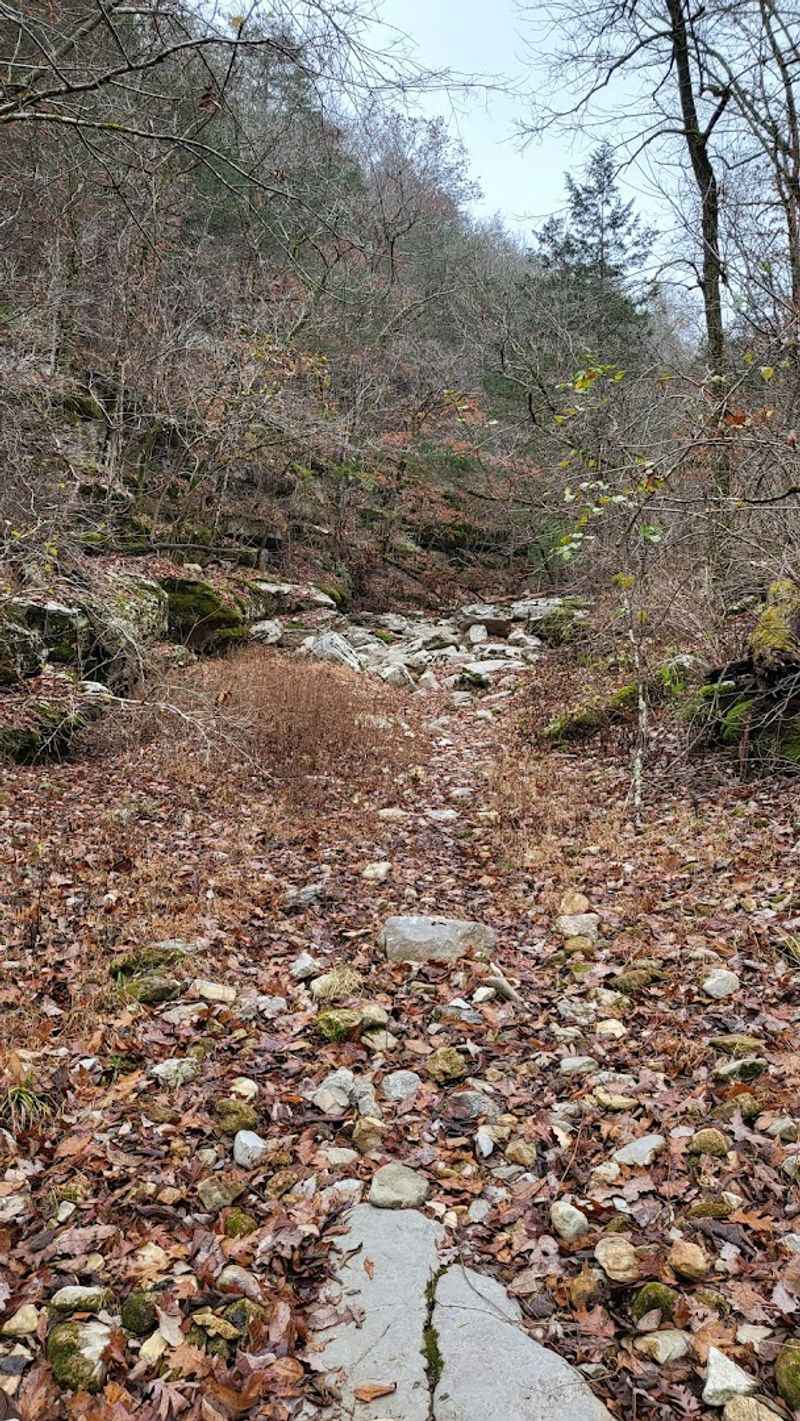
Honest advice from people who have hiked this trail consistently points to footwear as the single most important piece of gear you can bring.
The trail includes steep sections with loose soil, exposed roots, and wet rock surfaces that punish smooth-soled shoes and reward boots with aggressive tread patterns and ankle support.
Stream crossings on the creek bed require stepping across wet, moss-covered limestone that can shift or tilt underfoot, and these crossings are where most slips tend to happen for hikers who move too quickly or too confidently.
I took my time at every crossing, testing each rock before committing my full weight, and that cautious pace made the difference between a clean crossing and a soaked boot situation.
The steep initial descent from the parking area is where trail reviews most frequently mention difficulty, and trekking poles provide a real advantage on the return climb when leg fatigue sets in.
Hiking with a companion rather than solo is a sensible approach given how remote the canyon feels once you are down in it and away from the parking area.
Respecting the terrain, moving at a pace that matches your fitness level, and staying aware of your footing at all times keeps the adventure squarely in the enjoyable column rather than the regrettable one.