
The Whimsical Park In Arkansas That’s Straight Out Of A Storybook
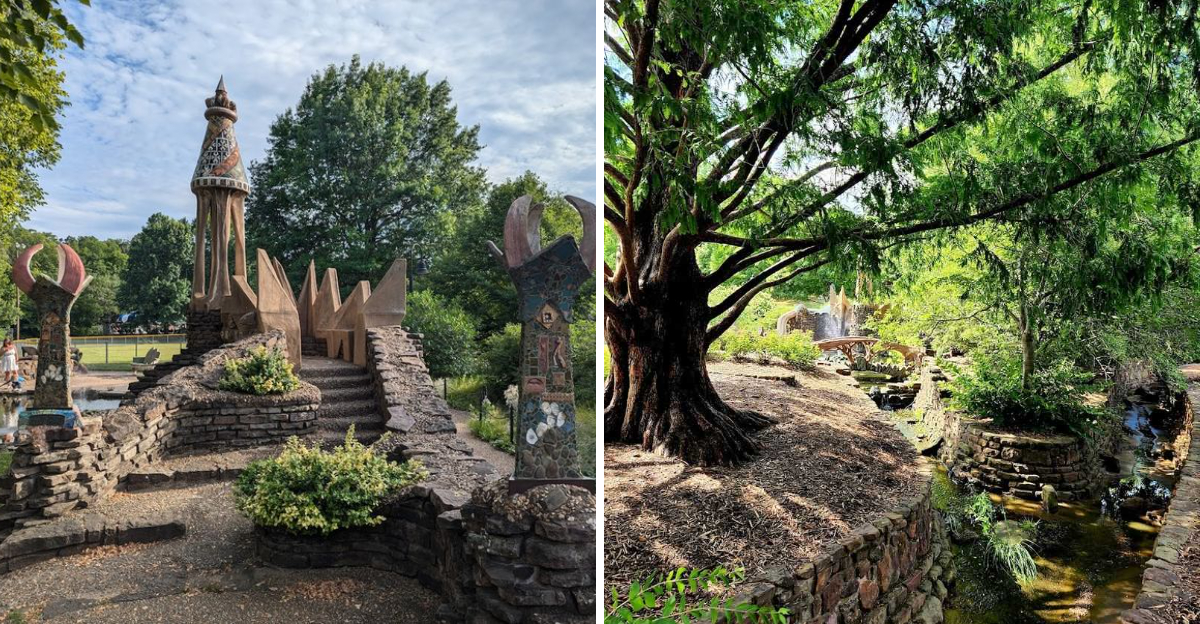
A castle in the middle of a park sounds like the kind of thing somebody would exaggerate online, but this one is real. I saw it on a sunny afternoon in northwest Arkansas, inside a 22.75-acre park that has been part of local life for generations.
At first, I thought I would take one photo and keep moving. Nope.
The closer I got, the more interesting it became. The stonework has that made-by-hand character you cannot fake.
Kids climbed around like they had just found their own kingdom, while grown-ups tried to act casual and still took a ton of pictures. I get it.
The place has a strange pull. It makes a simple park visit feel like a small adventure.
After staying way longer than expected, I looked into its backstory. That is where the story gets even better, and why people keep finding reasons to come back.
A Whimsical Stone Hideaway
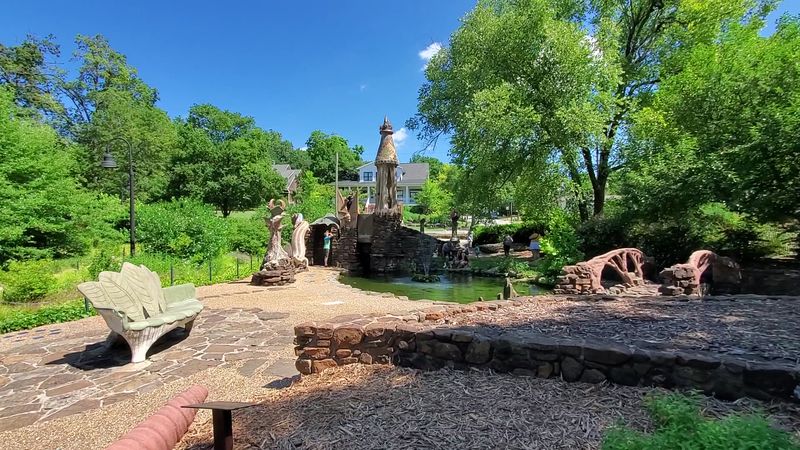
The first look at this sculpture made me forget I was in a public park. For a second, it felt more like a movie set.
The structure rising before me was not a replica or a themed playground prop but a one-of-a-kind piece of public art conceived by artist Frank Williams and completed in 1981, originally titled “Seven Points.”
Williams designed it to spark imagination, and he succeeded so thoroughly that the castle has become one of the most photographed places in Fayetteville.
Built from native stone and concrete, the castle incorporates bits of ceramic tile and oyster shells that catch the light in ways that make you want to circle it twice just to catch every detail.
Children treat it like a personal jungle gym, climbing through openings and discovering small surprises at every turn.
Adults, meanwhile, find themselves doing almost the same thing, just at a slightly slower pace and with slightly more dignity.
You can find all of this waiting for you at Wilson Park Castle at 675 N Park Ave, Fayetteville, AR 72701.
Storybook Shapes Beneath The Trees
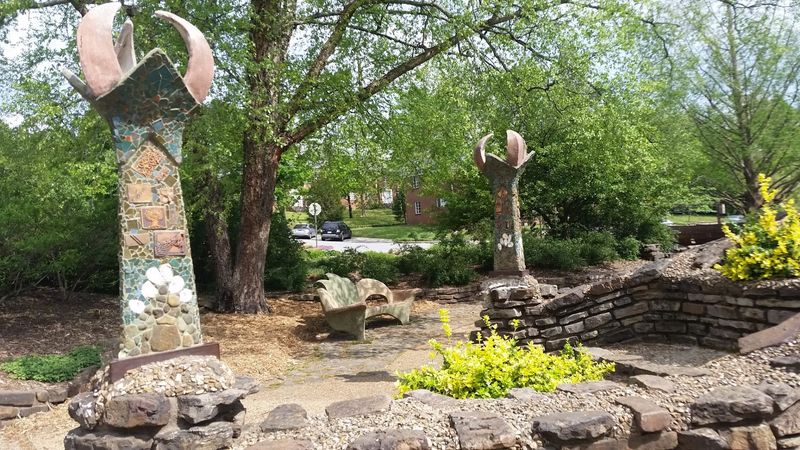
Every angle of this sculpture tells a slightly different story, which is exactly what Frank Williams intended when he dreamed up its layered, asymmetrical form.
The towers and arched openings create a silhouette that reads as a castle from a distance but reveals far more personality up close, where textures shift from rough stone to smooth concrete to sparkling tile.
I kept circling the structure during my visit, convinced I had missed something, and I was right every single time.
The shapes are deliberately fantastical, meaning no single side looks identical to another, giving the whole piece a hand-carved quality that modern playground equipment simply cannot replicate.
Mature trees frame the castle on multiple sides, so even on a bright afternoon the sculpture sits in comfortable shade, making it an inviting spot to linger rather than just photograph and leave.
Families spread out across the surrounding grass, some picnicking, others just watching their kids navigate the nooks with pure delight.
The composition as a whole feels like a living storybook illustration that somehow escaped onto a real piece of Arkansas soil.
A Spring-Fed Corner Of Wonder
One of the most quietly astonishing features of the entire castle is something most visitors almost walk right past without noticing it.
Tucked behind an iron door adorned with a Dogwood flower design, a natural spring still flows from within the castle structure, an active water source that historically fed into what locals once called Trent’s Pond.
I pressed my face close to that iron door on my visit and could hear the faint sound of moving water, which felt almost conspiratorial, like the castle was sharing a secret.
The spring is not a decorative fountain or a plumbing trick but a genuine natural feature that the original designers chose to incorporate rather than redirect or cover up.
That decision alone says a great deal about the philosophy behind the whole project: work with the land, honor what is already there, and let nature be part of the art.
Knowing that real water flows behind that flower-carved door adds a layer of authenticity to the castle that no amount of clever construction could manufacture.
It transforms the sculpture from a static object into something that feels genuinely alive.
Little Bridges And Quiet Water
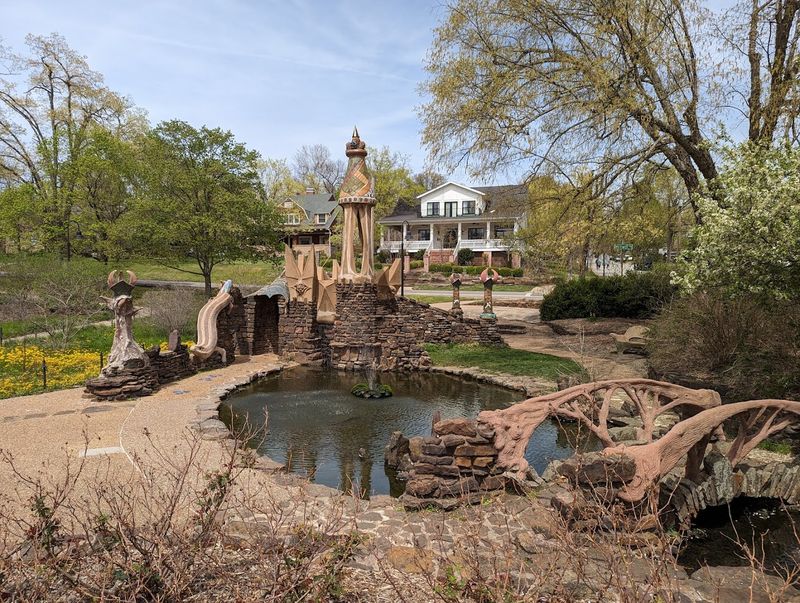
Water has a way of turning any outdoor space into something more interesting, and the area around the castle takes full advantage of that truth.
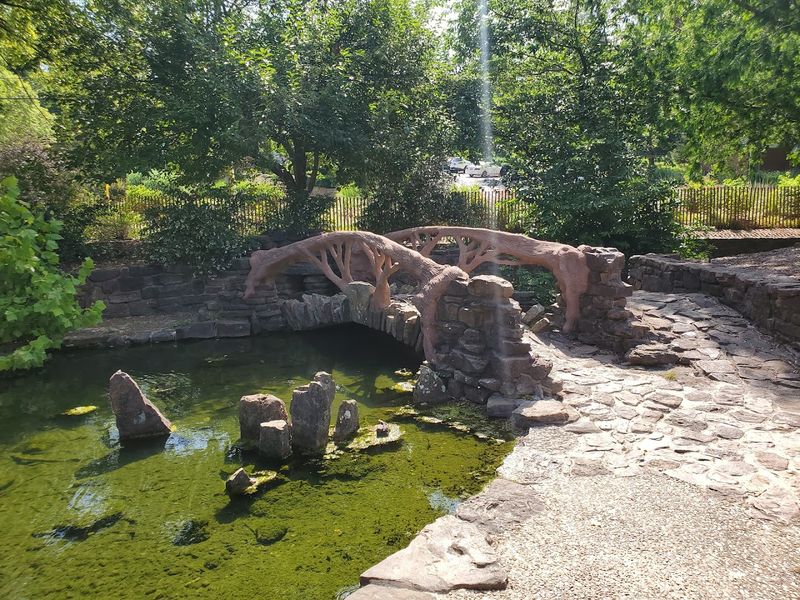
A creek winds through this section of Wilson Park, and small stone bridges cross it at just the right spots, creating natural pauses in a walk where you can stop and look down at the current moving beneath your feet.
One bridge has the kind of unexpected shape that makes the park feel different from anything else in the region, almost like a detail from an old handmade storybook scene.
I spent a few quiet minutes on one of those bridges just watching the water, and the kids nearby seemed completely absorbed by the shallows below.
The bridges are not purely decorative either; they connect different parts of the sculpture area and encourage exploration rather than passive observation.
Crossing from one side of the creek to the other feels like slipping into a slightly different chapter of the same story.
That sense of gentle transition is one of the park’s most underrated qualities.
Garden Paths With A Fairytale Feel
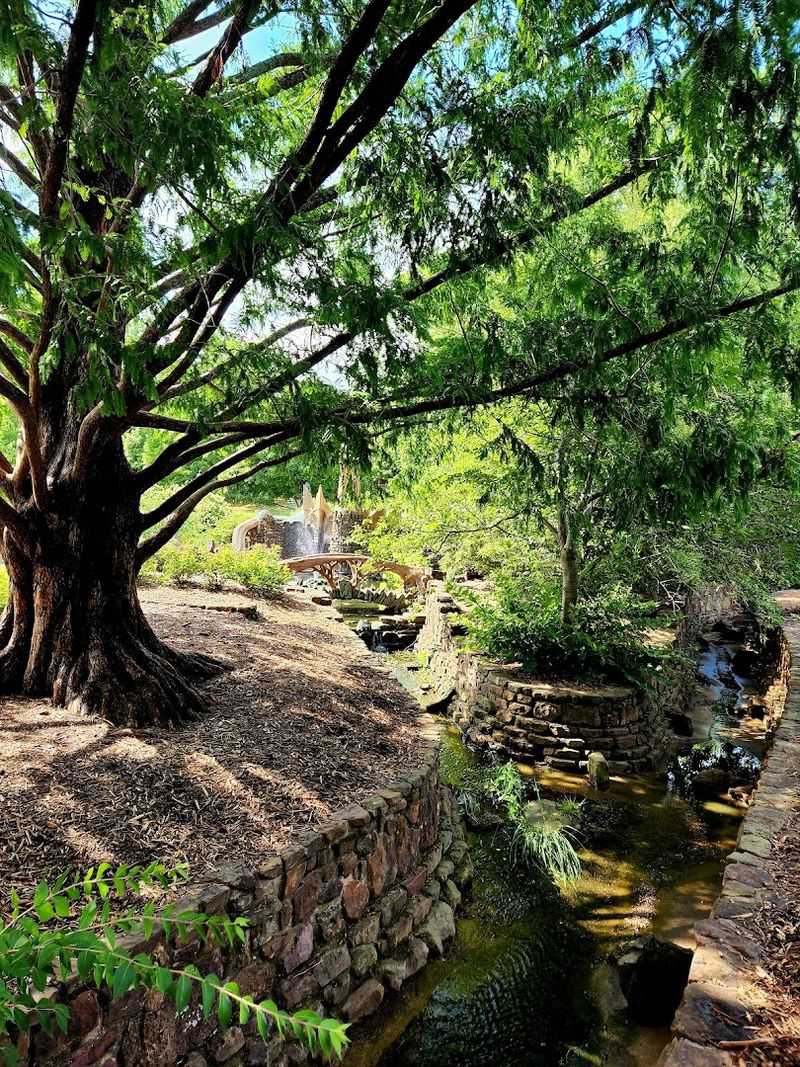
The garden paths around the castle do not feel like a basic city-park stroll. They feel more like little trails placed there to reward curiosity.
The plantings shift as you move, with different textures and colors appearing around each bend, keeping the visual experience fresh even on a second or third visit.
Wilson Park has flowering garden areas within its grounds, and the plants near the castle add movement and color to an already vibrant scene.
I noticed that the paths are shaded for much of their length, which makes an afternoon visit far more comfortable than you might expect during an Arkansas summer.
Benches appear at thoughtful intervals, positioned so that you can sit and look back at the castle from different distances.
Each vantage point offers something the previous one did not, whether it is a new architectural detail catching the light or a child discovering a hidden corner for the first time.
The garden paths transform what could have been a simple sculpture visit into a full sensory experience that rewards a slow, unhurried pace.
Playful Stonework In The Park
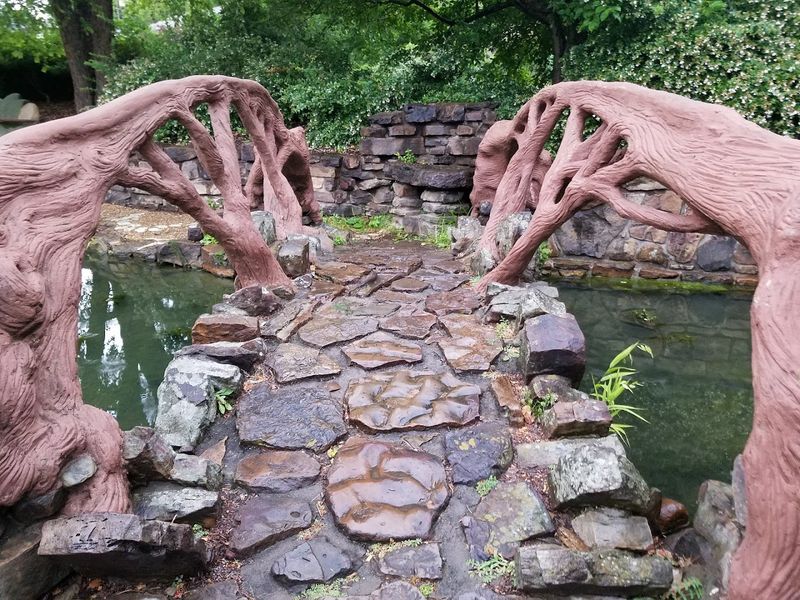
Frank Williams started the creative conversation at Wilson Park, but local artist Eugene Sargent kept it going in the most playful ways imaginable.
Sargent has added several elements to the park over the years, including flowering benches and a 45-foot earthworm retaining wall that stops first-time visitors completely in their tracks.
The earthworm wall in particular is the kind of thing you have to see twice before you fully believe it, a long, curving structure that uses scale and texture to turn a functional landscape feature into a piece of folk art.
I walked the length of it during my visit and found myself grinning by the halfway point, which is not a typical response to a retaining wall.
Another oversized creature sculpture carries that same playful confidence, positioned in the park with the casual authority of something that has always lived there and simply expects to be admired.
Together, Sargent’s additions and Williams’s original castle create a layered environment where the art never feels finished, as if the park is still growing.
That ongoing creative energy is part of what keeps locals returning and newcomers genuinely surprised.
A Cozy Landmark Framed By Greenery
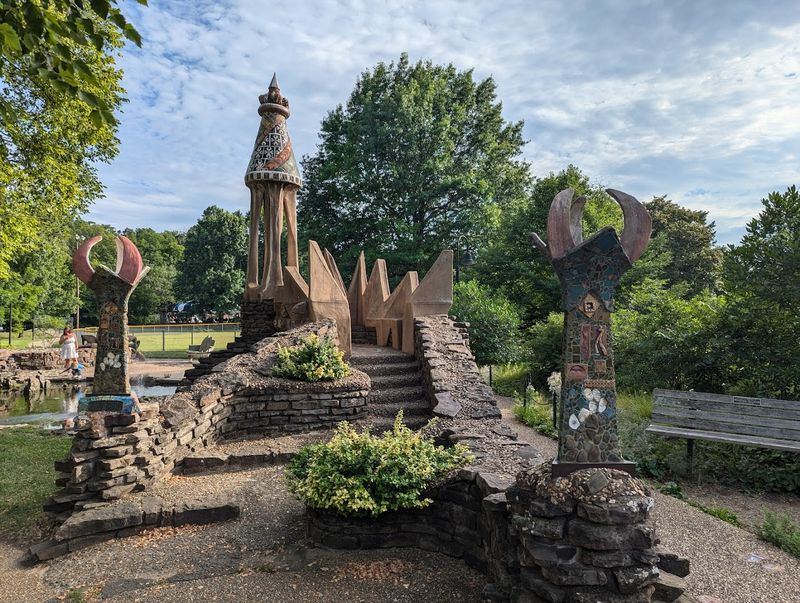
This place does not need a rating number to prove its charm. One look at the steady flow of families and photographers tells you why people keep coming back.
The castle sits within Wilson Park, which is Fayetteville’s oldest park at 22.75 acres, and the greenery surrounding the sculpture gives it a framed, portrait-like quality that makes even casual snapshots look intentional.
Mature trees wrap around the structure on multiple sides, softening the stone with organic color and creating a setting that feels both wild and carefully tended at the same time.
I visited on a weekday afternoon and found families picnicking nearby, a few photographers circling the castle with serious cameras, and young kids treating every opening in the stonework as a personal challenge to squeeze through.
The setting feels especially lovely in softer morning light, before the busiest part of the day settles in.
Parking can be tight on busy days, so arriving early or on a weekday gives you a calmer, more relaxed visit overall.
The greenery alone makes this corner of Fayetteville feel like a neighborhood worth spending a full afternoon in.
Hidden Magic Beside The Pond
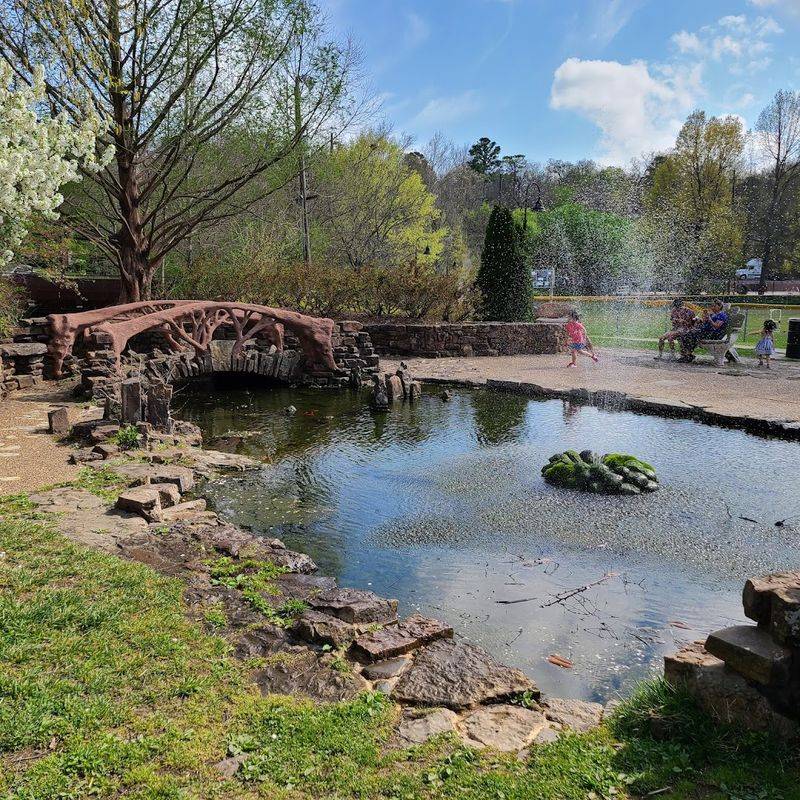
Some places only reveal their charm when you slow down and look carefully. The area beside the pond at Wilson Park is exactly that kind of spot.
The natural spring behind the castle’s iron door once fed into what was known as Trent’s Pond, creating a historical connection between the water feature and the sculpture that gives the whole setting a deeper sense of place.
Visitors sometimes spot fish in the water near the castle area, which adds a living, breathing element to a space already packed with visual interest.
I crouched beside the water during my visit and watched the shallows for a while, a small and unhurried moment that felt completely separate from the busy world outside the park gates.
The stonework nearest the pond picks up the surrounding colors beautifully, with the embedded tiles and shells catching reflections from the water’s surface in ways that shift throughout the day.
Children instinctively gravitate toward this area, drawn by the combination of water, bridges, and the looming castle just steps away.
All of it together creates the kind of layered, memorable afternoon that sticks with you long after you have driven home from Fayetteville.