
This Free Museum In Michigan Holds Prehistoric Wonders You Have To See
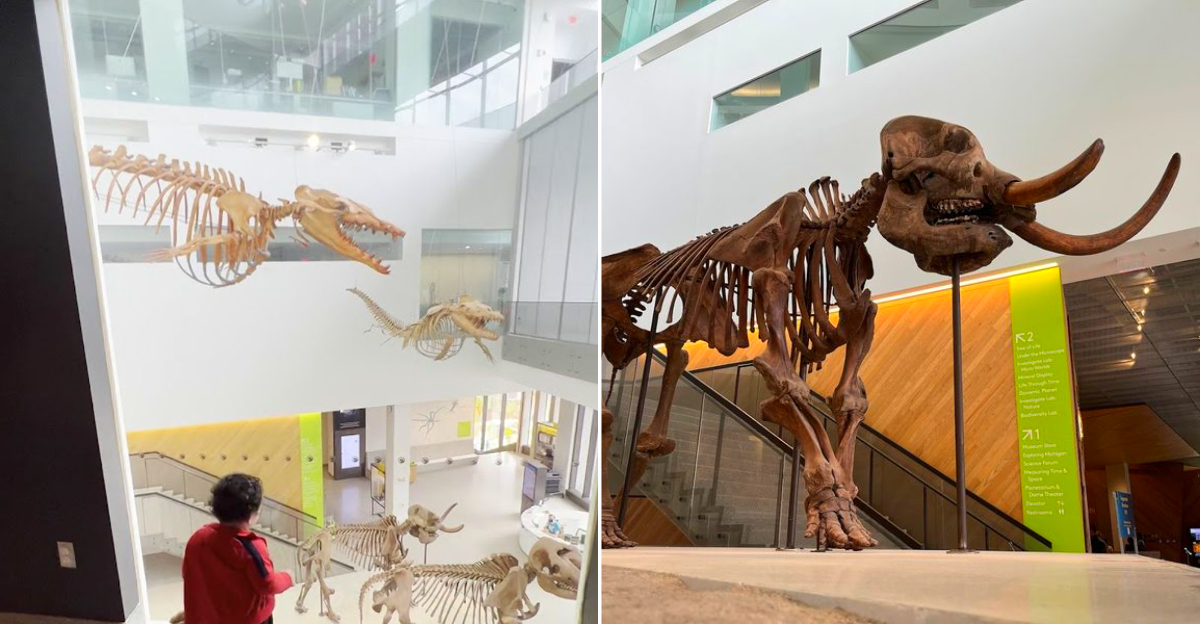
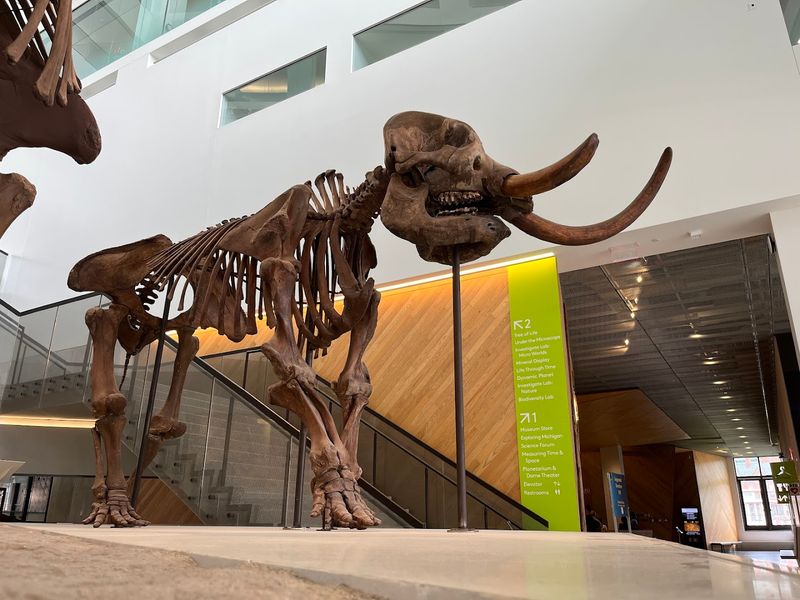
Walking through the doors of a university building, the last thing you expect is to come face to face with a prehistoric giant frozen mid-stride, its massive tusks curving upward like ancient ivory crescents.
Glass cases hold shimmering minerals, ancient fossils, carefully preserved specimens that tell the story of life across millions of years. What makes this place truly remarkable is not just the breadth of its collections or the quality of its exhibits.
It is the fact that every single display, from the smallest insect specimen to the most imposing dinosaur cast, is available to anyone who walks through the door without paying a cent.
Families with young children, college students between classes, retirees seeking a quiet afternoon, all of them share the same space, learning side by side. In Michigan, treasures like this are hidden in plain sight, waiting for the curious to simply walk in.
Arrive Ready For A Campus Museum, Not A Standalone Monument
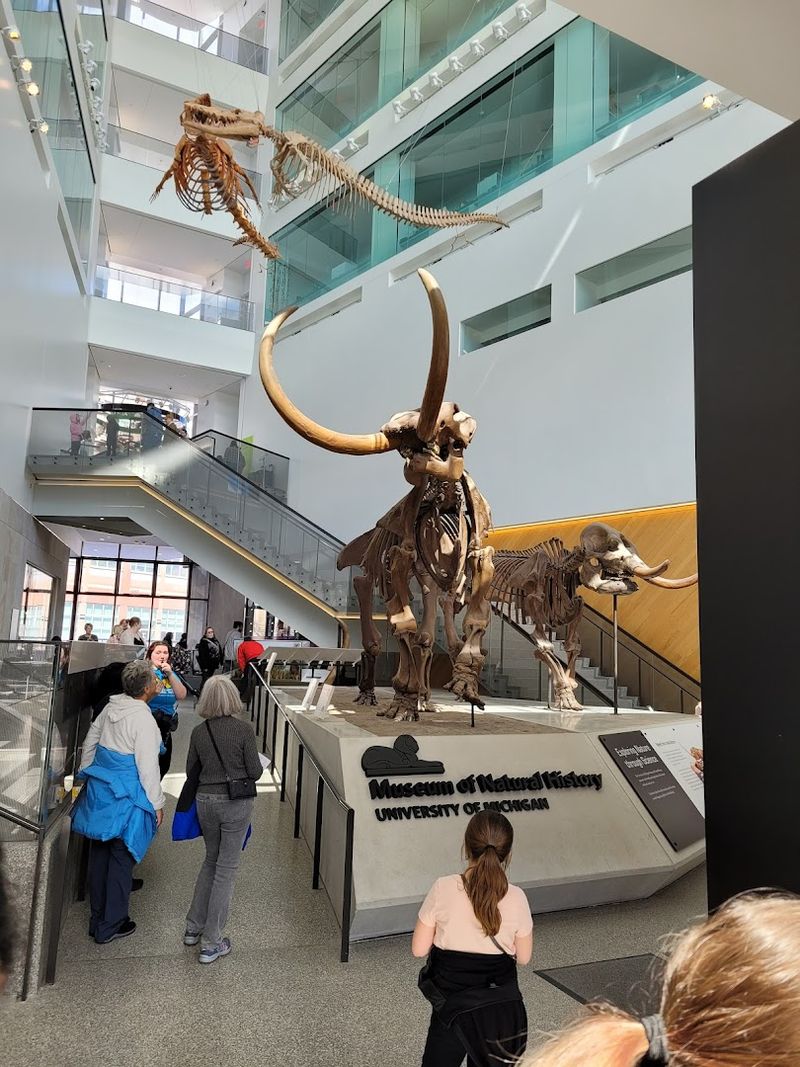
The first surprise is that this museum lives inside a university building, which gives the visit a more inquisitive mood than a grand civic flourish. You enter expecting prehistoric drama and quickly realize the setting is part of the appeal, because science here is folded into campus life.
That blend makes the museum feel active rather than ceremonial.
Give yourself a few extra minutes to find the entrance and get oriented, especially if you parked nearby and are walking through university paths. The nearest public option is Palmer Parking Structure, and some university Blue lots are free on evenings and weekends.
Because admission is always free, the whole visit begins with a pleasant sense that curiosity is being taken seriously.
Dinosaurs Waiting On Campus
University of Michigan Museum of Natural History makes a campus arrival feel instantly more exciting, especially once the Biological Sciences Building turns into fossils, mastodons, minerals, and planetarium energy.
You’ll find it at 1105 North University Ave, Ann Arbor, MI 48109, inside the Biological Sciences Building on the University of Michigan campus.
Park nearby, then finish the approach on foot like a proper Ann Arbor visitor. Once you step inside, the regular campus mood gives way to deep time, strange specimens, and the pleasant feeling that science class just got much better.
Use The Hall Of Evolution As Your Backbone
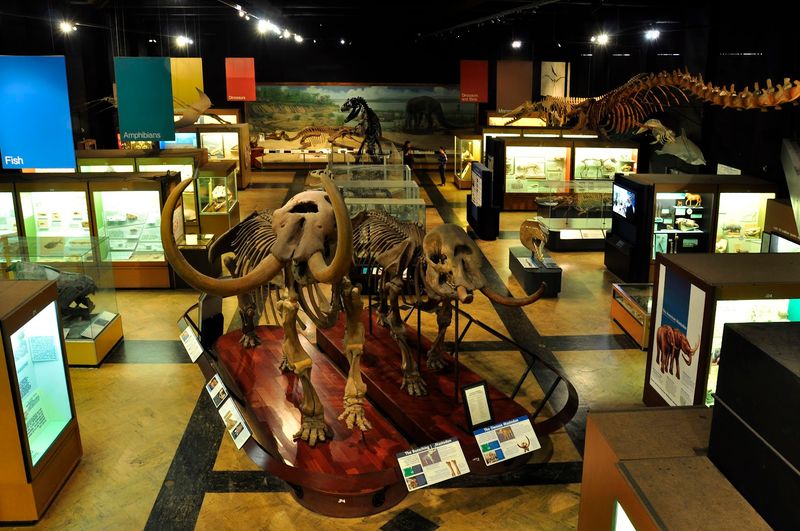
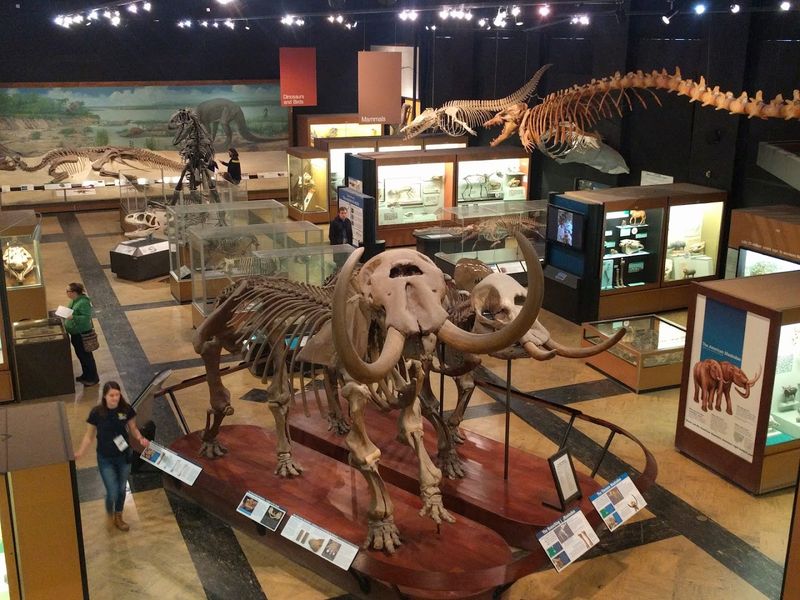
On the second floor, the Hall of Evolution, also known as Evolution: Life Through Time, gives the museum its structural spine. Fossils, models, and dioramas explain broad evolutionary changes without turning the galleries into a textbook.
The pacing is especially good if you like to read labels but do not want to feel pinned beneath them.
I appreciated how the exhibit moves between spectacle and explanation, letting big ancient creatures do their work before the science fills in the why. Dinosaurs, early mammals, and marine life all connect across a timeline that feels coherent rather than crowded.
Start here if you want the museum to make narrative sense, then circle back to your favorite corners for slower looking.
Do Not Miss The Prehistoric Whales
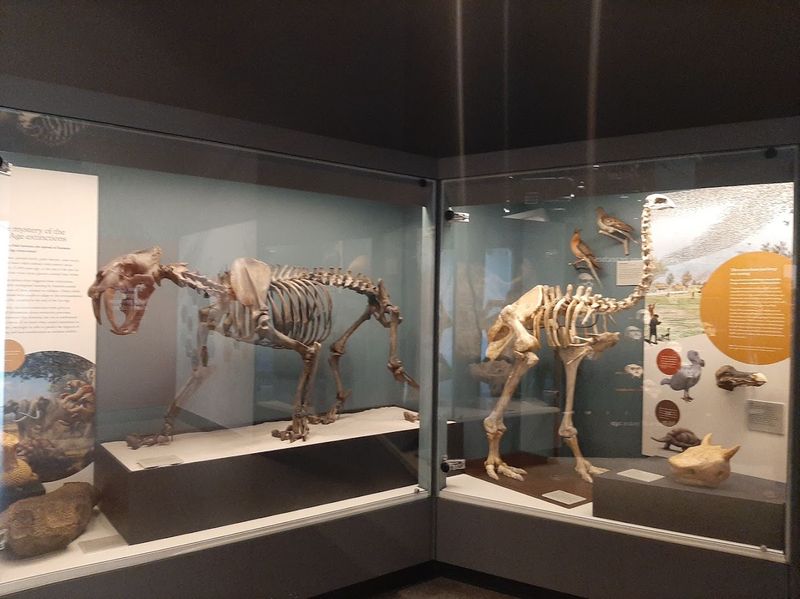
There is something wonderfully strange about seeing whale evolution explained through bones that still hint at a life on land. The prehistoric whale displays make that strangeness visible, especially when you notice the tiny back legs preserved in ancient forms.
Suddenly evolution stops being an argument and starts looking like a series of elegant compromises.
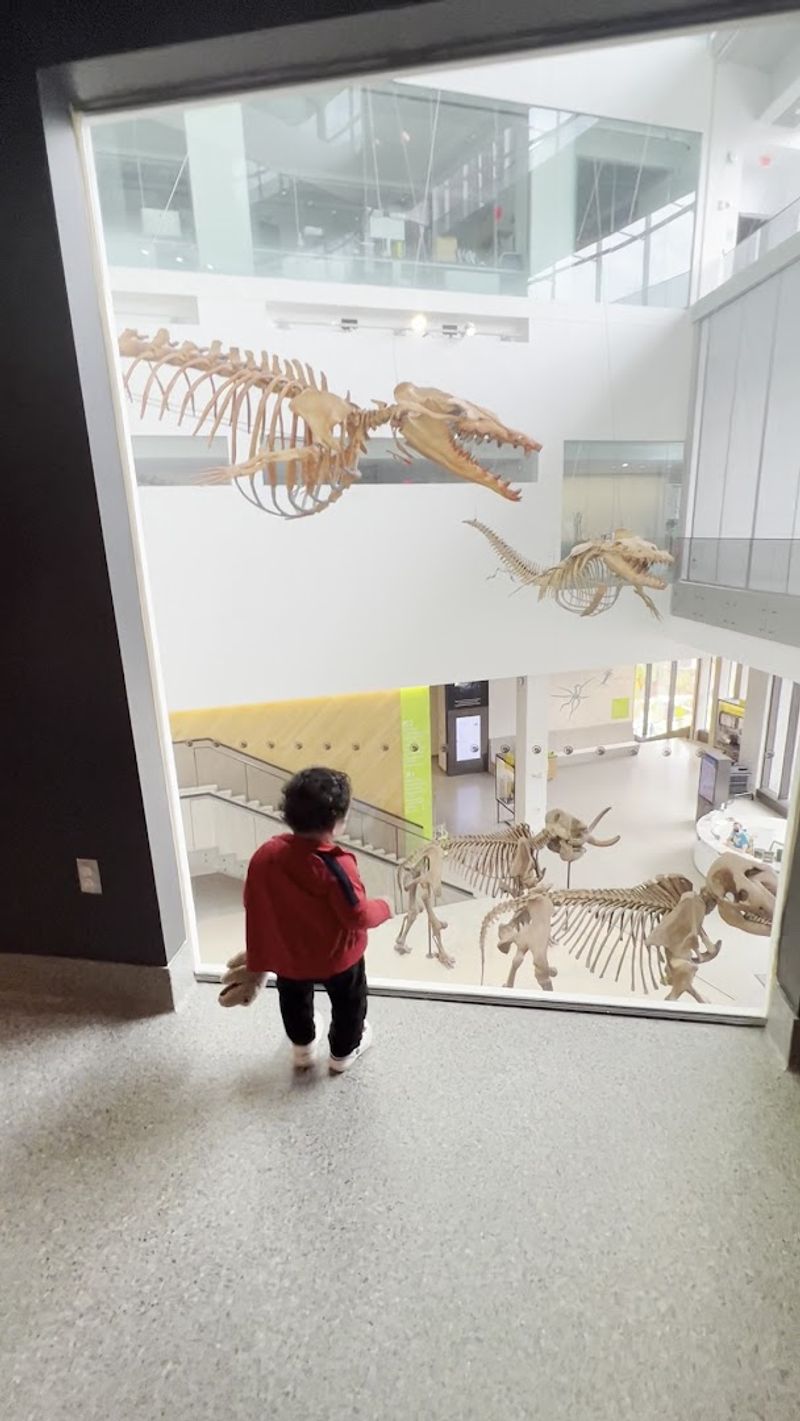
The 45-foot Basilosaurus is the gallery’s theatrical centerpiece, but the real pleasure is how clearly the museum frames the transition from walking ancestor to ocean specialist. You can stand beneath an enormous skeleton and still come away with a precise idea, not just a vague feeling of awe.
For me, this was one of the museum’s smartest combinations of scale and clarity.
Treat The Dinosaur Gallery Like A Conversation, Not A Checklist
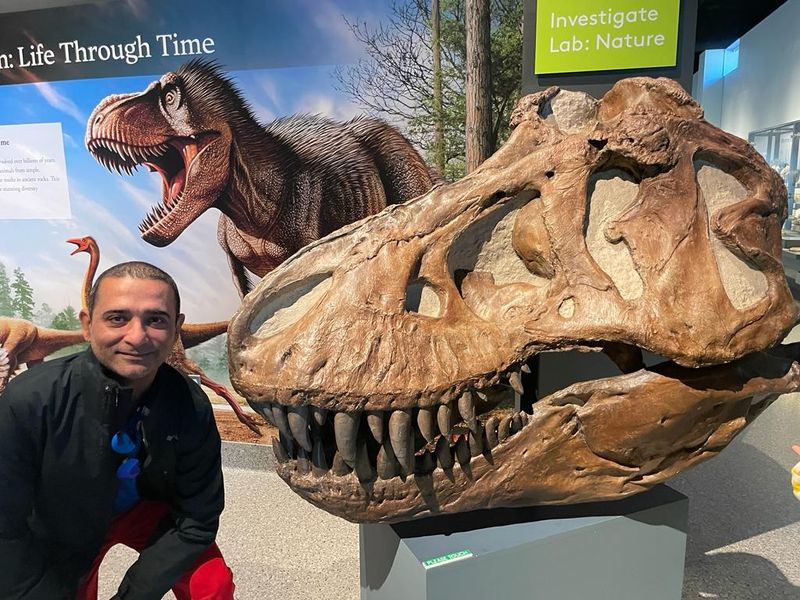
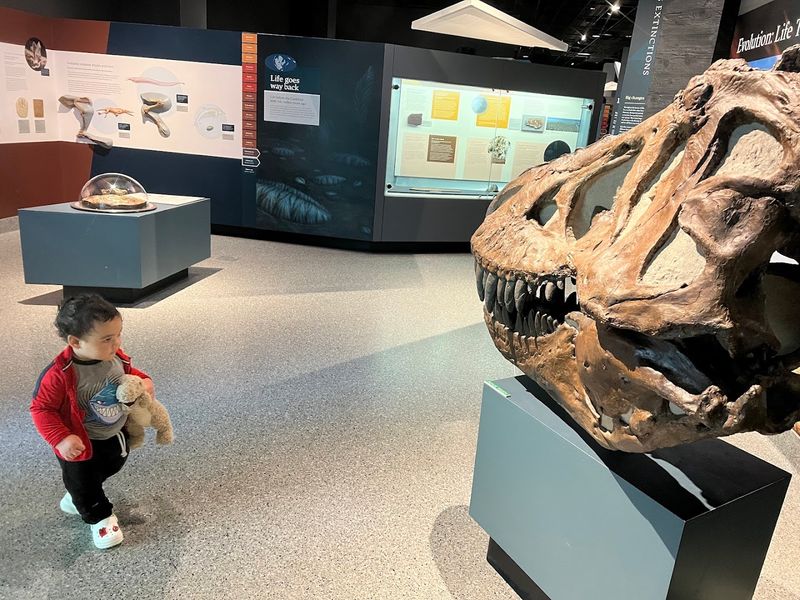
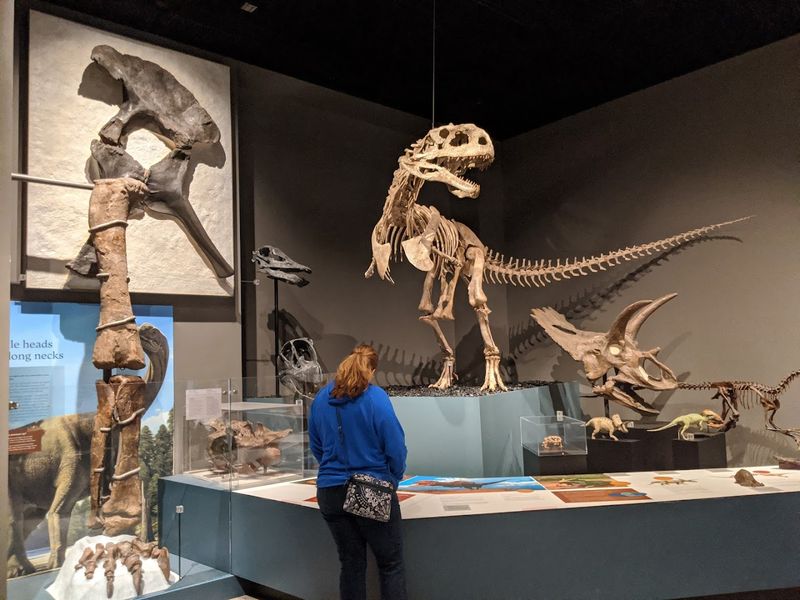
The dinosaur material works best when you resist the urge to rush from name to name. A touchable T. rex head immediately loosens the usual museum rulebook, and from there the gallery becomes more conversational than reverent.
Majungasaurus, Allosaurus, and Deinonychus appear not as isolated stars but as parts of a larger story about form and behavior.
That hands-on permission matters because it changes how you pay attention. Instead of hovering at a safe distance, you begin noticing texture, scale, and the engineering of jaws and limbs.
If you are visiting with children, this section naturally carries them along, but adults get just as much from it when they allow themselves to be curious rather than merely impressed.
Let Dynamic Planet Recalibrate Your Sense Of Time
Some exhibits try to make time feel bigger and only succeed in making it vague. Dynamic Planet does the opposite, using a geologic calendar and Earth history displays to make enormous spans legible.
By the time dinosaurs appear and humans arrive far later, your personal schedule starts to seem pleasantly unimportant.
This is a good section to visit when the museum feels busiest, because it invites a slower, steadier kind of attention. The design turns abstraction into sequence, which helps the prehistoric galleries around it click into place.
I liked returning here after seeing fossils elsewhere, since the timeline sharpened everything I had just admired into a clearer understanding of when, not only what.
Look For The Signs That Say Please Touch
One of the museum’s smartest choices is announcing that some things are meant to be touched. Those small Please Touch signs change the emotional weather of the galleries, replacing hesitation with permission and making natural history feel physical again.
Texture becomes part of the lesson, not an afterthought.
You may find touchable specimens and interactive elements scattered through different exhibits, and that variety keeps the museum from slipping into a read-only rhythm. The practical result is simple: people stay engaged longer because their attention is working through more than sight.
If you are planning a visit with anyone who learns best by doing, this is the detail to watch for, because it turns a solid museum into a genuinely participatory one.
Save Time For The Working Science Labs
Behind glass, the Science at Work labs add a welcome note of real-time activity to a museum devoted to deep time. If the lights are on, you may be able to observe university researchers in the Biodiversity Lab or Fossil Prep Lab, and sometimes even ask questions.
That bridge between exhibit and active research gives the institution a rare kind of credibility you can actually watch.
The effect is not flashy, which is exactly why it works. Instead of presenting science as settled treasure in a case, the museum lets you see process, patience, and careful labor.
Try to build a little unstructured time into your visit here, because these windows onto ongoing work reward lingering more than marching.
Use The Quieter Exhibits To Understand Michigan Itself
The prehistoric material may lure you in, but the museum becomes fuller when you notice how firmly it belongs to Michigan. Exploring Michigan connects native animals, ecosystems, and geological formations to the state outside the doors, which keeps the visit from floating off into generic natural history.
Local specificity is one of this museum’s understated strengths.
That focus also makes the mastodons and fossils feel less isolated, as though ancient life and present landscapes are part of a continuous regional story. If you are visiting from out of town, this gallery is especially helpful for translating science into place.
I found it grounding after the larger spectacle exhibits, a reminder that the museum is not only about vanished worlds but also about the living state around you.
Consider The Planetarium And Practical Comforts As Part Of The Day
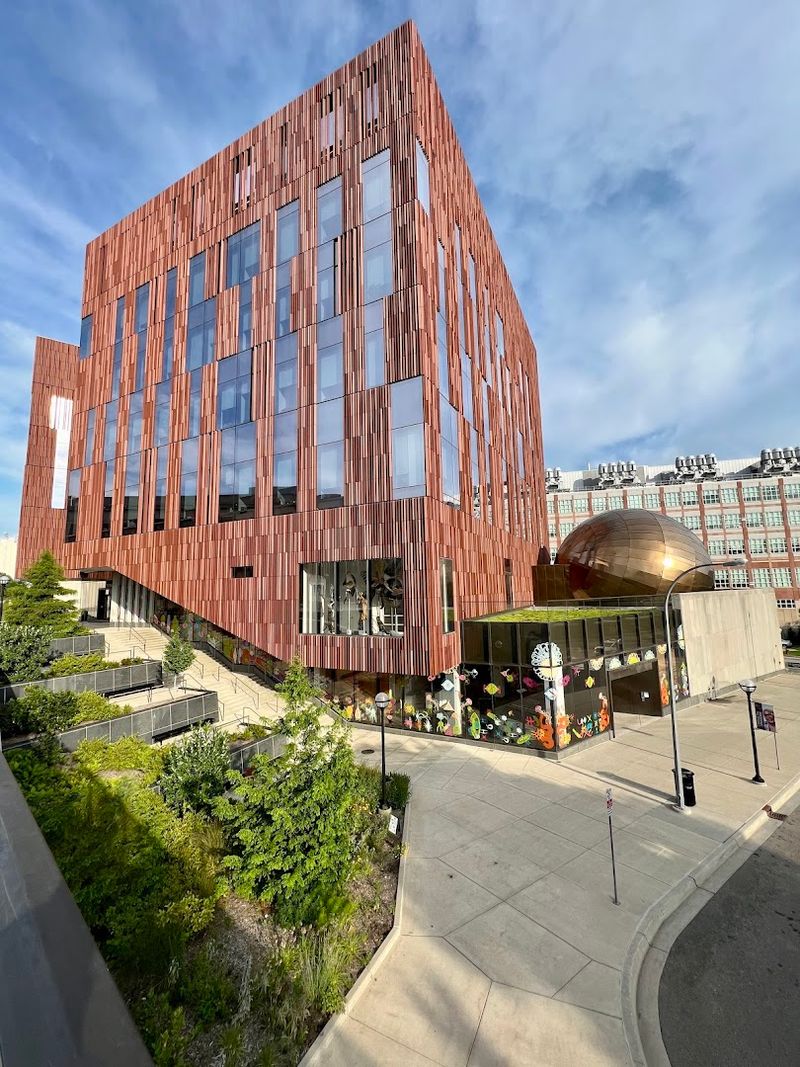
The museum’s planetarium adds another layer if you want more than galleries, with a 360-degree domed screen showing the night sky and other natural history subjects. Because the main museum is free, it helps to think of the planetarium as an optional extension rather than the center of the experience.
That mindset keeps the day flexible.
Practical comforts are easy to overlook, but they matter on a campus visit. Darwin’s, the on-site cafe, offers smoothies, soups, sandwiches, pastries, and other beverages, and the museum store is worth a quick browse before you leave.
With daily hours typically running from 10 a.m. to 5 p.m., this is an easy stop to combine with the rest of Ann Arbor.
Notice How Welcoming The Museum Is By Design
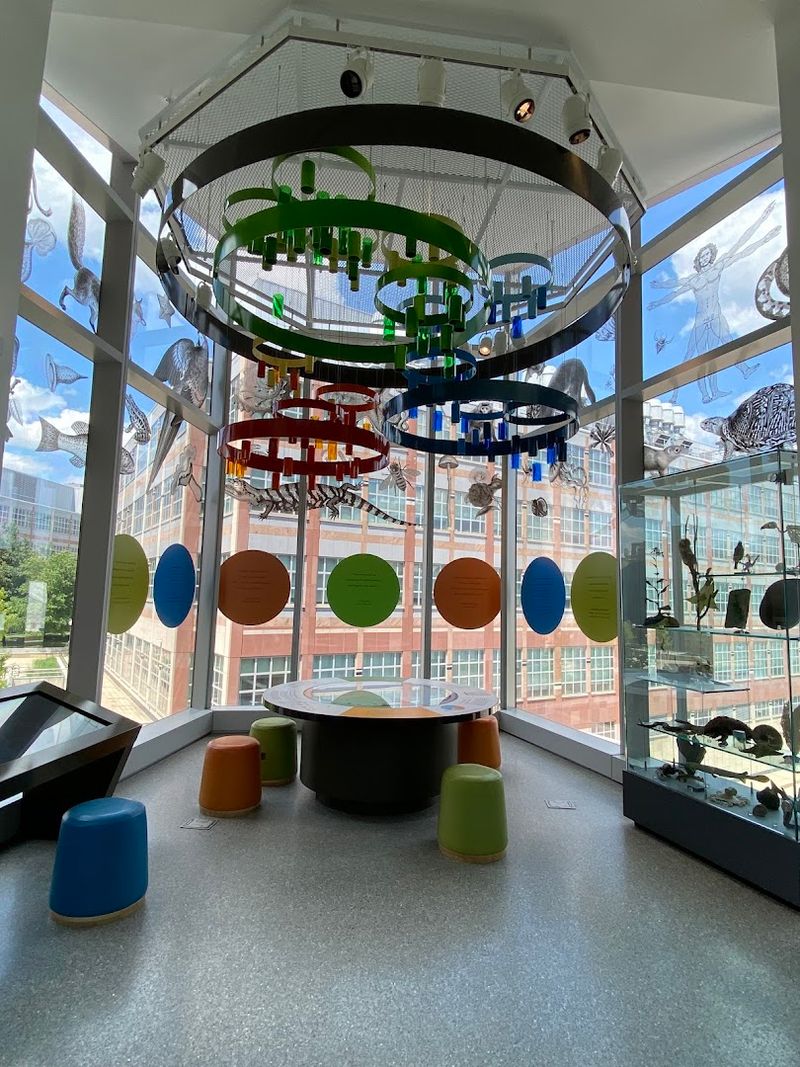
What stays with you after the fossils is often the museum’s generosity. Elevators reach all floors, bathrooms are accessible, wheelchairs are available, and there is a quiet Personal Room for sensory breaks along with sensory tools.
None of this feels tacked on, which is exactly the point.
A museum about enormous spans of time can still succeed or fail in the immediate present, and this one pays attention to how different people move through space. That care makes the visit calmer, especially for families or anyone who benefits from a more adjustable environment.
If you are planning ahead for comfort as much as content, the University of Michigan Museum of Natural History earns confidence by making accessibility part of the experience, not a footnote.