
This Underground Lava Tube Trail In Washington Is Unlike Any Other
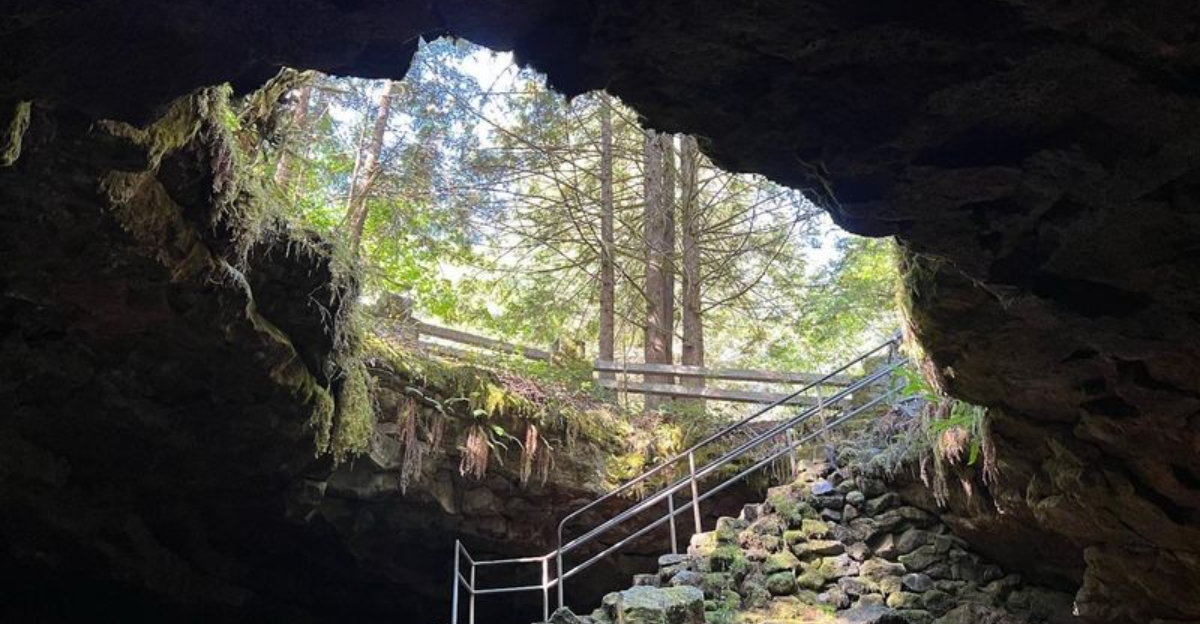
The temperature drops the moment you step inside, and suddenly you’re transported into a world that feels borrowed from a fantasy novel-except the author was actually a geologist with a flair for drama.
A lava tube this long and accessible is basically nature’s R-rated version of a nature walk, complete with low ceilings that force a new perspective on things, floor markings that show where the molten river once flowed, and a silence so complete you can hear your own heartbeat echoing off the walls.
Washington’s landscape hides this underground megastructure like a secret worth keeping, and hiking through it feels less like tourism and more like discovering where the mountain keeps its buried treasure.
Stretching an impressive 2.5 miles, it ranks as the third longest lava tube in North America, and every inch of it feels like walking through a chapter of the Earth’s own story.
How A Volcano Sculpted This Underground Tunnel
Around 2,000 years ago, Mount St. Helens sent a massive river of molten basaltic lava pouring down its southern flank.
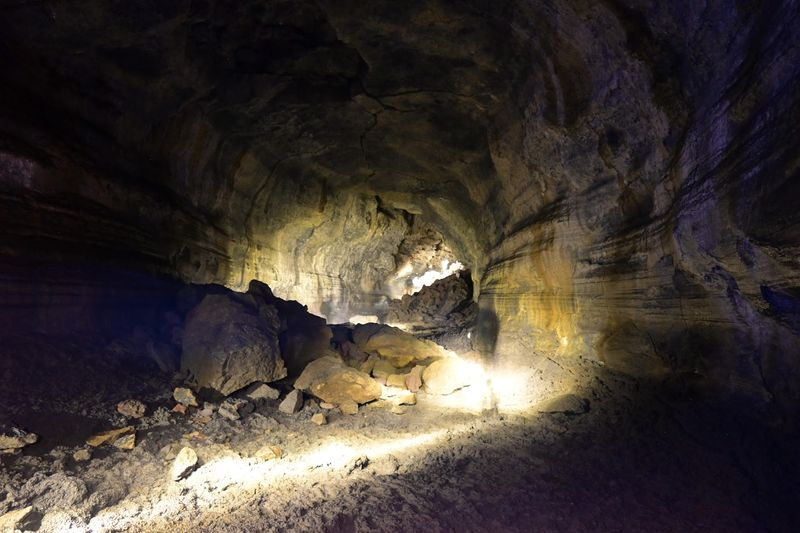
As the outer edges of that flow cooled and hardened, they formed a sturdy shell of rock, while the hotter lava inside kept moving forward, eventually draining out and leaving behind a long, hollow tube.
Scientists call this the Cave Basalt flow, and it stretched roughly eight miles across the landscape. What makes this formation particularly interesting is that about 90 percent of Mount St. Helens eruptions produce dacitic lava, which cools too quickly to form hollow tubes.
Basaltic lava, with less silica and a faster flow rate, is the rare exception here.
Researchers believe lava moved through the tube for as long as a full year before fully draining. That slow, steady process is what gave Ape Cave its incredible length and smooth, cathedral-like passages.
The same flow also created at least 13 other lava caves nearby, making this corner of Washington a truly unusual geological landscape.
The Constant Chill That Greets Every Visitor
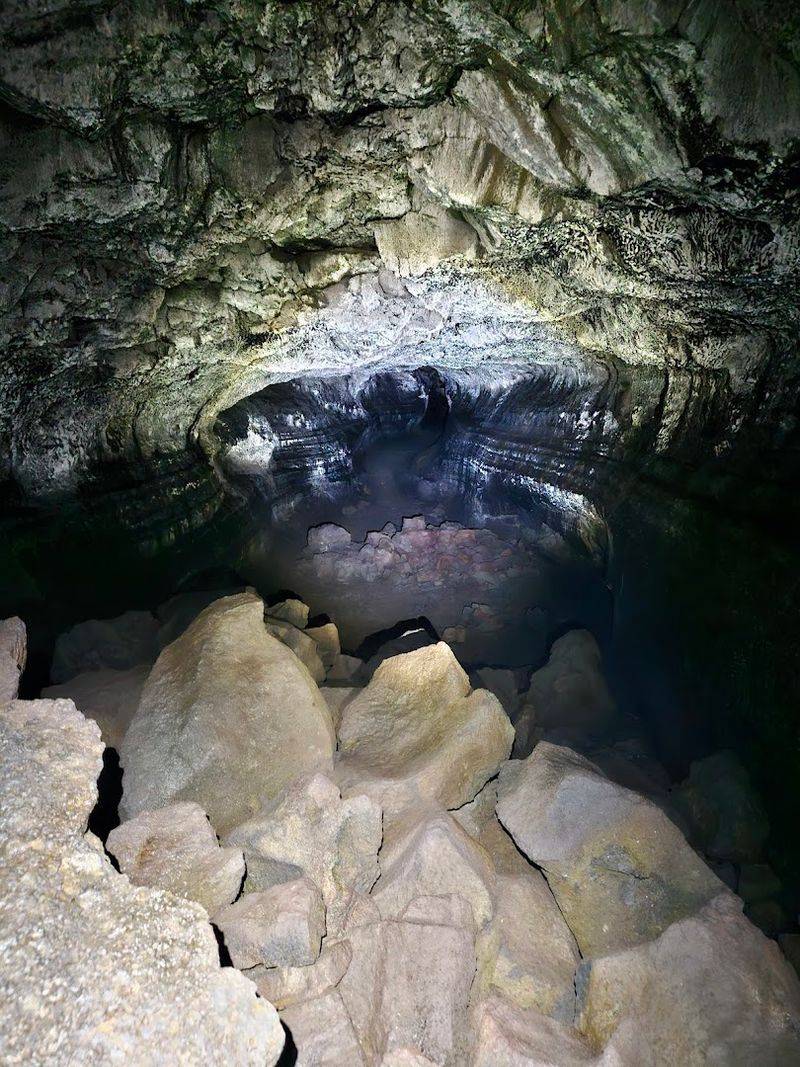
The moment you step inside, the temperature drops fast. Ape Cave maintains a steady 42 degrees Fahrenheit year-round, which feels refreshing on a hot summer day but absolutely bone-chilling if you show up in a thin t-shirt.
Smart visitors pack a fleece jacket or a light puffer, even when it is 80 degrees outside on the trail above. The cold is not the only thing that catches people off guard.
The cave surfaces can be wet and slippery, and the uneven basalt floor demands sturdy, closed-toe shoes with good grip. Sandals or flip-flops would make for a miserable and potentially risky experience down here.
Lighting is just as critical as clothing. Cell phone flashlights simply do not cut it in a space this dark and this long. Park guidelines require at least two reliable light sources per person, and lantern rentals are available at Ape Headquarters during the summer season.
Going in well-equipped transforms the whole experience from stressful to spectacular.
Choosing Your Route – Lower Cave Vs. Upper Cave
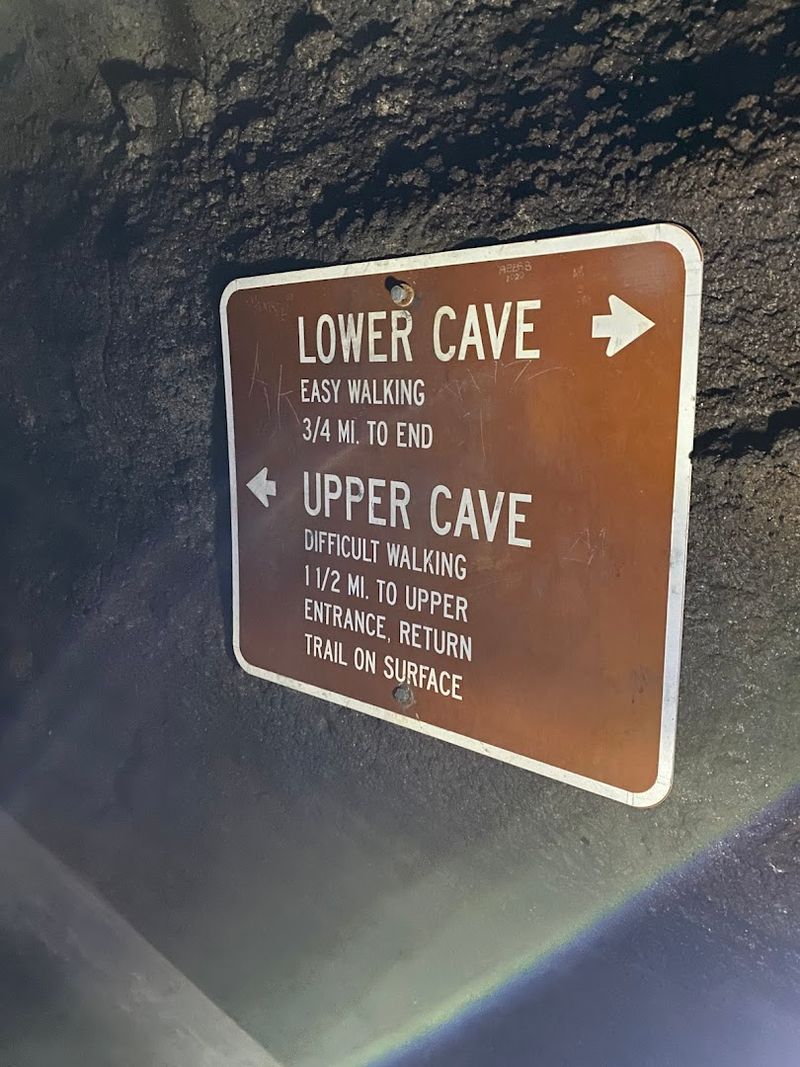
Ape Cave is cleverly divided into two distinct sections, and choosing between them depends entirely on your fitness level and sense of adventure. The Lower Cave runs about 0.75 miles one way, features a relatively flat and wide floor, and is considered family-friendly.
Most visitors complete it in roughly an hour and come away feeling genuinely satisfied. The Upper Cave is a different story altogether.
Stretching 1.5 miles, it demands that you scramble over piles of collapsed rock and haul yourself up an eight-foot lava fall using hand and footholds carved into the rock. It typically takes two hours or more, and the payoff is a raw, unfiltered sense of accomplishment.
After completing the Upper Cave, hikers exit through a small opening and follow a 1.5-mile above-ground trail back to the parking lot, passing through old-growth forest along the way.
Many visitors tackle both sections on the same day, treating it as a full underground and overground adventure rolled into one satisfying outing.
Strange And Stunning Features Inside The Tube
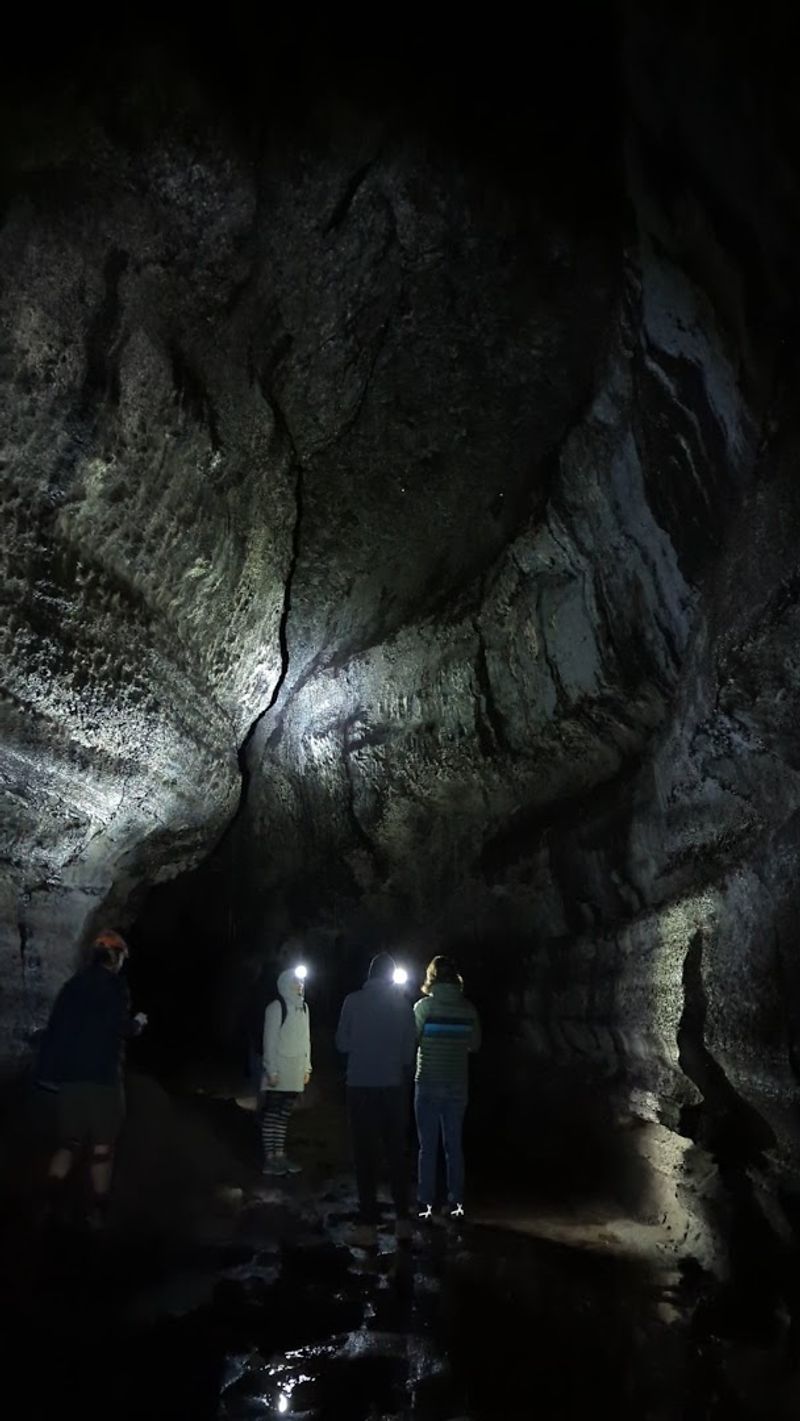
Walking through Ape Cave feels like browsing a geology museum that nobody built on purpose. One of the most talked-about features is called The Meatball, a large lava boulder that became wedged above a passageway as the tube was forming. It has been sitting there for two thousand years, and it looks both precarious and permanent at the same time.
Further along, you will spot formations called The Railroad Tracks, which are narrow lava levees that formed alongside moving lava flows. They run parallel down the floor like ancient stone rails, giving the cave an almost industrial feel despite being entirely natural.
The ceiling holds its own surprises too. Lavacicles, formed by dripping lava that cooled mid-drop, hang overhead like rocky stalactites.
Natural skylights appear in sections where the cave ceiling collapsed over time, letting in shafts of daylight. The largest of these collapses created the main entrance visitors use today, which adds a dramatic sense of arrival every time you descend into the cave.
Planning Your Visit
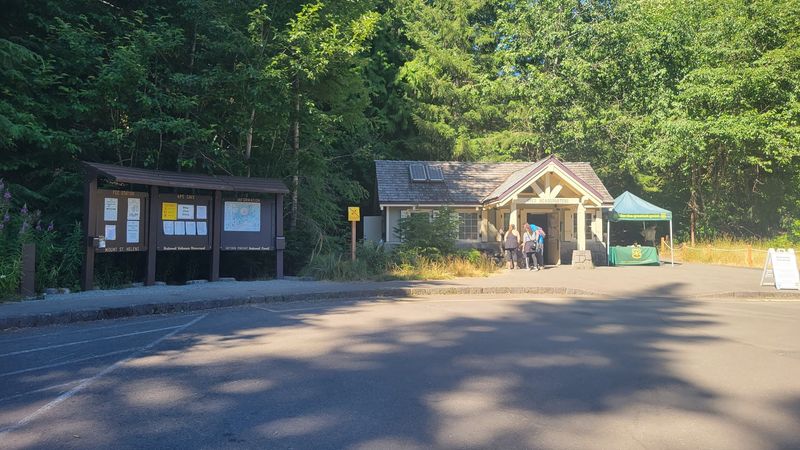
Ape Cave operates on a timed reservation system during its open season, which typically runs from mid-May through the end of October. Snagging a reservation in advance is essential, especially during summer weekends when demand is high.
The address for navigation purposes is along Forest Road 8303 within Gifford Pinchot National Forest, and cell service in the area is often nonexistent, so downloading directions before you leave home is a genuinely smart move.
Pets are not allowed inside the cave, and food should be left outside as well. These rules exist to protect the cave’s fragile ecosystem, including a living biological crust called cave slime that coats the walls and serves as the foundation of the cave’s food chain.
Touching the walls or ceiling can damage this delicate layer, so keeping hands to yourself is more than just polite.
Arriving early in the morning on a weekday offers the quietest and most atmospheric experience. The cave feels almost meditative when crowds are thin, and the silence underground is unlike anything you will find on a surface trail.
The Quirky Origin Story Behind The Name
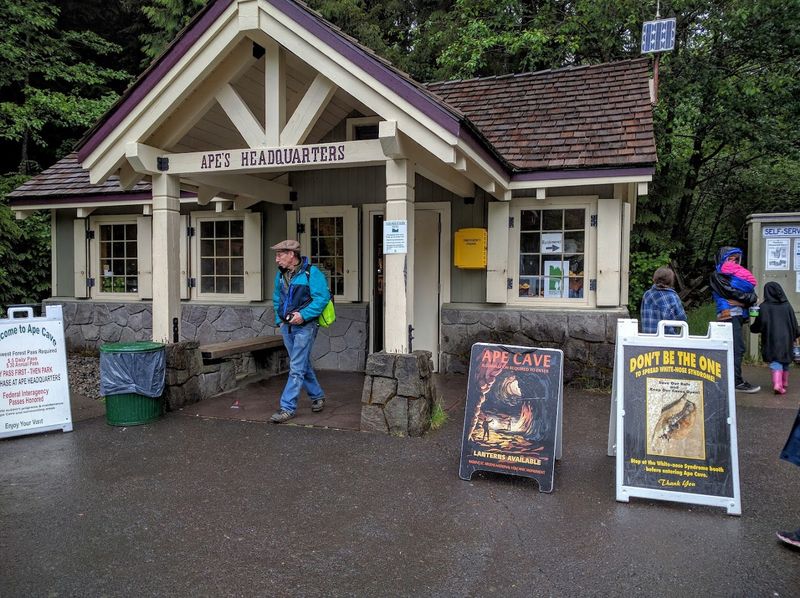
Many first-time visitors assume Ape Cave got its name from Bigfoot legends, and honestly, that assumption is understandable given the cave’s dramatic setting near Ape Canyon.
The real story, however, is both more grounded and more charming. A local Boy Scout troop called the Mount St. Helens Apes explored the cave in the early 1950s and gave it their group’s name.
The troop’s own name may well have been inspired by regional Bigfoot folklore, since Ape Canyon had long been associated with mysterious creature sightings in Pacific Northwest legend.
So while no actual apes or Sasquatch were involved in the naming process, the mythology adds a playful layer of intrigue that fits the cave’s eerie atmosphere perfectly.
This backstory has become part of the cave’s personality, and rangers at the monument are happy to share it with curious visitors.
It is a reminder that sometimes the most fascinating places earn their reputations not just from geology, but from the very human stories that grow up around them over decades.
Why This Cave Deserves A Spot On Washington Itinerary
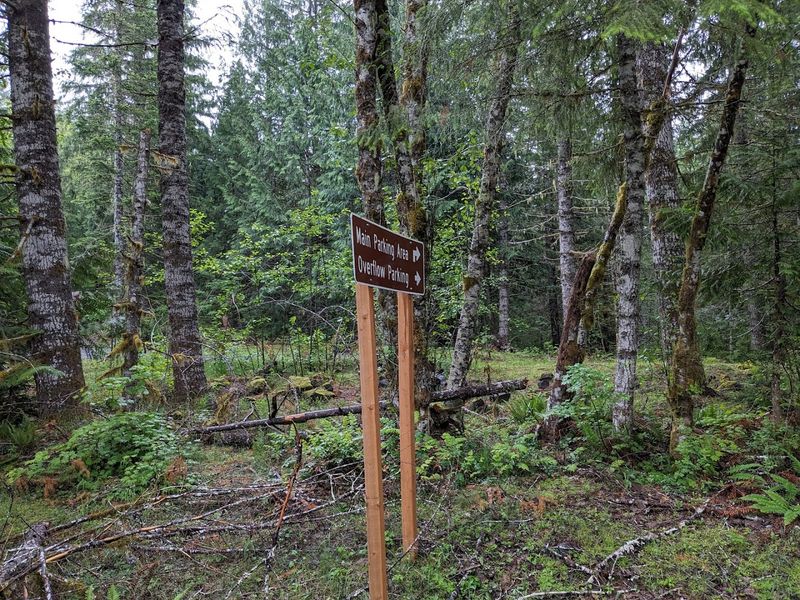
There are plenty of trails in Washington that offer stunning views, old-growth forests, and volcanic scenery, but very few send you underground into a two-thousand-year-old lava tube. Ape Cave delivers an experience that feels genuinely rare, the kind that stays with you long after you have brushed the cave dust off your boots and driven back to the highway.
Families with older kids tend to find the Lower Cave especially rewarding, while adventurous adults often leave the Upper Cave feeling like they have earned something real.
The cave manages to be accessible enough for beginners while still offering a legitimate physical challenge for those who want it.
Pairing the cave visit with a stop at the Johnston Ridge Observatory or a drive along the Spirit Lake Memorial Highway makes for an unforgettable full day in the Mount St. Helens area.
Ape Cave is not just a trail or a tourist stop, it is a living reminder of the raw, reshaping power that still sleeps beneath the surface of the Pacific Northwest.
Gearing Up Right
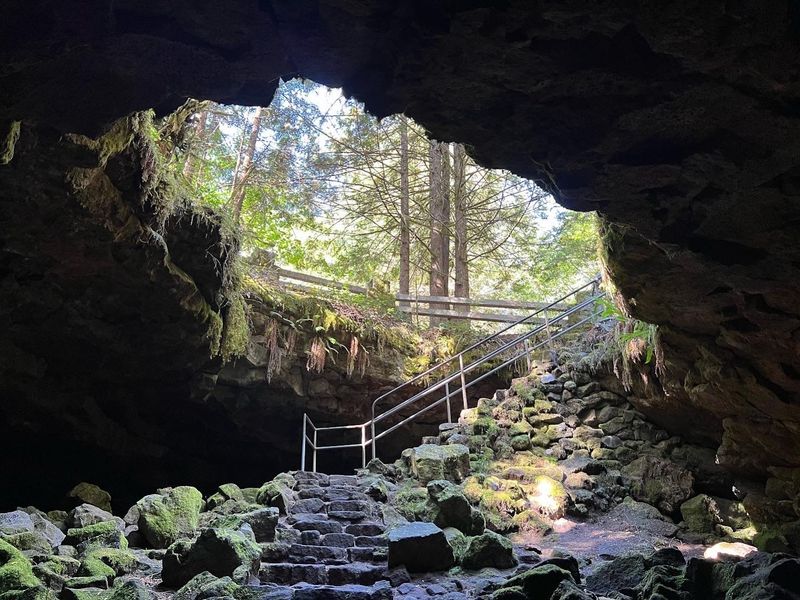
Good preparation can make the difference between a memorable adventure and a miserable one inside Ape Cave. The temperature underground stays around 42 degrees Fahrenheit year-round, so wearing layers is absolutely essential even on a hot summer day.
Sturdy, closed-toe shoes with ankle support help you navigate the uneven lava rock floor safely. Every person in your group should carry at least one reliable light source, but bringing two is strongly recommended in case one fails.
Headlamps work better than handheld flashlights because they keep your hands free for balance. Snacks and water are smart additions since the trail takes longer than most people expect.
Gloves can also be helpful, especially if you plan to take the more rugged upper route where scrambling over rocks is part of the experience.
Check current access rules before you go, since Ape Cave visits often require timed reservations during the busy season. It is also worth moving slowly and giving your eyes time to adjust because the darkness inside feels much deeper than a normal trail shadow.
A little extra planning makes the whole hike feel less stressful and lets you actually enjoy how strange, quiet, and unforgettable the cave is.