
This Washington Hike Climbs Straight Up The Core Of An Ancient Volcano
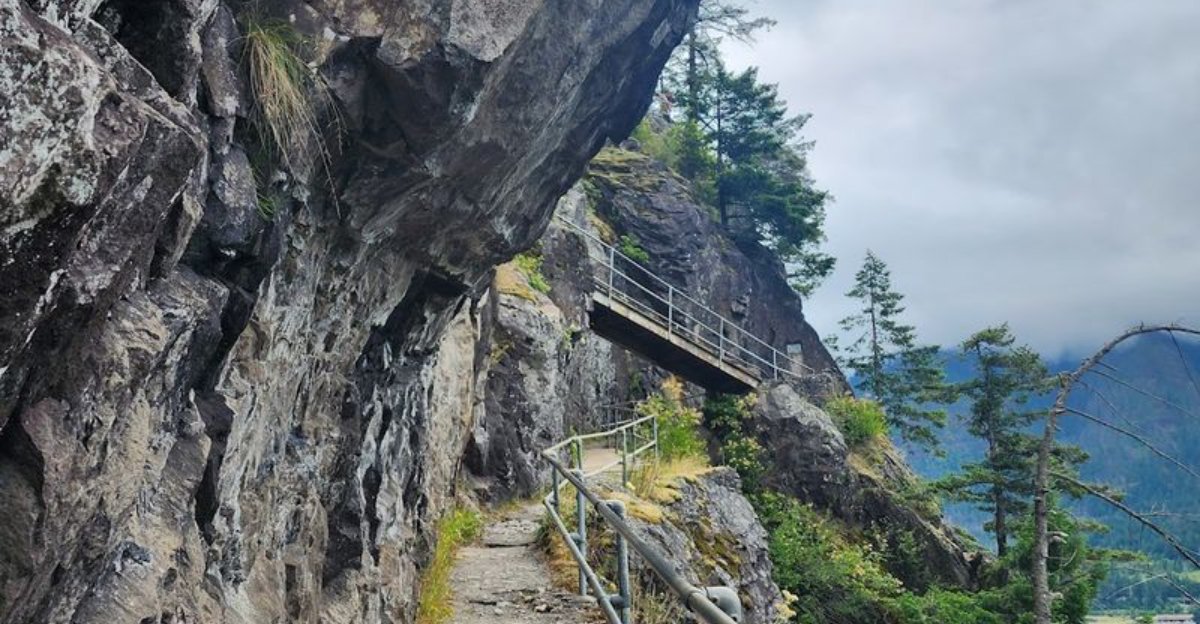
Let me tell you about the day I learned that confidence is merely ignorance wearing a hiking vest. I’d consider myself a seasoned hiker, someone who scoffs at elevation gains and treats switchbacks as mere suggestions rather than safety guidelines.
So when someone mentioned a Washington formation that rises abruptly from the landscape like nature’s middle finger, I laughed and said, “Challenge accepted.”
What they failed to mention was that this magnificent beast isn’t just a mountain-it’s the exposed chimney of an ancient volcano, and every step upward is a reminder that gravity has never been my biggest fan.
The humor, of course, was watching my grandiose summit dreams dissolve into gasping, sweating reality.
If you love geology, history, jaw-dropping river views, and a trail that feels like an engineering adventure carved right into the rock face, then keep reading because this one is absolutely worth your time.
The Volcanic Origins
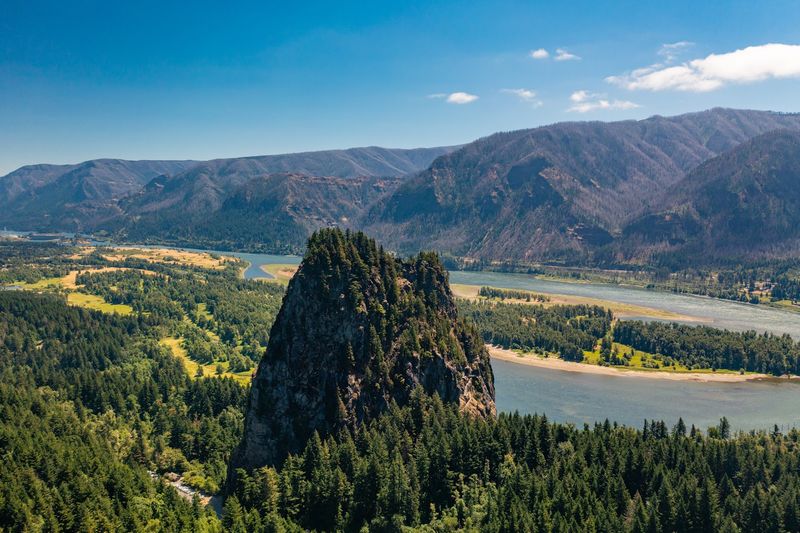
Long before hikers and trail cameras existed, a volcano quietly shaped this corner of the Pacific Northwest.
Beacon Rock is the preserved core of an extinct volcanic cinder cone that erupted approximately 57,000 years ago, making it one of the most ancient natural landmarks you can physically climb in Washington State.
It belongs to the Boring Volcanic Field, a geological feature spanning the Portland-Vancouver area that includes over 80 small volcanic vents and lava flows. The rock itself is composed of columnar basalt, with some columns stretching up to 9 feet in diameter and 90 feet in length.
What really sealed the deal for this dramatic appearance was the Missoula Floods, massive Ice Age floods that swept through about 15,000 years ago, stripping away the softer outer layers of the cinder cone and leaving only this hard basalt core standing tall.
Near the summit, you can spot air pockets in the rock where lava once cooled rapidly, trapping gases inside.
The Lewis And Clark Connection
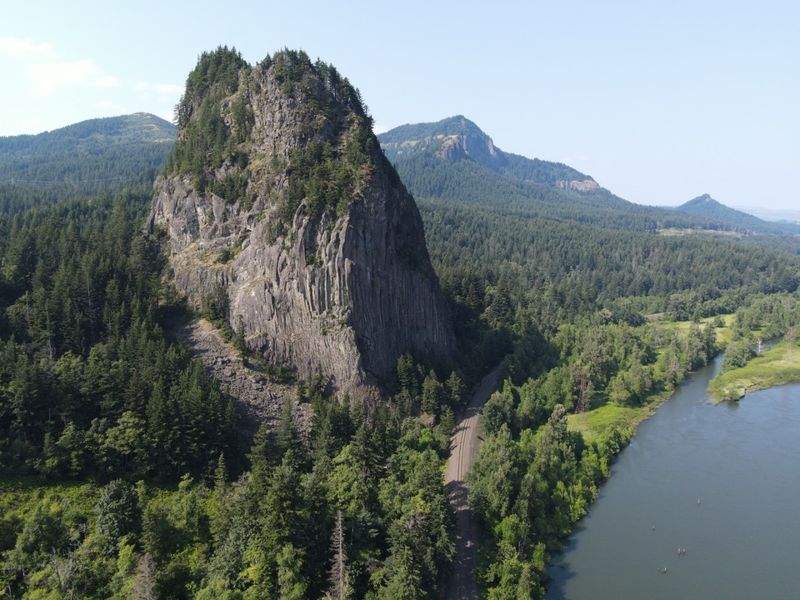
History buffs will appreciate that Beacon Rock has been turning heads for centuries.
When the Lewis and Clark Expedition paddled through this stretch of the Columbia River in 1805, they named the landmark “Beacon Rock,” initially calling it “Beaten Rock,” because it marked the easternmost point where they first noticed tidal influences from the Pacific Ocean.
That detail alone is remarkable. Standing at the base of this rock, you are essentially standing at the same geographic marker that two of America’s most celebrated explorers used to track their progress toward the sea.
For a period after their expedition, the rock was also referred to as “Castle Rock” before the original name was restored.
The Indigenous Cascade people had their own name for it long before any expedition arrived. They called it “Che-che-op-tin,” meaning “the navel of the world,” a name that carries a spiritual weight perfectly matched to the rock’s commanding presence over the river below.
Henry Biddle And The Trail That Almost Never Was
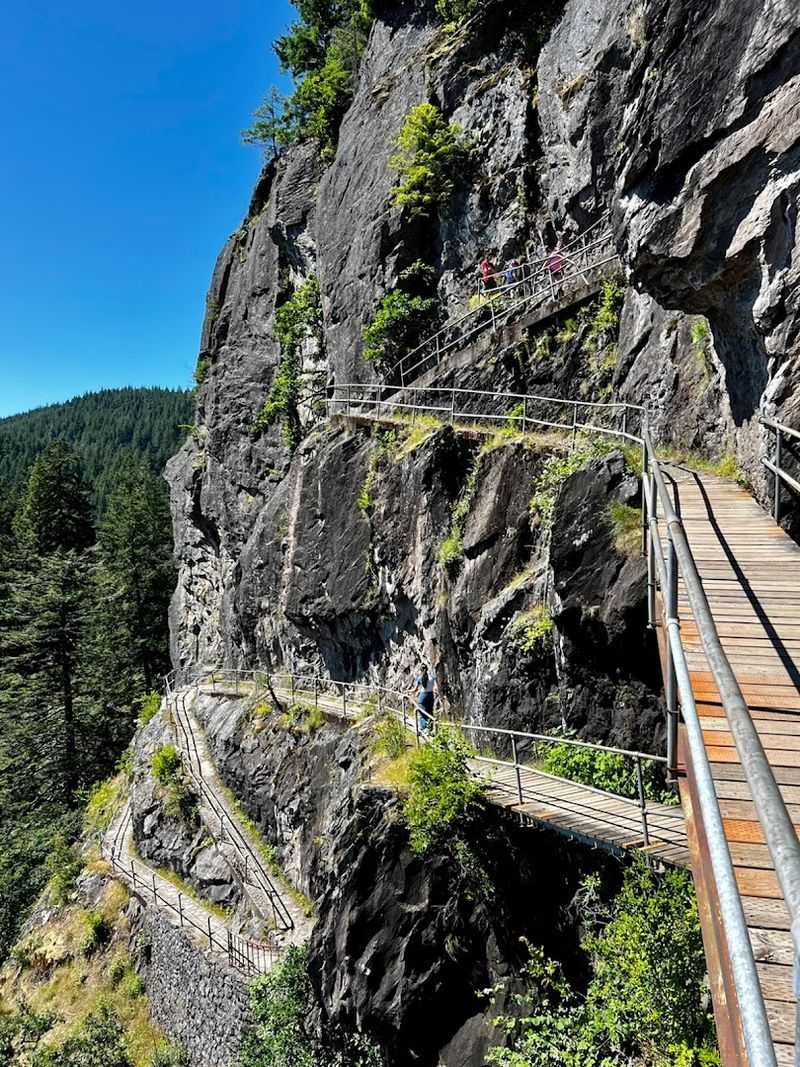
One man’s determination is the reason hikers today can walk to the top of Beacon Rock without ropes or climbing gear. In 1915, geologist Henry J. Biddle purchased the rock and surrounding land after learning that the U.S.
Army Corps of Engineers planned to demolish it for jetty material. He paid out of his own pocket to save it.
Biddle then financed the construction of the trail to the summit alongside builder Charles Johnson, a project that ran from October 1915 to April 1918 at a personal cost of $10,000. That is a serious investment for any era, especially for a trail that serves the public.
After Biddle passed away in 1928, his heirs donated the rock to the state of Washington in 1935, which is how Beacon Rock State Park came to exist. Every switchback you climb is a tribute to one man who refused to let an irreplaceable geological wonder become fill material at the bottom of a river.
The Trail Itself: An Engineered Marvel On A Rock Face
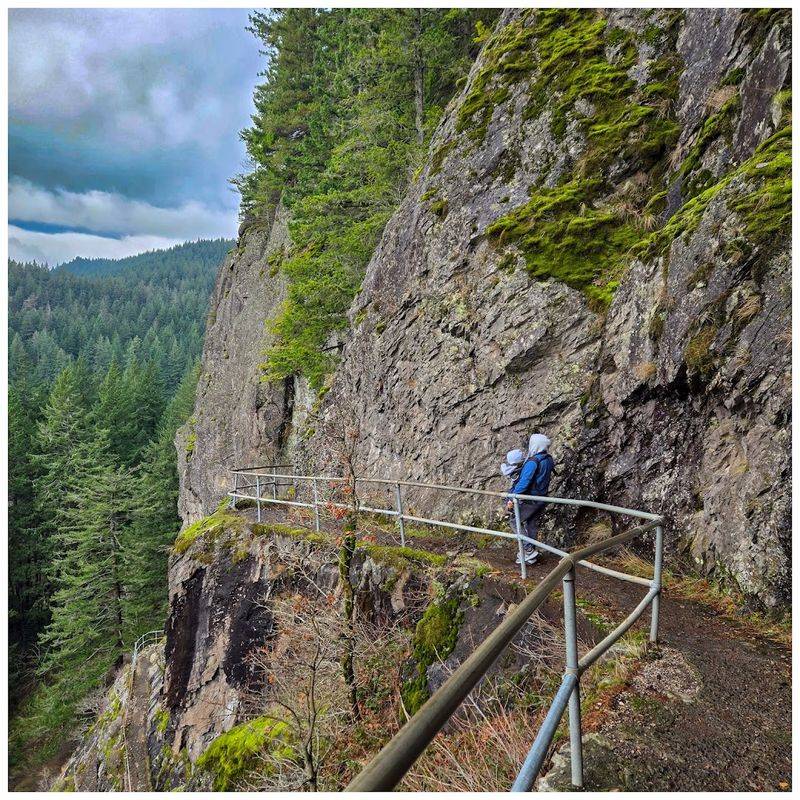
Calling this trail a typical hiking path would be a serious understatement.
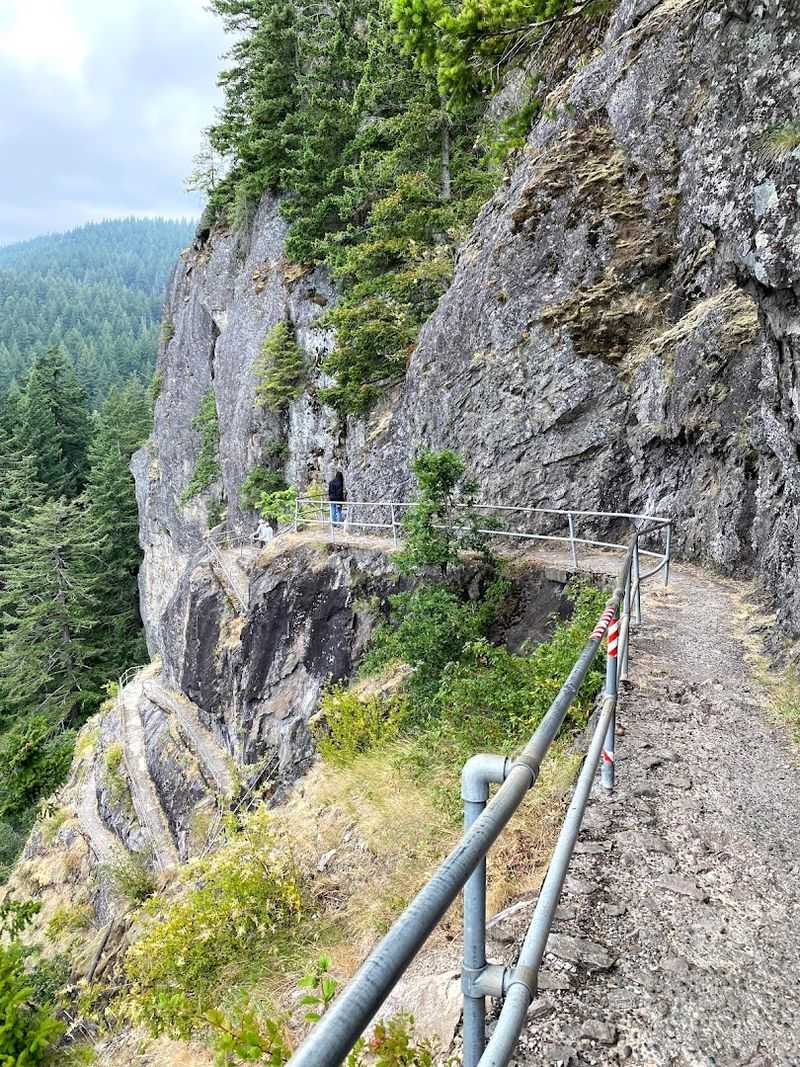
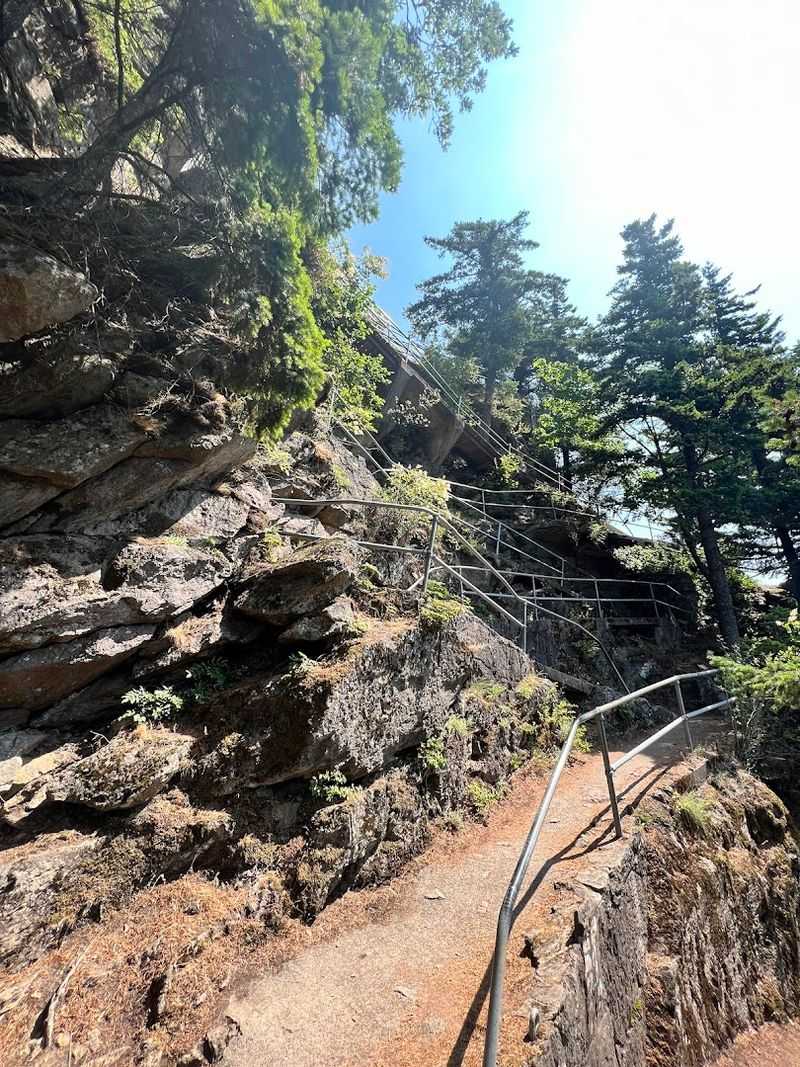
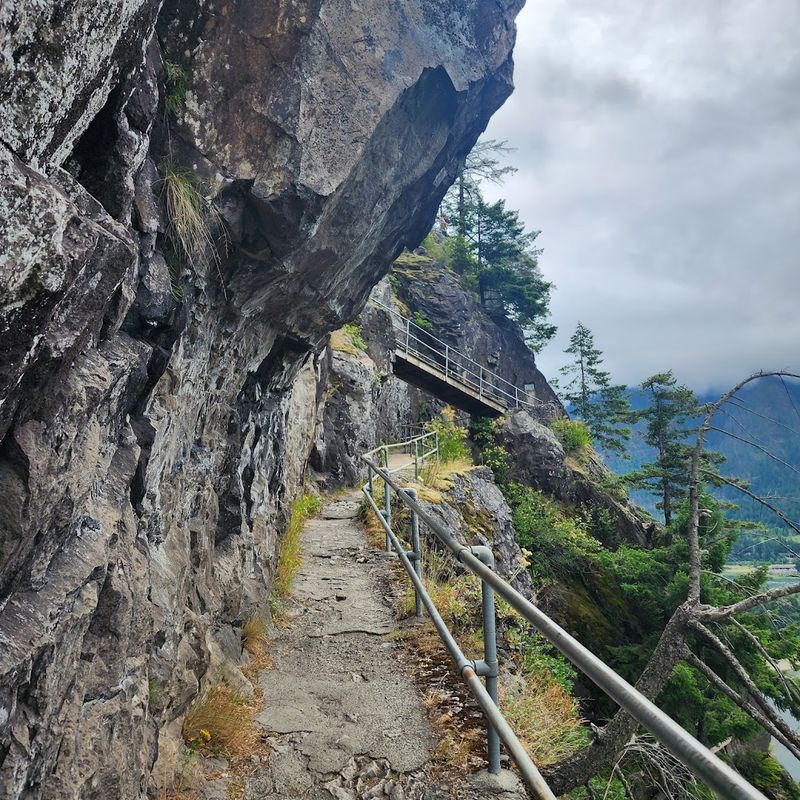
The route to the summit of Beacon Rock is a true feat of human engineering, featuring 22 wooden bridges, over 100 concrete slabs, and somewhere between 52 and 54 hairpin turns and switchbacks that zigzag up the near-vertical rock face.
The trail is roughly 1.1 to 1.8 miles in length as an out-and-back route, with an elevation gain of approximately 600 to 848 feet. Most experienced hikers rate it as easy to moderate, though families with young children may find the continuous uphill climb a bit more demanding than expected.
Metal handrails line the most exposed sections, which is reassuring when you look down and realize just how far you have climbed.
I found myself pausing at every bend not just to catch my breath but to take in the changing perspective of the river valley spreading out below me with every step upward.
Views From The Summit That Stop You Cold
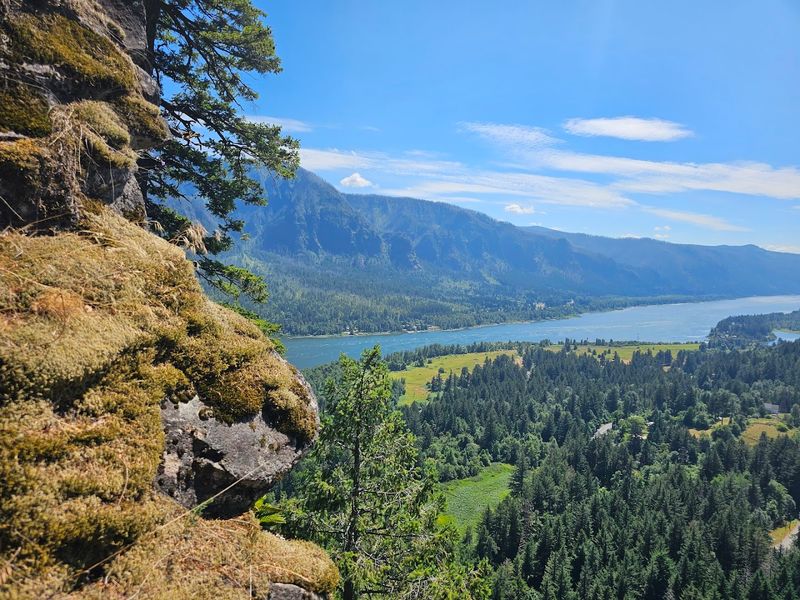
Reaching the top of Beacon Rock is one of those moments that genuinely earns its payoff. At 848 feet above the surrounding terrain, the summit delivers a sweeping panoramic view of the Columbia River Gorge that stretches in both directions, with the river looking impossibly wide and calm from that elevation.
On clear days, you can spot Mount Hood rising to the south in Oregon and Mount Adams to the north in Washington, two iconic volcanic peaks that frame the gorge like natural bookends.
The contrast between the dark basalt beneath your feet and the lush green valley below is visually striking in a way that photographs struggle to capture.
Beacon Rock stands taller than the Seattle Space Needle, a fact that hits differently once you are standing at the top looking out.
I stayed up there longer than planned, just watching the river traffic and the hawks riding the thermals rising off the warm basalt walls around me.
Beacon Rock State Park: More Than Just One Trail
The park surrounding the famous rock is surprisingly large and varied, covering approximately 4,458 to 5,100 acres within the Columbia River Gorge National Scenic Area. Most visitors come for the signature summit hike, but the park actually offers over 26 miles of trails suited for hiking, mountain biking, and equestrian use.
There is also 9,500 feet of freshwater shoreline along the Columbia River, which makes the park a solid destination for fishing, picnicking, and simply sitting near the water on a warm afternoon.
Camping is available year-round, making it a practical base camp for exploring the wider gorge area over a full weekend.
Technical rock climbing is another draw here, though certain faces have seasonal closures to protect rare plant species and cultural resources tied to the Indigenous history of the site.
Whether you are a weekend camper, a trail runner, or someone who just wants a scenic picnic spot, the park has something genuinely worth your afternoon.
Practical Tips Before You Go
A few logistical details can make the difference between a smooth visit and an avoidable headache. Beacon Rock State Park operates daily from 8:00 AM to dusk, so plan your arrival accordingly, especially if you are visiting during the shorter daylight hours of autumn or winter.
Vehicle access requires a Washington State Discover Pass, which you can purchase on-site if you do not already have one. It is a small cost that covers access to all Washington State Parks and Recreation areas, so it pays for itself quickly if you plan to explore more of the state.
The trailhead parking lot can fill up fast on weekends and sunny holiday days, so arriving early is genuinely good advice rather than just a polite suggestion.
Wear sturdy shoes with grip since the concrete and wooden sections of the trail can get slippery when wet, and bring water because the climb, while not long, is relentless in the best possible way.
Why Beacon Rock Belongs On Your Pacific Northwest List
There are plenty of hikes in the Pacific Northwest that promise big views for modest effort, but few deliver the combination of geological drama, human history, and sheer physical spectacle that Beacon Rock manages in under two miles.
This is a trail that tells a story with every step, from the volcanic rock under your boots to the river that Lewis and Clark paddled below.
Families, solo hikers, and history enthusiasts all find something worth carrying home from this place. The engineered trail is accessible enough for motivated beginners while still offering enough character to keep seasoned hikers genuinely entertained.
Beacon Rock State Park is located along State Route 14 in Skamania County, Washington, near the town of North Bonneville, roughly 35 miles east of Vancouver.
If the Columbia River Gorge is anywhere near your travel radar, this hike is the kind of experience that reminds you why exploring the natural world in person will always beat reading about it from a distance.